Connect with us

Business

Tesla’s earnings look grim, but the ‘Musk Magic’ premium is still sky-high

Published

on


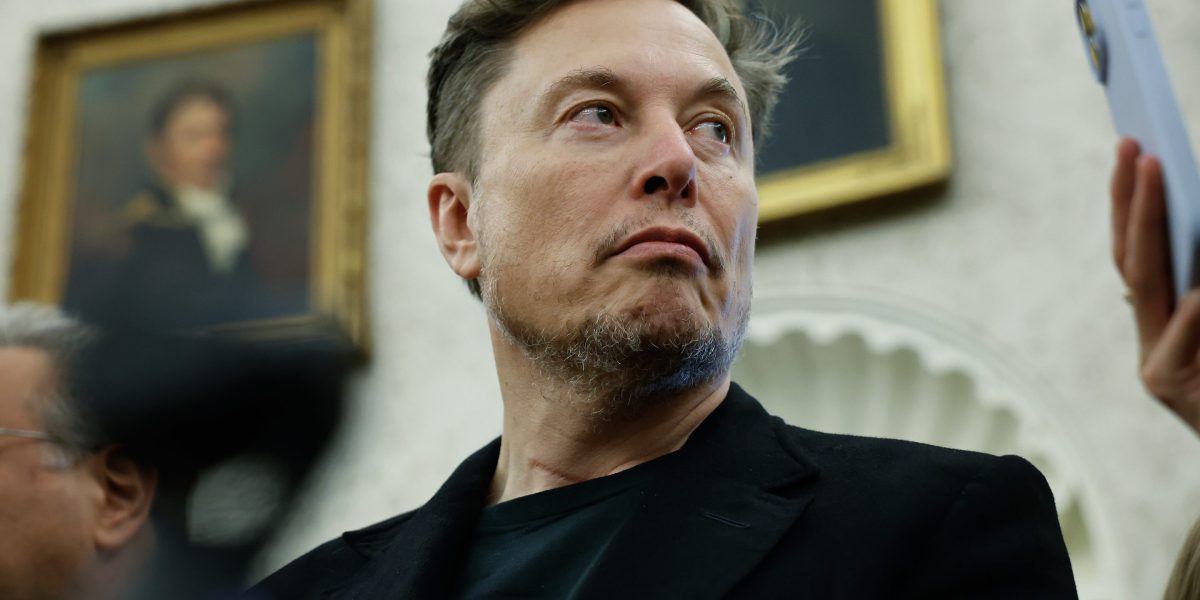
Are Tesla investors losing confidence in Elon Musk’s vision of the future? Or are they still inflating the company’s value based on their faith in the cofounder?

For the past several quarters after Tesla has unveiled earnings, I’ve been calculating a metric that I’ve dubbed The Musk Magic Premium. The figure estimates both the portion of the EV-maker’s valuation that’s justified by its current, baseline earnings, and the extra part based on CEO Musk’s promises for sensational products that have yet to be fully or even partially commercialized. That categories ranges from autonomous robotaxis, to full-self driving kits for retrofitting Teslas now on the road, to the manufacturer’s forthcoming humanoid “Optimus” robots.

Tesla’s Q2 report, issued after the market close on July 23, continues a series of highly disappointing quarters for the company’s EV sales, reflecting continuing weakness in China and Europe, even after a series of sharp discounts. Auto revenues dropped 16% versus Q2 of last year, and a rise in energy storage, services and other businesses failed to fill the gap, so that overall revenue declined by low-double-digit percentages. The sales headwind sent GAAP net profits down 17% to $1.17 billion—about a third what Tesla was netting per quarter in 2022.

But even the official earnings number overstates what I’ll call Tesla’s bedrock, “core” profits, defined as what it generates excluding special items that aren’t part of fundamental operations, and are unlikely contribute significantly in the years to come.

The first of the two big exclusions: Sales of regulatory credits to other carmakers that fail to meet the U.S. CAFE and other domestic and international emissions standards. The Trump administration is effectively axing the CAFE payments that have provided a huge bounty to Tesla, and Musk has acknowledged that the company’s lucrative “regulatory credits” revenue line won’t last too far into the future.

The second unusual item: unrealized profits and losses on Bitcoin holdings, currently worth around $1.4 billion. As we’ll see, the cryptocurrency careens from a positive to negative contributor depending on the quarter; the shifts in value have no impact on the cash Tesla collects and carry no tax penalty or benefit.

Tesla continues a streak of weak ‘core’ earnings

Hence, Tesla’s reported figure of $1.17 billion for Q2, though low, still overstate its current earnings power. The automaker booked regulatory credits worth an estimated $338 million after-tax, and added $284 million in paper gains from the big jump in Bitcoin prices. Subtract those two ephemeral items, and Tesla’s core earnings, by my definition, shrink to $550 million. In Q1, Tesla did even worse, making just $303 million using this metric (it took a loss on Bitcoin that I added back to get the core number). And for the past four quarters, it’s repeatable, durable profits total just $3.66 billion.

That’s a huge comedown from $12 billion registered by my measure in 2022.

So where does that result put the Musk Magic Premium? Investors disliked the Q2 results, sending Tesla’s shares reeling 8% as of market close on July 24. At that point, its market cap had dropped below the $1 trillion mark to $989 billion.

Let’s first establish what Tesla’s likely worth as a “standalone” maker and seller of cars and energy-saving equipment. Though sales are declining, we’ll award the current no-growth model the S&P 500’s generous overall PE of 29.3, an extremely high mark by historical standards. Running numbers on what it’s doing today, Tesla’s worth $107 billion. (That’s the multiple of 29.3 times trailing 12-month core earnings of $3.66 billion.)

The difference between that modest figure and Tesla’s still Brobdingnagian valuation is what’s known as Tesla’s “future growth value” or what I call the Musk Magic Premium. Today, the MMP stands at around $882 billion (today’s cap of $989 billion less a value based on what it does today of $107 billon). That’s actually slightly higher than it stood in March, when I last calculated it.

It’s intriguing that at least for today, investors are expressing a lot less confidence in Musk’s promises. Their doubts shaved no less than $89 billion from Tesla’s cap so far. Still, their faith extends well beyond anything that even the most optimistic growth estimates can reasonably explain. Say you want a 10% annual return for buying, or continuing to hold, Tesla shares over the next seven years. To deliver, Tesla’s valuation would need to double over that span, hitting nearly $2 trillion. Even if Tesla boasts a premium PE of 35 at that point, the required earnings bogey by mid-2032 reaches $55 billion a year. Ringing that bell would mandate annual profit growth of around 45%. That’s possible for a startup, but for a mature giant that’s arguably as much about metal bending as grounddbreaking technology, it sounds like the ultimate stretch.

Musk’s statements rival his most head-spinning pledges to date

On the earnings call, Musk predicted that by year end, “We’ll probably have autonomous ride hailing in probably half the population of the U.S.,” and that “the number of vehicles in operation will increase at a hyper-exponential rate.” But the most revealing part of Musk’s declaration was his cautionary interjections that because they’re so unusual, deserve close attention.

Musk acknowledged that the U.S. regulatory “tax credits are poised to go away.” He added, “We’re in this weird period where we’ll lose a lot of incentives in the U.S. We probably could have a couple of tough quarters.” He then reprised the super-promoter persona: “Once you get to autonomy at scale…certainly by the end of next, year I’d be surprised if Tesla’s economics are not very compelling.”

What? Investors need to wait to the end of 2026 to see big profits start rolling in? The farther the Musk horizon recedes, the more folks and funds will lose confidence in his fabulous vision, and the more days like today its stock will suffer. Going back to the numbers, they contained an even worse sign than the puny earnings. Tesla’s CFO stated that the company will spend over $5 billion in capital expenditures for the rest of the 2025. That’s more than what it collected in cash from operations in the first two quarters, suggesting its free cash flow could go negative. If that happens, Tesla will be spending more on expansion than it’s collecting in earnings.

The warning sign: All of these revolutionary products continue to be extremely expensive, and capital intensive, to fund. Getting the kind of returns Tesla needs will require huge returns on every new dollar it invests, along the lines of the Alphabet or Nvidia mold. Yet the heavy capital outlays keep coming. Musk heralds the promised land ahead. Investors are starting to see a fading mirage.


Source link

Continue Reading

Business

Meetings are not work, says Southwest Airlines CEO—he’s blocking his calendar every afternoon, Wednesday to Friday

Published

on


Business leaders are raising the alarm: meetings have taken over, and real work is being left behind. And Southwest Airlines CEO Bob Jordan is the latest to speak out on the phenomenon—arguing that many leaders mistake constant meetings for leadership.

“When you first start, it’s easy to confuse busyness and going to meetings with leadership,” Jordan said last week on a panel of CEOs at The New York Times DealBook Summit. “…Because what we all find, I’m sure, is there’s no time to ‘work’ and you confuse going to meetings with the work.”

Over the years, Jordan’s solution has been increasingly straightforward: protect his time. For 2026, his goal is to keep his calendar completely clear every Wednesday, Thursday, and Friday afternoon—blocking anyone from booking meetings during those hours.

While he acknowledges that approach might sound “crazy” to some executives, he said CEOs are hired to do work only they can do—and that rarely happens when they are trapped in back-to-back meetings. 

“It’s so that you can work on things you need to work on. You can think about what’s important right now. You can call people you need to talk to,” Jordan added.

The approach may be paying off. Despite a rocky year for the airline industry, Southwest posted a surprise profit in its most recent quarterly earnings report. Year-to-date, its stock price is up about 23%.

Fortune reached out to Southwest Airlines for further comment.

Meetings have become the bane of existence for employees and employers alike

Jordan isn’t alone in his frustration. Meetings have become a shared pain point for both workers and executives.

During the pandemic, meetings took on an almost emotional-support role—an attempted substitute for in-person interaction amid lockdowns. With no need to wait for a free conference room, calendars quickly filled up.

But now, nearly 80% of people say they’re drowning in so many meetings and calls that they barely have time to get any real work done, according to a 2024 Atlassian study which surveyed 5,000 workers across four continents. About 72% of the time, meetings are deemed ineffective.

That backlash has prompted a growing number of executives to aggressively prune—or outright eliminate—meetings from corporate schedules, sometimes carving out entirely meeting-free days. Still, some experts warn that getting rid of meetings altogether is a strategy that could risk removing any sense of belonging with the organization and backfire in the long term.

“Meetings don’t need to be banished completely; it’s just the ineffective, time-wasting ones that do,” Ben Thompson, CEO and cofounder of Employment Hero, previously told Fortune.

How Nvidia and JPMorgan Chase tackle meeting overload

Other CEOs have adopted their own unconventional approaches.

Nvidia’s CEO Jensen Huang, for instance, does not have one-on-one meetings with his more than 50 direct reports. Doing so, he has said, would not only overwhelm his schedule but also slow the broader team’s capacity to address challenges, work effectively, and maintain transparency.

“Our company was designed for agility—for information to flow as quickly as possible. For people to be empowered by what they are able to do, not what they know,” Huang said at Stanford University last year.

At JPMorgan Chase, CEO Jamie Dimon has taken a more blunt approach. In his annual letter to shareholders released last spring, he urged employees to rethink whether meetings are worth having at all.

“Here’s another example of what slows us down: meetings. Kill meetings,” he wrote. “But when they do happen, they have to start on time and end on time – and someone’s got to lead them. There should also be a purpose to every meeting and always a follow-up list.”

Efficiency has become an even higher priority as JPMorgan has pushed employees back into the office five days a week. Meetings, Dimon has emphasized, should command full attention.

“None of this nodding off, none of this reading my mail,” Dimon echoed at Fortune’s Most Powerful Women Summit in October. “If you have an iPad in front of me and it looks like you’re reading your email or getting notifications, I tell you to close the damn thing. It’s disrespectful.”


Source link

Continue Reading

Business

Bittensor just halved its supply. Here’s what that means

Published

on


Early on Monday, the supply of new cryptocurrency tied to Bittensor—a decentralized network of AI projects—dropped by half. The halving was the first the currency has experienced and came about by design, reflecting how Bittensor shares the same anti-inflationary architecture as Bitcoin. The event also serves a milestone for one of the most novel and ambitious cryptocurrencies to launch in years.

Currently, Bittensor has a market capitalization of $2.7 billion, according to the crypto analytics site CoinGecko. That pales in comparison to Bitcoin but is number 50 on the list of most popular cryptocurrencies. It also enjoys the backing of influential crypto billionaire Barry Silbert. At a time when AI is dominating the economy and the political discourse, Bittensor offers the promise of a decentralized alternative to Big Tech—provided it can keep picking up traction in the crypto world and beyond, and if its price holds up following the new drop in supply.

Here’s an overview of exactly what Bittensor is, who’s betting on its success, and what some crypto prognosticators say will come next after its halving:

What is Bittensor?

Founded by Jacob Steeves, a former Google engineer, in 2019, Bittensor is designed to repurpose the mechanics of Bitcoin for AI. In the world of Bitcoin, owners of fleets of computer servers leverage their processing power to process and secure cryptocurrency transactions. This is called Bitcoin mining.

Similarly, Steeves devised a system where fleets of computers compete to process AI computations. In exchange for their processing power, these “miners” receive Bittensor’s cryptocurrency, TAO. In aggregate, Bittensor is like a decentralized server farm for AI. “How did we create a supercomputer that is bigger than any government or corporation can create with a centralized entity?” Steeves said to Fortune in 2024.

Who’s betting on Bittensor?

Bittensor isn’t the most easily understood tech, but the protocol has had some serious backers. In 2024, the crypto venture capitalist Polychain held around $200 million of the cryptocurrency, another crypto VC Dao5 held $50 million, and the crypto conglomerate Digital Currency Group had around $100 million

Barry Silbert, the billionaire founder of Digital Currency Group, is such a believer in Bittensor that he’s founded his own startup called Yuma that’s dedicated to the cryptocurrency. “It is the thing that I’ve gotten most excited about since Bitcoin,” he said.

When did Bittensor halve and what will come next?

On Monday at 8:30 a.m. New York time, Bittensor reduced the amount of daily tokens it issues from 7,200 to 3,600. Like Bitcoin, the supply of Bittensor’s cryptocurrency is capped at 21 million.

In a research note, analysts at Grayscale, a crypto ETF issuer and a subsidiary of Barry Silbert’s Digital Currency Group, said that the halving could be a “positive catalyst for price.” Just a week before, the ETF issuer announced that trading in the U.S. had begun for a vehicle that gives investors exposure to Bittensor.

Sami Kassab, managing partner at Unsupervised Capital, a hedge fund dedicated to Bittensor, was similarly optimistic. “Halvings aren’t complicated. Historically, halvings have been bullish because there’s simply less inventory hitting the market, “ he said. “The same logic applies to TAO.”

Still, over the past 24 hours, the price of Bittensor’s cryptocurrency has dropped about TK% to $TK. That doesn’t mean the halving was a bust since the market often prices in such events ahead of time and, in the case Bitcoin, has often spurred subsequent booms. When Bitcoin last halved in April 2024, its price hovered around $65,000 shortly afterwards. But, by the end of the year, the world’s largest cryptocurrency had rocketed to above $100,000. 

This is Bittensor’s first halving. Its next will follow in late 2029, according to current projections.


Source link

Continue Reading

Business

Airbnb CEO Brian Chesky says he went to ‘night school’ for an hour every day with Barack Obama

Published

on


To build Airbnb into a billion-dollar business, Brian Chesky sometimes worked gruesome 100-hour weeks. However, on top of that, he would regularly carve out time to pick the brains of one of the most important people in the world: former President Barack Obama.

“At one point in 2018, we had a standing one-hour call every week, and I basically had my day job during the day, and then I had my night school with the former president, where I would get these assignments, but it changed my life,” Chesky has just revealed.

Speaking on Michelle Obama’s podcast IMO, he added: “I just was really shameless about reaching out to him, asking for advice, asking for mentorship, and he would meet with me, and he’d give me advice.” 

He recalled the 44th president of the United States advised him to avoid becoming like other leaders who are effectively “self-driving cars” without intention. Instead, he should always be thinking long and hard about relationships—with his friends, his success, and his company—and be more active with the impact he wants to make.

Fortune reached out to Chesky and former President Obama for comment. 

Finding a mentor in a president

After building Airbnb into a household name, Chesky faced a problem: He still wasn’t satisfied—nor necessarily happy. 

“The thing about being very successful in tech and making a lot of money and all this is no one ever told me how lonely it would become,” Chesky said to Michelle and Robinson. “And I started realizing, well, it’s weird, I had old friends that were middle-class, and I’ll be honest, a lot of them seemed happier than me at that point in my life.”

And he credits former President Obama with helping him realize that how he was feeling was completely normal: that “the more success you get, the more isolated you get.” 

“People dream of success, but what they don’t realize is a lot of with success comes disconnection to your past, to yourself, to your friends, and I think a lot of what I’ve tried to do the last handful of years is to reconnect, to not live a life of isolation,” Chesky said. 

Obama’s wisdom to Chesky was simple: He needed to be more hands-on with his relationships. That means instead of texting or calling a close friend once a year, stay constantly connected with them. Chesky said it’s a lesson he translated into his work as the leader of Airbnb.

“He told me something that I’ll never forget,” Chesky said. “He said you should institutionalize your intentions, so that even when you’re a public company, you can make sure not to compromise your vision. And what he meant by that, I think, was that you should be more thoughtful about what you’re making, why you’re making it, and the impact of what you’re making is on people.”

Chesky admitted Obama’s advice has made a “really, really big difference” at Airbnb. And while it may sound odd for a former President to effectively give a CEO homework, it’s something nothing new for Obama, who spent over a decade in the classroom teaching constitutional law at the University of Chicago before his jump into the political arena.

The ‘life hack’ to find success: Reach out to an old friend

The lessons learned from Chesky and President Obama’s relationship on finding success can be summarized into two simple steps: Seek out mentors and have friends outside of social media.

“For young people, the number one thing they need to learn how to do is how to learn,” Chesky said. “And some of the best ways to learn are from other people, and some of the best ways to learn from people are, again, in the real world.”

Moreover, rekindling old relationships is among what Chesky calls a “simple life hack” to make life happy.

“I think the vast majority of people, if they reach out to someone, someone will want to help them,” he added. “They reach out to an old friend, the old friend will want to reach back out to them, and that is the path for reconnection. It’s a path for relationships, and it’s a path for purpose.”

A version of this story originally published on Fortune.com on May 27, 2025.

More on career advice:

Join us at the Fortune Workplace Innovation Summit May 19–20, 2026, in Atlanta. The next era of workplace innovation is here—and the old playbook is being rewritten. At this exclusive, high-energy event, the world’s most innovative leaders will convene to explore how AI, humanity, and strategy converge to redefine, again, the future of work. Register now.


Source link

Continue Reading

Trending

Copyright © Miami Select.