Connect with us

Business

Tesla is officially smaller than China’s BYD in EV sales as it reports second-straight year of falling sales

Published

on


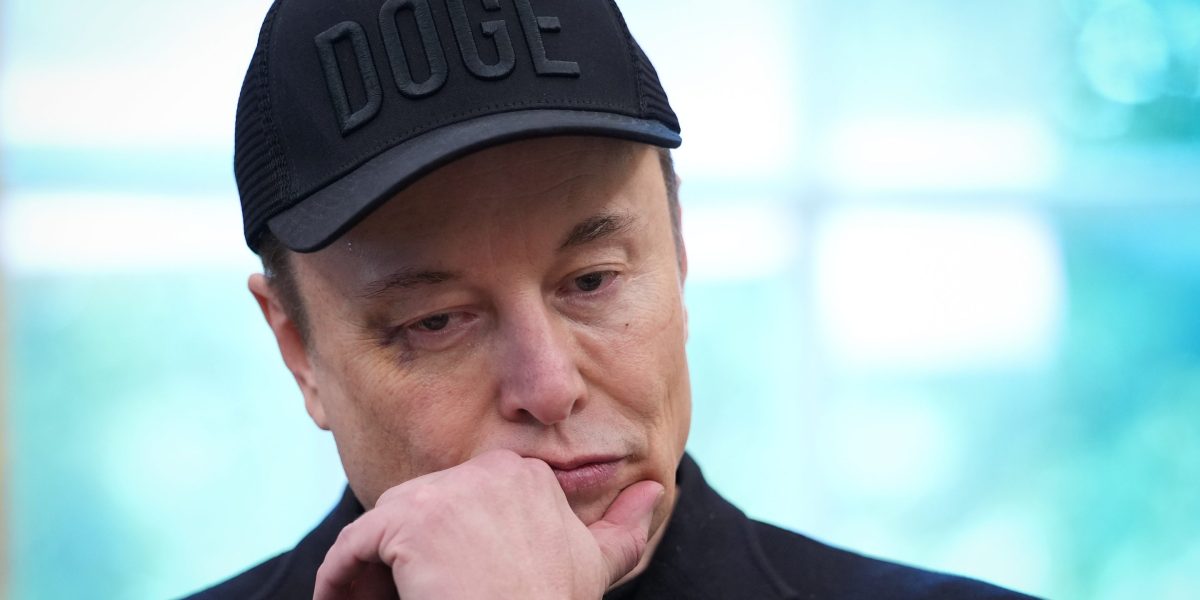
Tesla has officially ceded its long‑held crown as the world’s top electric‑vehicle maker, with China’s BYD now firmly in the lead after a year of surging sales in Asia and stalling demand for Elon Musk’s cars. The changing of the guard comes as Tesla reports its second straight annual drop in deliveries, underscoring how quickly the balance of power in the global EV race has tilted toward China. It also comes after the end of federal subsidies for EV purchases in the U.S. from Musk’s on-again, off-again ally President Donald Trump, a move that Ford CEO Jim Farley predicted in September would cut the EV market in half. ​

China’s BYD said this week it sold about 2.26 million fully electric vehicles in 2025, an increase of nearly 28% from the prior year and enough to make it the world’s largest EV seller. The Shenzhen‑based company’s battery‑electric tally does not include its vast plug‑in hybrid lineup, which brings total “new energy vehicle” sales to roughly 4.6 million last year.

By contrast, Tesla reported that its 2025 deliveries fell to roughly 1.6 million vehicles, down about 8%–9% from 2024 and well below BYD’s all‑electric total. That marks the second year in a row of shrinking sales for Tesla, which peaked around 1.8 million deliveries in 2023, but it was still narrowly ahead of BYD in 2024.

In an unusual move, Tesla preemptively released a statement on Tuesday, detailing the estimates from 20 Wall Street analysts on its deliveries through 2029 while adding that it “does not endorse” any of that information. The Information‘s Martin Peers suggested that Tesla didn’t want anyone “to be shocked by the magnitude of the sales decline it’s on track to report for the fourth quarter of 2025.” Peers noted that analysts expected a 14.6% drop to 422,850 and, in fact, Tesla reported a 15% drop to 418,227. Analyst Gary Black was on the mark in a post on X, interpreting the Tesla statement as a sign that it would release a number closer to the 420,000 range than previous estimates of around 450,000. Tesla stock is down over 6% over the last five days, but was relatively unchanged on Friday, indicating that the market had already priced in this news.

Ford Motor Company, for its part, announced a $19.5 billion writedown on its EV initiatives in December, with Farley saying there was a “customer-driven shift.” Speaking to CNBC about the electric pivot, Farley said that just in line with his predictions, the EV market had already shrunk to around 5% of the U.S. vehicle market, cut in half since the subsidy ended in September.

Tesla’s rare reversal in growth

For more than a decade, Tesla was synonymous with relentless growth, riding early‑mover advantage and generous subsidies to become the face of the EV revolution. That trajectory reversed in 2024 and 2025 as global demand cooled, rivals undercut prices, and key incentives in the United States and Europe expired. Elon Musk’s political evolution likely played a role as well, with his hard-right turn clashing with the demographics of many Tesla owners, who tend to be affluent and left-leaning. Sales in Europe notably declined as Musk took steps to endorse, for instance, the far-right AFD in Germany and Marine Le Pen in France.​

BYD’s ascent has been built on aggressive pricing, dense local supply chains and a broad range of mass‑market models that target price‑sensitive buyers at home and abroad. The company now sells everything from budget city cars to premium sedans, and it has rapidly expanded exports to Europe, Southeast Asia, Latin America and the Middle East. BYD sales are effectively not allowed at all in the U.S., with 100% high tariffs in place for Chinese EVs since ​2024, enacted under President Joe Biden.

Crucially, BYD caught and then overtook Tesla in pure EV production in 2024, before converting that lead into a clear sales advantage last year as its volumes passed 2.2 million fully electric units. Analysts say the company’s scale in China—by far the world’s largest EV market—gives it cost and learning‑curve advantages that are increasingly hard for Western rivals to match.

The shift in rankings lands at a politically sensitive moment, with Washington and Brussels already scrutinizing Chinese EV imports and raising tariffs over concerns about overcapacity and state support. Any further clampdown could complicate BYD’s overseas push even as it entrenches dominance inside China, where competition remains fierce and local subsidies are being pared back.

​BYD shares were up nearly 5% on Friday.


Source link

Continue Reading

Business

Google and Character.AI agree to settle lawsuits over teen suicides linked to AI chatbots

Published

on


Google and Character.AI have agreed to settle multiple lawsuits filed by families whose children died by suicide or experienced psychological harm allegedly linked to AI chatbots hosted on Character.AI’s platform, according to court filings. The two companies have agreed to a “settlement in principle,” but specific details have not been disclosed, and no admission of liability appears in the filings. 

The legal claims included negligence, wrongful death, deceptive trade practices, and product liability. The first case filed against the tech companies concerned a 14-year-old boy, Sewell Setzer III, who engaged in sexualized conversations with a Game of Thrones chatbot before he died by suicide. Another case involved a 17-year-old whose chatbot allegedly encouraged self-harm and suggested murdering parents was a reasonable way to retaliate against them for limiting screen time. The cases involve families from multiple states, including Colorado, Texas, and New York.

Founded in 2021 by former Google engineers Noam Shazeer and Daniel De Freitas, Character.AI enables users to create and interact with AI-powered chatbots based on real-life or fictional characters. In August 2024, Google re-hired both founders and licensed some of Character.AI’s technology as part of a $2.7 billion deal. Shazeer now serves as co-lead for Google’s flagship AI model Gemini, while De Freitas is a research scientist at Google DeepMind.

Lawyers have argued that Google bears responsibility for the technology that allegedly contributed to the death and psychological harm of the children involved in the cases. They claim Character.AI’s co-founders developed the underlying technology while working on Google’s conversational AI model, LaMDA, before leaving the company in 2021 after Google refused to release a chatbot they had developed.

Google did not immediately respond to a request for comment from Fortune concerning the settlement. Lawyers for the families and Character.AI declined to comment.

Similar cases are currently ongoing against OpenAI, including lawsuits involving a 16-year-old California boy whose family claims ChatGPT acted as a “suicide coach,” and a 23-year-old Texas graduate student who allegedly was goaded by the chatbot to ignore his family before dying by suicide. OpenAI has denied the company’s products were responsible for the death of the 16-year-old, Adam Raine, and previously said the company was continuing to work with mental health professionals to strengthen protections in its chatbot.

Character.AI bans minors

Character.AI has already modified its product in ways it says improve its safety, and which may also protect it from further legal action. In October 2025, amid mounting lawsuits, the company announced it would ban users under 18 from engaging in “open-ended” chats with its AI personas. The platform also introduced a new age-verification system to group users into appropriate age brackets.

The decision came amid increasing regulatory scrutiny, including an FTC probe into how chatbots affect children and teenagers.

The company said the move set “a precedent that prioritizes teen safety,” and goes further than competitors in protecting minors. However, lawyers representing families suing the company told Fortune at the time they had concerns about how the policy would be implemented and raised concerns about the psychological impact of suddenly cutting off access for young users who had developed emotional dependencies on the chatbots.

Growing reliance on AI companions

The settlements come at a time when there is a growing concern about young people’s reliance on AI chatbots for companionship and emotional support.

A July 2025 study by the U.S. nonprofit Common Sense Media found that 72% of American teens have experimented with AI companions, with over half using them regularly. Experts previously told Fortune that developing minds may be particularly vulnerable to the risks posed by these technologies, both because teens may struggle to understand the limitations of AI chatbots and because rates of mental health issues and isolation among young people have risen dramatically in recent years.

Some experts have also argued that the basic design features of AI chatbots—including their anthropomorphic nature, ability to hold long conversations, and tendency to remember personal information—encourage users to form emotional bonds with the software.


Source link

Continue Reading

Business

State Department suspends all U.S. aid to Somalia, citing ‘zero-tolerance policy for waste, theft, and diversion of life-saving assistance’

Published

on


The State Department said Wednesday that it has suspended all U.S. assistance to Somalia’s federal government over allegations that Somali officials destroyed an American-funded warehouse belonging to the World Food Program and seized 76 metric tons of food aid intended for impoverished civilians.

“The Trump Administration has a zero-tolerance policy for waste, theft, and diversion of life-saving assistance,” the department said in a statement.

“The State Department has paused all ongoing U.S. assistance programs which benefit the Somali Federal Government,” it said. “Any resumption of assistance will be dependent upon the Somali Federal Government, taking accountability for its unacceptable actions and taking appropriate remedial steps.”

The suspension comes as the Trump administration has ratcheted up criticism of Somali refugees and migrants in the United States, including over well-publicized fraud allegations involving child care centers in Minnesota. It has slapped significant restrictions on Somalis wanting to come to the U.S. and made it difficult for those already in the United States to stay.

It was not immediately clear how much assistance would be affected by the suspension because the Trump administration has slashed foreign aid expenditures, dismantled the U.S. Agency for International Development and not released new country-by-country data.

The U.S. had provided $770 million in assistance for projects in Somalia during the last year of Democratic President Joe Biden’s administration, but only a fraction of that went directly to the government.

A senior State Department official said Wednesday the department is “undertaking a thoughtful and individualized review to determine which ongoing assistance programs directly or indirectly benefit the Somali Federal Government and to take appropriate actions to pause, redirect or terminate such programs.”

The official said Somalia had long been “a black hole of poorly overseen U.S. assistance” and that the Trump administration is taking steps to terminate fraud-prone programs there.

The official said the administration ordered the suspension after authorities at the Mogadishu Port demolished the WFP warehouse at the direction of President Hassan Sheikh Mohamud “with no prior notification or coordination with international donor countries, including the United States.”

The official spoke on condition of anonymity to discuss private reporting from American diplomats in the region.

Located in the Horn of Africa, Somalia is one of the world’s poorest nations and has been beset by chronic strife and insecurity exacerbated by multiple natural disasters, including severe droughts, for decades.

This story was originally featured on Fortune.com


Source link

Continue Reading

Business

37-year-old mother of 3 shot and killed by ICE in Minneapolis was a U.S. citizen who had recently moved to the state

Published

on


The woman shot and killed by a U.S. Immigration and Customs Enforcement officer in Minneapolis on Wednesday was Renee Nicole Macklin Good, a 37-year-old mother of three who had recently moved to Minnesota.

She was a U.S. citizen born in Colorado and appears to never have been charged with anything involving law enforcement beyond a traffic ticket.

In social media accounts, Macklin Good described herself as a “poet and writer and wife and mom.” She said she was currently “experiencing Minneapolis,” displaying a pride flag emoji on her Instagram account. A profile picture posted to Pinterest shows her smiling and holding a young child against her cheek, along with posts about tattoos, hairstyles and home decorating.

Her ex-husband, who asked not to be named out of concern for the safety of their children, said Macklin Good had just dropped off her 6-year-old son at school Wednesday and was driving home with her current partner when they encountered a group of ICE agents on a snowy street in Minneapolis, where they had moved last year from Kansas City, Missouri.

Video taken by bystanders posted to social media shows an officer approaching her car, demanding she open the door and grabbing the handle. When she begins to pull forward, a different ICE officer standing in front of the vehicle pulls his weapon and immediately fires at least two shots into the vehicle at close range.

In another video taken after the shooting, a distraught woman is seen sitting near the vehicle, wailing, “That’s my wife, I don’t know what to do!”

Calls and messages to Macklin Good’s current partner received no response.

Trump administration officials painted Macklin Good as a domestic terrorist who had attempted to ram federal agents with her car. Her ex-husband said she was no activist and that he had never known her to participate in a protest of any kind.

He described her as a devoted Christian who took part in youth mission trips to Northern Ireland when she was younger. She loved to sing, participating in a chorus in high school and studying vocal performance in college.

She studied creative writing at Old Dominion University in Virginia and won a prize in 2020 for one of her works, according to a post on the school’s English department Facebook page. She also hosted a podcast with her second husband, who died in 2023.

Macklin Good had a daughter and her son from her first marriage, who are now ages 15 and 12. Her 6-year-old son was from her second marriage.

Her ex-husband said she had primarily been a stay-at-home mom in recent years but had previously worked as a dental assistant and at a credit union.

Donna Ganger, her mother, told the Minnesota Star Tribune the family was notified of the death late Wednesday morning.

“Renee was one of the kindest people I’ve ever known,” Ganger told the newspaper. “She was extremely compassionate. She’s taken care of people all her life. She was loving, forgiving and affectionate. She was an amazing human being.”

Ganger did not respond to calls or messages from the AP.

___

Mustian reported from New York.


Source link

Continue Reading

Trending

Copyright © Miami Select.