Fashion
Tendam’s Richard Gum: ‘Cortefiel has been a pioneer in virtually every facet of Spanish fashion’
Published
December 22, 2025
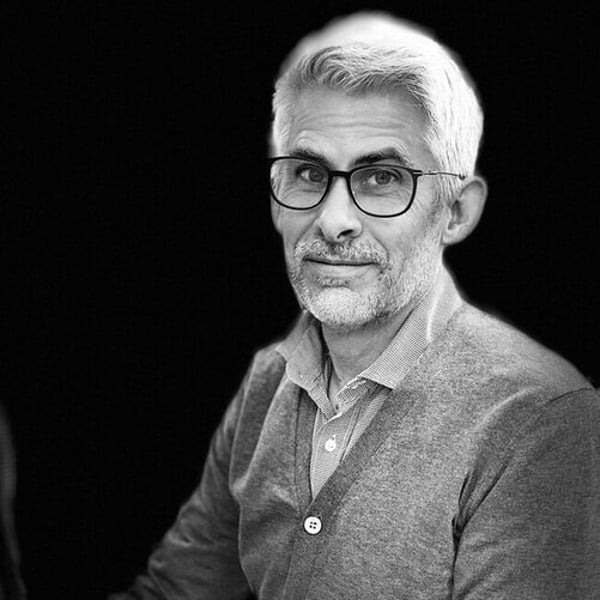
2025 is a year of milestones and anniversaries. Among them is that of one of the doyens of Spanish fashion, Cortefiel, which celebrates eight decades on the market. Now firmly established as a pioneering brand and the seed of one of Europe’s leading textile groups, FashionNetwork.com speaks to Richard Gum, buying director for Cortefiel, Pedro del Hierro Menswear and OOTO.
With previous experience at Federated Department Stores (now Macy’s) and Gucci, he has spent 30 years at the Spanish company.
FashionNetwork.com: Cortefiel turns 80 in 2025 and you have been with the company for three decades. How have you seen the brand evolve over this time?
Richard Gum: We’ve professionalised management through the rollout of systems, new functions within the company and a sharper focus on design. The way we work has changed significantly, thanks in part to the growing importance of digital—both commercially and operationally. What hasn’t changed is how we think about the customer, our desire to stay close to society, and our determination to weather the crises that come our way—of which there have been many over the past 80 years, and indeed the last 30.
Equally unchanged is our long‑term mission to stay relevant, which compels us to pay close attention to innovation and societal shifts. We do this while upholding our philosophy of a people‑centred business—customers, our team—and pursuing profitable, responsible growth.
FNW: How is this strategy structured to stay relevant?
R. G.: Innovation and staying current are vital, but you can’t be relevant without an essence—a heritage—to preserve. As an 80‑year‑old company, those of us here today want to keep making it better and ensure it lasts another 80 years. How? By staying current and remaining part of our customers’ lives.


FNW: What values defined the brand at its origin and are still present today?
R. G.: First and foremost, the product. It’s in our name—a “faithful cut”. We pay close attention to construction, use quality fabrics and, across our sales channels, aim to advise customers as well as possible. Those values are embedded in the garments and, as a company, we work as a team and strive to act responsibly towards everyone in our ecosystem, be they customers, employees or external partners.
FNW: From a corporate angle, the company has changed a lot in recent years. What was the Cortefiel group became the Tendam group and, in the last five years, new brands have been incorporated and launched. Not to mention the recent acquisition by Multiply Group. How has the brand dealt with these processes?
R. G.: With the transformation from Grupo Cortefiel to Tendam, what we on the inside have seen is the professionalisation of operations. By sharing them across several banners, we’ve been able to build more robust sourcing structures, strengthen logistics and distribution, and bring in IT specialists—things that, as standalone brands, we wouldn’t have managed in the same way. That professionalisation has allowed those of us working within the brands to focus more on our customers, products and value proposition.
As for new brands, Cortefiel—being the base of the group and the original core—has positioned itself very well to serve as an incubator. Pedro del Hierro began within Cortefiel and, although it remains an important part, it now has its own identity. Women’secret also launched with a strong presence in Cortefiel stores and later became completely independent. We now have newer brands—Hoss, OOTO and Slow Love—enjoying strong growth and adding significant value to the group, while giving customers more choice.
FNW: So, what role would you say Cortefiel plays within the Tendam group?
R. G.: As the brand from which the group originated, it plays a fundamental role in how we see ourselves as a company. It has provided the platform for growth and for adding brands over the past 80 years. It has served not only as an incubator for brands, but also for initiatives such as our loyalty club, which now counts eight million members. Club Cortefiel launched in 1979 and was truly pioneering—preceding even the department store programmes.
FNW: Let’s talk about distribution. What is Cortefiel’s current position?
R. G.: We operate in 40 countries. Spain remains our home and is hugely important to us, but we’re pursuing an organic, very natural expansion into other markets. We have a franchise network across Africa, Latin America, Europe and Asia. We’ve recently opened concessions in Shaws department stores in Ireland, inaugurated the first Hoss store in Mexico and, also in the Mexican market, we’ll launch Cortefiel in spring 2026.


FNW: What will Cortefiel’s landing in Mexico be like?
R. G.: They will be standalone stores, offering our full assortment—menswear and womenswear. We’re in the process of signing contracts and organising the expansion. Although we’re a Spanish company, when we enter a new country like Mexico it’s vital for us to build the same closeness and connection with local customers that we enjoy with consumers in mature markets such as Spain and Portugal. We want to understand their needs, tastes and shopping occasions, which aren’t exactly the same as elsewhere.
FNW: How does Cortefiel connect with international audiences? What do customers like about the brand outside Spain?
R. G.: In some countries we see a very positive response from the outset—Portugal, for example. Others are less similar to Spain, such as those in Latin America or the Balkans, where our elegance, quality and a style distinct from global fast fashion—focused on adult customers—are appreciated. European style in general, and Spanish in particular, also carries positive weight abroad.
FNW: Going back to Cortefiel as a brand, what would you say is its legacy to Spanish fashion?
R. G.: It has been a pioneer in almost every aspect of Spanish fashion. It was among the first chains to expand abroad, among the first to offer menswear and womenswear under one roof—even to install fluorescent lighting! In many Spanish cities, the first escalator was at Cortefiel. That drive to stay current is our heritage and what will help us remain relevant—continually considering what we can contribute, how we can offer a better product, and how we can listen more closely to customers and markets. We’ve also incorporated topics that barely featured 20 years ago, such as sustainability. And we’ve done so while preserving our style and a very human philosophy: it’s our strength, the legacy of the past and the roadmap for the future.
FNW: There are still two decades to go before 100, but Cortefiel is well on its way to becoming a centenary brand. How do you envision the firm on that anniversary?
R. G.: I hope to be retired by then—although you never know! Joking aside, given everything that’s changed in the company over the past 20 years, it’s hard to imagine what the next 20 will look like. I’m sure that by then Cortefiel will be fully up to speed with technology; we’ll deliver our products to customers in the way they want to receive them and use every tool at our disposal to offer the best product. I imagine we’ll be able to create increasingly personalised garments, under a more sustainable business approach that uses only the resources required to deliver the best result. I believe we’ll still be intent on dressing people well, with durable, versatile garments. That balance—using the tools available to adapt to society while preserving our essence—is what has brought us to 80 years.
This article is an automatic translation.
Copyright © 2025 FashionNetwork.com All rights reserved.