Connect with us

Politics

Temporary status to be removed from roughly 80K Hondurans, Nicaraguans after 25 years in U.S.
Published

on


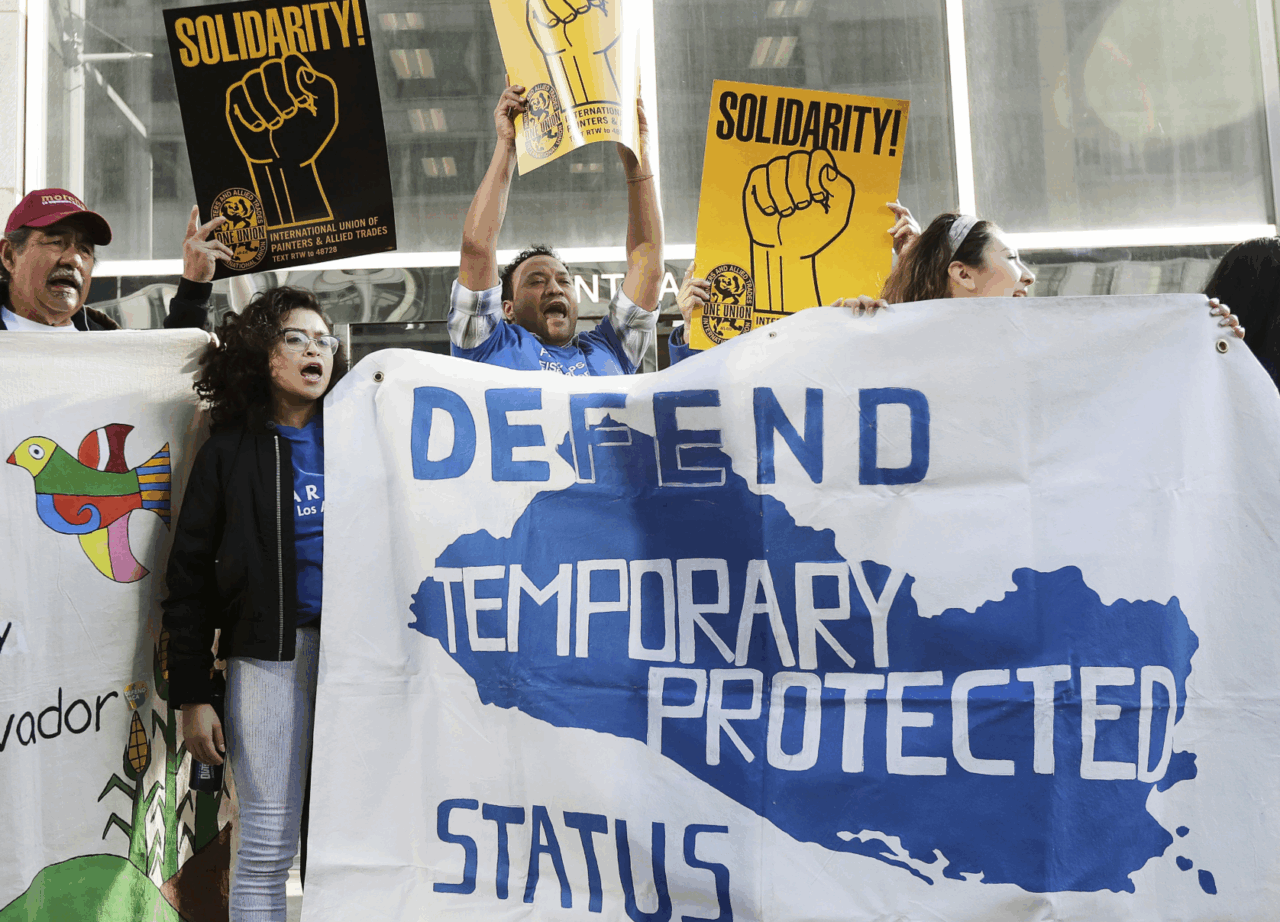
President Donald Trump’s administration is ending the temporary status for nearly 80,000 Hondurans and Nicaraguans that has allowed them to live and work in the U.S. for a quarter of a century after a devastating hurricane hit Central America, according to federal government notices — a move that comes as the White House pushes to make more immigrants in the U.S. eligible for deportation.

The notices are part of a wider effort by the current administration to make good on campaign promises to carry out mass deportations of immigrants. It’s doing this by going after people in the country illegally or those who’ve committed crimes that make them eligible for deportation but also by removing protections from hundreds of thousands of people, many admitted under former President Joe Biden.

Temporary Protected Status is a temporary protection that can be granted by the Homeland Security secretary to people of various nationalities who are in the United States, which prevents them from being deported and allows them to work. The Trump administration has aggressively been seeking to remove the protection, thus making more people eligible for removal.

Administration says conditions have changed

The Department of Homeland Security said Monday in the Federal Register — in a notice set to become official on Tuesday — that Secretary Kristi Noem had reviewed the country conditions in Honduras and Nicaragua. She concluded the situations there had improved enough since the initial decision in 1999 that people currently protected by those temporary designations could return home.

The department estimated that roughly 72,000 Hondurans and 4,000 Nicaraguans in the U.S. are covered by the status that will now expire in roughly two months. However, the TPS Alliance, which advocates for immigrants covered by these temporary protections, estimated that about 40,000 Hondurans would be affected because many had obtained legal residency through various immigration channels.

Temporary Protected Status (TPS) for both nationalities expired on July 5. The notices said the protections will be terminated 60 days after the notices are officially published in the Federal Register.

TPS is usually granted when conditions in someone’s home country make it difficult to return. People covered by it must register with the Department of Homeland Security. and then they’re protected from being deported and can work.

However, it does not grant them a pathway to citizenship and the secretary must renew it regularly, often in 18-month intervals.

When their status officially ends, Hondurans and Nicaraguans currently covered by the Temporary Protected Status can be deported and their work permits will be terminated if they can’t find another avenue to stay in the country.

Critics say ‘temporary’ became permanent

Critics say that successive administrations — especially the Biden administration — essentially rubber-stamped these renewals regardless, and people covered by what’s supposed to be a temporary status end up staying in the United States for years.

The Trump administration has already terminated TPS for about 350,000 Venezuelans, 500,000 Haitians, more than 160,000 Ukrainians, and thousands of people from Afghanistan, Nepal and Cameroon. Some of them, like Venezuelans, Haitians and Ukrainians, have pending lawsuits at federal courts.

Another 250,000 Venezuelans are still protected under TPS until September, as well as thousands of Syrians. TPS for Ethiopians expires in December, for Yemenis and Somalians in March 2026, and for Salvadoreans in September 2026.

During the Biden administration, the number of people protected by TPS grew significantly. Nearly 1 million Venezuelans and Haitians were protected.

Jose Palma, co-coordinator at the National TPS Alliance, said the termination announced Monday will affect people who have lived in the United States for nearly three decades.

“They have established families. Investments. It is a community that …. has undergone annual background checks, that has shown … all its contributions to this country,” Palma said. “It’s cruel what’s happening.”

Litigation delayed ending the protections

Temporary protections for both countries were initially granted back in 1999 following 1998’s Hurricane Mitch. The first Trump administration attempted to end the protections but they both remained in place after litigation.

Homeland Security wrote in the federal register notice that Honduras had “witnessed significant changes in the 26 years since Hurricane Mitch’s destruction.”

“Honduras has made significant progress recovering from the hurricane’s destruction and is now a popular tourism and real estate investment destination,” the department wrote. They department said the Honduran government in January had launched a plan called “Brother, Come Home” which aims to help Hondurans deported from the U.S. with money and help finding a job.

Of Nicaragua, Noem wrote: “Nicaragua has made significant progress recovering from the hurricane’s destruction with the help of the international community and is now a growing tourism, ecotourism, agriculture, and renewable energy leader.”

Honduras Deputy Foreign Affairs Minister Antonio García expressed disappointment at the announcement Monday.

“They argue that Honduras has foreign investment, tourism and its program ‘Honduran come home’ and that there are conditions to return,” García said. But he said it was the anti-immigrant sentiment of the Trump administration that was really behind it.

“They came to power with that and they’re getting it done for their electorate,” he said.

___

Republished with permission of The Associated Press.


Post Views: 0


Source link

Continue Reading

Politics

Kevin Steele seeks insight from conservative leaders at Rick Scott-led summit

Published

on


State Rep. Kevin Steele’s campaign for Chief Financial Officer already enjoys political support from U.S. Sen. Rick Scott. The Dade City Republican attended a summit headlined by the Senator to also gain some policy insight and mentoring.

Steele was among the attendees for the Rescuing the American Dream summit held on Thursday in Washington, D.C. He said it was a quest for knowledge that drew him to Capitol Hill to hear the discussion.

“The way you do things better in the future is by learning from people who have already accomplished something,” Steele told Florida Politics at the event.

Scott gave a shoutout to Steele from the stage. The Governor already endorsed Steele, who is challenging the appointed Chief Financial Officer Blaise Ingoglia in 2026. At the summit, Scott both promoted conservative successes in the first year of President Donald Trump’s second term and laid out visions on issues from health care reform to cryptocurrency.

Steele called the panel discussions “amazing” and instructive on tackling affordability issues in Florida.

“If we don’t start addressing those things head first, we’re going to fall behind,” Steele said. “I think we’ve lost several million jobs in the state of Florida over the past six or seven years. Learning from Rick Scott and how to bring jobs back to the state is a good thing. And I think that we need to start tackling some of the big, big things that we need to attack.”

That includes addressing property insurance premiums head on and evaluating the property tax situation.

While he will be challenging a Republican incumbent in a Primary, Steele voiced caution at comparing his philosophy too directly with Ingoglia, a former Republican Party of Florida Chair with a history of animus with Scott.

But he did suggest Ingoglia’s recent scrutinizing of local governments may be starting at the wrong place when it comes to cutting spending.

“We need to start focusing on state down, instead of going to a county and pointing out flaws there,” Steele said. “There’s a lot of issues at the state level that we can address, some of which we are, some of which I’ve submitted different bills to address. I think that there’s a lot of waste and abuse at the state level that we can focus on.”


Source link

Continue Reading

Politics

Darren Soto refuses to call for Sheila Cherfilus-McCormick’s resignation

Published

on


U.S. Rep. Darren Soto is refusing to say whether indicted U.S. Rep. Sheila Cherfilus-McCormick should vacate her seat in Congress.

Video obtained by Florida Politics shows Soto being confronted on Capitol Hill. “Will you call on Sheila Cherfilus-McCormick to resign?” the videographer asks.

Initially, Soto remains silent, but the questioner suggests that silence shows “support” for someone who “stole $5 million in health care funds for the most vulnerable.” The Kissimmee Democrat then responds but continues walking away from the camera. He then conflates a censure motion against U.S. Rep. Cory Mills, a New Smyrna Beach Republican, and Cherfilus-McCormick, a Miramar Democrat.

“Both Mills and Cherfilus-McCormick, both will have due process. Thank you,” Soto said.

Both Cherfilus-McCormick and Mills remain the subjects of ongoing House Ethics Committee investigations. But only Cherfilus-McCormick now faces criminal prosecution for alleged financial crimes.

A grand jury in November indicted Cherfilus-McCormick on charges she stole $5 million in disaster relief funds to finance her 2021 congressional campaign.

The indictment alleges that Cherfilus-McCormick and her brother, Edwin Cherfilus, secured funding intended for a COVID vaccine distribution program, but when overpayments were made, she routed the spending through several accounts that later donated the funds as campaign contributions.

Minority Leader Hakeem Jeffries said pursuant to House rules that Cherfilus-McCormick had to give up her ranking status on the Subcommittee on the Middle East and North Africa. Local Democrats have started to issue calls for the Miramar Democrat’s resignation. But there have been no calls from Democratic members of Congress.

U.S. Rep. Greg Steube, a Sarasota Republican, has said if she won’t resign, he will move for her expulsion.

The National Republican Congressional Committee (NRCC), which lists Soto as a target in 2026, slammed Soto’s unwillingness to criticize a fellow Democrat.

“Darren Soto’s refusal to call on Sheila Cherfilus-McCormick to resign is unacceptable,” said NRCC spokesperson Maureen O’Toole. “Floridians deserve a representative who fights for them, not his taxpayer-thieving colleague.”


Source link

Continue Reading

Politics

Lawmakers propose tough penalties for adults who involve minors in animal cruelty

Published

on


Bipartisan legislation filed this week would expand Florida’s criminal penalties for adults who involve children in acts of animal cruelty or expose them to violent offenses against animals.

Democratic Sen. Kristen Arrington and Republican Rep. Linda Chaney filed the legislation (SB 676, HB 559). The bills would add new crimes to state law that make it a third-degree felony for an adult to entice a minor to commit animal cruelty, or for an adult to commit animal cruelty in the presence of a minor. 

The lawmakers cite studies that show children who witness acts of animal cruelty experience an increase in mental health issues, along with an increased likelihood of engaging in violence themselves. By addressing the cycle of abuse early on, they say children can be shielded from additional trauma caused by witnessing violence.

The proposal would also create offenses for adults who involve minors in animal fighting or baiting, and for sexual activities with animals, while also ranking the new crimes on the state’s offense severity chart and increasing penalties for certain felony offenses. If approved, the act would take effect Oct. 1, 2026.

Arrington, of Kissimmee, said the goal is to strengthen protections for both children and animals.

“Exposing children to acts of animal cruelty not only harms animals but has a profound negative impact on children’s emotional development and wellbeing” Arrington said in a statement. “This bill is meant to protect both our youth and our animals, ensuring that those who would involve minors in such heinous acts face strict consequences.”

Chaney, of St. Pete Beach, said animal crimes committed in front of children are closely linked with other forms of family violence.

“Committing animal crimes in front of minors is a serious issue that often co-occurs with other forms of family violence and can have severe, long-term traumatic effects on the children involved” Chaney said. “We must do all we can to break generational cycles of violence. This bill can do that.”

Democratic Rep. Johanna López of Orlando signed on as a prime co-sponsor.

“I’m honored to join Senator Arrington and Representative Chaney in advancing reforms that protect the safety and mental health of our minors and ensure that those who abuse our children or our pets are held accountable,” López said.


Source link

Continue Reading

Trending

Copyright © Miami Select.