Connect with us

Business

Tariffs explainer: what are they, how do they work, are they a tax

Published

on


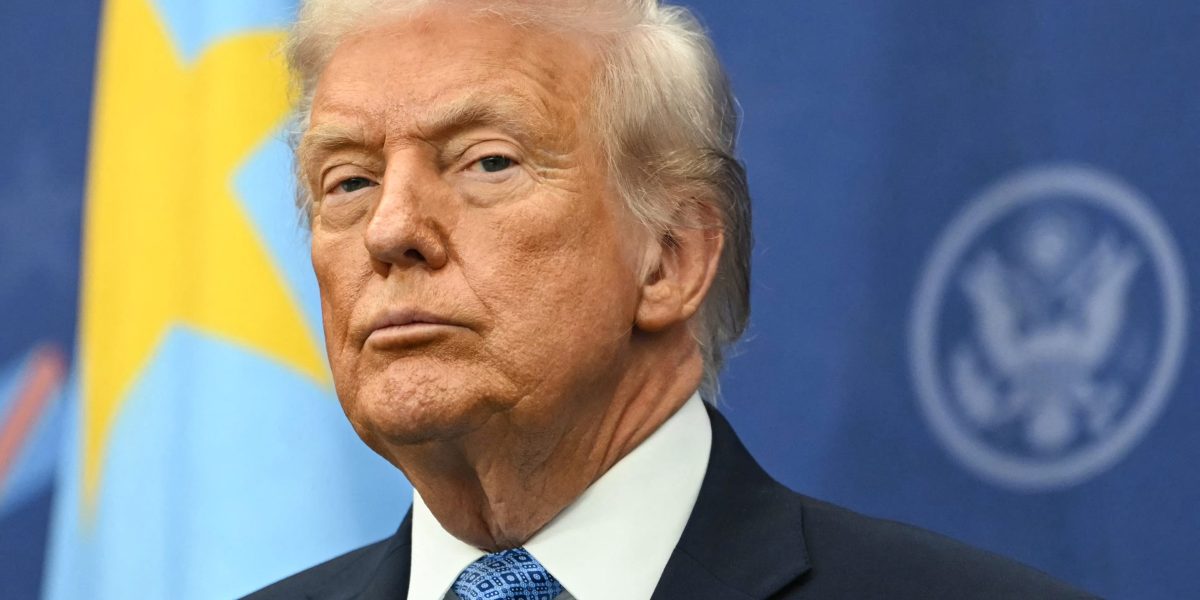
The U.S. Supreme Court is currently reviewing a case to determine whether President Donald Trump’s global tariffs are legal.

Until recently, tariffs rarely made headlines. Yet today, they play a major role in U.S. economic policy, affecting the prices of everything from groceriesto autosto holiday gifts, as well as the outlook for unemployment, inflation and even recession.

I’m an economist who studies trade policy, and I’ve found that many people have questions about tariffs. This primer explains what they are, what effects they have, and why governments impose them.

What are tariffs, and who pays them?

Tariffs are taxes on imports of goods, usually for purposes of protecting particular domestic industries from import competition. When an American business imports goods, U.S. Customs and Border Protection sends it a tariff bill that the company must pay before the merchandise can enter the country.

Because tariffs raise costs for U.S. importers, those companies usually pass the expense on to their customers by raising prices. Sometimes, importers choose to absorb part of the tariff’s cost so consumers don’t switch to more affordable competing products. However, firms with low profit margins may risk going out of business if they do that for very long. In general, the longer tariffs are in place, the more likely companies are to pass the costs on to customers.

Importers can also ask foreign suppliers to absorb some of the tariff cost by lowering their export price. But exporters don’t have an incentive to do that if they can sell to other countries at a higher price.

Studies of Trump’s 2025 tariffs suggest that U.S. consumers and importers are already paying the price, with little evidence that foreign suppliers have borne any of the burden. After six months of the tariffs, importers are absorbing as much as 80% of the cost, which suggests that they believe the tariffs will be temporary. If the Supreme Court allows the Trump tariffs to continue, the burden on consumers will likely increase.

While tariffs apply only to imports, they tend to indirectly boost the prices of domestically produced goods, too. That’s because tariffs reduce demand for imports, which in turn increases the demand for substitutes. This allows domestic producers to raise their prices as well.

A brief history of tariffs

The U.S. Constitution assigns all tariff- and tax-making power to Congress. Early in U.S. history, tariffs were used to finance the federal government. Especially after the Civil War, when U.S. manufacturing was growing rapidly, tariffs were used to shield U.S. industries from foreign competition.

The introduction of the individual income tax in 1913 displaced tariffs as the main source of U.S. tax revenue. The last major U.S. tariff law was the Smoot-Hawley Tariff Act of 1930, which established an average tariff rate of 20% on all imports by 1933.

Those tariffs sparked foreign retaliation and a global trade war during the Great Depression. After World War II, the U.S. led the formation of the General Agreement on Tariffs and Trade, or GATT, which promoted tariff reduction policies as the key to economic stability and growth. As a result, global average tariff rates dropped from around 40% in 1947 to 3.5% in 2024. The U.S. average tariff rate fell to 2.5% that year, while about 60% of all U.S. imports entered duty-free.

While Congress is officially responsible for tariffs, it can delegate emergency tariff power to the president for quick action as long as constitutional boundaries are followed. The current Supreme Court case involves Trump’s use of the International Emergency Economic Powers Act, or IEEPA, to unilaterally change all U.S. general tariff rates and duration, country by country, by executive order. The controversy stems from the claim that Trump has overstepped his constitutional authority granted by that act, which does not mention tariffs or specifically authorize the president to impose them.

The pros and cons of tariffs

In my view, though, the bigger question is whether tariffs are good or bad policy. The disastrous experience of the tariff war during the Great Depression led to a broad global consensus favoring freer trade and lower tariffs. Research in economics and political science tends to back up this view, although tariffs have never disappeared as a policy tool, particularly for developing countries with limited sources of tax revenue and the desire to protect their fledgling industries from imports.

Yet Trump has resurrected tariffs not only as a protectionist device, but also as a source of government revenue for the world’s largest economy. In fact, Trump insists that tariffs can replace individual income taxes, a view contested by most economists.

Most of Trump’s tariffs have a protectionist purpose: to favor domestic industries by raising import prices and shifting demand to domestically produced goods. The aim is to increase domestic output and employment in tariff-protected industries, whose success is presumably more valuable to the economy than the open market allows. The success of this approach depends on labor, capital and long-term investment flowing into protected sectors in ways that improve their efficiency, growth and employment.

Critics argue that tariffs come with trade-offs: Favoring one set of industries necessarily disfavors others, and it raises prices for consumers. Manipulating prices and demand results in market inefficiency, as the U.S. economy produces more goods that are less efficiently made and fewer that are more efficiently made. In addition, U.S. tariffs have already resulted in foreign retaliatory trade actions, damaging U.S. exporters.

Trump’s tariffs also carry an uncertainty cost because he is constantly threatening, changing, canceling and reinstating them. Companies and financiers tend to invest in protected industries only if tariff levels are predictable. But Trump’s negotiating strategy has involved numerous reversals and new threats, making it difficult for investors to calculate the value of those commitments. One study estimates that such uncertainty has actually reduced U.S. investment by 4.4% in 2025.

A major, if underappreciated, cost of Trump’s tariffs is that they have violated U.S. global trade agreements and GATT rules on nondiscrimination and tariff-binding. This has made the U.S. a less reliable trading partner. The U.S. had previously championed this system, which brought stability and cooperation to global trade relations. Now that the U.S. is conducting trade policy through unilateral tariff hikes and antagonistic rhetoric, its trading partners are already beginning to look for new, more stable and growing trade relationships.

So what’s next? Trump has vowed to use other emergency tariff measures if the Supreme Court strikes down his IEEPA tariffs. So as long as Congress is unwilling to step in, it’s likely that an aggressive U.S. tariff regime will continue, regardless of the court’s judgment. That means public awareness of tariffs ⁠– and of who pays them and what they change ⁠– will remain crucial for understanding the direction of the U.S. economy.

Kent Jones, Professor Emeritus, Economics, Babson College

This article is republished from The Conversation under a Creative Commons license. Read the original article.



Source link

Continue Reading

Business

Former ambassador: China is winning the biotech race. Patent reform is how we catch up

Published

on


The United States is at risk of losing one of the most important technology races of the 21st century: biotechnology. A 2025 report from a bipartisan, congressionally chartered commission warns that China is closing in on a win, and the United States has only a narrow window to respond.

The report, released by the National Security Commission on Emerging Biotechnology, offers dozens of recommendations, ranging from increasing federal investment and expanding domestic manufacturing to reducing reliance on Chinese suppliers and improving interagency coordination. But one issue receives too little attention. If the United States wants to compete, it must restore trust in the intellectual property rights that enable inventors to turn bold ideas into revolutionary products.

Patents make high-risk innovation financially viable. They allow startups to protect their discoveries, attract capital, and grow. Without reliable patent rights, promising research gets shelved — or picked up and advanced abroad.

This isn’t theoretical. The United States led past waves of innovation — like the explosion of biotech startups after the Bayh-Dole Act of 1980 and the 19th-century surge of invention that brought us the telephone and automobile — precisely because it backed inventors with clear, enforceable IP rights.

In biotech, the stakes are higher. The field is transforming how we treat disease, grow food, and manufacture everything from chemicals to advanced materials. And with artificial intelligence accelerating discovery, the pace is exponential. As the Commission notes, tools like AlphaFold from GoogleDeepMind can now model hundreds of millions of protein structures in days, a task that once took years.

China saw this future coming. For more than two decades, it has treated biotechnology as a national strategic priority, pouring money into research, building vast biomanufacturing capacity, and acquiring foreign IP through both legal and illicit means.

Today, Chinese firms produce many of the ingredients U.S. drugmakers rely on. According to the Commission, nearly 80% of American drugmakers depend on Chinese contractors for part of their supply chain.

In a crisis, that kind of reliance could leave Americans without access to critical medicine. The Commission outlines a scenario in which Chinese researchers develop a breakthrough cancer therapy and withhold it during a crisis over Taiwan.

Supply chains collapse. Doctors ration care. The White House faces an impossible choice: hold the line on foreign policy or secure access to lifesaving medicine.

The situation is fictional, but the threat is real.

It doesn’t stop there. The report warns that if China stays on its current path, it could soon control the biological data, manufacturing platforms, and AI tools driving the next generation of industrial and defense technologies.

When innovation stays on U.S. soil, so do the jobs, data, and supply chains that protect our citizens. If the technologies that define the future are instead developed under adversarial regimes, the United States risks dependence on foreign powers not only for products but for strategic capabilities. Falling behind wouldn’t just cost the United States market share. It would endanger national security and global influence.

The Commission is right to emphasize the need for a stronger domestic biotech sector. But efforts to achieve that goal will fall short unless we fix the foundation that enables innovation in the first place.

That foundation, our IP system, is under serious strain. Over the past decade, court decisions have blurred the boundaries of what qualifies for patent protection — what is “patent eligible” — especially in medical diagnostics, synthetic biology, and AI-enabled research.

And even when patents are granted, protecting them has become harder. A little-known administrative body called the Patent Trial and Appeal Board (PTAB) lets big corporations repeatedly try to invalidate competitors’ patents, forcing startups into expensive and drawn-out legal battles.

At the same time, a 2006 Supreme Court decision made it harder for courts to issue legal orders called injunctions — which stop infringers from continuing to use others’ inventions — even in cases of clear wrongdoing.

These trends have a chilling effect. Investors hesitate to fund science unless they can count on the underlying IP rights. In biotech, where it can cost billions of dollars and more than a decade to develop a single product, that hesitation can kill entire pipelines of innovation.

The good news is that Congress has tools to change course. Three bipartisan proposals in the House and Senate would help. One bill would restore clarity to patent eligibility standards. Another would reform PTAB procedures to curb duplicative challenges to patents. A third would make it easier for courts to block infringers by issuing injunctions.

Together, these reforms would reduce uncertainty, restore balance, and make the United States a more attractive place to innovate and invest.

We still have significant advantages: world-class research institutions, deep capital markets, and a free market that rewards bold ideas. But as the Commission warns, our lead is slipping — and time is short. To stay ahead in the race for biotech dominance, we need to fix the IP system that makes American innovation possible.

The opinions expressed in Fortune.com commentary pieces are solely the views of their authors and do not necessarily reflect the opinions and beliefs of Fortune.

Join us at the Fortune Workplace Innovation Summit May 19–20, 2026, in Atlanta. The next era of workplace innovation is here—and the old playbook is being rewritten. At this exclusive, high-energy event, the world’s most innovative leaders will convene to explore how AI, humanity, and strategy converge to redefine, again, the future of work. Register now.


Source link

Continue Reading

Business

Fists, not football: There is no concussion protocol for domestic violence survivors

Published

on


It’s fall in America, and that means football. With football comes questions and concerns about concussions in athletes. How long does it take to fully recover from a concussion? What happens if an athlete returns to play too soon after a concussion? How many concussions are too many?

But it’s not just sports where concussions occur. The most common cause of concussion in NCAA athletes is a car accident. The most common cause of a concussion overall is a fall. And a hidden demographic of people experience brain injuries at an alarming rate: domestic violence survivors.

Every minute, 32 people in the United States experience violence at the hands of an intimate partner. Roughly half of American women and 40% of American men will experience domestic violence at least once in their lives. Most incidents go unreported. One study found that just one in five victims sought medical help immediately after suffering a head injury. Nearly all these injuries involve a blow to the neck or head. 

Current research indicates that more than 75% of domestic violence survivors suffer one or more traumatic brain injuries. In my experience, the most common response to the question, “How many concussions have you suffered,” is “Too many to count.” 

On any given Sunday, you will see up to 30 medical professionals standing on the sidelines of a professional football game. At a high school game, you are likely to see paramedics within eyesight of the players on the field. There are no medical providers who stand outside the home of domestic violence survivors waiting for an injury to occur. There is no concussion protocol for those who are abused.

In addition to repeated impacts to the head, domestic violence survivors often suffer strangulation, being choked, resulting in decreased oxygen to the brain, loss of bladder and bowel function, seizures, and sometimes death.

The long-term consequences of repeated concussion and strangulation include sleep disturbancedizzinesspersonality changes, and memory problems. The most common complaint of a domestic violence survivor who suffers one or more concussions is headaches. One silver lining is that these symptoms are treatable.

Thanks to widespread education and awareness campaigns, athletes have benefited from a sea change in how brain injuries are recognized and treated. We need to bring that same standard of care to survivors of domestic violence by establishing a concussion protocol tailored to their needs.

We must ensure domestic violence survivors receive concussion screenings when they reach the doctor’s office or emergency department — regardless of whether they exhibit clear signs of a traumatic brain injury. New technologies can make brain injury screening simple and accurate. 

Diagnostic tests, like Abbott’s Alinity i TBI test, can help providers evaluate people for traumatic brain injuries with a small blood sample, by measuring two blood biomarkers in the brain. We recently implemented this testing capability at the WVU Rockefeller Neuroscience Institute. We’re one of the first to adopt the brain injury test, where results come back in just 18 minutes. That quick turnaround is especially useful in situations where a provider may have limited time with a survivor who is hesitant to seek medical care. Finally, we must offer everything we provide to athletes: cognitive screening, concussion rehabilitation, and VIP treatment.

At the WVU Rockefeller Neuroscience Institute in Morgantown, we design a comprehensive, tailored treatment plan for each patient, which may also include psychiatry, physical rehabilitation, and speech and vision therapy. Personalized approaches like this one help resolve subtle, lingering problems and prepare patients to protect their brain health after they check out of the hospital. Survivors of domestic violence are our VIPs.

Society has rightly taken steps to ensure athletes receive top-notch treatment whenever they experience a traumatic brain injury. Survivors of domestic violence are every bit as deserving of that level of attention and care.

The opinions expressed in Fortune.com commentary pieces are solely the views of their authors and do not necessarily reflect the opinions and beliefs of Fortune.


Source link

Continue Reading

Business

FAA head hasn’t sold his stake in an airline despite promises to do so, Democratic Senator claims

Published

on


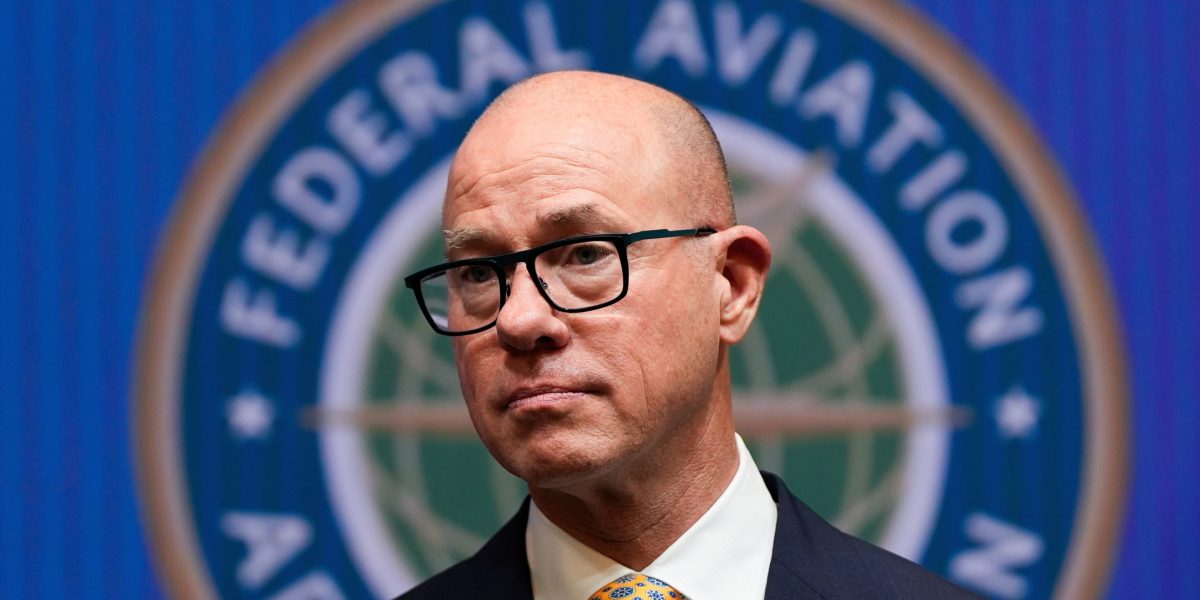
The head of the Federal Aviation Administration has not sold off his multimillion-dollar stake in the airline he led since 1999 despite a promise to do so as part of his ethics agreement, according to a Democratic senator.

In a letter to Bryan Bedford this week, Sen. Maria Cantwell said he vowed to sell all his shares in Republic Airways within 90 of his confirmation but 150 days have now passed. In Bedford’s financial disclosures, he estimated that his Republic stock was worth somewhere between $6 million and $30 million.

Republic completed a merger last month with another major regional airline, Mesa Air Group. Republic’s stock closed Thursday at $19.02, nearly double what it was before the deal was announced in April.

“It appears you continue to retain significant equity in this conflicting asset months past the deadline set to fully divest from Republic, which constitutes a clear violation of your ethics agreement. This is unacceptable and demands a full accounting,” Cantwell said in the letter.

Bedford declined a request for comment, and an FAA spokesperson said he plans to respond directly to Cantwell.

The agency has been in the spotlight since January, when an airliner collided with an Army helicopter over Washington, D.C., killing 67 people. The investigation has already highlighted shortcomings at the FAA, which failed to recognize an alarming number of close calls around Reagan National Airport in the years beforehand.

Then, in the spring, technical problems at the center that directs planes into New Jersey’s Newark Liberty International Airport highlighted a fragile and outdated system relied on by air traffic controllers.

And in the fall, a longstanding shortage of controllers led to thousands of flight cancellations and delays during the longest government shutdown ever as more controllers missed work while going without a paycheck.

Bedford has pledged to prioritize safety and upgrade the nation’s outdated air traffic control system. Congress approved $12.5 billion for that project, and last week the FAA picked the company that will oversee the work.

Join us at the Fortune Workplace Innovation Summit May 19–20, 2026, in Atlanta. The next era of workplace innovation is here—and the old playbook is being rewritten. At this exclusive, high-energy event, the world’s most innovative leaders will convene to explore how AI, humanity, and strategy converge to redefine, again, the future of work. Register now.


Source link

Continue Reading

Trending

Copyright © Miami Select.