Connect with us

Business

Target spotlights support for Black founders after DEI backlash

Published

on


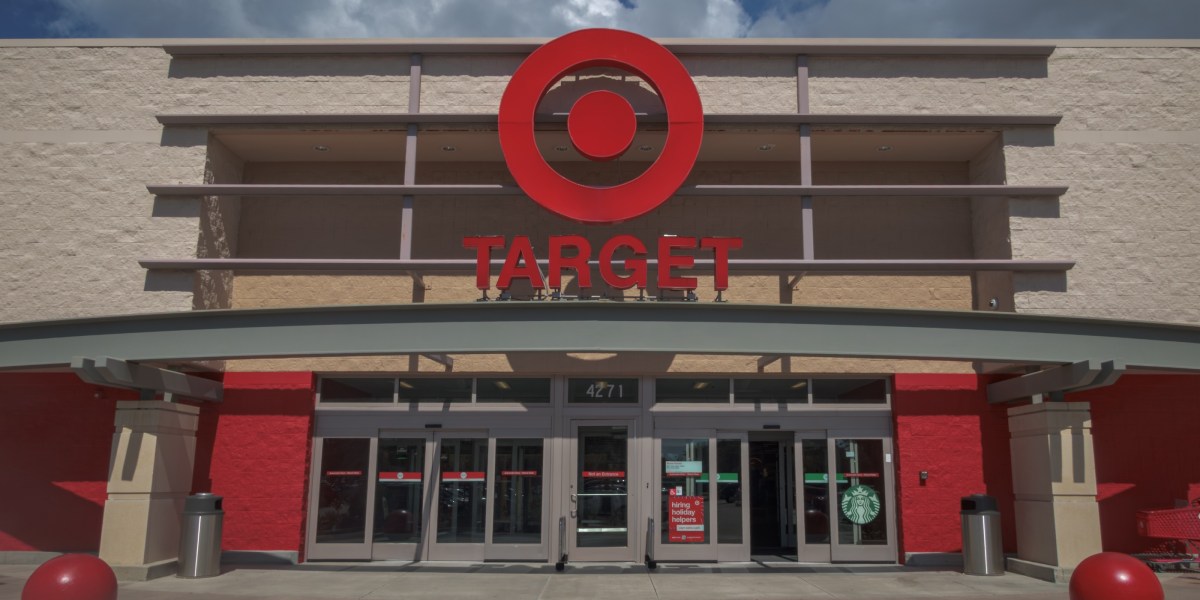
Target recently highlighted its ongoing partnership with a group dedicated to Black founders, following a turbulent year marked by backlash, boycotts, and leadership changes.

The retailer’s renewed spotlight on Black businesses could signal a recalibration—and perhaps an effort to mend relations with communities that once helped define its brand ethos.

Partnership in the spotlight

In an Oct. 20 statement, Target pointed to its tie-up with the Russell Innovation Center for Entrepreneurs (RICE), which supports Black small business founders with education, mentorship, and access to retail opportunities. Through RICE’s Retail Readiness Academy, Target has helped fund initiatives that train emerging entrepreneurs in retail strategy and business scaling. The company also extended support through HBCU programs under its “HBCU, Always” series—an ongoing effort to connect graduates with Target’s mentorship network.

The timing is significant, notes journalist Habiba Katsha in a blog post for People of Color in Tech. The announcement arrives just months after the resignation of CEO Brian Cornell, amid falling sales and customer traffic. Cornell’s leadership had been central to Target’s post-2020 DEI expansion, including its $2 billion Racial Equity Action and Change (REACH) initiative. Yet in January 2025, the company abruptly moved to end many of those DEI goals, citing a “realignment” of strategy and a focus on “business neutrality”.

DEI rollback and retail fallout

Target’s rollback of DEI initiatives set off a firestorm. As Fortune reported in early 2025, civil rights activists organized a nationwide boycott in protest of the company’s decision to scale back its DEI infrastructure, which had been celebrated in the wake of George Floyd’s murder. ​

The boycott came during Black History Month—symbolically amplifying the controversy—and led to dramatic declines in store traffic. Black business owners whose products were featured in Target stores voiced concern that the boycotts might inadvertently harm their own sales, prompting activists to urge consumers to buy directly from those brands online instead.

​Target sales have declined in 2025, and the stock has dropped 61% from its 2021 peak. The company also announced its first major layoffs in a decade and plans to cut 1,800 corporate jobs. While consumer boycotts have played a role, company leadership has also cited competition from Amazon and Walmart as factors in its decline.

Pressure for companies

Target’s retreat mirrors a larger pattern across corporate America. Fortune has chronicled the growing pressure on companies to either scale back or quietly rebrand DEI programs amid shifting political and cultural winds. By mid-2025, only a small fraction of Fortune 500 firms continued to publish detailed diversity reports, as others transitioned to euphemistic “inclusion” or “corporate responsibility” frameworks.

Earlier this year, analysts warned that companies dismantling DEI structures risk severe reputation damage and long-term brand erosion. “If the politics in society change, your values should not,” said consultant Ponce de Leon, underscoring the trust deficit companies face when perceived as abandoning equity commitments.

Other Fortune coverage emphasized the financial risks of retreating from DEI. Boycotts, talent attrition, and eroding customer loyalty—particularly among younger and more diverse demographics—are emerging as critical market liabilities.

Next chapter for Target

Target’s decision to spotlight RICE and reaffirm support for Black-owned business development is being read as both a reputational hedge and a cultural reset. It offers the company a way to demonstrate continued engagement with racial equity without reviving the formal DEI frameworks that drew political scrutiny.

Whether this recalibration can reverse Target’s declining sales remains uncertain. But in a corporate landscape where DEI language is declining 68% in filings from S&P 500 companies in 2025, Target’s move stands out as a strategic attempt to balance commerce, conscience, and survival in a politically polarized marketplace.

For this story, Fortune used generative AI to help with an initial draft. An editor verified the accuracy of the information before publishing. 


Source link

Continue Reading

Business

Trump administration waives part of a Biden-era fine against Southwest Air for canceled flights

Published

on


The U.S. Department of Transportation is waiving part of a fine assessed against Southwest Airlines after the company canceled thousands of flights during a winter storm in 2022.

Under a 2023 settlement reached by the Biden administration, Southwest agreed to a $140 million civil penalty. The government said at the time that the penalty was the largest it had ever imposed on an airline for violating consumer protection laws.

Most of the money went toward compensation for travelers. But Southwest agreed to pay $35 million to the U.S. Treasury. Southwest made a $12 million payment in 2024 and a second $12 million payment earlier this year. But the Transportation Department issued an order Friday waiving the final $11 million payment, which was due Jan. 31, 2026.

The department said Southwest should get credit for significantly improving its on-time performance and investing in network operations.

“DOT believes that this approach is in the public interest as it incentivizes airlines to invest in improving their operations and resiliency, which benefits consumers directly,” the department said in a statement. “This credit structure allows for the benefits of the airline’s investment to be realized by the public, rather than resulting in a government monetary penalty.”

The fine stemmed from a winter storm in December 2022 that paralyzed Southwest’s operations in Denver and Chicago and then snowballed when a crew-rescheduling system couldn’t keep up with the chaos. Ultimately the airline canceled 17,000 flights and stranded more than 2 million travelers.

The Biden administration determined that Southwest had violated the law by failing to help customers who were stranded in airports and hotels, leaving many of them to scramble for other flights. Many who called the airline’s overwhelmed customer service center got busy signals or were stuck on hold for hours.

Even before the settlement, the nation’s fourth-biggest airline by revenue said the meltdown cost it more than $1.1 billion in refunds and reimbursements, extra costs and lost ticket sales over several months.


Source link

Continue Reading

Business

Trump slams Democratic congressman as disloyal for not switching parties after pardon

Published

on


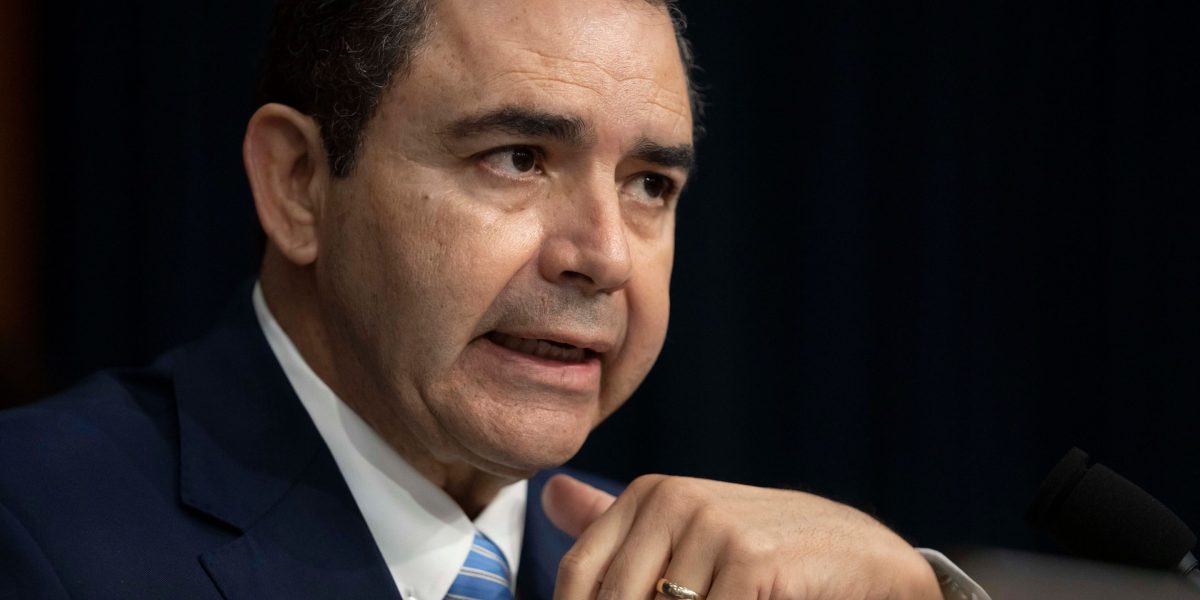
Trump blasted Cuellar for “Such a lack of LOYALTY,” suggesting the Republican president might have expected the clemency to bolster the GOP’s narrow House majority heading into the 2026 midterm elections.

Cuellar, in a television interview Sunday after Trump’s social media post, said he was a conservative Democrat willing to work with the administration “to see where we can find common ground.” The congressman said he had prayed for the president and the presidency at church that morning “because if the president succeeds, the country succeeds.”

Citing a fellow Texas politician, the late President Lyndon Johnson, Cuellar said he was an American, Texan and Democrat, in that order. “I think anybody that puts party before their country is doing a disservice to their country,” he told Fox News Channel’s “Sunday Morning Futures.”

Trump noted on his Truth Social platform that the Democratic President Joe Biden’s administration had brought the charges against Cuellar and that the congressman, by running once more as a Democrat, was continuing to work with “the same RADICAL LEFT” that wanted him and his wife in prison — “And probably still do!”

“Such a lack of LOYALTY, something that Texas Voters, and Henry’s daughters, will not like. Oh’ well, next time, no more Mr. Nice guy!” Trump said. Cuellar’s two daughters, Christina and Catherine, had sent Trump a letter in November asking that he pardon their parents.

Trump explained his pardon he announced Wednesday as a matter of stopping a “weaponized” prosecution. Cuellar was an outspoken critic of Biden’s immigration policy, a position that Trump saw as a key alignment with the lawmaker.

Cuellar said he has good relationships within his party. “I think the general Democrat Caucus and I, we get along. But they know that I’m an independent voice,” he said.

A party switch would have been an unexpected bonus for Republicans after the GOP-run Legislature redrew the state’s congressional districts this year at Trump’s behest. The Texas maneuver started a mid-decade gerrymandering scramble playing out across multiple states. Trump is trying to defend Republicans’ House majority and avoid a repeat of his first term, when Democrats dominated the House midterms and used a new majority to stymie the administration, launch investigations and twice impeach Trump.

Yet Cuellar’s South Texas district, which includes parts of metro San Antonio, was not one of the Democratic districts that Republicans changed substantially, and Cuellar believes he remains well-positioned to win reelection.

Federal authorities had charged Cuellar and his wife with accepting thousands of dollars in exchange for the congressman advancing the interests of an Azerbaijan-controlled energy company and a bank in Mexico. Cuellar was accused of agreeing to influence legislation favorable to Azerbaijan and deliver a pro-Azerbaijan speech on the floor of the U.S. House.

Cuellar has said he his wife were innocent. The couple’s trial had been set to begin in April.

In the Fox interview, Cuellar insisted that federal authorities tried to entrap him with “a sting operation to try to bribe me, and that failed.”

Cuellar still faces a House Ethics Committee investigation.


Source link

Continue Reading

Business

Jerome Powell faces a credibility issue as he tries to satisfy hawks and doves on a divided Fed

Published

on


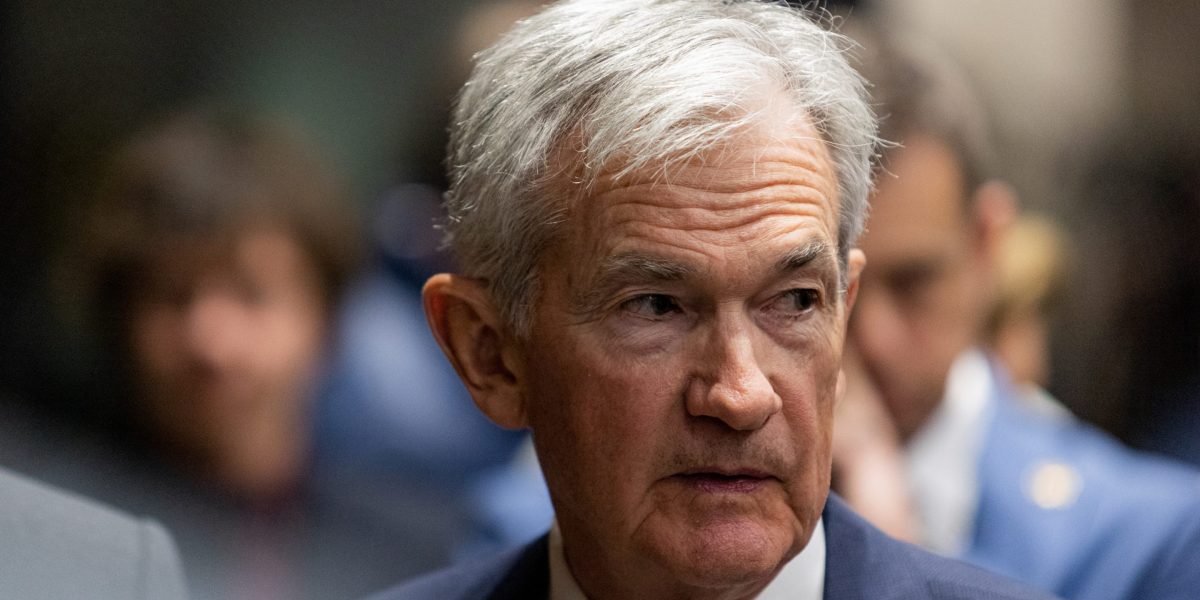
With the Federal Reserve split between increasingly hawkish and increasingly dovish policymakers, Chairman Jerome Powell is due to perform some serious log-rolling when the central bank meets this week.

Another rate cut is a near certainty after the Fed meeting ends on Wednesday, but the main question is what Powell will say about the prospects for more easing next month.

Wall Street expects a hawkish cut, meaning Powell is likely to avoid signaling a January cut to appease Fed hawks, after joining doves to lower rates this month.

“Chair Powell is facing the most divided committee in recent memory,” analysts at Bank of America said in a note on Friday. “Therefore, we think he will attempt to balance the expected rate cut with a hawkish stance at the press conference, just as he did in October.”

But at the same time, the Fed chief has also been insistent that policymakers are not on a pre-determined course and that rate moves depend on the data that come in.

As a result, BofA is doubtful that he can pull off a hawkish cut so easily, considering all the market-moving data that will come out between the two meetings, with some delayed due to the government shutdown.

The week after the Fed meeting, for example, jobs numbers for October and November, October retail sales, and the consumer price index for November will come out. And December readings for those indicators are likely to be released before the next meeting on Jan. 27-28.

“It will be difficult for Powell to send a credibly hawkish signal at the press conference,” analyst said.

BofA still sees a way for him to thread the needle. One option is for Powell to suggest that “significant further weakening” in the jobs data will be necessary to trigger a January cut.

Another option is to argue that 3.5%-3.75%—where benchmark rates would be if the Fed cuts again this week—isn’t restrictive after accounting for inflation, meaning the central bank is no longer weighing on the economy as much.

Similarly, JPMorgan chief U.S. economist Michael Feroli said he expects Powell to stress that after this week’s cut, rates will be close to neutral. So any additional easing would depend on meaningful deterioration in the labor market and not be predicated in risk management.

For now, Wall Street doesn’t expect a January cut, with 25% odds currently being priced in on CME Group’s FedWatch tool. But BofA thinks Powell will likely leave the door open for one.

“We wouldn’t be surprised if markets start pushing more aggressively for a Jan cut in the near term,” analysts predicted. “And the anticipation of this outcome might raise the probability of more dissents in Dec, since hawks might be inclined to dig their heels in instead of compromising.”


Source link

Continue Reading

Trending

Copyright © Miami Select.