
Politics
Tampa Bay nonprofits brace for high demand as the federal government shutdown threatens SNAP benefits

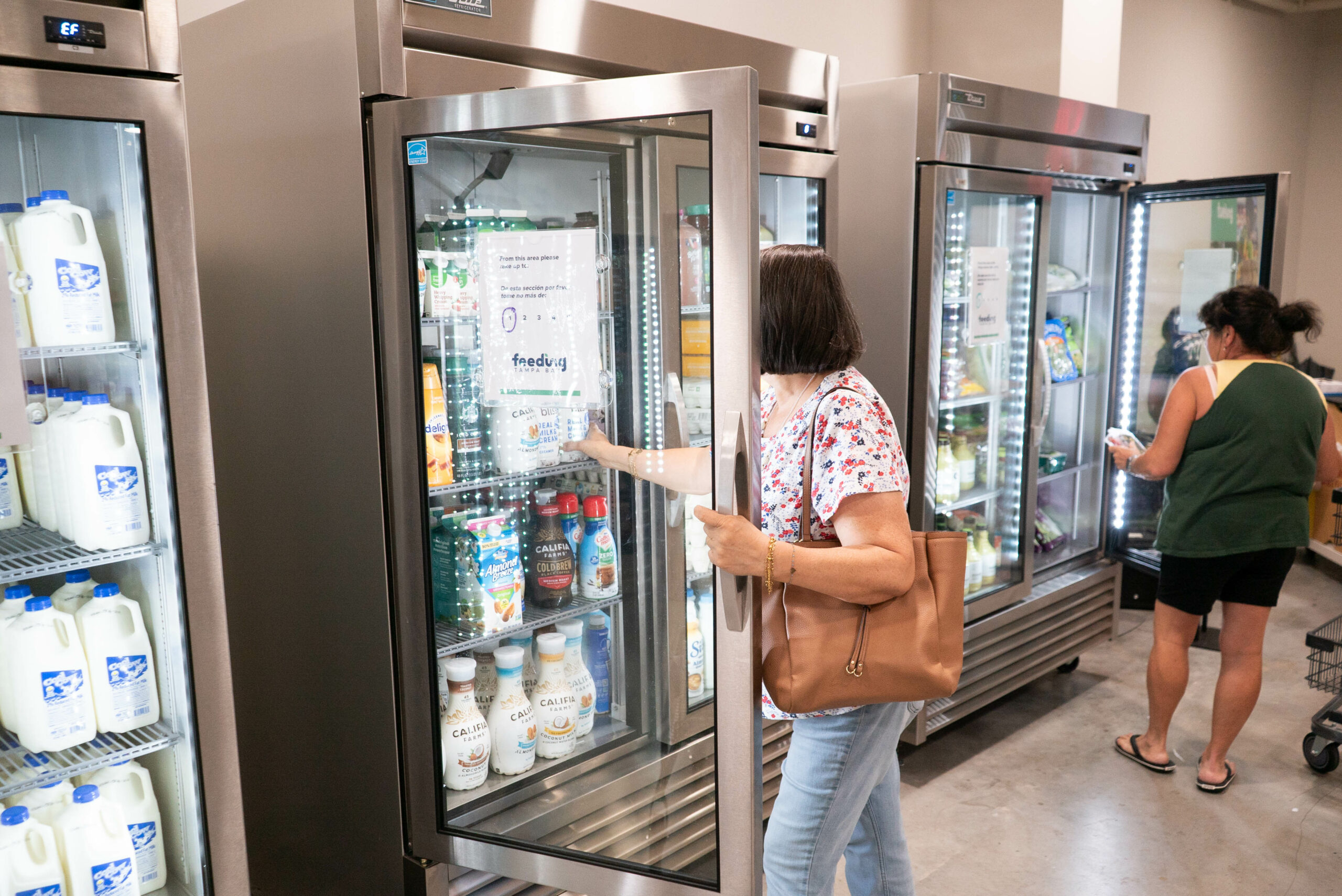
Tampa Bay nonprofits and charities anticipate a surge in demand for food assistance and other services in November as the ongoing federal government shutdown threatens Supplemental Nutrition Assistance Program (SNAP) benefits.
The government shutdown has been ongoing since Oct. 1, forcing many federal employees who have lost their pay to turn to local nonprofits for support. Those nonprofits now expect even higher demand for assistance once SNAP benefits lose federal funding starting in November.
Feeding Tampa Bay
“Over the last couple of years we’ve seen a 45% to 40% increase in need for services, so I don’t think we can tell the story of what’s happening today without understanding that already we have a lot of folks who are struggling economically,” Feeding Tampa Bay President and CEO Thomas Mantz said. “As we move into today we’ve been taking care of federal workers who have been unpaid for about three weeks, almost four weeks. We’ve built out a particular set of services and programs for that group of folks.”
Feeding Tampa Bay will increase support for federal employees and residents losing SNAP benefits in November as the government shutdown rolls on. The organization and more than 400 partners announced distributions across a number of counties Wednesday afternoon. Distributions will begin on Monday, Nov. 3, and continue as necessary.
Feeding Tampa Bay has provided specialized support to government employees who have lost income since the government shutdown began on Oct. 1. Mantz said the shutdown now threatens SNAP benefits for more than 250,000 households and between 350,000 to 500,000 people in the 10-county area the organization serves. Feeding Tampa Bay typically provides 1.9 million meals weekly, but expects the number to increase significantly with the loss of SNAP support.
“The issue at hand today is what happens if SNAP is not funded, which looks increasingly like that will be the case,” he said. “SNAP recipients are very unlikely, extremely unlikely, to have any other options available to them so they will likely come into our care. We’ll do our best to respond but that will be a challenge.”
Emergency response distributions are available throughout the organization’s service area. Those include locations at the Causeway Center in Hillsborough County at 3624 Causeway Blvd., Tampa, on Nov. 3; the Bartow Civic Center in Polk County at 2250 S. Floral Ave., Bartow, on Nov. 4; the Volunteer Way in Pasco County at 8061 Congress St., Port Richey, on Nov. 4; the Hands for Homeless at Highlands County at 106 N. Butler Ave., Avon Park, on Nov. 5; and BayCare: Drew Street in Pinellas County at 2985 Drew St., Clearwater, on Nov. 6; among numerous other locations. A comprehensive list of emergency response distributions is available at feedingtampabay.org/snaprelief.
Visit feedingtampaybay.org/governmentshutdown for more information.
Metropolitan Ministries

Metropolitan Ministries expects a surge in demand if SNAP benefits are paused in November and federal workers continue to lose pay as a result of the federal government shutdown, estimating that demand for support could quadruple to 4,000 families per month.
The organization has doubled access to food pantry boxes for government workers, has increased the number of community meal sites throughout Tampa Bay to 52, and has expanded utility and rent assistance programs. Metro also offers services through its Counseling and Resiliency Center, including six free counseling sessions to federal workers as they navigate circumstances brought on by the shutdown.
Those in need can visit the Metro Market once per month. It offers fresh produce, bread, meat, pantry staples and clothing. Locations include Downtown Tampa at 2301 N. Tampa St.; the Prosperity Center at Thaddeus M. Bullard Academy, which is open on the first and third Tuesday and Thursday of the month, at 2011 E. Sligh Ave., Tampa; and locations in West and East Pasco at 3216 U.S. 19, Holiday; and 13703 17th St., Dade City.
Hot meal sites include locations like the Faith Café at 1225 Clearview Ave., Tampa; the First Baptist Church of College Hill at 3834 N. 29th St., Tampa; Holy Trinity Presbyterian at 350 S. Hyde Park Ave., Tampa; as well as the Trinity Cafe III at 6330 54th Ave. N. in St. Petersburg; and the Unitarian Universalist church at 100 Mirror Lake Dr. N. in St. Petersburg. Visit www.metromin.org/expanded-services for a full list of hot meal sites and other resources.
St. Pete Free Clinic
The St. Pete Free Clinic operates one of Pinellas County’s largest food pantries. Although the clinic is not a shutdown-specific program, its We Help Fresh Pantry is a critical resource for those who may lose SNAP benefits in Pinellas.
The indoor market offers fresh produce, meat and pantry staples Monday through Thursday to anyone in need. It has expanded hours on Thursday evenings to accommodate working families.
The indoor market is located at 863 3rd Ave. N., St. Petersburg. The organization also offers drive-through pantry services on Mondays and Wednesdays at 22nd St. S. and 2198 15th Ave. S. in St. Petersburg. Only Pinellas County residents are eligible for service, and individuals can visit the pantry twice per month. Visit thespfc.org for more information.
Gigglewaters
Gigglewaters restaurant will provide free lunch to children in need through its Giggles for Good charity program starting Nov. 1. Patrons can stop at the restaurant and ask for a “GiggleBag” for every child present until SNAP benefits are restored. No purchase is necessary.
“It’s just a simple, bagged to-go lunch, nothing fancy, but it’s a meal if your children are hungry,” the restaurant announced on Facebook.
Check back for more
Florida Politics will continue to monitor local non-profits, businesses and other organizations offering assistance and update this list as we learn more.

Ma de La Luz Mejia Rosas died last month after the 70-year-old suffered a ruptured brain aneurysm on Universal’s Revenge of the Mummy ride, according to a newly released Medical Examiner’s report.
Rosas became unresponsive on Nov. 25 on the indoor roller coaster then passed away two weeks later Dec. 9 at Orlando Regional Medical Center, records showed.
“Mrs. Rosas went to the park to enjoy time with her children and grandchildren, expecting a safe and joyful experience,” lawyer Ben Crump, who is representing her family, said in a statement.
“Instead, her family is now left grieving and searching for answers. They deserve a full understanding of what happened before, during, and after this ride. We intend to thoroughly investigate the circumstances surrounding this tragedy and ensure her family’s voice is heard.”
Crump said he is asking for information about the ride’s operations, safety protocols, maintenance history and data on other incidents.
Universal did not immediately respond to a request for comment Tuesday.
Rosas’ death was publicly disclosed on a statewide theme park injury report last week.
Florida’s major theme parks are required to self-disclose all visitors’ injuries on rides if the guests were hospitalized for at least 24 hours. The report is publicly released by the Florida Department of Agriculture and Consumer Services, though it contains limited information on what went wrong and about visitors’ condition.
The theme park injury report showed 16 people had been hurt on Revenge of the Mummy since it opened in 2004. Most recently, a 32-year-old woman felt “neck pain/motion sickness” last year. A 60-year-old woman had a seizure in 2017. Other guests reported chest pain, light headedness, feeling nauseous or passing out.
Crump was previously representing the family of a man with disabilities who died in September after riding a roller coaster at Universal’s Epic Universe theme park.

The family and Universal settled out of court in a confidential settlement.
Millions of people visit Orlando’s theme parks every year, and a handful of tragedies occur.
Earlier this month, a wrongful death lawsuit was filed against The Boathouse restaurant after a man died from choking on a steak at Disney Springs last year.
Politics
Stacy Hahn files to challenge GOP incumbent Donna Cameron Cepeda in Hillsborough Commission race

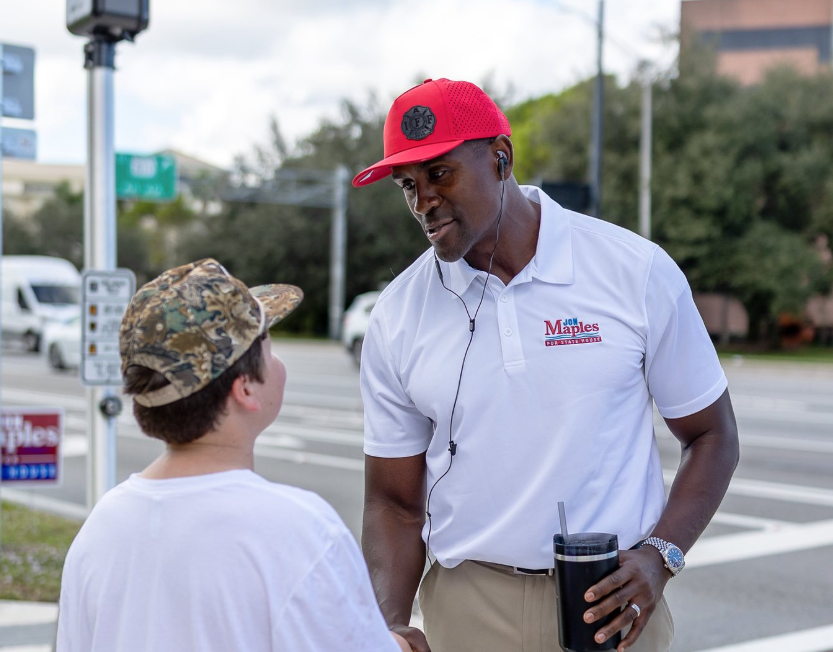
Republican Hillsborough County School Board member Stacy Hahn has filed to run for the Hillsborough County Commission, challenging another Republican in a gambit for the countywide District 5 seat.
Hahn, who has served on the Hillsborough County School Board since 2018, announced her candidacy by citing her experience with the School District as evidence of her fiscal responsibility and belief in limited government.
The countywide District 5 seat is currently held by incumbent Republican Commissioner Donna Cameron Cepeda, who won election in 2022 as part of a broader GOP sweep that flipped control of the Hillsborough County Commission.
The race is already drawing significant attention, with well-funded Democratic challenger Neil Manimala also vying to claim the seat. Manimala has a significant lead in funds raised, with his campaign already reporting more than $121,000 compared to $6,000 raised by Cepeda, according to Supervisor of Elections records. Hahn has not yet been required to submit a funding report.
Hahn described herself as a conservative who supports limited government and fiscal discipline, arguing that government is most effective when it empowers individuals, families and businesses rather than expanding bureaucracy.
In a statement, Hahn said her time on the School Board gave her a firsthand view of how county-level decisions affect classrooms, neighborhoods and the local economy, touching on issues such as public safety, infrastructure, housing affordability and budgeting.
“As a School Board member, I worked closely with families, educators, and community partners, and I saw firsthand how county decisions impact our classrooms, neighborhoods, and local economy — from public safety and infrastructure to housing affordability and responsible budgeting,” Hahn said.
“Hillsborough County is a unique and beautiful place with tremendous potential. To unlock that potential, we need common-sense leadership at the County Center — leaders who are focused on improving quality of life for every neighborhood, supporting local businesses, and being responsible stewards of taxpayer dollars.”
First elected to the School Board in 2018, Hahn has focused her tenure on financial transparency, literacy initiatives, workforce and career pathways, and early childhood education. She has pointed to her oversight of the School District’s roughly $4.4 billion budget and management of the county’s largest employer as preparation for the demands of county government, saying that experience helped her balance budgets, manage growth and deliver results.
Hahn has also been involved in a range of community and nonprofit efforts, including literacy- and STEM-focused programs, according to her campaign materials. She lives in Tampa with her husband, Jeff, their three children, Ethan, Jackson and Aidan, and their dog Rocky.

Hahn said she is “excited about the work ahead and the opportunity to serve.”


Bartolomeo Rongone to leave Bottega Veneta for Moncler

Woman who died after riding Universal’s Revenge of the Mummy had ruptured aneurysm

At Davos, AI hype gives way to focus on ROI
-

 Politics8 years ago
Congress rolls out ‘Better Deal,’ new economic agenda
-
Entertainment9 years ago
New Season 8 Walking Dead trailer flashes forward in time
-
Politics9 years ago
Poll: Virginia governor’s race in dead heat
-
Politics8 years ago
Illinois’ financial crisis could bring the state to a halt
-
Entertainment8 years ago
The final 6 ‘Game of Thrones’ episodes might feel like a full season
-
Entertainment9 years ago
Meet Superman’s grandfather in new trailer for Krypton
-
Business9 years ago
6 Stunning new co-working spaces around the globe
-
Tech8 years ago
Hulu hires Google marketing veteran Kelly Campbell as CMO