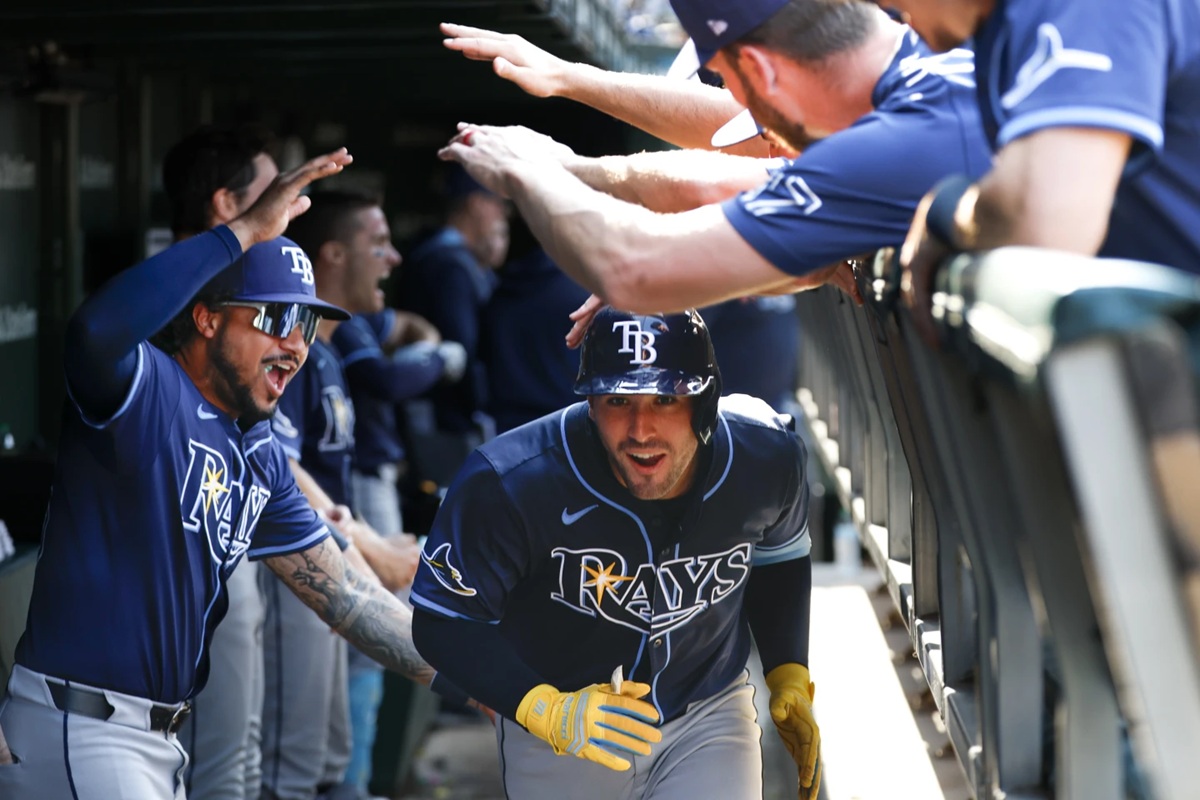
Tampa Bay Rays pinch hiter Nick Fortes rounds the bases after hitting a solo home run against the Chicago Cubs during the ninth inning of a baseball game Saturday, Sept. 13, 2025, in Chicago. (AP Photo/Kamil Krzaczynski)
The Tampa Bay Rays’ new ownership group — led by Jeffrey Vinik, Dan Doyle Jr., and supported by MLB leadership under Commissioner Rob Manfred — has made it clear that the franchise’s future depends on securing 100 acres or more for a transformative stadium village. This isn’t just about building a new ballpark. It’s about creating a destination, a year‑round economic engine modeled after the wildly successful Battery Atlanta, home of the Atlanta Braves.
The Rays’ leadership has repeatedly emphasized that the franchise must evolve beyond the traditional stadium model. The team wants a multi‑use district that blends baseball with retail, restaurants, residential towers, hotels, office space, greenways, and entertainment venues. This is the formula that has redefined the Braves’ business model and reshaped expectations across professional sports.
Battery Atlanta didn’t just change how fans experience baseball — it changed how teams think about real estate. The Braves now generate revenue 365 days a year, not just during home games. Their district includes corporate headquarters, luxury apartments, boutique hotels, and a thriving restaurant scene. It is a self‑sustaining ecosystem, and the Rays want the same opportunity.
To replicate that success, the Rays need land — and lots of it. A downtown parcel simply cannot accommodate the scale of development required to build a modern sports village. The team’s vision requires space to grow, space to build, and space to create a district that can compete with the best in professional sports.
Why Modern Stadium Villages Require Massive Acreage
One of the biggest drivers behind the 100‑acre requirement is parking and transportation infrastructure. While many fans imagine stadiums as compact structures, the reality is that the surrounding infrastructure often consumes far more land than the stadium itself.
A standard parking ratio for major sports venues is one space per three to four attendees. For a 40,000‑seat stadium, that translates to at least 25,000 parking spaces. According to industry planning standards, that alone can require nearly 100 acres, depending on layout, access roads, and traffic‑flow design.
And that’s before considering:
Pedestrian plazas
Ride‑share zones
Transit hubs
Team operations facilities
Loading docks and service roads
Emergency access routes
When you add mixed‑use development — retail, restaurants, hotels, office towers, and residential units — the acreage requirement grows even larger. This is why teams across MLB and the NFL are moving away from tight downtown footprints and toward suburban or edge‑city developments where land is plentiful and development can be controlled.
Publications like USA Today, Sports Business Journal, and the Atlanta Journal‑Constitution have documented this shift extensively. Teams want control, flexibility, and long‑term revenue streams that downtown parcels rarely provide.
The National Trend: Stadium Villages Replace Downtown Ballparks
Across the country, professional sports franchises are embracing the stadium‑village model:
The Atlanta Braves built Battery Atlanta on more than 80 acres, transforming the franchise’s financial outlook.
The Texas Rangers developed a massive entertainment district around Globe Life Field.
The Chicago Bears are pursuing a 326‑acre redevelopment in Arlington Heights.
The Kansas City Chiefs have proposed a large‑scale entertainment district tied to their stadium plans.
The Tennessee Titans are building a new stadium surrounded by a multi‑use riverfront district.
This is the new playbook: teams want to be developers, not just tenants.
Downtown stadiums — once the gold standard — are increasingly seen as limiting. They lack parking, lack expansion room, and often lack the zoning flexibility needed for large‑scale mixed‑use development. Teams want to build mini‑cities, not just ballparks.
The Rays’ leadership understands this. They know that to compete in the modern sports landscape, they must create a district that attracts fans, residents, businesses, and tourists year‑round.
Why the Rays Can’t Settle for Less Than 100 Acres
The Rays’ current situation in St. Petersburg has long been criticized for its isolation and lack of surrounding development. The team’s new ownership wants to avoid repeating that mistake. They want a site that can support:
A state‑of‑the‑art ballpark
A walkable entertainment district
Residential towers
Corporate office space
Hotels and hospitality venues
Green space and public plazas
Transit and parking infrastructure
This is not possible on a cramped downtown parcel.
A 100‑acre site allows the Rays to build a destination, not just a stadium. It allows them to create a district that can host concerts, festivals, corporate events, and community gatherings. It allows them to generate revenue from real estate, not just baseball.
And most importantly, it allows them to build a franchise that can thrive for decades.
The Economics Behind the 100‑Acre Requirement
Sports economists and business analysts have noted that stadium villages are not just real estate projects — they are economic engines. They generate:
Sales tax revenue
Property tax revenue
Tourism spending
Job creation
Corporate relocation opportunities
Battery Atlanta alone has generated hundreds of millions in economic impact and has become a model studied by teams across the country.
The Rays want to replicate that success. They want to build a district that attracts businesses, residents, and visitors. They want to create a place where people live, work, and play — not just watch baseball.
To do that, they need land. And 100 acres is the minimum required to build a true stadium village.
Conclusion: The Future of the Rays Depends on Land
The Tampa Bay Rays are at a crossroads. Their new ownership understands that the future of the franchise depends on more than a new ballpark — it depends on building a 100‑acre stadium village that can transform the team’s economic future.
The national trend is clear: downtown stadiums are out, and mixed‑use sports districts are in. The Rays want to join the ranks of franchises that have embraced this model and reaped the rewards.
To do that, they need space. They need vision. And they need a site that can support the next generation of sports development.
The Rays aren’t just looking for land — they’re looking for a future.
Gayle Benson has made her position unmistakably clear. The owner of the NFL’s New Orleans Saints and the NBA’s New Orleans Pelicans has no intention of selling either franchise. At 78 years old, and approaching her 79th birthday, Benson dismissed persistent rumors with blunt language.
“The teams are not for sale,” Benson said. She emphasized the point repeatedly and expressed frustration with constant inquiries. Benson said she remains healthy and active, and sees no reason to entertain discussions about ownership changes. She also addressed relocation rumors, telling fans and officials to calm down. According to Benson, both teams remain firmly rooted in New Orleans.
A Long-Term Plan for the Community
Benson did outline one future scenario. When she eventually passes, both franchises will be sold to the highest bidder. She stated clearly that 100 percent of those proceeds will be used to benefit the New Orleans community. That commitment reinforces her long-standing civic approach, even as speculation continues around the future of professional sports in the city.
For now, however, Benson remains in full control. Her focus is not on selling. It is on infrastructure, particularly for basketball.
Saints Stable, Pelicans Arena Not
The Saints’ home situation is secure. The State of Louisiana has renovated the Superdome multiple times, with the most recent upgrades just completed. The building remains one of the NFL’s signature venues.
The Pelicans’ situation is far more complicated. The team plays in a 26-year-old, state-owned arena that Benson believes no longer meets NBA standards. While the building survived Hurricane Katrina in good condition and underwent renovations in 2014, those improvements did not solve deeper structural issues.
Structural and Financial Challenges
A state assessment identified numerous high and medium priority concerns. The arena needs new seating and upgraded lighting. It also lacks a modern center-hung scoreboard and contemporary video screens. Concession areas require significant upgrades as well.
There are also design limitations. The lower bowl configuration restricts premium seating revenue. The overall footprint of the building limits modernization options. Those constraints hurt a franchise operating in one of the league’s smallest markets.
A Market Reality Problem
The Pelicans face challenges beyond the building. New Orleans is a small television market with limited corporate support. Ownership resources are not vast. That makes venue quality even more critical to financial stability.
Historically, Louisiana has sometimes paid franchise ownership to ensure the team stayed in the city. That history underscores the fragile economics involved. Benson needs a viable, modern basketball arena to keep the Pelicans competitive and sustainable.
The Bottom Line
Gayle Benson is not selling. The Saints are secure. The Pelicans, however, need a solution. Until a new or significantly upgraded arena becomes reality, pressure will remain on both ownership and the state to act.
Let ’em Run has two sows this weekend on Sports Talk Florida
Let ’em Run Happy Hour Sets the Tone for the Weekend
Friday afternoons are for racing talk, strong opinions, and getting positioned for the weekend. That is exactly what Let ’em Run presents Friday Happy Hour delivers. The show continues to grow as a go-to spot for horseplayers who want insight without the fluff.
The focus stays on upcoming cards, betting angles, and how to approach the weekend bankroll. The conversation is relaxed, but the analysis stays sharp. This is not about chasing every race. It is about finding value and understanding where the opportunities really are.
Smart Racing Talk Without the Noise
Let ’em Run Happy Hour leans into real handicapping conversations. The show breaks down form cycles, pace scenarios, and trainer intent. It avoids overcomplicating things. The goal is clarity, not confusion.
Viewers get a feel for how seasoned bettors think. That includes when to press and when to pass. It also includes understanding why certain races matter more than others. Fridays are about preparation, and the show reflects that mindset.
The atmosphere stays loose, but the information is serious. That balance is what keeps people coming back.
Saturday Brings More Let ’em Run Coverage
The conversation does not stop on Friday. Fans can also catch John Kostin and Fred York on Saturday at 12:30 p.m. Their show continues the Let ’em Run approach with a deeper dive into the day’s racing action.
Kostin and York bring experience and perspective. They focus on race structure, wagering strategy, and how to attack key sequences. The show is designed to help bettors make informed decisions before post time.
Saturday’s show pairs perfectly with Friday Happy Hour. One sets the table. The other helps you eat.
Building Momentum Into the Racing Weekend
Let ’em Run continues to build a community around thoughtful racing content. The shows respect the audience’s intelligence. They also respect the difficulty of the game.
Friday Happy Hour starts the weekend with confidence. Saturday’s show sharpens the final approach. Together, they offer a complete setup for players who want to be ready when the gates open.
If you are looking for racing talk that values preparation, discipline, and smart wagering, Let ’em Run delivers exactly that.
You can watch the Friday show live here on Sports Talk Florida at 3 p.m EST.
Mesa politicians want to be a stadium-village at the site of the old Fiesta Mall
Mesa Joins the Stadium-Village Trend
The calendar year 2026 is picking up right where 2025 ended. Another city is going to create an entertainment district with the hope of building a stadium-village. The goal is to attract a Major League Soccer franchise, a National Women’s Soccer League team, or both. The latest municipality is Mesa, Arizona, which is part of the Phoenix metropolitan area. Mesa is the spring training home of the Major League Baseball Chicago Cubs franchise and John Fisher’s Athletics franchise. Mesa also hosts an Arizona Fall League development team.
The Palo District Proposal
The Mesa City Council has approved the formation of the Palo District at a location where an abandoned mall is located. The district will feature restaurants, retail, lodging, offices, residences, and a “multi-use stadium that could include soccer.” The proposal promises to be an economic catalyst bringing jobs to the area. That is the standard line about these types of proposals.
“The Phoenix metropolitan area is a great place for it, and we’re able and willing to court them,” Mayor Mark Freeman said. “MLS, women’s soccer and there could be other sports venues as well.”
Quick Approval, Bigger Challenges
It took the Mesa city council about 12 minutes to approve the creation of the district. No Mesa residents attended the meeting. That was the easy part. Now comes the real work. Finding money to build the stadium-village, finding an owner, and then finding a league that wants to put a soccer team in Mesa.
There is no indication that Major League Soccer wants to expand in the near future. The league has been keeping an eye on developments in Indianapolis, where elected officials also want to build a stadium-village. The NWSL probably would have an interest in placing a team in the Phoenix area if a stadium becomes available.
Politicians Bet on Stadium-Villages
Politicians are falling in love with soccer-stadium villages. This is despite the fact there is no evidence they are an economic generator. The concept remains appealing as a way to bring sports, development, and jobs to cities. Mesa now joins the growing list of municipalities attempting to leverage this strategy for professional soccer.