Connect with us

Politics

Taking a dip Labor Day weekend? Swimmers face fecal contamination at beaches along US coastline
Published

on


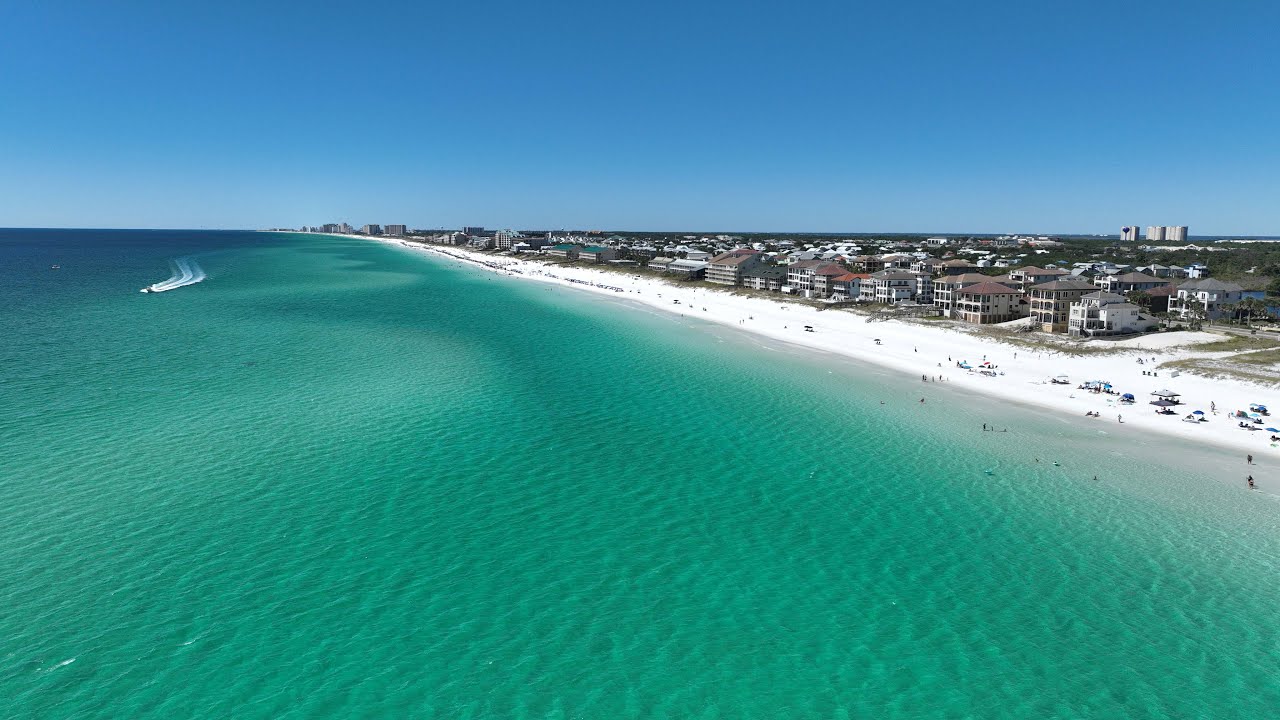
Thousands of Americans will head to beaches for one last summer splash this Labor Day weekend, but taking a dip might be out of the question: Many of the beaches will caution against swimming because of unsafe levels of fecal contamination.

Beaches from Crystal River, Florida, to Ogunquit, Maine, have been under advisories warning about water quality this week because of elevated levels of bacteria associated with fecal waste. The advisories typically discourage beachgoers from going in the water because the bacteria can cause gastrointestinal illness, rashes and nausea.

There have been closures this week at some of the country’s most popular beach destinations, including Keyes Memorial Beach in the Cape Cod village of Hyannis in Barnstable, Massachusetts; Benjamin’s Beach on Long Island in Bay Shore, New York; and a portion of the Imperial Beach shoreline near San Diego. Even on the pristine, white sand beaches of Hawaii, the Hawaii State Department of Health is warning of a high bacteria count at Kahaluu Beach Park on the Big Island.

It’s a longstanding and widespread problem. Nearly two-thirds of beaches tested nationwide in 2024 experienced at least one day in which indicators of fecal contamination reached potentially unsafe levels, conservation group Environment America said in a report issued this summer.

The group reviewed beaches on the coasts and Great Lakes and found that 84% of Gulf Coast beaches exceeded the standard at least once. The number was 79% for West Coast beaches, 54% for East Coast beaches and 71% for Great Lakes beaches.

The report also said more than 450 beaches were potentially unsafe for swimming on at least 25 percent of the days tested. A key reason is outdated water and sewer systems that allows contamination from sewage to reach the places where people swim, said John Rumpler, clean water director and senior attorney with Environment America.

“These beaches are a treasure for families across New England and across the country. They are a shared resource,” said Rumpler, who is based in Boston. “We need to make the investment to make sure that literally our own human waste doesn’t wind up in the places where we are swimming.”

Other factors have also played a role in contaminating beaches, including increasingly severe weather that overwhelms sewage systems, and suburban sprawl that paves over natural areas and reduces the ecosystem’s ability to absorb stormwater, Rumpler said.

But many people plan to jump in the ocean anyway. Despite a two-day warning of elevated fecal indicator bacteria last month at Rehoboth Beach, Delaware, beachgoer Yaromyr Oryshkevych was not concerned.

“I really don’t expect to be in any kind of danger of fecal contamination,” said Oryshkevych, a retired dentist. He said he didn’t think Rehoboth was close enough to notable pollution to be concerned, and he expected the ocean’s natural currents to take care of any problems with contamination in the area.

Dana West, a federal worker visiting Rehoboth Beach, recalled an instance earlier this year where a dozen members of his vacationing party experienced gastrointestinal issues. The symptoms occurred after they went on a snorkeling excursion, an activity that increases the likelihood of swallowing seawater, off the coast of Isla Mujeres, Mexico.

It was an unpleasant experience, but he doesn’t expect a repeat this weekend in Delaware.

“But generally, I have no concerns about the level of fecal and bacterial matter,” said West while admiring Rehoboth’s shore. ”I assume the local authorities will tell us if there are higher levels than normal.”

Despite West’s confidence, some beaches in the area of Rehoboth, including nearby Rehoboth Bay and Dewey Beach bayside, were indeed under water advisories this week. Such advisories are not always posted on public signs.

Environment America assessed beach safety in its report by examining whether fecal bacteria levels exceeded standards set by the U.S. Environmental Protection Agency that trigger an alert to avoid the water. Fecal bacteria at those levels can cause illness in 32 out of every 1,000 swimmers.

In North Carolina, five beaches were under advisories in late August because of elevated levels of fecal bacteria. The beaches are open, but swimmers are advised that going in the water could be risky, said Erin Bryan-Millush, environmental program supervisor with the North Carolina Department of Environmental Quality.

Hurricane Erin caused extensive erosion and storm surge in some coastal areas, according to the Department of Environmental Quality. Heavy rain events this summer also exacerbated the contamination problem in some areas, Bryan-Millush said.

“Those storm drains carry everything,” Bryan-Millush said. “It could be really bad for someone who is immune compromised.”

___

Republished with permission of the Associated Press.


Post Views: 0


Source link

Continue Reading

Politics

Darren Soto refuses to call for Sheila Cherfilus-McCormick’s resignation

Published

on


U.S. Rep. Darren Soto is refusing to say whether indicted U.S. Rep. Sheila Cherfilus-McCormick should vacate her seat in Congress.

Video obtained by Florida Politics shows Soto being confronted on Capitol Hill. “Will you call on Sheila Cherfilus-McCormick to resign?” the videographer asks.

Initially, Soto remains silent, but the questioner suggests that silence shows “support” for someone who “stole $5 million in health care funds for the most vulnerable.” The Kissimmee Democrat then responds but continues walking away from the camera. He then conflates a censure motion against U.S. Rep. Cory Mills, a New Smyrna Beach Republican, and Cherfilus-McCormick, a Miramar Democrat.

“Both Mills and Cherfilus-McCormick, both will have due process. Thank you,” Soto said.

Both Cherfilus-McCormick and Mills remain the subjects of ongoing House Ethics Committee investigations. But only Cherfilus-McCormick now faces criminal prosecution for alleged financial crimes.

A grand jury in November indicted Cherfilus-McCormick on charges she stole $5 million in disaster relief funds to finance her 2021 congressional campaign.

The indictment alleges that Cherfilus-McCormick and her brother, Edwin Cherfilus, secured funding intended for a COVID vaccine distribution program, but when overpayments were made, she routed the spending through several accounts that later donated the funds as campaign contributions.

Minority Leader Hakeem Jeffries said pursuant to House rules that Cherfilus-McCormick had to give up her ranking status on the Subcommittee on the Middle East and North Africa. Local Democrats have started to issue calls for the Miramar Democrat’s resignation. But there have been no calls from Democratic members of Congress.

U.S. Rep. Greg Steube, a Sarasota Republican, has said if she won’t resign, he will move for her expulsion.

The National Republican Congressional Committee (NRCC), which lists Soto as a target in 2026, slammed Soto’s unwillingness to criticize a fellow Democrat.

“Darren Soto’s refusal to call on Sheila Cherfilus-McCormick to resign is unacceptable,” said NRCC spokesperson Maureen O’Toole. “Floridians deserve a representative who fights for them, not his taxpayer-thieving colleague.”


Source link

Continue Reading

Politics

Lawmakers propose tough penalties for adults who involve minors in animal cruelty

Published

on


Bipartisan legislation filed this week would expand Florida’s criminal penalties for adults who involve children in acts of animal cruelty or expose them to violent offenses against animals.

Democratic Sen. Kristen Arrington and Republican Rep. Linda Chaney filed the legislation (SB 676, HB 559). The bills would add new crimes to state law that make it a third-degree felony for an adult to entice a minor to commit animal cruelty, or for an adult to commit animal cruelty in the presence of a minor. 

The lawmakers cite studies that show children who witness acts of animal cruelty experience an increase in mental health issues, along with an increased likelihood of engaging in violence themselves. By addressing the cycle of abuse early on, they say children can be shielded from additional trauma caused by witnessing violence.

The proposal would also create offenses for adults who involve minors in animal fighting or baiting, and for sexual activities with animals, while also ranking the new crimes on the state’s offense severity chart and increasing penalties for certain felony offenses. If approved, the act would take effect Oct. 1, 2026.

Arrington, of Kissimmee, said the goal is to strengthen protections for both children and animals.

“Exposing children to acts of animal cruelty not only harms animals but has a profound negative impact on children’s emotional development and wellbeing” Arrington said in a statement. “This bill is meant to protect both our youth and our animals, ensuring that those who would involve minors in such heinous acts face strict consequences.”

Chaney, of St. Pete Beach, said animal crimes committed in front of children are closely linked with other forms of family violence.

“Committing animal crimes in front of minors is a serious issue that often co-occurs with other forms of family violence and can have severe, long-term traumatic effects on the children involved” Chaney said. “We must do all we can to break generational cycles of violence. This bill can do that.”

Democratic Rep. Johanna López of Orlando signed on as a prime co-sponsor.

“I’m honored to join Senator Arrington and Representative Chaney in advancing reforms that protect the safety and mental health of our minors and ensure that those who abuse our children or our pets are held accountable,” López said.


Source link

Continue Reading

Politics

Florida delegation warns Donald Trump against new offshore drilling plan

Published

on


U.S. Rep. Vern Buchanan and the full Florida congressional delegation are urging President Donald Trump to keep offshore drilling away from the state’s coastlines, pressing him to maintain a moratorium he put in place in 2020.

Buchanan, co-Chair of the 30-member bipartisan delegation, joined U.S. Sen. Rick Scott and Sen. Ashley Moody in leading a letter asking Trump to uphold his executive order extending a ban on oil and gas leasing off Florida’s Gulf and east coasts through 2032.

“President Trump made the right call in 2020 when he protected Florida from offshore drilling, and we’re asking him to keep those safeguards in place,” Buchanan said. “Florida’s coastline is essential to our tourism-based economy, environment and military readiness. A single mistake offshore could cost our state billions of dollars. We cannot afford to lose even an inch of these critical protections.”

The Florida lawmakers sent the letter in response to a program proposed by the Department of the Interior’s Bureau of Ocean Energy Management, which would open part of the Eastern Gulf of America to new oil and gas drilling. The area overlaps with waters explicitly protected under Trump’s executive order.

In the letter, the delegation expressed strong opposition to any attempts to expand offshore oil and gas drilling off Florida’s coasts to protect “the incredible value Florida’s pristine coasts have to our state’s economy, environment, and military community.” They added that Trump’s 2020 action received overwhelming and bipartisan support.

Lawmakers also warn that the newly proposed leasing area falls inside the Gulf Test Range, a large military training zone used for advanced air and weapons systems testing. They describe the range as a critical national security asset.

“The Gulf Test Range remains an integral part of Department of War training to ensure mission readiness and is supported by multiple military bases in Florida’s Panhandle,” the lawmakers wrote. “Collectively, these bases employ tens of thousands of military and civilian personnel and are of critical importance to national security.”

The area is the largest multidomain military training and testing complex in the country, and the lawmakers stated that “protecting this range from encroachment, including oil exploration, is essential.” The letter says more than 50,000 jobs in the Panhandle depend directly on the military facilities tied to the range.

The delegation cites Eglin Air Force Base as a key example, noting it “supports 20,000 personnel, provides the country with $11 billion in economic impact every year, and currently boasts 123,000 square miles of water range, which would all have to be reduced in an instance of an encroachment of the Gulf Test Range.”

The delegation also points to the economic weight of Florida’s tourism industry, and its vulnerability to fallout from potential oil spills, arguing that the risks outweigh any short-term gains.

“Florida’s beaches alone generate more than $127.7 billion per year in tourism spending and support over 2.1 million tourism-related jobs,” lawmakers wrote. “Unfortunately, all these resources suffered devastating harm during the Deepwater Horizon oil spill of 2010. That disaster wiped billions of dollars from Florida’s industries and caused irreparable damage to our environment and coastal communities.”

“For these reasons, we urge you to uphold your existing moratorium and keep Florida’s coasts off the table for oil and gas leasing,” they added. “Florida’s economy, environment, and military readiness depend on this commitment.”

Every member of the Florida congressional delegation signed the letter, including Buchanan, Scott, Moody and U.S. Reps. Aaron Bean, Gus Bilirakis, Kat Cammack, Kathy Castor, Sheila Cherfilus-McCormick, Mario Díaz-Balart, Byron Donalds, Neal Dunn, Randy Fine, Lois Frankel, Scott Franklin, Maxwell Frost, Carlos Giménez, Mike Haridopolos, Laurel Lee, Anna Paulina Luna, Brian Mast, Cory Mills, Jared Moskowitz, Jimmy Patronis, John Rutherford, María Elvira Salazar, Darren Soto, Greg Steube, Debbie Wasserman Schultz, Daniel Webster and Frederica Wilson.


Source link

Continue Reading

Trending

Copyright © Miami Select.