
Fashion
Swiss watch exports slump in September, hurt by US tariffs


Published
December 9, 2025
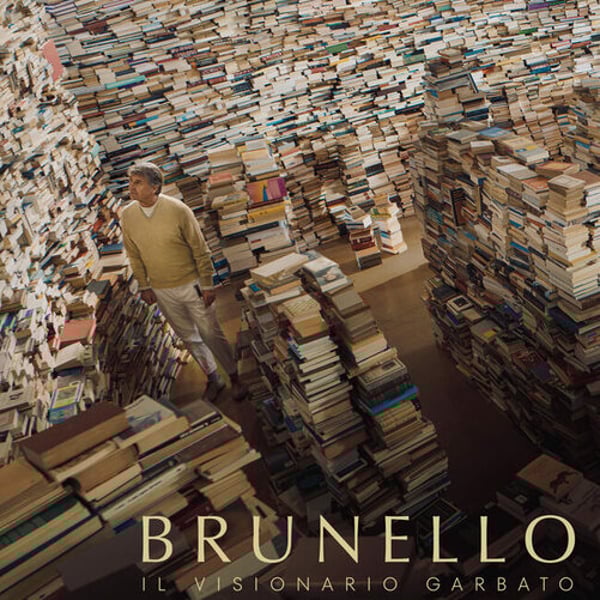
A wealth of emotion and enchantment marked the world premiere of the documentary film “Brunello, il Visionario Garbato”, directed by Oscar winner Giuseppe Tornatore with a score by fellow Oscar winner Nicola Piovani, presented in Rome on December 4 in the magical setting of Cinecittà.
Blending documentary and fiction, the film retraces the places and key moments in the Umbrian entrepreneur’s life journey, from his childhood in the countryside to the village of Solomeo, transformed into the emblem of a distinctive humanistic capitalism. Testimonies, archival footage and personal recollections reveal a man who, from humble beginnings, built a company and an internationally renowned name while always holding fast to the values he cherishes—above all, fairness, dignity and social justice.

“When I was a child we lived in an isolated cottage. Next to us were my uncles, cousins and grandparents, a total of 13 people, all sharecroppers. We had no running water, electricity, heating or even a bathroom, and the farm work was hard. We worked hard and in the evenings, although worn out with fatigue, there was no shortage of smiles and conversation when we gathered for dinner. We children made up games out of nothing and had great fun in our simplicity. I loved being immersed in nature, among the animals, and in the evening I never tired, then as now, of spending hours admiring the stars,” recalled a moved Cucinelli.

“My father taught me from an early age the importance of precision and beauty. When I helped him plough the fields, driving the oxen, he would say, ‘The furrows must be straight, Brunello.’ ‘Why, Dad?’ I would ask. ‘Because straight furrows are beautiful.’ Life in those days, though poor, was happy, healthy, orderly, characterised by strong brotherhood and harmony with the rhythms of nature. And there was faith, of course—indispensable.”

The film, which opens in Italian cinemas between December 9 and 11, goes on to recount the move to Ferro di Cavallo in the 1960s, where Brunello’s father found a job with a steady paycheque as a factory worker, hoping to offer a better life to his family. The arrival in the city is a culture shock: with so many more comforts, Brunello misses the silence; the television seems almost to quash family conversation; and schoolmates mock him because he is a “farm boy”. Then, one evening, overhearing a conversation between his parents, he discovers that his father is unhappy because he is “humiliated in the factory where he is treated like a beast, like a slave”—a pivotal moment for the protagonist. Brunello says to himself, “I do not know what I will do in life, but I would like to try to work and live for human dignity.”
A promise the entrepreneur has certainly kept. A thirst for truth and justice, a desire to do well and to do good, translated into concrete actions in his work, and also drove him to conceive a film about his life.

“I’ve seen so many docu-films made after the protagonist’s death and, in my opinion, the protagonist himself must be turning in his grave. I wanted people to have a record of my actions, to hear the facts told in my own voice, while I am alive, for the sake of truth, not for glory. Considering that the film of my life is ‘Nuovo Cinema Paradiso’, who else could I have contacted but Giuseppe Tornatore? So I called him and managed to convince him. And then we thought of Nicola Piovani, for what has become a wonderful, perfectly judged score. They are two masters and also two poets—for me, poets are humanity’s first great figures—and they managed to enter my soul,” Cucinelli explained. “It took us three years to complete the project: filming was spread over two years and one more was devoted to editing. We sought to invest in the great ideals we believe in: family, spirituality, religion, combining them with wisdom, equality and concord, which are for me the great pillars of a decent person.”
Tornatore, who knew little of Cucinelli’s life before embarking on this cinematic adventure with him, said he was gradually drawn in by his stories. The key spark for the Sicilian director was Brunello’s relationship with card games, his great passion since childhood, nurtured in his teenage years and early adulthood, particularly at the bar with friends. A pastime, mind you, not an end in itself nor mere gambling, but one that attained the dignity of a mental exercise, based on logic and strategy, which would later serve him well in business.
“I came up with this idea of telling it all as if it were a card game; it was the spark that led me to say that we could try to shoot,” Tornatore explained.
And he jokes about his protagonist who, although he wanted a film made in his lifetime, actually “was exemplary, because he behaved as if he were dead! He never, in fact, meddled; he did not ask me to remove or add even a single frame. I thank Brunello for allowing me to enter his story and tell it in my own way.”

Tornatore begins with Brunello’s childhood, portrayed by Francesco Cannevale and Francesco Ferrone, then moves into his youth with Saul Nanni—the only professional actor on a set composed mostly of ordinary people—alongside Brunello himself, who interacts with his own life as though a spectator. There are also contributions from the family in the form of interviews: his wife Federica, his first love and muse; his daughters, Camilla and Carolina; and friends—from those who are not famous to Hollywood superstars such as Patrick Dempsey and Oprah Winfrey—who recount anecdotes and share reflections about him. The film revisits his early entrepreneurial successes, the creation of the company, its growing achievements, and all his work for the benefit of employees and, more generally, the community.

Cucinelli is filmed in the places dearest and most emblematic to him: the old rural family home, the countryside around Perugia and Solomeo, his “place of the soul”, the village that pulses at the heart of his life and work. It was there that the woman who would become his wife lived, and among those alleyways and half-ruined walls that the young Brunello conceived the winning venture centred on cashmere and dreamed of restoring the village, the church and the castle—the latter so that it could one day become the headquarters of his company. A dream that became reality thanks to unstoppable determination and undisputed creative genius, but also thanks to Providence. Brunello never forgets his faith, the prayers of the community and his spiritual mentor, Don Alberto, who have always accompanied and supported him.
Tornatore has managed, with his trademark mastery, to fuse moments of powerful pathos with ironic, sardonic and even irreverent elements (some scenes at Bar Gigino or at the Munich trade fair are hilarious), lending the character greater dimensionality and warmth.

Nothing was, of course, left to chance. Nor the spectacular Ancient Rome set at Cinecittà chosen by Cucinelli, after the film’s screening inside the Nuovo Teatro 22 (Europe’s largest studio, ed.), to host his guests, including FashionNetwork, at an unforgettable gala dinner.
A long walkway among the ‘ancient ruins’, illuminated by candles and quotations from philosophers dear to Brunello (“Beauty is the splendour of Truth,” Plato; “The language of truth is simple,” Socrates; “Live according to nature,” Marcus Aurelius) led us inside the Basilica Aemilia, where the walls had been decorated with some 130,000 volumes, a nod to the film poster and to the Umbrian entrepreneur’s love of knowledge, philosophy and literature, particularly Greek and Latin.

Brunello Cucinelli certainly did not need a film to become an enduring star in the human and entrepreneurial firmament of our time, but this Tornatore masterpiece will surely also consecrate him to eternal cinematic memory.
This article is an automatic translation.
Click here to read the original article.
Copyright © 2025 FashionNetwork.com All rights reserved.
Published
December 9, 2025
As the end of the year approaches, the fashion retail sector is seeing several brands strengthen their bricks-and-mortar presence with new openings. Here is a round-up.
Maison Ola inaugurates first Parisian boutique
Maison Ola, the label founded by Maria de la Orden and Grégory Mizele, known for its hats and hair accessories with a refined, sunlit charm, has set up shop in Paris for the first time. The brand officially opened the doors of its first boutique on 17 November, at 33, rue de Grenelle in the 7th arrondissement.
The 50-square-metre space is located in the heart of Saint-Germain-des-Prés. The boutique brings together all the brand’s collections and has been conceived to showcase its materials and craftsmanship.
This first physical address marks a new milestone for Maison Ola, which continues to expand its network and establish itself in the Parisian market. Maison Ola is available on the Moda Operandi platform, as well as in several outlets located in the Airelles group’s hotels and high-end establishments: Les Airelles Courchevel, Airelles Val d’Isère, Château de la Messardière, Jardin Tropezina, Château d’Estoublon and La Bastide de Gordes.
Phileo brings footwear offering to Boulevard Beaumarchais in Paris

Founded in 2020 by Philéo Landowski, the independent Parisian footwear brand Phileo opens its first boutique at 37, Boulevard Beaumarchais, in the 3rd arrondissement. The official opening took place on 27 November, and the boutique will be open Tuesday to Saturday, 1pm to 7pm. The retail space spans 62 square metres.
Conceived by Philéo Landowski, who collaborates with several major sports and lifestyle brands, the boutique takes an unconventional approach to retail. With exposed structures and raw surfaces, the space reflects the brand’s interest in the creative process and the tension between materials, and functions as a living space hosting interventions and installations by artists and collaborators.
As an independent label, Phileo is supported by DSMP-BD (Dover Street Market Paris – Brand Development) for distribution. The brand is carried in around thirty points of sale worldwide. It received the 2024 Grand Prix de la Création de la Ville de Paris and was a finalist for the 2025 ANDAM Fashion Award.
Caleb opens first boutique in Le Marais

Founded by Aaron Moyal and Samuel Milgrom, two-year-old brand Caleb continues its expansion with the opening of its first Paris boutique. The store is located at 72, rue Vieille-du-Temple, in the heart of Le Marais, in a 70-square-metre space.
Positioned around a timeless, genderless wardrobe, Caleb offers pieces with fluid cuts and materials selected for their durability. The boutique brings together the full menswear, womenswear and genderless collections, as well as limited editions and a selection of exclusive objects.
This first bricks-and-mortar location strengthens Caleb’s presence in the Paris market. The brand already has several international points of sale: Paris (2 points of sale: 1 Caleb boutique and 1 multi-brand corner at Printemps), St Barth, St-Tropez, Dubai, Kyiv (partner boutique), Italy and Tel Aviv.
Bonne Maison opens first boutique in Annecy

Bonne Maison, the French premium socks brand founded in 2012 and acquired in 2023 by Laure de Gennes, inaugurates its first boutique at 34, rue Sommeiller, in Annecy. The official opening was on 19 November 2025.
The brand, renowned for its graphic, colourful socks made from Egyptian cotton yarn and manufactured in Europe, has unveiled a 30-square-metre space designed as an art gallery.
Bonne Maison, which does not disclose its turnover, generates 90% of its sales internationally (Europe, the United States and Asia) and 20% of its business via digital channels. The brand is distributed in over 700 points of sale worldwide, including Le Bon Marché, Isetan and Printemps New York.
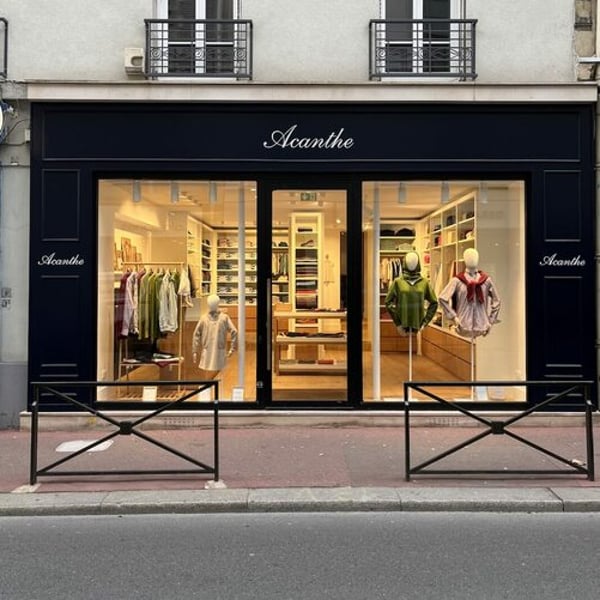
Acanthe inaugurates 15th boutique in France in Levallois-Perret

Founded in 1983 by Antoine de Jouffrey, Acanthe aims to offer quality shirts and clothing at accessible prices. Today, the family-run brand is headed by Blanche de Jouffrey, the founder’s daughter, while Aimée de Jouffrey, a womenswear designer, is debuting her Winter 2025 collection.
Acanthe develops timeless, durable collections crafted from natural materials such as cotton, linen, merino wool, lambswool and cashmere. The Cashmere Collection, launched in 2006, illustrates this commitment with modern, long-lasting pieces knitted in two-ply yarn.
In October, Acanthe opened its 15th boutique in France, in Levallois-Perret, a 52-square-metre space. The brand now has 15 points of sale, all standalone boutiques, consolidating its physical presence and direct access to customers.
This article is an automatic translation.
Click here to read the original article.
Copyright © 2025 FashionNetwork.com All rights reserved.


Tornatore immortalises Brunello Cucinelli on film

USF is ready for a Power Four invite

Jennifer Garner Kisses Gal Pal — See the Pic!
-

 Politics8 years ago
Congress rolls out ‘Better Deal,’ new economic agenda
-
Entertainment8 years ago
New Season 8 Walking Dead trailer flashes forward in time
-
Politics8 years ago
Poll: Virginia governor’s race in dead heat
-
Entertainment8 years ago
The final 6 ‘Game of Thrones’ episodes might feel like a full season
-
Entertainment8 years ago
Meet Superman’s grandfather in new trailer for Krypton
-
Politics8 years ago
Illinois’ financial crisis could bring the state to a halt
-
Business8 years ago
6 Stunning new co-working spaces around the globe
-
Tech8 years ago
Hulu hires Google marketing veteran Kelly Campbell as CMO