
Politics
Sweeping new Florida law targets using AI to ‘nudify’ people in photographs

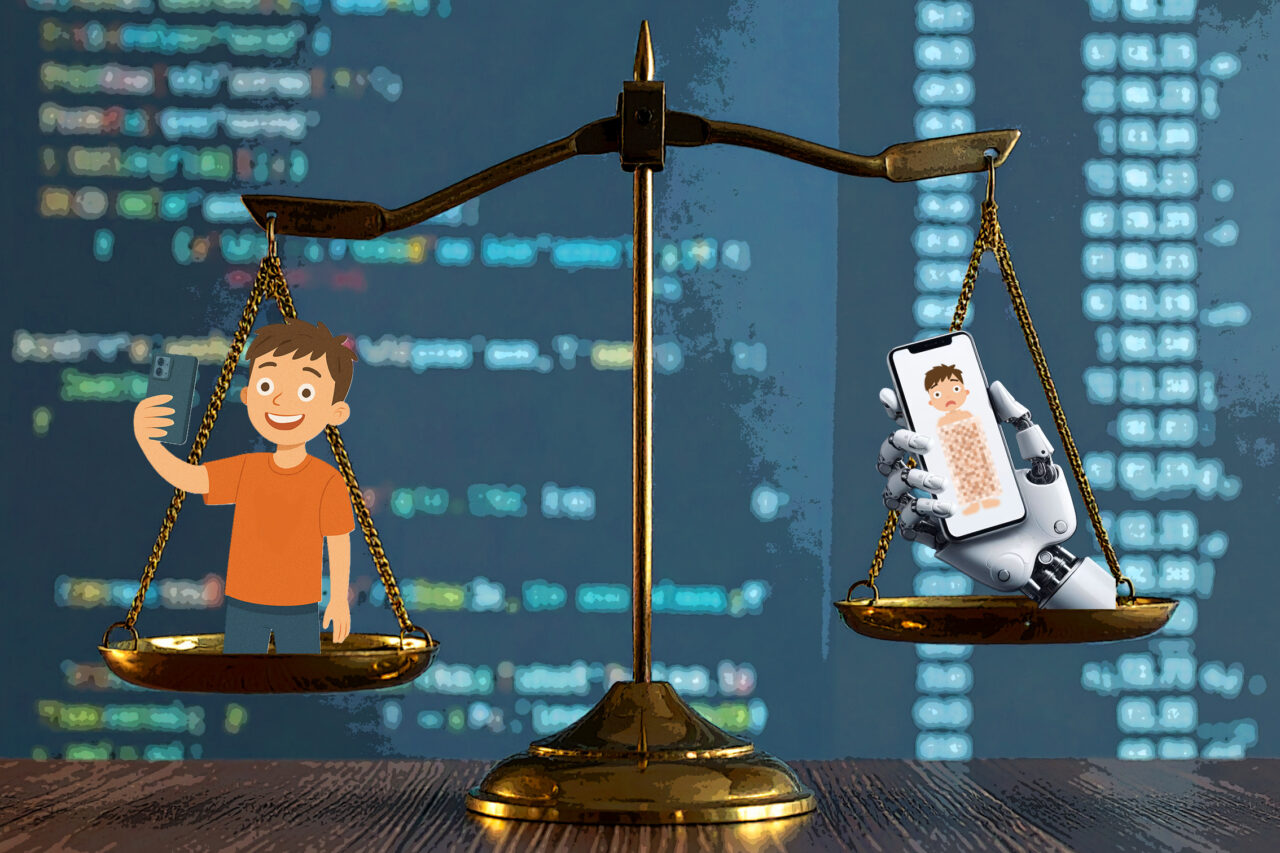
A sweeping new law in Florida that took effect Wednesday makes it illegal to produce sexual images of a person using artificial intelligence or similar technologies without their permission.
The new law also allows people whose photographs were manipulated that way to sue those responsible in civil court.
The law took effect this week only two days after Marion County Sheriff’s deputies arrested Lucius William Martin, 39, of Eustis, and accused him of using AI to produce nude images of the juvenile daughter of someone close to him and her friend. The software Martin used digitally removed the girls’ clothing in pictures he downloaded from social media, according to court records.
Such tools can be used to “nudify” an otherwise innocent photograph.
Martin was arrested Monday and remains in the county jail in Ocala, facing eight felony counts of child pornography under Florida’s existing statutes and one count of trying to destroy evidence. The girl’s mother captured a screenshot of the images to give to authorities, the Sheriff’s Office said. A deputy said Martin reset his phone as he was being arrested to delete the evidence.
Martin couldn’t be reached immediately for comment because he was still in jail. He was being appointed a public defender on Thursday for his arraignment scheduled next month, but no lawyer had yet been assigned to represent him.
The versions of the images of the girls nude on Martin’s phone included remnants of their clothing that had been digitally removed and showed deformities on the girls’ arms and legs, which a deputy wrote in court records “is common on AI-generated imagery.” His phone also contained the same, unaltered images of the girls wearing clothes, court records said.
Last year, singer Taylor Swift was the victim of AI-generated, fake images of her nude, also called “deep fakes,” circulating over popular social media sites.
The Florida bill, sponsored by Republican Reps. Mike Redondo of Miami and Jennifer Kincart Jonsson of Bartow and known as the “sexual images” bill, passed the Legislature unanimously earlier this year and was signed by Gov. Ron DeSantis in May.
Rep. Michelle Salzman, a Cantonment Republican, said during a House Judiciary Committee hearing earlier this year that her community in Florida’s Panhandle has suffered cases of AI-generated sexual images.

“Seeing this brought forward is a breath of fresh air,” she said. “AI is incredible. We need it. It does a lot of good, but with great power comes great responsibility, and a lot of folks aren’t taking responsibility for their actions.”
Key provisions of the new law include criminalizing use of AI to generate a nude image of an actual person without their consent, or soliciting or possessing such images. The new felony punishment includes a prison term up to 5 years for each image and a fine up to $5,000.
The new law was long overdue, said former Sen. Lauren Book, a leading advocate for sex crime victims. She said AI and popular software tools make it easy to create realistic images.
“Legislation is a crucial step in ensuring that our justice system can keep pace with technological advancements so that we are not lagging in protecting our children,” said Book, a child sex abuse survivor who founded “Lauren’s Kids,” a non-profit dedicated to stopping child sex abuse.
Such digitally altered images of children or teens are often used to extort families, said Fallon McNulty, Executive Director at the National Center for Missing and Exploited Children. Criminals can extract payment or sexual favors in exchange for agreeing not to distribute nude images to victims’ friends, classmates or family members.
The center’s CyberTipline, which started tracking reports involving generative AI in 2023, received 4,700 reports involving AI-generated images in its first year. In the first six months of 2025, she said the tipline had received 400,000 such reports.
McNulty said mainstream software companies try to block and report illicit use of their programs, but some developers offer apps with no built-in safety measures.
Meta announced earlier this year it was suing a company in Hong Kong that it said ran ads on its platforms to promote an app that helps users create nonconsensual, sexualized images using AI. It sued the developer of an app called CrushAI, which could be used to create nude images.
Lawmakers are always “trying to play catch up” when it comes to regulating AI, said Elizabeth Rasnick, an assistant professor at the Center for Cybersecurity at the University of West Florida, adding that they are “doing the best they can with what they currently have.”
“ There’s no possible way we can foresee how these tools are going to be used in the future,” Rasnick said. “The Legislature is always going to have to try to fill in whatever gaps there were after those gaps are discovered and exploited.”
Digitally altering images has been possible for decades using specialized image-editing tools, but the new AI programs can turn out sexual content in seconds with no special skills required, said Kevin Butler, a professor of computer science and director of the Institute for Cybersecurity Research at the University of Florida.
Using the new AI tools can take a photo posted on social media and “undress the whole family,” said Kyle Glen, commander of the Central Florida Internet Crimes Against Children Task Force. He praised the new law but noted that juvenile offenders — who may try to bully classmates by creating such images — often aren’t prosecuted criminally the first time they are caught.
“As much laws as we pass and as much software is out there, and technology that we use, bad guys are always a step ahead,” Glen said. “They’re innovative and they’re going to think of ways to get around law enforcement or exploit children, you know, if that’s what they’re infatuated with.”
___
This story was produced by Fresh Take Florida, a news service of the University of Florida College of Journalism and Communications. The reporter can be reached at [email protected]. You can donate to support our students here.

Legislation that would narrowly recategorize 911 dispatchers as first responders so they can receive workers’ compensation for work-related psychological injuries is one step closer to passing in the Legislature’s upper chamber.
Members of the Government Oversight and Accountability Committee voted unanimously to advance the bill (SB 774), which would eliminate a barrier that today denies aid to people who are often the first to respond to a crime.
The measure’s sponsor, Hollywood Sen. Jason Pizzo, noted that during his time as a prosecutor, playing a 911 call would often be the most effective thing to do to sway a jury.
“911, what’s your emergency? He’s going to kill me! He’s going to kill me! Now, imagine hearing that 12 times a day, 15 times a day,” he said.
“Two years ago, you all voted to require these 911 operators to be proficient in CPR so they could administer (it) over the phone. And they’re not considered first responders? They are first responders, and they’ve been grossly overlooked and screwed, and this brings some remedy.”
SB 774 would add 911 dispatchers to the group of “first responders” covered by Florida’s special workers’-compensation rules for employment-related mental or nervous injuries. It would apply the same framework to them as other first responders for mental health claims.
Essentially, if you’re a 911 dispatcher and develop post-traumatic stress disorder, anxiety or similar mental health injuries from traumatic calls, SB 774 would make it so you can get workers’ comp-covered treatment and that your claim is handled under the same special rules lawmakers already set for other first responders — without certain time-limit restrictions that typically apply to mental injury benefits.
Several dispatchers signaled or spoke in favor of the bill, as did representatives from the Florida Police Chiefs Association, Florida Sheriffs Association and Consolidated Dispatch Agency.
Jennifer Dana, a dispatcher with the Palm Beach Sheriff’s Office, noted that in a Senate analysis of SB 774, there’s a list of disturbing things first responders see and do on the job, from seeing dead children and witnessing murders to helping severely injured people, including those who commit suicide.
What it doesn’t include, she said, is that 911 dispatchers also witness those things.

“We’re seeing and hearing it,” she said. “We have the technology for people to livestream it now, so it’s a double-whammy for us, and we want to make sure we have the protections.”
Kim Powell, a licensed and clinical mental health counselor who oversees an employee behavioral health program at a 911 communications center in Leon County, detailed several examples of what dispatchers experience: a woman struggling to breathe while dying from a gunshot wound inflicted by her child’s father; an officer’s final words moments before his murder; the sound of a mother discovering her deceased infant; the 800 or so calls received in the wake of the Florida State University shooting last April.
“These are not isolated events; they are part of the job,” she said. “The trauma compounds over time with repeat exposure.”
St. Petersburg Republican Sen. Nick DiCeglie thanked Pizzo for carrying the bill and expressed gratitude to the “3,500 dispatchers” across Florida for their work.
“For me personally, (this) could be one of the most important bills that we have this Session because of the importance there is for your well-being and your quality of life,” he said.
Melbourne Republican Sen. Debbie Mayfield, who chairs the committee, echoed DiCeglie’s remarks.
Pizzo reminded the panel that four years ago, during COVID, a $280 million set-aside for payments to first responders and front-line workers did not extend to 911 dispatchers.
“They never stopped working,” he said, adding that Mayfield at the time acknowledged the oversight and pledged that the Legislature would get it right in the future. “So, it’s serendipitous that you were kind and gracious enough to put us on the agenda.”
SB 774 will next go to the Senate Appropriations Committee on Agriculture, Environment and General Government, after which it has one more stop before reaching a floor vote.
An identical bill (HB 451) by Republican Rep. Jeff Holcomb of Spring Hill awaits its first hearing in the House.

The Tampa Bay Rays’ search for a new home took a tangible step forward as the Hillsborough College Board of Trustees approved a nonbinding agreement that could ultimately shift the franchise away from St. Petersburg under its new ownership.
The Board voted to approve a memorandum of understanding (MOU) authorizing staff to negotiate with the Tampa Bay Rays over a potential stadium and mixed-use redevelopment at the college’s Dale Mabry Campus.
The agreement does not commit the college to the project and can be terminated by the Board at any time. Instead, it outlines key terms the parties would like to see in any future binding agreements, which would require separate Board approval at a later public meeting.
College officials characterized the MOU as the beginning of negotiations. Under the document, staff would begin drafting potential project agreements for Trustees to consider in the future, with an anticipated negotiation timeline of up to 180 days.
Rays CEO Ken Babby addressed Trustees during the meeting, calling the proposal an early milestone. He emphasized that the effort involves the college, the team, the state and local governments. Babby said the Rays are exploring a roughly 130-acre redevelopment anchored by a new stadium and an integrated college campus, alongside residential, commercial and entertainment uses.
“As we envision this development, together in cooperation and partnership with the community and the college, we’ve been calling the campus portion of this work ‘Innovation Edge’ featuring Hillsborough College,” Babby said.
“It’ll be neighbored by, of course, what we envision to be ‘Champions Corridor,’ which we hope will be the mentioned home of the Tampa Bay Rays. Of course, this will be a mixed-use with residential, with commercial, and, as we’ve said, billions of dollars of economic impact to the region. … This is an incredible moment for our community.”
Public input was split. Supporters recognized the economic impact the project could have, while critics worried about the effect on housing affordability, in particular for college students.
Following the vote, Trustees acknowledged uncertainty among students, faculty and staff, particularly those based at the Dale Mabry campus, but stressed that the approval did not determine final outcomes.
“This is a major decision, and I truly hope that it leads Hillsborough College towards growth and advancement,” Student Trustee Nicolas Castellanos said.

Trustee Michael Garcia echoed the sentiment.
“It’s a tremendous day for the future of Hillsborough College and for the future of Major League Baseball in the area and also for the future of the city of Tampa,” Garcia said.
Gov. Ron DeSantis publicly expressed support for the concept ahead of Tuesday’s meeting, saying it could benefit both the college and the region, while cautioning that details still need to be resolved.
“It could be very good for HCC, and I’ve met with the President about it. I think he’s excited about the possibility,” DeSantis said in Pinellas Park.
“Obviously, they’ve got to iron out details. But basically, we’re supportive of them pursuing that partnership because I think it could be good for them. I think it could be good for the state. But I definitely think it could be really good for this region.”
Also ahead of Tuesday’s meeting, Tampa Mayor Jane Castor told Florida Politics the city and Hillsborough County have been in ongoing discussions with the Tampa Bay Rays as the team explores long-term stadium options — including the potential Hillsborough College site. She emphasized that any future stadium proposal would require coordination among multiple governments and would be evaluated alongside existing contractual obligations related to other major sports facilities.
No timeline for construction, campus relocation or final land disposition was discussed Tuesday. College officials emphasized that any binding agreements would return to the Board of Trustees for approval at a future public meeting.
___
A.G. Gancarski and Janelle Irwin Taylor of Florida Politics contributed to this report.


Meghan Trainor and Daryl Sabara Welcome Baby Via Surrogate

Nike changes Greater China leadership in bid to recapture growth

Senate committee willing to test the waters on expanding swim lesson vouchers
-

 Politics8 years ago
Congress rolls out ‘Better Deal,’ new economic agenda
-
Entertainment9 years ago
New Season 8 Walking Dead trailer flashes forward in time
-
Politics9 years ago
Poll: Virginia governor’s race in dead heat
-
Politics8 years ago
Illinois’ financial crisis could bring the state to a halt
-
Entertainment8 years ago
The final 6 ‘Game of Thrones’ episodes might feel like a full season
-
Entertainment9 years ago
Meet Superman’s grandfather in new trailer for Krypton
-
Business9 years ago
6 Stunning new co-working spaces around the globe
-
Tech8 years ago
Hulu hires Google marketing veteran Kelly Campbell as CMO