Connect with us

Politics

Supreme Court takes up Republican attack on Voting Rights Act in case over Black representation
Published

on


A Republican attack on a core provision of the Voting Rights Act that is designed to protect racial minorities comes to the Supreme Court this week, more than a decade after the justices knocked out another pillar of the 60-year-old law.

In arguments Wednesday, lawyers for Louisiana and the Trump administration will try to persuade the justices to wipe away the state’s second majority Black congressional district and make it much harder, if not impossible, to take account of race in redistricting.

“Race-based redistricting is fundamentally contrary to our Constitution,” Louisiana Attorney General Elizabeth Murrill wrote in the state’s Supreme Court filing.

A mid-decade battle over congressional redistricting already is playing out across the nation, after President Donald Trump began urging Texas, Florida and other Republican-controlled states to redraw their lines to make it easier for the GOP to hold its narrow majority in the House of Representatives. A ruling for Louisiana could intensify that effort and spill over to state legislative and local districts.

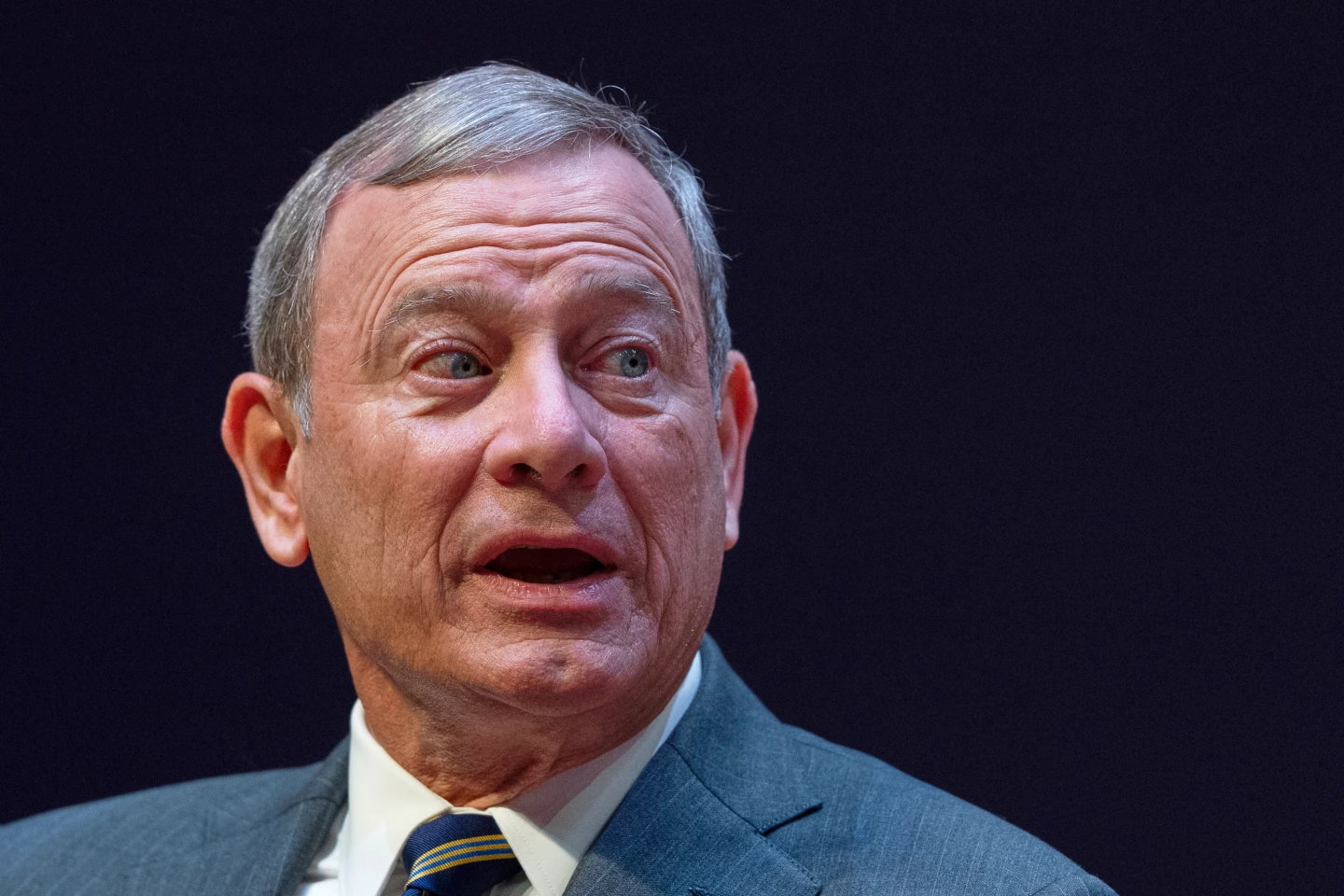
The conservative-dominated court, which just two years ago ended affirmative action in college admissions, could be receptive. At the center of the legal fight is Chief Justice John Roberts, who has long had the landmark civil rights law in his sights, from his time as a young lawyer in the Reagan-era Justice Department to his current job.

“It is a sordid business, this divvying us up by race,” Roberts wrote in a dissenting opinion in 2006 in his first major voting rights case as chief justice.

In 2013, Roberts wrote for the majority in gutting the landmark law’s requirement that states and local governments with a history of discrimination, mostly in the South, get approval before making any election-related changes.

“Our country has changed, and while any racial discrimination in voting is too much, Congress must ensure that the legislation it passes to remedy that problem speaks to current conditions,” Roberts wrote.

Chellenged provisions relies on current condition

Challenges under the provision known as Section 2 of the voting rights law must be able to show current racially polarized voting and an inability of minority populations to elect candidates of their choosing, among other factors.

“Race is still very much a factor in current voting patterns in the state of Louisiana. It’s true in many places in the country,” said Sarah Brannon, deputy director of the American Civil Liberties Union’s Voting Rights Project.

The Louisiana case got to this point only after Black voters and civil rights groups sued and won lower court rulings striking down the first congressional map drawn by the state’s GOP-controlled Legislature after the 2020 census. That map created just one Black majority district among six House seats in a state that is one-third Black.

Louisiana appealed to the Supreme Court but eventually added a second majority Black district after the justices’ 5-4 ruling in 2023 that found a likely violation of the Voting Rights Act in a similar case over Alabama’s congressional map.

Roberts and Justice Brett Kavanaugh joined their three more liberal colleagues in the Alabama outcome. Roberts rejected what he described as “Alabama’s attempt to remake our section 2 jurisprudence anew.”

That might have settled things, but a group of white voters complained that race, not politics, was the predominant factor driving the new Louisiana map. A three-judge court agreed, leading to the current high court case.

Instead of deciding the case in June, the justices asked the parties to answer a potentially big question: “Whether the state’s intentional creation of a second majority-minority congressional district violates the Fourteenth or Fifteenth Amendments to the U. S. Constitution.”

Those amendments, adopted in the aftermath of the Civil War, were intended to bring about political equality for Black Americans and gave Congress the authority to take all necessary steps. Nearly a century later, Congress passed the Voting Rights Act of 1965, called the crown jewel of the civil rights era, to finally put an end to persistent efforts to prevent Black people from voting in the former states of the Confederacy.

Second round of arguments rare at Supreme Court

The call for new arguments sometimes presages a major change by the high court. The Citizens United decision in 2010 that led to dramatic increases in independent spending in U.S. elections came after it was argued a second time.

“It does feel to me a little bit like Citizens United in that, if you recall the way Citizens United unfolded, it was initially a narrow First Amendment challenge,” said Donald Verrilli, who served as the Barack Obama administration’s top Supreme Court lawyer and defended the voting rights law in the 2013 case.

Among the possible outcomes in the Louisiana case, Verrilli said, is one in which a majority holds that the need for courts to step into redistricting cases, absent intentional discrimination, has essentially expired. Kavanaugh raised the issue briefly two years ago.

The Supreme Court has separately washed its hands of partisan gerrymandering claims, in a 2019 opinion that also was written by Roberts. Restricting or eliminating most claims of racial discrimination in federal courts would give state legislatures wide latitude to draw districts, subject only to state constitutional limits.

A shift of just one vote from the Alabama case would flip the outcome.

With the call for new arguments, Louisiana changed its position and is no longer defending its map.

The Trump administration joined on Louisiana’s side. The Justice Department had previously defended the voting rights law under administrations of both major political parties.

Cleo Fields has been here before

For four years in the 1990s, Louisiana had a second Black majority district until courts struck it down because it relied too heavily on race. U.S. Rep. Cleo Fields, then a rising star in the state’s Democratic politics, twice won election. He didn’t run again when a new map was put in place and reverted to just one majority Black district in the state.

Fields is one of the two Black Democrats who won election to Congress last year in newly drawn districts in Alabama and Louisiana.

He again represents the challenged district, described in March by Roberts as “a snake that runs from one end of the state to the other,” picking up Black residents along the way.

If that’s so, civil rights lawyer Stuart Naifeh told Roberts, it’s because of slavery, Jim Crow laws and the persistent lack of economic opportunity for Black Louisianans.

Fields said the court’s earlier ruling that eliminated federal review of potentially discriminatory voting laws has left few options to protect racial minorities, making the preservation of Section 2 all the more important.

They would never win election to Congress, he said, “but for the Voting Rights Act and but for creating majority minority districts.”

___

Republished with permission of The Associated Press


Source link

Continue Reading

Politics

American Council of Engineering Companies gives awards to 14 firms that worked on Florida projects

Published

on


The American Council of Engineering Companies of Florida (ACEC Florida) is awarding more than a dozen engineering firms responsible for Florida public projects for their work.

The projects being honored range from complex road interchanges to environmental projects. The Engineering Excellence Awards will be presented at the ACEC Florida banquet set for Feb. 13 at the Hyatt Regency in Orlando.

Of the 14 engineering companies that will be honored for their Florida work, seven firms will snag top honors known as “grand awards.” Out of those, one will be named the Florida “Grand Concepter Award” winner. All of those top seven recipients will be eligible for the national Grand Conceptor title.

“Florida’s professional engineering community are among the finest in the country, and we’re proud to recognize their extraordinary contributions and innovations,” said Richard Acree, President of ACEC Florida. “The business of engineering is delivering through design build projects that are enhancing the lives of Floridians.”

The Grand Award winners include:

— Black & Veatch for Water Resources category and an H2.0 Purification Center for JEA.

— DRMP, Inc. for Transportation category and the Wekiva Parkway Section 8 Interchange Design-Build for Florida Department of Transportation.

— Hanson Professional Services Inc. for Transportation category for the Bartow Executive Airport Digital ATC Tower for the Bartow Executive Airport Development Authority.

— Kisinger Campo & Associates, Corp. in the Studies, Research and Consulting category for the SR 429 Widening & Systemwide Flex Lanes for the Central Florida Expressway Authority.

— Taylor Engineering, Inc. for the Studies, Research and Consulting category and the Florida Department of Environmental Protection Statewide Vulnerability Assessment.

— TLP Engineering Consultants, in the Transportation Category for the State Road 417 Widening from I-Drive to John Young Parkway for the Central Florida Expressway Authority.

— WGI, in the Transportation category for the Jacksonville Transportation Authority Bay Street Innovation.

The companies named for Honor winners include:

— CHA Consulting, Inc.

— EAC Consulting, Inc.

— Hanson Professional Services Inc.

— Jacobs.

— PRIME AE Group, Inc.

— Wade Trim.

— WGI, Inc.


Source link

Continue Reading

Politics

Ashley Moody slams Harvard for hiring protester arrested for assaulting Israeli student

Published

on


U.S. Sen. Ashley Moody slammed Harvard University for hiring a student accused of assaulting pro-Israel peers during campus protests.

The Plant City Republican criticized the university after the New York Post reported that Elom Tettey-Tamaklo had been hired as a graduate teaching Fellow. According to the academic’s LinkedIn, he took on that role in August, months after he faced misdemeanor charges of assaulting an Israeli classmate.

“Leaders must step up to not only condemn antisemitism but show action to faithfully combat this evil. Unfortunately, many profess to want to quash this abhorrent behavior but then make decisions and promote others that bolster antisemitism with a wink and a nod,” Moody posted on social media.

Especially discouraging to Moody, she said, was that she had spoken to Harvard’s leadership specifically about the need to drive out antisemitism from its campus culture.

“Earlier this year, I sat down with Harvard President Alan Garber. During our meeting, I expressed my deep frustration with Harvard’s inaction regarding students who violated the civil rights of, and even assaulted, their peers simply because of their religion. It’s a reason I introduced the RECLAIM Act to send a message that these schools must be held accountable. I also pointed out that the university continues to reward those that support an anti-Israel agenda,” she posted.

“With this latest hire, it appears Harvard remains on an indefensible path. This is another example of why a once-great university is becoming at best a national embarrassment and at worst purposefully promoting harmful ideals. Harvard should refocus its mission on again becoming a university that students aspire to attend for academic excellence and not a utopia for woke radicals.”

The Recouping Educational Contributions Linked to Antisemitic Institutional Misconduct (RECLAIM) Act (S 1069) would allow the government to claw back federal grants to institutions of higher education if it is found they have violated students’ civil rights. The bill in March was referred to the Senate Judiciary Committee.

Tettey-Tamaklo was charged with assault and battery in 2023, according to the Post, after video went viral of him and other protesters surrounding an Israeli student and shouting “shame.” The incident occurred amid campus protests nationwide of the Israeli conflict in Gaza following Hamas terror attacks that year. The Post said he was ordered to complete anger management courses and complete community service, but that the case was ultimately dismissed in November 2024.

Tettey-Tamaklo was a student at Harvard Divinity School at the time and one of the organizers of Graduate Students 4 Palestine, according to The Harvard Crimson. He has discussed his involvement in student activism on social media, including after a speech to the Muslim Public Affairs Council Foundation in Los Angeles.

“I shared some reflections on the importance of student activism and the need to keep Palestine at the forefront of our minds,” he wrote on LinkedIn two weeks ago.

When others shared the Post story about his hire on his page, Tetty-Tamaklo shared news reports noting that a Judge dismissed antidiscrimination lawsuits from Harvard grad students who claimed they faced pervasive antisemitism at the school.

“While the court does not condone an assault on a fellow student by campus protestors, nothing in the Amended Complaint plausibly supports the notion that his assailants’ conduct was motivated by race-based antisemitism,” the Judge wrote in a ruling, as reported by the Crimson.


Source link

Continue Reading

Politics

Last Call for 12.15.25 – A prime-time read of what’s going down in Florida

Published

on


Last Call – A prime-time read of what’s going down in Florida politics.

First Shot

A new national survey finds Americans across demographic and partisan lines continue to support policies that expand parental control and education choice in K-12 schools, including open enrollment, education savings accounts, and education tax credits.

The polling, conducted by YouGov on behalf of yes. every kid. foundation., surveyed 1,000 registered voters nationwide between Nov. 19 and Nov. 24 and carries a margin of error of plus or minus 3.6%.

According to the survey, 64% of respondents support allowing students to attend any public school in their state regardless of where they live, while 63% support education savings accounts that will enable families to direct public education funds toward tuition, tutoring, or other education-related expenses. Support for education tax credits reached 58%.

The findings show consistent backing for education choice policies across key demographic groups, including majorities of K-12 parents, Black voters, Hispanic voters, and voters in both major political parties.

Support for greater parental accountability was also a central theme in the survey. More than three-quarters of respondents said K-12 schools need to be more accountable to parents, and 61% agreed schools would be more accountable if families could leave a school and take their education funding with them.

“Americans across the country are united behind education freedom. They want to give families more authority, more flexibility, and more options than the current system offers, and the data shows they are far ahead of the political debate,” said Matt Frendewey, vice president of Strategy at yes. every kid. foundation.

The polling also found education remains a high-priority issue for voters heading into the 2026 election cycle. A majority of respondents rated education as highly important in their vote for Congress next year, and education had a net positive impact on ballot decisions across party lines.

While respondents expressed confidence in parents and state governments to make education decisions, the federal government ranked lowest in trust. Nearly two-thirds of voters said K-12 education decisions should be made by those closest to students — families, teachers, and local communities — rather than by national experts.

“For the third year in a row, our survey demonstrates that Americans are demanding a new direction in education, one that respects the needs of every child, shifts accountability to families, and expands opportunities to empower all children to succeed,” Frendewey said.

Evening Reads

—“Donald Trump bashes late director Rob Reiner, drawing immediate backlash” via Amy B. Wang of The Washington Post

—”Nvidia becomes a major model maker with Nemotron 3” via Will Knight of WIRED

—”How a tech-savvy officer finally cracked the Jan. 6 pipe-bombs case” via Sadie Gurman and C. Ryan Barber of The Wall Street Journal

—”The SEC was tough on crypto. It pulled back after Trump returned to office.” via Ben Protess, Andrea Fuller, Sharon LaFraniere and Seamus Hughes of The New York Times

—”The unexpected link between your diet and your anxiety” via Hannah Seo of Vox

—”‘The sun rises and sets with her, man’” via Jesse Raub of The Atlantic

—”How did ‘Heat’ become the most beloved crime movie of the past 30 years?” via David Fear of Rolling Stone

—”Ron DeSantis warns of dangers of AI, calls for Florida to regulate the technology” via Anthony Man of the South Florida Sun-Sentinel

—”Orlando ICE office becomes place of fear as asylum seekers line up to learn their fate” via Natalia Jaramillo of the Orlando Sentinel

—“Former Florida Supreme Court justice speaks out for an independent judiciary” via Mitch Perry of the Florida Phoenix

Quote of the Day

“I’m not concerned about the recent executive order, because it doesn’t apply against the states directly.”

— Gov. Ron DeSantis, on Trump’s executive order pre-empting state-level AI regulations.

Put it on the Tab

Look to your left, then look to your right. If you see one of these people at your happy hour haunt, flag down the bartender and put one of these on your tab. Recipes included, just in case the Cocktail Codex fell into the well.

Wilton Simpson gets a Candy Cane for handing out personalized “Certificates of Clearance” recognizing Santa’s imminent arrival.

U.S. Rep. Jimmy Patronis gets a Crystal Clear for getting on board with a movement to reduce the impacts of the Clean Water Act.

The Florida State Parks Foundation gets a Park Lane in celebration of yet another record in annual financial impact.


Breakthrough Insights

Tune In

Lightning host Panthers

Florida’s NHL rivals meet tonight with the Tampa Bay Lightning hosting the Florida Panthers (7 p.m. ET, NHL Network, SCRIPPS).

Tampa Bay leads the Atlantic Division standings, tied with the Detroit Red Wings on points. No team in the division has as impressive a goal differential as the Lightning, who have outscored the opposition by 21 goals this season.

Remarkably, Tampa Bay is only one game over .500 at home, having won eight of 15 games on home ice. 

Injuries have been an issue for the Lightning, but they continue to get results, winning four of the last five games. 

Florida, the two-time defending Stanley Cup champion, sits five points behind the Lightning in the standings. Tonight’s game marks the end of a four-game road trip for the Panthers, who have won two of the previous three games on the road. It is the second meeting between the two Sunshine State rivals this season. Tampa Bay won the first game 3-1 on Nov. 15 in South Florida. The two organizations will meet twice more in the regular season, Dec. 27 in South Florida and Feb. 5 in Tampa.

Florida’s Sam Reinhart has enjoyed success against the Lightning, scoring 18 goals in 35 games against Tampa Bay.

___

Last Call is published by Peter Schorsch, assembled and edited by Phil Ammann and Drew Wilson, with contributions from the staff of Florida Politics.


Source link

Continue Reading

Trending

Copyright © Miami Select.