Superdry on Wednesday reported “a year of significant operational progress and strategic reset, delivering stronger margins, a return to profitability, and extensive restructuring as the brand continues to refocus on full-price trading and sustainable long-term growth”.
Superdry & Co
And CEO Julian Dunkerton said that “FY25 has been a transformative year for Superdry. We have taken the tough but necessary decisions to reset the business, rebuild our margins, and restore financial stability. Our focus on design, quality, and sustainability is beginning to resonate again with customers. While the retail environment remains uncertain, we are emerging leaner, more disciplined, and better positioned to grow profitably.”
So what does that mean in numbers? The company’s FY25 results — covering the year to late April — saw group revenue falling to £374.6 million from £488.6 million in FY24, despite Superdry’s upbeat stance.
That fall reflected “planned store closures, a disciplined approach to discounting, and a restructured wholesale network,” we’re told.
Importantly, despite those headline sales falling, the business delivered a gross margin of 58.2%, which was up 3.2pp, “supported by reduced markdown activity and a more profitable channel mix”.
And that’s the key to the company’s progress claim as it meant it achieved adjusted profit before tax of £33.8 million, a major swing from the £48.3 million loss of the previous year. This was driven by “over £130 million in SG&A savings, targeted cost reductions, and impairment reversals linked to lease modifications”.
Adjusted profit after tax also delivered good news as it reached £33.3 million following a prior loss of £50.8 million.
Looking at the sales performance in more detail, store sales fell 22% to £175.2 million, following the brand closing loss-making stores and cutting promotional activity. And its online sales fell 25% to £109 million, also affected by that reduced promotional activity, “but delivering improved channel-level EBITDA through stronger marketing efficiency and logistics savings”.
Wholesale dropped 23% to £90.4 million as the company changed the structure of its wholesale business “with a key focus on profitable franchise stores, and the removal of the territories where the IP was sold in FY24”.
The company currently operates 133 owned stores across the UK, Europe and the US, as well as 158 franchise stores in 22 countries. And FY25 was an important year for the former London Stock Exchange-listed (until July 2024) business as it saw the full implementation of its court-sanctioned Restructuring Plan that had been launched in April 2024.
That plan was crucial for relieving pressure on the retailer as it involved rent reductions across 36 UK stores; the extension of debt facilities; a £10 million equity injection in June 2024 (with a further £4.3 million raised in September 2025 to strengthen liquidity); and the completion of 47 store closures and renegotiation of lease terms in the UK.
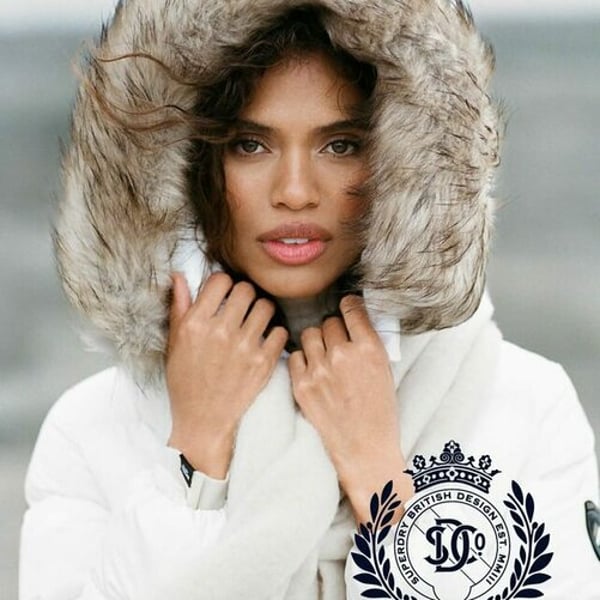
The year also involved a major rebrand to Superdry & Co, with a new logo and refreshed store formats. The company said that it saw “a return to the brand’s heritage, cleaner aesthetic, more premium positioning, and renewed focus on brand identity and controlled distribution”.
So now that the company is halfway through FY26, what has the new financial year yielded?
Management “expects further operational benefits from its streamlined cost base and renewed focus on full-price trading”. Store like-for-like sales “are expected to improve as the impact of the Superdry & Co rebrand takes hold”. E-commerce growth should also return “as digital enhancements mature, while the Affiliation and Concession store models are set to support wholesale recovery”.
In the medium term, it’s expecting revenues between £350 million and £450 million with mid-to-high-single-digit EBITDA margins, “reflecting steady, sustainable profitability”.
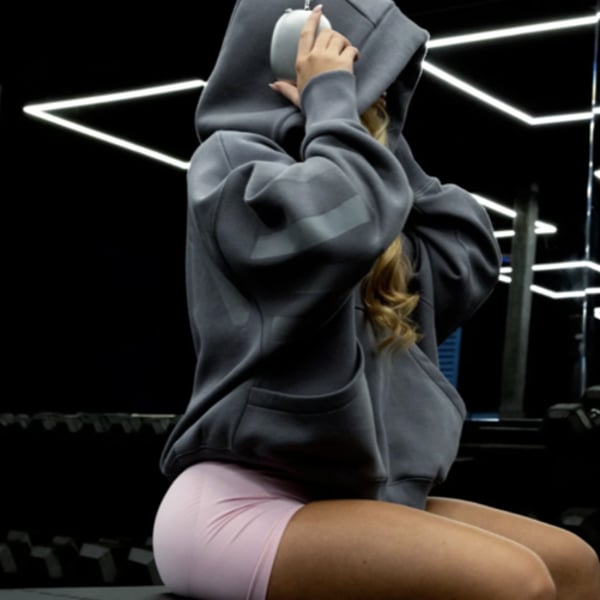
Scottish gymwear brand Dfyne has opening a 21,623 sq ft headquarters in Glasgow that “marks a major milestone in the company’s growth just four years after launch”, it said.
Dfyne
Designed in collaboration with workplace designer/builder Oktra, the new HQ provides a permanent base for Dfyne’s growing team and “reflects the brand’s ambition, identity, and people-first values.. as the business continues to grow”.
The opening marks ‘phase one’ of the project, with further phases planned to extend the workspace and complete the ground floor fit-out, it said.
The workplace is organised around a series of “clearly defined zones, balancing focused workspaces with informal collaboration areas and spaces to showcase Dfyne products”.
“Cultural storytelling” is also embedded within the design. Brown leather seating in the new meeting booths references a brown leather sofa from Dfyne’s original headquarters – a piece closely associated with the brand’s early days and formative moments.
“This detail symbolises [our] journey from a small founding team to a fast-growing international brand, while maintaining a strong connection to its roots”, it said.
CEO Oscar Ryndziewicz added: “In only four years, and thanks to our incredible community, we’ve grown to such a level that we can create a new, tailor-made space for our team that embodies our brand values. With the creation of unique workspaces, our new HQ is purposefully designed to enable everyone who supported the company’s growth to spark connections and inspire innovation.”
Puma is continuing its fruitful fashion-meets-sport collab with UK streetwear brand Represent, this time “rewriting the playbook of basketball-inspired staples”.
Puma x Represent
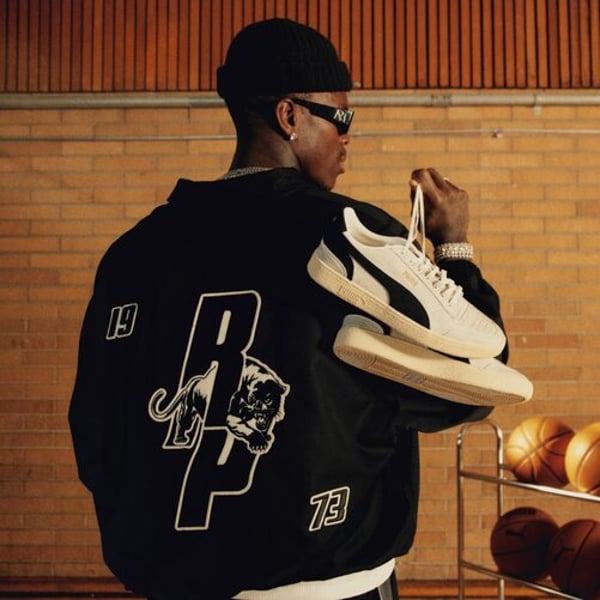
Fusing “Heritage Hoops Energy with Modern Streetwear”, it brings the two brands neatly together with a campaign fronted by German NBA star Dennis Schröder who “embodies the collection’s balanced fusion of court performance and off-court style”.
The “simple yet elevated collection” spans footwear and apparel that’s “highlighted by expressive and detailed cut-and-sew designs”, as well as a fresh interpretation of Puma’s All-Pro Nitro 2 sneaker.
Its “court-ready” Jersey and Shorts debut comes with a newly designed Puma x Represent graphic, featuring mesh construction and contrasting trim “that nods to retro game-day uniforms”.
The range is, of course, accompanied by “courtside essentials” including a Graphic T-Shirt and Hoodie, “pieces that bring bold visual detailing to the championship collaboration”.
A Coach Jacket and accompanying Pants also “comprise comfortable warm-up layers with everyday wearability”.
For footwear, Puma x Represent presents a re-envision All-Pro Nitro 2, a performance design underpinned by “explosive Nitro cushioning and a lightweight Ultraweave upper”. The black and white two-tone colourway is punctuated by subtle logo hits on the heel and tongue.
Complementing one of Puma’s “most modern examples of basketball performance technology”, the collection brings “a touch of ‘80s flair with the low-top Majesty”.
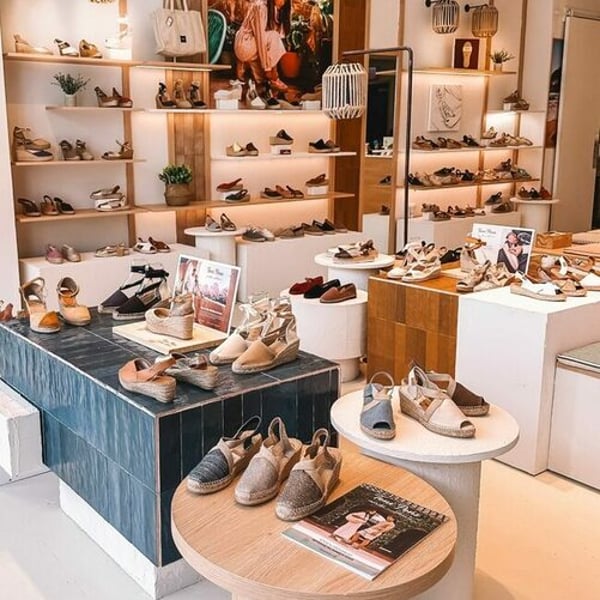
Spanish label Toni Pons continues to expand its global retail network and has opened a new store in the US. The Catalan espadrille brand has opened in Miami Beach, Florida, at 1656 Lenox Ave. It is the brand’s second store in the state, following its opening at the end of 2024 in Boca Raton.
Interior of the new Toni Pons store in Miami – Toni Pons
The Spanish footwear brand, which will celebrate its 80th anniversary in 2026, announced the opening via its profile on the professional networking platform LinkedIn and described it as “a new chapter in its international journey.”
Based in Girona, the footwear brand was founded in 1946 and currently operates more than 50 company-owned stores in Spain and abroad. The online channel is also a key pillar of its business, and the brand is available at around 4,000 multi-brand points of sale across nearly 90 markets. In financial terms, the brand records annual turnover of approximately €32 million.
This article is an automatic translation. Click here to read the original article.





 Politics8 years ago