Connect with us

Politics

SunRunner bus lane removal may have violated state law created to make it harder to repurpose lanes
Published

on


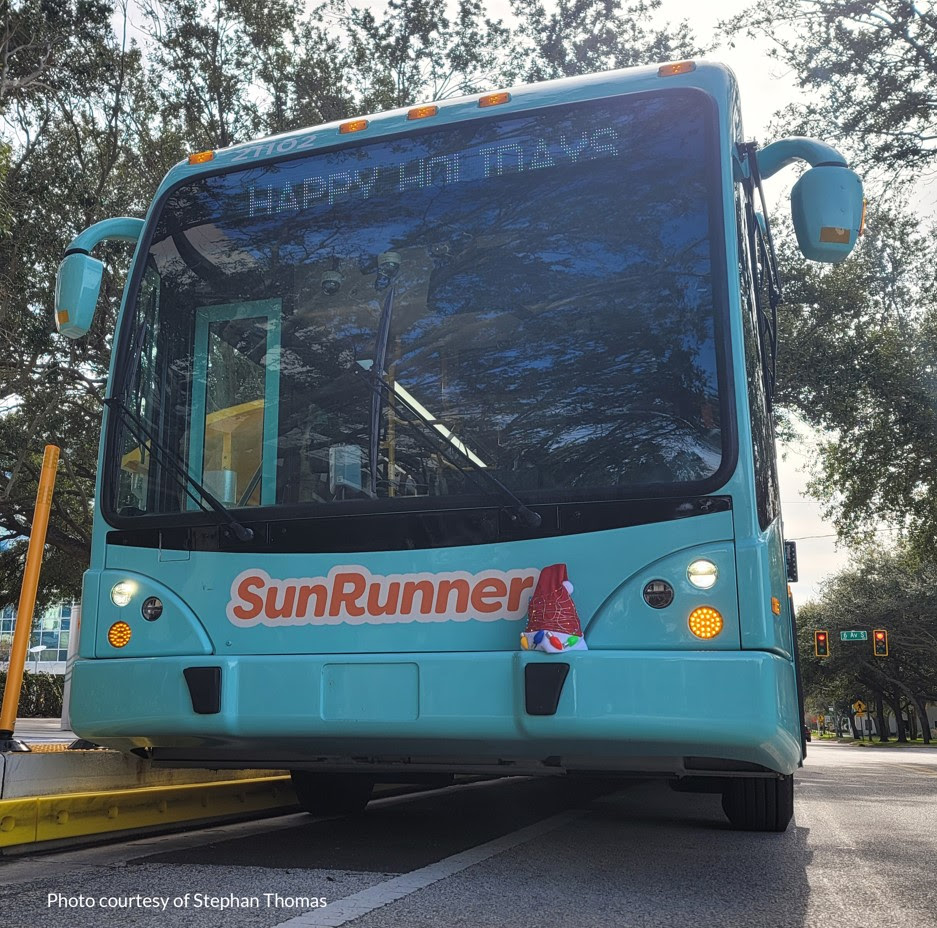
A local transit supporter has filed a complaint against Florida Department of Transportation (FDOT) District 7 Secretary Justin Hall over the agency’s decision to remove dedicated Business Access and Transit (BAT) lanes along Pasadena Avenue used by the Pinellas Suncoast Transit Authority’s (PSTA) SunRunner route.

The complaint, filed by local transit and pedestrian accessibility activist Garrett Marple, says Hall “likely made or authorized this decision … without the professional diligence, safety analysis, or ethical consideration required of a licensed professional Engineer under Florida law.”

It raises questions about whether the lane removal violates state law established to make it harder to repurpose traffic lanes.

Marple filed the complaint with the Florida Board of Professional Engineers.

The complaint does not specifically reference language in Florida law relating to repurposing traffic lanes. But legislation approved in 2024 (HB 1301) requires “any project that will repurpose one or more existing traffic lanes” to include “a traffic study to address any potential adverse impacts of the project” and hold at least one public meeting “before completing the design phase of the project.”

FDOT provided a one-page document outlining its reason for reverting the BAT lanes along Pasadena Avenue to general purpose lanes. It’s not clear whether the document qualifies under state law as a study, as it relates to lane repurposing. But even if it does, the state did not hold a public meeting to discuss the plan.

Asked about a potential violation of the law, a spokesperson from FDOT did not directly answer, and instead offered a lengthy statement explaining its decision to remove BAT lanes along Pasadena Avenue, saying the agency “routinely performs post-construction reviews of lane repurposing projects across the state to assess whether they are achieving their intended outcomes.”

The spokesperson, FDOT Public Information Officer Kris Carson, said the reviews are done “to examine driver behavior and see if additional features are necessary including signage, additional pavement markings etc. to ensure FDOT is providing a safe and efficient transportation system.”

Rep. Linda Chaney, in a press release celebrating FDOT’s decision to remove the BAT lanes along Pasadena Avenue, specifically referenced HB 1301 as a catalyst for reviewing the corridor. She did not respond to a request for comment sent to both her official House email and her staff.

The BAT removal only represents a small section of the overall SunRunner route, which travels along First Avenues North and South connecting downtown St. Petersburg to St. Pete Beach. First Avenues North and South are not state roads, and therefore FDOT does not have jurisdiction to remove BAT lanes along that portion of the route. But Pasadena Avenue is a state road (SR 693).

FDOT’s one-pager outlining its safety concerns along that part of the corridor shows an increase in crashes after the BAT lanes were implemented, from 36 in 2020 and 37 in 2021 to 55 in 2023 and 54 in 2024. The SunRunner route was completed in 2022.

Marple’s complaint takes issue with the data used to support removing the BAT lanes. It argues FDOT ignored “the availability of additional data” and calls the data FDOT did review “an inadequate sample under accepted professional standards.” Additionally, the complaint points out that two of the years reviewed — 2019 and 2020 — were during the COVID pandemic, “when driving patterns were highly atypical and not statistically reliable.”

Florida Politics requested data from 2018 and 2019 to further compare crash numbers, but FDOT has not responded.

Florida Politics obtained crash data compiled by the city of St. Petersburg along the portion of the SunRunner route on First Avenues North and South that actually shows a decrease in crashes from non-COVID years before implementation of BAT lanes to years after its implementation.

In 2018, there were 284 crashes reported along the corridor. There was actually an increase in crashes in 2023 (303), but there was a decrease in 2024 (262).

A different data set, compiled by Forward Pinellas from the crash data management system, shows a more pronounced decrease in crashes after the BAT lanes were implemented on First Avenues North and South. In 2018, before the lanes were installed, there were 405 crashes between both corridors. In 2023, after the lanes were implemented, that number dropped to 366 and in 2024 crashes dropped to 360.

Additionally, a PSTA report released in September 2024 evaluating SunRunner performance before and after traffic signal optimization found significant reduction in travel times along the route, including average rate of travel and cumulative stop delays.

Average travel along First Avenue North during morning hours dropped nearly 24%, according to the analysis, while the route along First Avenue South decreased by nearly 27%. Numbers were similar for midday and evening travel times.

Average speeds similarly improved by nearly 30% along First Avenue North during the morning commute and more than 37% along First Avenue South during the same time period.

The biggest improvement to travel time though was in decreases to travel delays, which hovered around a 70% reduction compared to pre-SunRunner times, according to the analysis.

And while FDOT claimed the BAT lanes on Pasadena Avenue were causing congestion, its own analysis found average speeds along the corridor actually decreased overall after the implementation of the lanes.

Five out of six time periods evaluated — weekday morning and evening peak travel times; weekday midday travel times; weekday overnight; and weekend overall — showed increased average speeds along both Pasadena Avenue northbound and southbound. Only weekend midday showed a decrease in average speed.

Still, FDOT said it “is returning the BAT lane to a standard right-turn/general-purpose lane to improve safety and traffic operations through increased capacity.”

To mitigate any loss in route efficiency, Carson wrote that FDOT was also working “on transit signal priority installations at intersections along the corridor to ensure minimal impact to bus operations.”

Because Marple’s complaint was filed with the Florida Board of Professional Engineers, it is unlikely to impact the outcome of BAT lanes on Pasadena Avenue. The Board accepts complaints against industry professionals and if an initial assessment finds a possible violation of engineering laws or rules, an investigation will take place to determine whether to impose discipline. It does not dictate state policy. 

Still, FDOT’s decision to remove BAT lanes could cause a financial blow. PSTA in 2020 received a nearly $22 million grant from the Federal Transit Administration’s Capital Investment Grant program to cover half the capital cost of building out the SunRunner route. That grant was hinged on the route being true BRT, the commonly used abbreviation for bus rapid transit.

“If we don’t have a reasonable lane that’s dedicated for buses and cars to turn, then it takes the ‘R’ out of BRT,” Darden Rice, chief planning and community affairs officer for the Pinellas transit authority, previously told the Tampa Bay Times. “There’s nothing rapid about a bus stuck in traffic.”

It’s not clear yet whether a repayment will be required or, if it is, how the funds would be repaid.


Source link

Continue Reading

Politics

Senate committee willing to test the waters on expanding swim lesson vouchers

Published

on


The Senate Health Policy Committee plunged into a proposal to expand the Florida swim lesson voucher program that provides financial help for teaching kids how to handle water.

The panel approved a measure (SB 428) by Sen. Clay Yarborough, a Jacksonville Republican, to allow older kids to qualify for the voucher program. The current program, originally enacted in 2024, provides vouchers for families of children aged 0 to 4 years old. Yarborough’s bill would allow kids 1 to 7 to qualify for vouchers.

Yarborough told the committee that in the first year of life for infants, they don’t really “learn” how to swim as much as they act instinctively in the water. Furthermore, he said, adding additional years will help ensure lessons for children who didn’t get around to learning how to swim earlier.

Corrine Bria, a pediatric emergency medical physician at Nemours Children’s Health facility in Orlando, spoke at the hearing and said the rise in young drownings is heartbreaking. Nemours has handled 35 drownings of children in the past three years, and 90% of those are under the age of 7, Bria said.

“As a physician in a pediatric emergency department I see firsthand what it looks like when a child gets carried into the ED (emergency department) by a parent or brought in on a stretcher after drowning,” Bria said. “We know that a child can drown in a matter of seconds and this happens too frequently in Florida.”

Jason Hagensick, President and CEO of the YMCA of South Palm Beach County, also addressed the committee on behalf of the Florida State Alliance of YMCAs and said the revision to the swimming lesson voucher program would be a big improvement.

“Drowning remains a leading cause of unintentional injury (and) death in the United States,” Hagensick said, adding that early swim lessons reduce the risk of drowning by 88%.

“Expanding the swim voucher program to include children up to the age of 7 will dramatically increase access to essential swim instruction at a time when those skills are most impactful,” Hagensick continued. “It will deepen water competency and strengthen confidence for kids and parents alike and help prevent needless tragedies that devastate families and communities.”

A similar bill (HB 85) is working its way through the House. The House Health Care Budget Subcommittee approved that measure last week. Rep. Kim Kendall, a St. Augustine Republican, is sponsoring the House version.


Source link

Continue Reading

Politics

Senate advances Jason Pizzo bill extending PTSD workers’ comp coverage to 911 dispatchers

Published

on


Legislation that would narrowly recategorize 911 dispatchers as first responders so they can receive workers’ compensation for work-related psychological injuries is one step closer to passing in the Legislature’s upper chamber.

Members of the Government Oversight and Accountability Committee voted unanimously to advance the bill (SB 774), which would eliminate a barrier that today denies aid to people who are often the first to respond to a crime.

The measure’s sponsor, Hollywood Sen. Jason Pizzo, noted that during his time as a prosecutor, playing a 911 call would often be the most effective thing to do to sway a jury.

“911, what’s your emergency? He’s going to kill me! He’s going to kill me! Now, imagine hearing that 12 times a day, 15 times a day,” he said.

“Two years ago, you all voted to require these 911 operators to be proficient in CPR so they could administer (it) over the phone. And they’re not considered first responders? They are first responders, and they’ve been grossly overlooked and screwed, and this brings some remedy.”

SB 774 would add 911 dispatchers to the group of “first responders” covered by Florida’s special workers’-compensation rules for employment-related mental or nervous injuries. It would apply the same framework to them as other first responders for mental health claims.

Essentially, if you’re a 911 dispatcher and develop post-traumatic stress disorder, anxiety or similar mental health injuries from traumatic calls, SB 774 would make it so you can get workers’ comp-covered treatment and that your claim is handled under the same special rules lawmakers already set for other first responders — without certain time-limit restrictions that typically apply to mental injury benefits.

Several dispatchers signaled or spoke in favor of the bill, as did representatives from the Florida Police Chiefs Association, Florida Sheriffs Association and Consolidated Dispatch Agency.

Jennifer Dana, a dispatcher with the Palm Beach Sheriff’s Office, noted that in a Senate analysis of SB 774, there’s a list of disturbing things first responders see and do on the job, from seeing dead children and witnessing murders to helping severely injured people, including those who commit suicide.

What it doesn’t include, she said, is that 911 dispatchers also witness those things.

“We’re seeing and hearing it,” she said. “We have the technology for people to livestream it now, so it’s a double-whammy for us, and we want to make sure we have the protections.”

Kim Powell, a licensed and clinical mental health counselor who oversees an employee behavioral health program at a 911 communications center in Leon County, detailed several examples of what dispatchers experience: a woman struggling to breathe while dying from a gunshot wound inflicted by her child’s father; an officer’s final words moments before his murder; the sound of a mother discovering her deceased infant; the 800 or so calls received in the wake of the Florida State University shooting last April.

“These are not isolated events; they are part of the job,” she said. “The trauma compounds over time with repeat exposure.”

St. Petersburg Republican Sen. Nick DiCeglie thanked Pizzo for carrying the bill and expressed gratitude to the “3,500 dispatchers” across Florida for their work.

“For me personally, (this) could be one of the most important bills that we have this Session because of the importance there is for your well-being and your quality of life,” he said.

Melbourne Republican Sen. Debbie Mayfield, who chairs the committee, echoed DiCeglie’s remarks.

Pizzo reminded the panel that four years ago, during COVID, a $280 million set-aside for payments to first responders and front-line workers did not extend to 911 dispatchers.

“They never stopped working,” he said, adding that Mayfield at the time acknowledged the oversight and pledged that the Legislature would get it right in the future. “So, it’s serendipitous that you were kind and gracious enough to put us on the agenda.”

SB 774 will next go to the Senate Appropriations Committee on Agriculture, Environment and General Government, after which it has one more stop before reaching a floor vote.

An identical bill (HB 451) by Republican Rep. Jeff Holcomb of Spring Hill awaits its first hearing in the House.


Source link

Continue Reading

Politics

Hillsborough College Trustees OK first step in Tampa Bay Rays stadium talks

Published

on


The Tampa Bay Rays’ search for a new home took a tangible step forward as the Hillsborough College Board of Trustees approved a nonbinding agreement that could ultimately shift the franchise away from St. Petersburg under its new ownership.

The Board voted to approve a memorandum of understanding (MOU) authorizing staff to negotiate with the Tampa Bay Rays over a potential stadium and mixed-use redevelopment at the college’s Dale Mabry Campus.

The agreement does not commit the college to the project and can be terminated by the Board at any time. Instead, it outlines key terms the parties would like to see in any future binding agreements, which would require separate Board approval at a later public meeting.

College officials characterized the MOU as the beginning of negotiations. Under the document, staff would begin drafting potential project agreements for Trustees to consider in the future, with an anticipated negotiation timeline of up to 180 days.

Rays CEO Ken Babby addressed Trustees during the meeting, calling the proposal an early milestone. He emphasized that the effort involves the college, the team, the state and local governments. Babby said the Rays are exploring a roughly 130-acre redevelopment anchored by a new stadium and an integrated college campus, alongside residential, commercial and entertainment uses. 

“As we envision this development, together in cooperation and partnership with the community and the college, we’ve been calling the campus portion of this work ‘Innovation Edge’ featuring Hillsborough College,” Babby said.

“It’ll be neighbored by, of course, what we envision to be ‘Champions Corridor,’ which we hope will be the mentioned home of the Tampa Bay Rays. Of course, this will be a mixed-use with residential, with commercial, and, as we’ve said, billions of dollars of economic impact to the region. … This is an incredible moment for our community.”

Public input was split. Supporters recognized the economic impact the project could have, while critics worried about the effect on housing affordability, in particular for college students.

Following the vote, Trustees acknowledged uncertainty among students, faculty and staff, particularly those based at the Dale Mabry campus, but stressed that the approval did not determine final outcomes.

“This is a major decision, and I truly hope that it leads Hillsborough College towards growth and advancement,” Student Trustee Nicolas Castellanos said. 

Trustee Michael Garcia echoed the sentiment.

“It’s a tremendous day for the future of Hillsborough College and for the future of Major League Baseball in the area and also for the future of the city of Tampa,” Garcia said.

Gov. Ron DeSantis publicly expressed support for the concept ahead of Tuesday’s meeting, saying it could benefit both the college and the region, while cautioning that details still need to be resolved.

“It could be very good for HCC, and I’ve met with the President about it. I think he’s excited about the possibility,” DeSantis said in Pinellas Park.

“Obviously, they’ve got to iron out details. But basically, we’re supportive of them pursuing that partnership because I think it could be good for them. I think it could be good for the state. But I definitely think it could be really good for this region.”

Also ahead of Tuesday’s meeting, Tampa Mayor Jane Castor told Florida Politics the city and Hillsborough County have been in ongoing discussions with the Tampa Bay Rays as the team explores long-term stadium options — including the potential Hillsborough College site. She emphasized that any future stadium proposal would require coordination among multiple governments and would be evaluated alongside existing contractual obligations related to other major sports facilities.

No timeline for construction, campus relocation or final land disposition was discussed Tuesday. College officials emphasized that any binding agreements would return to the Board of Trustees for approval at a future public meeting.

___

A.G. Gancarski and Janelle Irwin Taylor of Florida Politics contributed to this report.


Source link

Continue Reading

Trending

Copyright © Miami Select.