
Politics
Success Academy is coming to Florida — good news for families

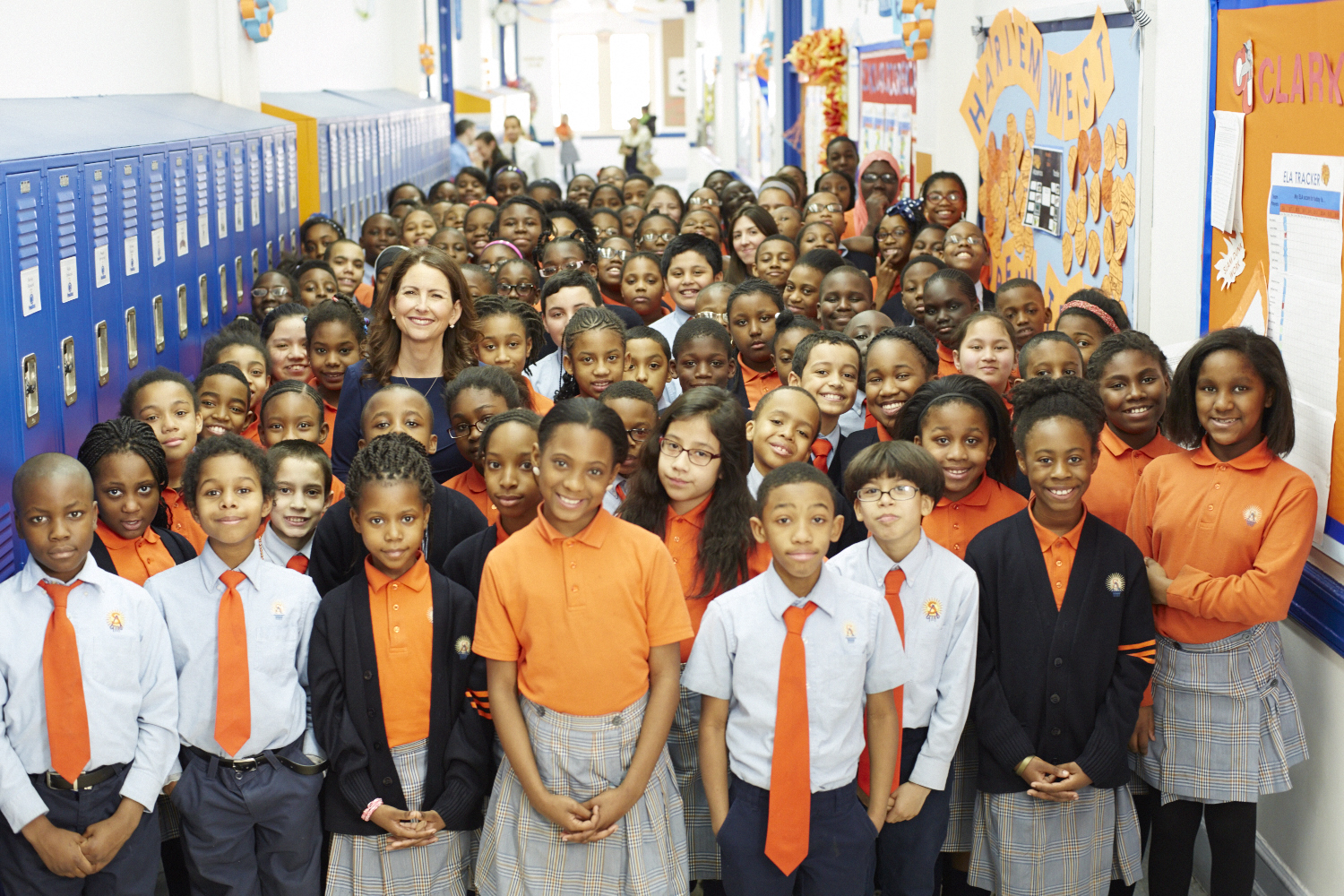
After much anticipation, it’s official — Success Academy is coming to Florida. The New York-based charter school network’s arrival marks a significant step forward for the state’s Schools of Hope program by providing a valuable new educational option for parents.
Last month, Success Academy’s founder and CEO, Eva Moskowitz, alongside Gov. Ron DeSantis and Florida’s Education Commissioner, announced that her charter organization would open a Miami campus in 2027, with significant philanthropic backing. The network was approved as a School of Hope operator in Florida last year, part of a program to encourage the growth of high-performing charter schools in the state.
For nearly two decades, Success Academy, despite the intense scrutiny it has received in its once—but no longer—charter-friendly home city, has indeed been an undeniable success. Its students far outpace their peers in other New York City public schools, including charters, on state standardized tests, AP exams, and SAT scores — Success Academy even boasts an 8-year consecutive 100% college acceptance rate.
Since the close of this year’s Legislative Session, there’s been plenty of hyperbole around Florida’s Schools of Hope program, with one frequent critic calling it a “failed experiment.” Some context is needed here. Of the 14 currently designated Schools of Hope, 11 have only been open for three school years or less. Of those that received a state report card for the 2024-25 school year, none received a grade lower than a “C,” with three schools improving their grade from the previous year.
In fact, charter schools in Florida generally outpace district schools on state standardized tests and on the most recent National Assessment of Educational Progress. Nationwide, there is substantial evidence that charter schools improve outcomes for students in disadvantaged urban communities. A report released last year by the Progressive Policy Institute, for example, concluded that, in cities that have “aggressively expanded high-quality public school choices,” particularly charter schools, low-income students in both charters and district schools “have started to catch up to statewide student performance levels.”
Success Academy opened its first school in 2006 and has since emerged as a shining example of educational excellence. More impressively, it has done so in a political environment generally hostile to all forms of school choice. Success Academy functions like a private school for low-income families — academically demanding and exacting in its culture. And don’t low-income families, who can’t afford private school, deserve an option like that too?
The criticism aimed at Schools of Hope and Success Academy largely misses the forest for the trees. Charter schools, which are legally public schools and accountable to nearly all the same laws that apply to all other public schools in Florida, do not exist to subsume traditional school districts, but to provide choices for families. Create a healthy charter environment, and low-income parents now have the same ability as their wealthy counterparts to choose between educational approaches that fit their needs and priorities. Charter schools help create an education ecosystem in which a student’s school is no longer determined by their zip code, but by their parents.
Public opinion in Florida is largely in favor of the charter. A recent survey by the James Madison Institute suggests that most Floridians would prefer to send their children to a “school choice option” like charter schools. Meanwhile, the most recent public opinion poll by the advocacy organization EdChoice shows that most parents in Florida support school choice policies, including charter schools.
Success Academy’s arrival is a win for Miami’s families and will only enhance access to high-quality educational choices in Florida.
___

Thibaut Delloue is a Policy Fellow at the Florida Charter Institute, the state’s premier hub for charter innovation. Partnered with Miami Dade College, FCI provides resources, education, and research and serves as an authorizer for charter schools in Florida. Learn more at flcharterinstitute.org.


For the first time in a decade, hunters armed with rifles and crossbows are fanning out across Florida’s swamps and flatwoods to legally hunt the Florida black bear, over the vocal opposition of critics.
The state-sanctioned hunt began Saturday, after drawing more than 160,000 applications for a far more limited number of hunting permits, including from opponents who are trying to reduce the number of bears killed in this year’s hunt, the state’s first since 2015.
The Florida Fish and Wildlife Conservation Commission awarded 172 bear hunt permits by random lottery for this year’s season, allowing hunters to kill one bear each in areas where the population is deemed large enough. At least 43 of the permits went to opponents of the hunt who never intend to use them, according to the Florida chapter of the Sierra Club, which encouraged critics to apply in the hopes of saving bears.
The Florida black bear population is considered one of the state’s conservation success stories, having grown from just several hundred bears in the 1970s to an estimated more than 4,000 today.
The 172 people who were awarded a permit through a random lottery will be able to kill one bear each during the 2025 season, which runs from Dec. 6 to Dec. 28. The permits are specific to one of the state’s four designated bear hunting zones, each of which have a hunting quota set by state officials based on the bear population in each region.
In order to participate, hunters must hold a valid hunting license and a bear harvest permit, which costs $100 for residents and $300 for nonresidents, plus fees. Applications for the permits cost $5 each.
The regulated hunt will help incentivize maintaining healthy bear populations, and help fund the work that is needed, according to Mark Barton of the Florida chapter of Backcountry Hunters and Anglers, an advocacy group that supported the hunt.
Having an annual hunt will help guarantee funding to “keep moving conservation for bears forward,” Barton said.
According to state wildlife officials, the bear population has grown enough to support a regulated hunt and warrant population management. The state agency sees hunting as an effective tool that is used to manage wildlife populations around the world, and allows the state to monetize conservation efforts through permit and application fees.
“While we have enough suitable bear habitat to support our current bear population levels, if the four largest subpopulations continue to grow at current rates, we will not have enough habitat at some point in the future,” reads a bear hunting guide published by the state wildlife commission.

___
Republished with permission of the Associated Press.


Tucker Wetmore’s Song ‘Proving Me Right’ is About Model Bryana Ferringer

‘Bachelor’ Winner Cassie Randolph Marries Brighton Reinhardt

Kanye West and Bianca Censori Travel to South Korea Together
-

 Politics8 years ago
Congress rolls out ‘Better Deal,’ new economic agenda
-
Entertainment8 years ago
New Season 8 Walking Dead trailer flashes forward in time
-
Politics8 years ago
Poll: Virginia governor’s race in dead heat
-
Entertainment8 years ago
The final 6 ‘Game of Thrones’ episodes might feel like a full season
-
Entertainment8 years ago
Meet Superman’s grandfather in new trailer for Krypton
-
Politics8 years ago
Illinois’ financial crisis could bring the state to a halt
-
Business8 years ago
6 Stunning new co-working spaces around the globe
-
Tech8 years ago
Hulu hires Google marketing veteran Kelly Campbell as CMO