Do you employ a forward engineer? How about a data annotator? Forensic analyst, anyone? There has been a lot of coverage of the jobs that might disappear due to agentic artificial intelligence—the technology which learns about your business from the data you feed it and then undertakes many of the tasks itself. Less prominent is the story of the jobs that will, and are already, being created. “In the near term, AI is creating more jobs than it is replacing,” reads an against-the-grain report by LinkedIn, the social media and employment platform. We should all give thanks for that.
The irritating thing about the future, a chief financial officer might muse, is that preparing for it costs money—and often an awful lot of it. At this stage of AI development, businesses are spending much of that hiring people, not building bots. In a bleak employment landscape, every little helps.
“The broader macroeconomic uncertainty that we’re seeing continues to play out in the labor market, which is stuck in a pretty low gear,” says Sue Duke, LinkedIn’s Head of Global Public Policy and Managing Director for EMEA. “Hiring is sluggish. Momentum is broadly not there. For the most part, in advanced economies, we’re seeing hiring about 20% below where it was pre-pandemic.
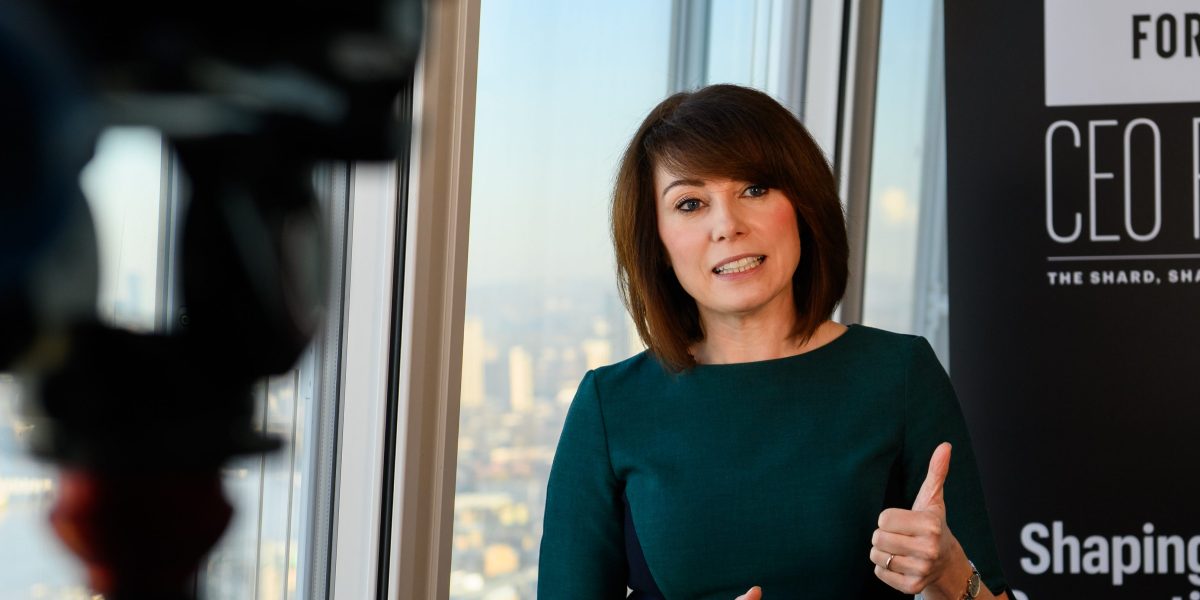
“One of the standout bright spots are AI-enabled jobs—what we’re calling ‘new collar’ jobs. This is a whole new category of worker that’s bringing a blend of different skills, mixing advanced technical skills with distinctly human skills to create these new roles.”
Globally, between 2023 and 2025, around 1.3m new roles have been added to the new-collar category. Data annotators, forensic analysts, and forward-deployed engineers are roles dedicated to preparing businesses for the technological future and executing AI transformations. Others are simpler to understand—Heads of AI and AI Engineers do what they say on the tin.
“These are roles you may not have heard of two years ago, a year ago, maybe even six months ago, and yet we’ve seen an explosion of them on the platform,” says Duke. “That tells you that this new digital economy, this transition to an AI-driven economy, is well underway in creating these new categories of roles and workers that we haven’t seen before.”
Many will sigh with relief upon hearing this—which might be premature (IBM recently announced that artificial intelligence assistants now handle 94% of routine HR tasks). Duke also tells me that two-thirds of jobs will have fundamentally changed by the end of the decade.
“One of the standout bright spots are AI-enabled jobs—what we’re calling ‘new collar’ jobs.”
Sue Duke, LinkedIn’s Head of Global Public Policy and Managing Director for EMEA
“We anticipate, from looking at our own data, that 70% of the average skillset of the average job will have changed by 2030. We know that we need to be much more focused on re-skilling and lifelong learning than we have been previously.”
Little wonder that ‘legacy markers’ are dropping off applicants’ résumés. Who needs to know which school an applicant went to twenty years ago when ‘AI coding skills’ and an understanding of ‘token sequences’ are now much more important considerations.
“Traditionally, we’ve relied on legacy signals,” Duke says. “We’re asking questions like: ‘What school did you go to? What degree did you get? What was your last job? What was your job before that?’ What needs to change is moving away from solely relying on those signals to asking the single most important question: do you have the skills and potential to do this job?”
“That tells you that this new digital economy, this transition to an AI-driven economy, is well underway in creating these new categories of roles and workers that we haven’t seen before.”
Sue Duke
Understanding what those skills are, and who might have them, is the new superpower in workforce planning. The number of applicants per job has doubled since 2022, according to LinkedIn data. Employers are using AI tools to sift candidates. Candidates are using AI tools to work out how to beat this sifting, an HR arms race often unhelpful—and dispiriting, to both sides.
“People hire people,” Duke says. AI can help with the process, analyzing new groups of candidates in a world where a billion people can see your job advert in an instant. “Where it really works is when you’re bringing together the best of the technology with the best of those unique human recruiter skills,” Duke says. Not human ‘in the loop’ as much as human ‘in the lead’. Soft skills matter, as much for the tech engineer as the executive lost when the chat at the water cooler turns to AI.