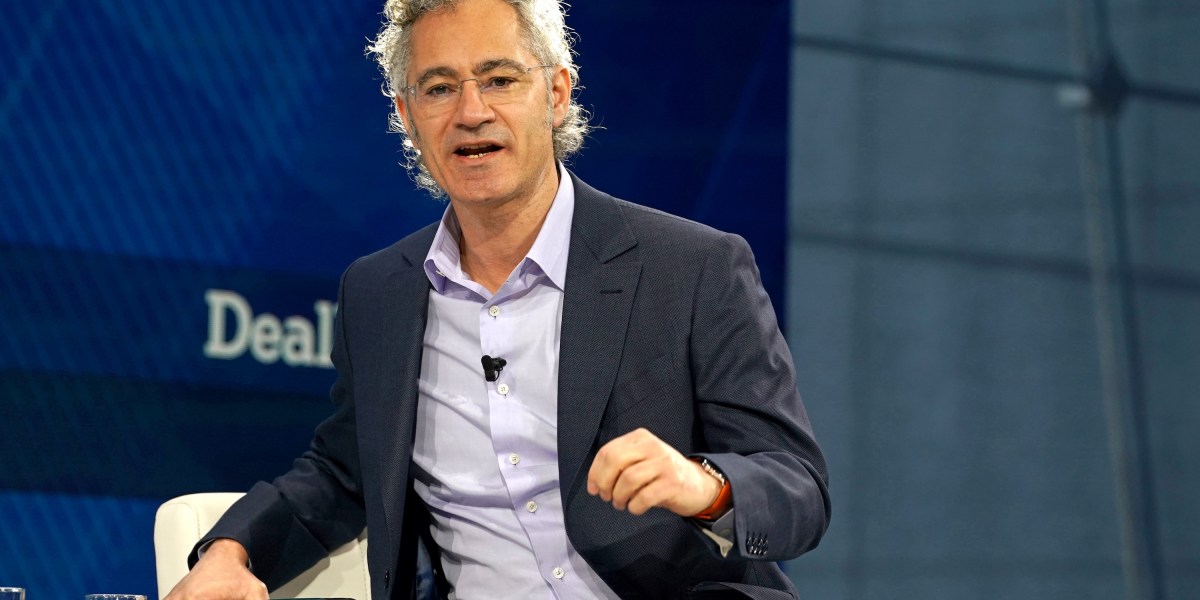
A huge global rally in stocks is underway today after Palantir delivered yet another blockbuster earnings call that blew through analysts’ expectations yesterday and—separately—a poll of manufacturers showed they were surprisingly optimistic about the future.
Palantir stock was up 10.86% in overnight trading, after closing 0.81% yesterday.
Nasdaq 100 futures rose 0.41% this morning. Apple, Alphabet, and Amazon also rose yesterday and remained buoyant in overnight trading. S&P 500 futures were up 0.14% this morning after the index closed up 0.54% yesterday.
Those gains came after markets in Asia closed strongly up today. Japan’s Nikkei 225 was up 3.92%; the South Korea KOSPI was up 6.84%.
Two factors were driving markets back toward record highs this morning:
The Palantir results show that spending on AI is set to continue for the foreseeable future—putting fears that AI is a bubble on the backburner.
And the Institute for Supply Management’s manufacturing index yesterday showed a sharp and unexpected increase in optimism among factory purchasing executives, boosting non-tech stocks.
That’s why the tech-heavy Nasdaq and the broader S&P both went up even though Nvidia, Oracle, Meta, Microsoft, and Tesla—Magnificent 7 stocks that have the power to move the entire market—all declined.
Ohsung Kwon and his team of analysts at Wells Fargo noted that 167 companies in the S&P 500 have reported Q4 earnings so far—and their earnings are 5% above the consensus. In addition, 68% of companies said they expected to increase their capital expenditure (“capex”) above analysts’ expectations. “We expect higher capex … and volume growth in 2026,” he told clients.
All that spending suggests AI companies won’t run out of money any time soon.
Palantir’s results were so strong that some on Wall Street think this level of growth might be unsustainable. At Jefferies, Brent Thill and his team warned of “tougher comps ahead,” meaning that comparable percentage growth in earnings and revenues is likely to slow down in the future. “PLTR has delivered 10 consecutive Qs of growth acceleration, which means that comps will only continue to get more demanding,” they told clients.
They also worried about Palantir’s ability to add new customers fast enough. “While revenue growth has been inflecting, the growth in number of customers has actually decelerated,” they said. Palantir’s customer growth was 5% in Q4, compared to 7% in Q3 and 10% in Q2, they said.
The uptick in the manufacturing index was a total surprise, according to Jim Reid and his colleagues at Deutsche Bank: “That ISM manufacturing print was critical, because it cemented the prevailing narrative of strong data resilience, which has supported markets despite the array of surprising headlines in recent weeks. Indeed, the headline print was back in expansionary territory at 52.6 in January (vs. 48.5 expected), placing it above every economist’s estimate on Bloomberg.”
Lawrence Werther and Brendan at Stuart Daiwa Capital Markets said it was almost too surprising. They produced these charts showing just how out-of-line with the trend the new numbers are:
And they warned that next month’s numbers might see a reversal to the norm: “Concerns related to trade policy were abundant in comments submitted to the survey, with headwinds stemming from the current tariff agenda continuing to contribute to the negative assessments of survey respondents,” they advised clients in a note. “Detail from the survey indicated that the Trump administration’s trade policy has contributed to the postponement of long-term planning decisions, volatility in supply chains, and reduced profits.”
Here’s a snapshot of the markets ahead of the opening bell in New York this morning:
S&P 500 futures were up 0.14% this morning. The last session closed up at 0.54%.
STOXX Europe 600 was up 0.16% in early trading.
The U.K.’s FTSE 100 was down 0.41% in early trading.