
Politics
State reveals how many kids lost health coverage after being unable to do so in Senate committee


Florida’s top Medicaid official came before the Legislature Tuesday to update state senators on a pending legal battle with the federal government over expansion of the popular children’s health insurance program known as Florida KidCare.
But Brian Meyer couldn’t answer a simple question: How many children have been disenrolled from the program because their families haven’t paid the premiums, which is at the center of a tussle between the administration of Gov. Ron DeSantis and the federal Centers for Medicare and Medicaid Services (CMS)?
Meyer couldn’t answer another question during a hearing before the Senate Health Policy Committee: How many children would have been enrolled had the expansion been implemented as planned to cover children living in families that earn up to 300% of the federal poverty level, which amounts to $96,450 annually? Now, only children living in families earning 200% of the federal poverty level qualify. The Legislature ordered the higher threshold in 2023 but the administration hasn’t complied.
“I don’t have that information handy, but I’d be certainly happy to work with our Florida Healthy Kids Corp. partners on that information,” Meyer said, responding to Boynton Beach Democrat Sen. Lori Berman’s questions.
Berman told the Florida Phoenix after the meeting she hopes Meyer has the answers to her simple questions.
“But having been here as long as I have, I hear those responses very often,” Berman said, referring to Meyer’s non-answer.
The Florida Phoenix asked the Agency for Health Care Administration (which administers the Medicaid program) and Florida Healthy Kids (which helps administer the Florida KidCare program) for disenrollment data prior to publishing this story.
Neither agency provided the data before first publication of this story.
The Phoenix also asked those agencies for disenrollment data in July and got no information
In an email to the Florida Phoenix following publication, KidCare spokesperson Ashley Carr said 17,510 children were removed from the subsidized program between Sept. 1, 2024, and Aug. 31, 2025, for failing to pay the premium. That equals 7% of children with subsidized policies over that time span, Carr said.

Another 8,614 children who weren’t receiving subsidies but were enrolled in the program were removed for failing to pay their premiums over that same time span. Those children live in families that earn too much to qualify for subsidies and are willing to pay the full costs of the health insurance plan.
While the dispute over the 12-month eligibility requirement doesn’t apply to the full-pay children, some of them would have qualified for subsidies had the state expanded the program as directed by the 2023 law.
Florida KidCare is the umbrella name for the federal subsidized children’s health insurance program, which allows families that earn too much to qualify for traditional Medicaid to access affordable health insurance. Florida KidCare is an optional Medicaid expansion and families must contribute to the costs of care by paying monthly premiums and co-pays.
Meyer’s presentation largely focused on legal wrangling with CMS over expanding the program. The dispute began under former President Joe Biden but continues to linger under President Donald Trump.
The state sued the federal government in February 2024 after being told the feds would approve the expansion but that the state would have to abide by a 12-month continuous eligibility requirement. That was dictated by the 2023 federal budget, as flagged in a “Frequently Asked Questions” document sent to Medicaid directors nationwide and later codified into rule.
It requires the state to keep eligible enrolled children in the program for a year even if their parents miss the state-mandated monthly premiums.
The DeSantis administration argued at the time that the federal government overstepped its authority with the requirement. Florida was the only state to challenge the rule.
The lawsuit has not moved much since first being filed. U.S. District Judge Mary Scriven in July ordered the parties to provide an update on the legal challenge by September. That’s when attorneys for the U.S. Department of Justice asked Scriven to keep the case open.
“We are continuing to have conversations related to kind of settling this that will be an amenable position to the state and also to the federal government, so we are hopeful we get somewhere hopefully in the near future,” he said.
Meyer said it’s difficult to predict the timeline of the litigation. “We are certainly committed to finding alternative pathways forward to implement the legislation,” he said, adding that the state is in discussions with the “higher levels” at CMS.
Several members of the committee expressed support for the state’s position. Stuart Republican Sen. Gayle Harrell said she didn’t understand the federal government tying the 12-month continuous eligibility with expansion approval.
“We are essentially being held hostage on implementation of raising the income eligibility to 300% of the federal poverty level under the (Medicaid) waiver because of this lawsuit,” Harrell said.
The continued delay in expanding access to Florida KidCare comes with the number of uninsured children in the state on the rise, with a new study showing that 8.5% of children in the state are uninsured, up from 7.4% in 2024. That’s an increase of about 67,000 uninsured children.
___
Christine Sexton reporting. Florida Phoenix is part of States Newsroom, a nonprofit news network supported by grants and a coalition of donors as a 501c(3) public charity. Florida Phoenix maintains editorial independence. Contact Editor Michael Moline for questions: [email protected].

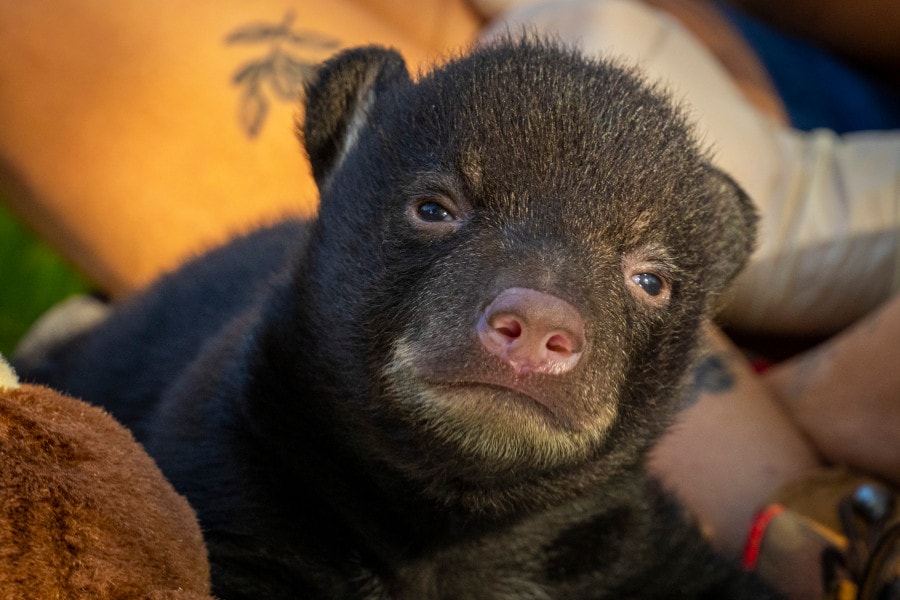
For the first time in a decade, hunters armed with rifles and crossbows are fanning out across Florida’s swamps and flatwoods to legally hunt the Florida black bear, over the vocal opposition of critics.
The state-sanctioned hunt began Saturday, after drawing more than 160,000 applications for a far more limited number of hunting permits, including from opponents who are trying to reduce the number of bears killed in this year’s hunt, the state’s first since 2015.
The Florida Fish and Wildlife Conservation Commission awarded 172 bear hunt permits by random lottery for this year’s season, allowing hunters to kill one bear each in areas where the population is deemed large enough. At least 43 of the permits went to opponents of the hunt who never intend to use them, according to the Florida chapter of the Sierra Club, which encouraged critics to apply in the hopes of saving bears.
The Florida black bear population is considered one of the state’s conservation success stories, having grown from just several hundred bears in the 1970s to an estimated more than 4,000 today.
The 172 people who were awarded a permit through a random lottery will be able to kill one bear each during the 2025 season, which runs from Dec. 6 to Dec. 28. The permits are specific to one of the state’s four designated bear hunting zones, each of which have a hunting quota set by state officials based on the bear population in each region.
In order to participate, hunters must hold a valid hunting license and a bear harvest permit, which costs $100 for residents and $300 for nonresidents, plus fees. Applications for the permits cost $5 each.
The regulated hunt will help incentivize maintaining healthy bear populations, and help fund the work that is needed, according to Mark Barton of the Florida chapter of Backcountry Hunters and Anglers, an advocacy group that supported the hunt.
Having an annual hunt will help guarantee funding to “keep moving conservation for bears forward,” Barton said.
According to state wildlife officials, the bear population has grown enough to support a regulated hunt and warrant population management. The state agency sees hunting as an effective tool that is used to manage wildlife populations around the world, and allows the state to monetize conservation efforts through permit and application fees.
“While we have enough suitable bear habitat to support our current bear population levels, if the four largest subpopulations continue to grow at current rates, we will not have enough habitat at some point in the future,” reads a bear hunting guide published by the state wildlife commission.

___
Republished with permission of the Associated Press.


Buccaneers host rival Saints in key NFC South game

BIG Ten and SEC may not expand in the next TV cycle

Tucker Wetmore’s Song ‘Proving Me Right’ is About Model Bryana Ferringer
-

 Politics8 years ago
Congress rolls out ‘Better Deal,’ new economic agenda
-
Entertainment8 years ago
New Season 8 Walking Dead trailer flashes forward in time
-
Politics8 years ago
Poll: Virginia governor’s race in dead heat
-
Entertainment8 years ago
The final 6 ‘Game of Thrones’ episodes might feel like a full season
-
Entertainment8 years ago
Meet Superman’s grandfather in new trailer for Krypton
-
Politics8 years ago
Illinois’ financial crisis could bring the state to a halt
-
Business8 years ago
6 Stunning new co-working spaces around the globe
-
Tech8 years ago
Hulu hires Google marketing veteran Kelly Campbell as CMO