Connect with us

Politics

State lawmakers greenlight sweeping audit of Miami Beach after request by Fabián Basabe

Published

on


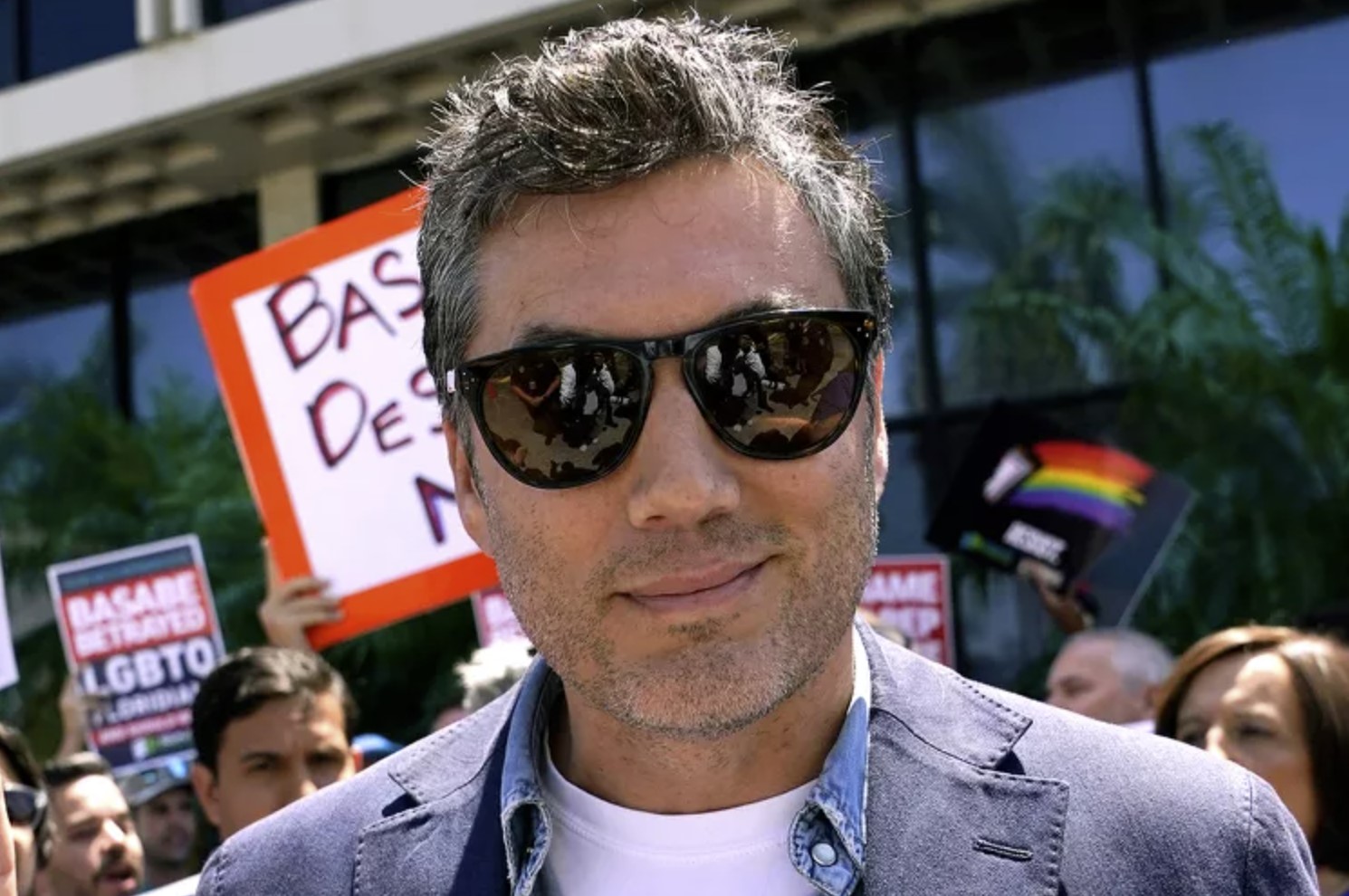
Miami Beach is now bracing for a rare, top-to-bottom state audit after lawmakers quietly and unanimously approved a request by Republican Rep. Fabian Basabe.

The Joint Legislative Auditing Committee directed Florida Auditor General Sherill Norman to examine Miami Beach’s operations, a move lawmakers advanced without discussion after Basabe alleged chronic mismanagement and weak transparency.

An audit, he said, would “strengthen systems, reinforce public trust and support the residents we all serve.”

“This isn’t about fault-finding. It’s an opportunity, with the budget of our size and the responsibilities that we carry as a coastal community,” he said. “Transparency and partnership matter.”

Basabe detailed his concerns in an October letter to the panel’s Chairs, Sen. Jason Brodeur and Rep. Chase Tramont, accusing the city of mismanaging its nearly $1 billion budget, procurement irregularities and chronic delays on major capital projects.

Norman will now set the scope of the review, Audit Manager Derek Noonan told the Miami Herald, which first reported on the audit’s approval. Noonan said auditors will coordinate with the city in the coming weeks to begin document requests and arrange on-site work. A final report is expected roughly one year after the audit formally begins.

Miami Beach officials have pushed back on Basabe’s allegations. City Manager Eric Carpenter told the Herald that the city “undergoes comprehensive audits each year” and is prepared to “fully cooperate with the State to dispel any misinformation.”

Notably, those audits are conducted internally.

Commissioner Alex Fernandez — a Democrat with whom Basabe has differed on multiple matters, including the city’s homelessness ordinance, which the lawmaker has argued conflicts with state law — similarly told the Herald that Miami Beach is a “transparent, well-run, and fiscally strong government.” He noted that the city has reduced its millage rates and boasts strong bond ratings, record reserves and a year-end surplus.

Commissioner Laura Dominguez, also a Democrat and target of negative attention from Basabe in the form of a pay-for-play accusation she called a “baseless smear,” also cited the city’s bond ratings, balanced budget and annual audits in a statement to Florida Politics.

Basabe has called for the audit to probe a wide range of concerns, including a 45% increase in the city’s budgets since 2021, spending on international travel, allegedly opaque procurement contracts and what he calls a counterproductive pattern of repeatedly arresting and then releasing homeless people.

His October request also flagged alleged “inflated contracts, diversion of funds,” excessive reliance on outside consultants and favoritism in leases and contract awards. He further questioned delays in completing projects such as Bayshore Park, which he said “took thirty years” to build — contemporary reporting suggested the timeline for the project was closer to 10 years — and the Miami Beach boardwalk, which he said took 20 years to finish.

Though Miami Beach already maintains an independent Inspector General with broad subpoena authority, the Auditor General’s inquiry represents one of the most sweeping state-led examinations of a South Florida municipality in recent years.

It also lands after Gov. Ron DeSantis’ administration, through its separate Department of Government Efficiency initiative led by CFO Blaise Ingoglia, conducted audits of Miami-Dade County, Broward County, Palm Beach County, the city of Miami and other local governments that Ingoglia said have collectively overspent nearly $1.9 billion in one year alone.


Source link

Continue Reading

Politics

Ron DeSantis says most Floridians won’t notice ‘schools of hope,’ as they will be in places most people don’t go

Published

on


Gov. Ron DeSantis is strongly advocating for the “Schools of Hope” model, which would co-locate charter schools in underused public school facilities.

And as DeSantis said in Orlando, the facilities primarily will cater to children whose parents aren’t doing as much as some others, in places most people wouldn’t even go, with tonier communities insulated from the concept.

“You’re really relieving burdens on the district, right? Because, you know, you’re creating a program where it is going to be targeted at … the least-advantaged students. And in areas where a lot of people say it’s not even worth trying,” DeSantis said.

It’s unclear which people are allegedly saying it’s not worth “trying” to educate some students but not others.

But worries that they will be in places like Windermere or Palm Beach are misplaced, DeSantis said.

“This is not going to be something where a school of hope is going to be coming in and descending on Palm Harbor or Destin or some of these places,” he said, singling out two wealthy communities where more than 80% of residents are White.

He reassured parents that these schools of hope won’t come in where “my Sally or my Johnny goes,” but instead would be in “some hard areas in Miami. Probably Fort Lauderdale, Broward County, probably Orlando, maybe Tampa, maybe Jacksonville.”

In these areas, DeSantis predicts the Schools of Hope will largely go unnoticed.

“I don’t think most Floridians are even going to know that there’s a school of hope. Because quite frankly, probably where they’re setting up, already a lot of Floridians aren’t spending a lot of time in some of these areas, but they’re going to go in,” DeSantis said.

Regardless of whether residents are aware of the schools, DeSantis made it clear his preferred vendor would be the Success Academies championed by arguably his leading political patron over the years, billionaire Ken Griffin.

Griffin has already pledged to devote $50 million to expanding the concept in Florida.

“It’s a difficult mission, but at least with Success Academy, you have an operator who’s been able to do some really, really great things,” DeSantis said.

He credits Success Academies with having “gone into the worst areas in terms of opportunity … the most at-risk … areas where no one else wants to go.”

Lots of vendors want into the taxpayer-subsidized space.

As of last month, 22 School Districts across the state have received at least 690 letters of intent from charter school operators, according to data gathered by the Florida Policy Institute, a member of the Florida Coalition for Thriving Public Schools.

School Districts reporting letters as of mid-November include Brevard, Broward, Collier, Duval, Hillsborough, Indian River, Lake, Lee, Manatee, Miami-Dade, Orange, Osceola, Palm Beach, Pasco, Pinellas, Polk, St. Johns, St. Lucie, Sarasota, Seminole, Sumter and Volusia counties.

The letters, sent by privately operated charter school organizations, seek to occupy portions of public schools the state considers underutilized. Under provisions added to the 2025–26 state budget, “Hope operators” may move into those spaces at no cost, leaving districts to absorb maintenance, custodial and other operational expenses.

South Florida had received the most letters at last check, with at least 224 between Broward and Miami-Dade counties. Miami-Dade officials said the district received at least 180 letters, though only 90 were considered valid because many came from Bridge Prep Academy, which is not yet an approved Schools of Hope operator.

The impact also was obvious across the Tampa Bay region, where Hillsborough, Pinellas, Pasco and Manatee counties collectively show some of the highest concentrations of claims in the state. Together, the four districts account for more than 80 campuses and more than 46,000 requested seats, according to data compiled by the coalition.

Even as those letters go out, state lawmakers are already working to pull the plug on the program’s most controversial rule that allows charter school operators to move into “underused” public school buildings rent-free. SB 424, filed by Democratic Sen. Darryl Rouson of St. Petersburg, would repeal that provision.

“By eliminating language requiring co-location in public schools, we are ensuring schools do not face the unintentional consequence of an unfunded mandate, and that students can continue thriving in their schools without losing access to spaces they need for academic success,” Rouson said in an earlier statement about the bill.

___

A.G. Gancarski and Jesse Mendoza of Florida Politics contributed to this report.


Source link

Continue Reading

Politics

Gov. DeSantis now says poorer counties will ‘eventually’ be on their own to deal without property taxes

Published

on


What once was framed as “budget dust” could eventually be gone with the wind, leaving local politicians in small towns with tough decisions in the coming years.

Gov. Ron DeSantis is reiterating his promise to give fiscally constrained counties money in his new budget proposal to replace potentially property tax revenues should they be phased out. But DeSantis is now saying those cash-strapped jurisdictions will have to do without supplementary funds down the road.

“I’m not saying it’s even going to be necessary, but I put in the budget enough money to completely, 100% reimburse any homestead property tax reduction for those fiscally constrained counties,” DeSantis said in Orlando.

“There’s some people that say you shouldn’t do that. But my view is it’s a little more difficult maybe for some of them. And now, eventually they’re going to have to figure it out.”

DeSantis rolled out the budget proposal to aid smaller counties during a cable news hit last week, but did not say there would eventually be an end to state-level generosity despite touting a “big surplus” to a national audience.

“We have 32 fiscally constrained counties. You know, Miami-Dade, Palm Beach, these are powerhouses. I’m putting in my budget the revenue to totally backfill every one of those rural counties. So they’re not going to miss a single thing,” the Governor said on “Fox & Friends.”

However, he first teased the idea in October.

“I can fund all that. I can take all 32 fiscally constrained counties, I could fund 100% of tax revenue that would be derived from a homestead Florida residence, property taxes. And it’s like budget dust for us,” DeSantis said in Panama City.

A total of 32 of Florida’s 67 counties are designated as fiscally constrained.

Typically lower in population and property value, they include Baker, Bradford, Calhoun, Columbia, DeSoto, Dixie, Franklin, Gadsden, Gilchrist, Glades, Gulf, Hamilton, Hardee, Hendry, Highlands, Holmes, Jackson, Jefferson, Lafayette, Levy, Liberty, Madison, Okeechobee, Putnam, Suwannee, Taylor, Union, Wakulla and Washington counties.

DeSantis has been leaning on lawmakers in the supermajority Republican Legislature to put a measure eliminating homestead property taxes on the ballot, even teasing a Special Session during the Summer if they don’t ratify something during the Regular Session.

That ballot measure would need 60% support should it be presented to voters.


Source link

Continue Reading

Politics

Stan McClain, Lauren Melo push for ‘Blue Ribbon’ projects to boost land preservation

Published

on


State lawmakers are considering a proposal aimed at encouraging Florida’s largest private landowners to serve as long-term stewards of both the natural and built environments, offering a framework supporters say better aligns growth, conservation and infrastructure planning.

Sen. Stan McClain and Rep. Lauren Melo have each filed bills (SB 354, HB 299) establishing “Blue Ribbon” projects, which would apply to landowners who control or own at least 10,000 or more contiguous acres. The measures would require participating landowners to conserve at least 60% of the property.

Under the bill, the plan must prescribe the development property over a 50-year planning period by meeting strict statutory requirements. Landowners would still have to earn approval from local governments based on compliance with the statutes, including development orders, and concurrency. 

“HB 299 creates a framework that secures large-scale private land conservation for the long term — without requiring state purchase or taxpayer subsidies,” Melo said.

“The legislation not only fosters responsible growth, it also expands the availability of attainable housing for Florida families. The Blue Ribbon Projects bill strikes a balance that will be good for our communities, while protecting natural spaces, wildlife corridors and critical water recharge areas.” 

The stated Blue Ribbon project goals are to protect wildlife and natural areas; limit urban sprawl; provide a range of housing options including missing middle and affordable housing; create quality communities designed to reduce vehicle trips and promote mobility options; and enhance local economic development objectives and job creation.

The proposal is born of a desire to implement smart growth strategies by ensuring growth occurs only where it can be supported. The proposal requires phased planning for water, wastewater, transportation, schools and utilities.

It also emphasizes sustainability beyond just conservation lands, by ensuring new development supports population density in compact communities that are mobility focused.

The measure also seeks to ensure the state is a good steward of taxpayer dollars, by allowing conservation lands to be secured without public dollars. 

Still in its early phases, the bill has some early detractors, such as the Sierra Club, worried the proposal constitutes a local government preemption. But Audubon Florida’s Beth Alvi has not taken a direct position and remains hopeful, telling POLITICO that Melo “has always been solutions-oriented and is a devoted advocate for her community.”

Supporters, meanwhile, argue the process actually gives local residents more say in development in or near their communities through a real remedy process for landowners or anyone who objects to the project proposal.

“These bills are about the Florida we leave behind. They secure meaningful land conservation at no cost to taxpayers, while giving our state a responsible way to plan for future growth. SB 354 and HB 299 also bring fairness and predictability to the review process and support sustainable development that pays its own way — providing the long-term certainty communities and local governments need to plan wisely,” McClain said.

The House version of the bill will be heard in its first committee, the Intergovernmental Affairs Subcommittee, Thursday at 9 a.m.


Source link

Continue Reading

Trending

Copyright © Miami Select.