Connect with us

Politics

State Attorney declines to pursue charges against Monroe GOP officials after election probe

Published

on


Monroe County’s top Republican leaders are breathing easier after prosecutors announced they will not pursue charges tied to a disputed $20,000 political contribution that set off months of infighting, allegations of fraud and an almost one-year investigation.

In a memo finalized last month, State Attorney Amira Fox of the 20th Judicial Circuit said her Office found insufficient evidence that Republican Party of Monroe Chair Rhonda Rebman Lopez and then-Treasurer Sherri Hodies violated state law when the organization endorsed and donated to Hodies’ successful Supervisor of Elections campaign.

Rebman Lopez celebrated the decision this week, commending Gov. Ron DeSantis for ensuring a “fair, transparent process” and blasting Republican Monroe State Attorney Dennis Ward, whom she accused of pushing the complaint to help Hodies’ Democratic opponent last year.

“This was a political attack from the start,” Rebman Lopez said. “Ward’s efforts to slander loyal Republicans failed. Thanks to Governor DeSantis and to the voters of Monroe County for standing strong.”

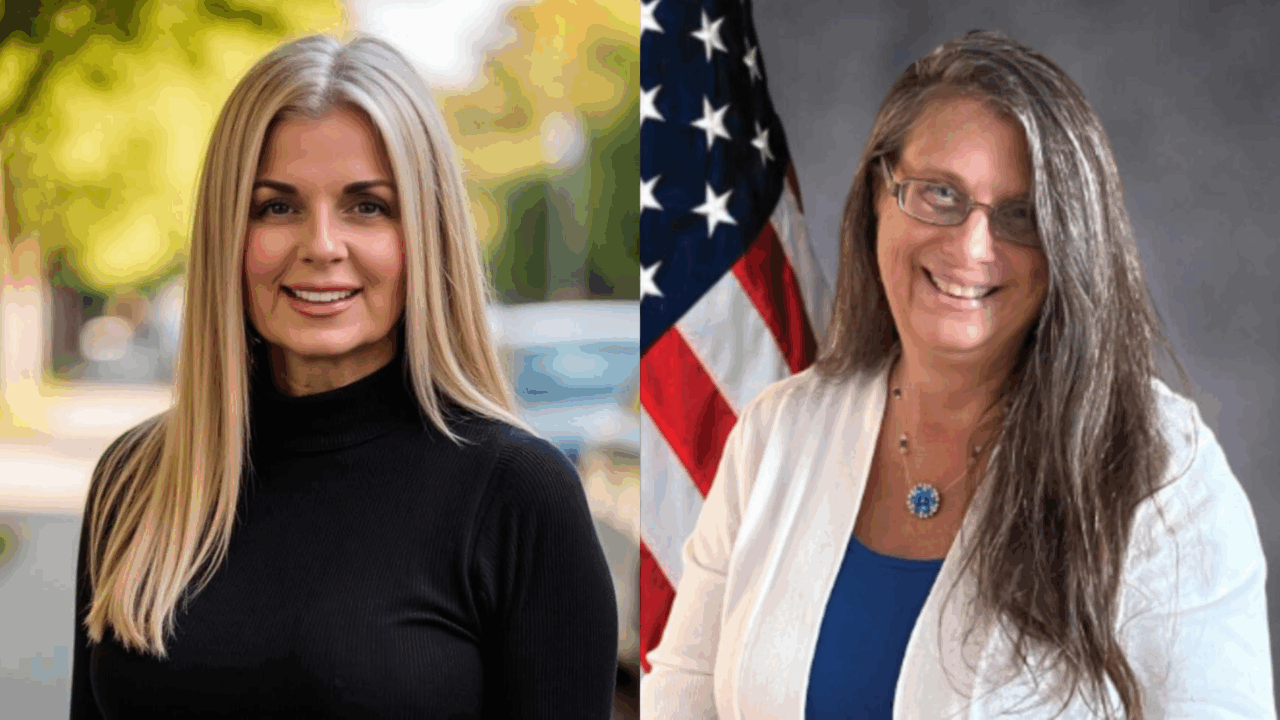
(L-R) Republican Party of Monroe County Chair Rhonda Rebman Lopez and Supervisor of Elections Sherri Hodies, a past Monroe GOP Chair. Images via Rhonda Rebman Lopez and Republican Party of Monroe County.

The controversy dates to an April 20, 2024, meeting of the Monroe County Republican Executive Committee (MCREC). At that gathering, members voted to endorse Hodies over Republican primary rival Margaret Romero and contribute $20,000 to her campaign.

Soon after, Key West resident Phyllis May filed a complaint alleging that the vote did not satisfy Rule 8-B of the Republican Party of Florida (RPOF), which requires either 60% of a local Executive Committee’s total membership or two-thirds of those present to endorse a candidate in a contested Primary.

May argued that the April vote — 20 in favor, 18 opposed — fell short of that threshold, making the contribution unlawful. She also alleged that the move amounted to voter fraud and unlawful distribution of funds, placing both Rebman Lopez and Hodies in violation of Florida law that makes it a third-degree felony for a county party Chair or Treasurer to misappropriate or unlawfully expend party funds.

Because Ward had been present at the April meeting, he recused himself to avoid a conflict. DeSantis reassigned the case to Fox through an executive order Sept. 20, 2024.

Investigators interviewed numerous MCREC members and reviewed meeting the group’s minutes, bylaws and testimony. According to a close-out report investigators from Fox’s Office submitted in June, the April meeting was contentious, and many members were unfamiliar with Rule 8-B.

Key testimony came from MCREC Secretary Jessica Prescott, who said she researched Rule 8-B and believed a simple majority was sufficient because a 60% quorum was present; MCREC member Patrick Foley, who testified that confusion stemmed from conflicting interpretations of Rule 8-B, but that nothing nefarious occurred; and the group’s current Treasurer, Henry Stark, who argued Rule 8-B as vague and subject to “a variety of interpretations.”

Fox’s Office concluded there was no evidence that Rebman Lopez or Hodies had criminal intent to misappropriate funds, finding instead that there had been an honest dispute among members about how to apply party rules.

“The evidence is clear that different members of the MCREC had different interpretations of RPOF Rule 8-B and members had little to no experience with RPOF Rule 8-B,” the report stated.

Fox’s Office also noted that Rule 8-B governs endorsements but not financial contributions, which the committee had historically approved by simple majority.

“Had the MCREC simply proceeded with a majority vote for the financial distribution, as the organization had always done in the past,” the memo said, “the allegation of misappropriation of funds may have been avoided.”

Post Views: 0


Source link

Continue Reading

Politics

Parents of trans children urge compassion, not humiliation, in Florida’s schools, doctor’s offices and government halls

Published

on


Juan Dominguez feared for his child Kai entering a deep depression, angry at the world, before a doctor finally provided a diagnosis of gender dysphoria. The father knew little about transgender identity at the time, but saw an immediate turnaround once Kai was treated.

But as Florida implemented new laws restricting medical professionals from providing gender-affirming care to minors, that doctor can no longer provide care, nor can any other in the state.

“The doctor that helped us identify Kai’s condition can no longer see us. We are not allowed to be open with other doctors because they won’t accept our child in their clinics,” Domingue said. “Doctors spend years studying the research. They know their patients. Medical decisions belong with families and doctors, not politicians.”

Dominguez was one of several parents to speak Wednesday at an Equality Florida press conference in Tallahassee, condemning a new round of laws aimed at LGBTQ Floridians. Parents of transgender children said their children have been humiliated in school, denied care and silenced repeatedly for any objection to what they say are draconian laws.

Equality Florida Executive Director Stratton Pollitzer said this follows a trend of attacks, ones that too often originate from Gov. Ron DeSantis’ Office.

“Let’s understand why DeSantis and this small band of his cronies are so obsessed with attacking the LGBTQ community,” Pollitzer said.

“These bills are smoke bombs meant to distract Floridians from the complete failure of Ron DeSantis and his allies to address the real crises Floridians are facing: lack of affordability, a housing emergency, and skyrocketing insurance costs.”

The press conference called out legislation, including one dubbed by critics as the “Don’t Say Gay or Trans at Work” bill threatening funding from organizations holding LGBTQ sensitivity training. Activists also took the state to task for many bills passed in prior years, most in a stretch before DeSantis’ ultimately failed run for President.

Those included bans on transgender students in women’s sports, restrictions on medical care being provided to minors and coverage to adults, and the state’s notorious “Parental Rights in Education” law barring any instruction on gender identity or sexual orientation through high school, a prohibition that includes outlawing the use of preferred pronouns or nicknames by school faculty and staff.

Luisa Montoya, President of PFLAG Broward, said she was upset she could not even register her trans son in school with his preferred name.

“Because of this, my child was repeatedly called by his birth name in front of other students. Sometimes it happened in the classroom, sometimes in the hallway. And once, it even happened over the school megaphone,” Montoya said.

“I will never forget the look on my child’s face. That moment reminded me why I fight. Because school should be a place of learning and safety — not fear or humiliation.”

Jennifer Solomon, head of Equality Florida’s Parenting with Pride program, stressed that LGBTQ families deserve representation in Tallahassee. And she said parents are one group that won’t be silenced.

“Look around. These parents are not here as strangers. They are your neighbors, your colleagues, your friends. Every one of them has a child they cherish and a story they want to be heard,” Solomon said.

“This fight is not abstract. It is deeply personal. I live it every day — in every choice I make, in every conversation I have about the future of Florida, and in every moment I stand beside families who are facing these threats with courage and love.”

Pollitzer said he was heartened in recent Legislative Sessions when, despite anti-LGBTQ legislation being filed and occasionally heard in committee, few bills have passed.

“Last year we saw a growing number of legislators refuse to waste more time on these awful bills and with people power we defeated all of them,” he said.

“We hope that with real challenges facing everyday Floridians lawmakers will again refuse to prioritize DeSantis’s agenda of more censorship, surveillance, and government control. But hope does not mean silence. And it does not mean standing down.”


Source link

Continue Reading

Politics

AI bill of rights legislation clears its first Senate committee stop

Published

on


A Senate committee advanced a bill to create an artificial intelligence bill of rights aiming to protect consumers and minors.

With unanimous bipartisan support, the Senate Commerce and Tourism Committee backed Sen. Tom Leek’s bill (SB 482).

“Quite simply, we get a 60-day Session once a year. If we don’t act and Congress doesn’t act, those protections won’t exist for Florida’s children and vulnerable adults,” Leek, a Port Orange Republican, told lawmakers before the 10-0 vote Wednesday. “So I believe we have to act.”

Wednesday’s vote was the bill’s first committee stop to support Gov. Ron DeSantis’ agenda as the measure heads next to the Senate Appropriations Committee.

DeSantis has increasingly been calling for more regulation to protect young people from the dangers of AI technology. But President Donald Trump has also been critical of states passing AI reforms and signed an executive order in December aimed at restricting states from overregulating the technology.

Leek argued that his bill doesn’t defy Trump’s order.

“I think the protections that we’ve got here for minors and for vulnerable adults, and for all of us really, are in line with what President Trump wants,” Leek said during Wednesday’s hearing.

Leek argued Trump was striking back against “onerous restrictions,” while his bill was specifically focused on consumer protections.

“It is purposely and deliberately targeted at those protections and not … the universe of things that could be done,” Leek said.

Under Leek’s bill, chatbot platforms would be required to post pop-up warnings that a person is talking to AI. The message would appear at the start of the conversation and reappear at least every hour.

Children would not be allowed to communicate with chatbots without parental permission. Parents would have control to see their child’s communications with the chatbot and could also limit access or delete the child’s account.

The bill would also require minors to be reminded to “take a break” at least once every hour.

Chatbot platform operators that violate the proposed new rules could face civil fines up to $50,000 per violation.

The AI bill of rights legislation comes after a 14-year-old Orlando boy killed himself in 2024 after he had been chatting with an AI bot extensively. Some of the conversations turned sexual and romantic. The family later sued in a case that got national coverage by The New York Times.

“Artificial intelligence, holding a great deal of promise, also poses novel and unique threats. Generative AI in particular can be particularly insidious in some contexts when used by children or unsuspecting or vulnerable or adults,” Leek said at Wednesday’s hearing.

“Given the incredible pace of the evolution of the technology and its adoption by business and academia, it is incumbent on us to protect Floridians for some of its problematic results.”

Several advocates and Democrats praised the bill, while also arguing there was room for improvement in Leek’s legislation.

“We would like to be a part of the conversation,” said Florida AFL-CIO lobbyist Rich Templin. “This is a great consumer protection beginning, but what about workers?”

And Turner Loesel, a technology policy analyst at the James Madison Institute, warned that the bill’s language needed to be tweaked, which Leek teased is coming. Leek said he is still working with stakeholders to tighten the bill’s definitions.

“Its definition of artificial intelligence is broad enough to capture spam filters alongside companion chatbot platforms, and we look forward to the amendments on that definition,” Loesel said.

Sen. Carlos  Guillermo Smith, an Orlando Democrat, called the bill a good first step but also agreed the legislation could be beefed up.

“We need meaningful accountability in the bill. Floridians deserve more than promises. They deserve proof. That means compliance reporting and audits that show companies are actually protecting biometric data, that they’re preventing misuse, and that they’re operating transparently,” Smith said.

“I think relying solely on political actors in the Office of the Attorney General for enforcement is not enough. To stop harmful conduct, I think we need stronger civil protections, including a private cause of action for all ages to defend all of our rights that are outlined in this AI bill of rights.”


Source link

Continue Reading

Politics

As pennies fade away, Senate panel advances Don Gaetz proposal setting cash-rounding rules

Published

on


The rounding requirement would apply only to cash purchases.

A proposal addressing how Florida retailers will handle cash transactions now that pennies are no longer being minted has cleared its first Senate committee stop.

The Senate Commerce and Tourism Committee approved the bill (SB 1074) without debate or amendment. Sen. Don Gaetz, the bill sponsor, told lawmakers that Federal Reserve regional vaults stopped distributing pennies last month, leaving retailers unable to provide exact change in cash transactions when 1-cent coins are unavailable.

“Retailers will have no choice but to round to the nearest nickel for cash customers,” Gaetz said.

“As you know President (Donald) Trump ended the production of pennies, so now we’re moving to a pennyless economy. This bill tries to provide some guidance to help retailers know how to proceed.”

Under the bill, in-person cash transactions ending in 1 or 2 cents would be rounded down, while amounts ending in 3 or 4 cents would be rounded up to the nearest nickel. Transactions ending in 6 or 7 cents would be rounded down to a nickel, and those ending in 8 or 9 cents would be rounded up to the nearest dime.

The rounding requirement would apply only to cash purchases. Sales tax would be calculated before rounding occurs, ensuring the amount of tax owed does not increase or decrease because of the adjustment.

SB 1074 also amends Florida’s Deceptive and Unfair Trade Practices Act to specify that rounding cash transactions under these circumstances would not constitute a deceptive or unfair trade practice.

The Senate bill now advances to the Finance and Tax Committee, its second of three committee stops.

Sarasota Republican Rep. Fiona McFarland filed HB 951, the House version of the proposal, earlier this month.


Source link

Continue Reading

Trending

Copyright © Miami Select.