Connect with us

Business

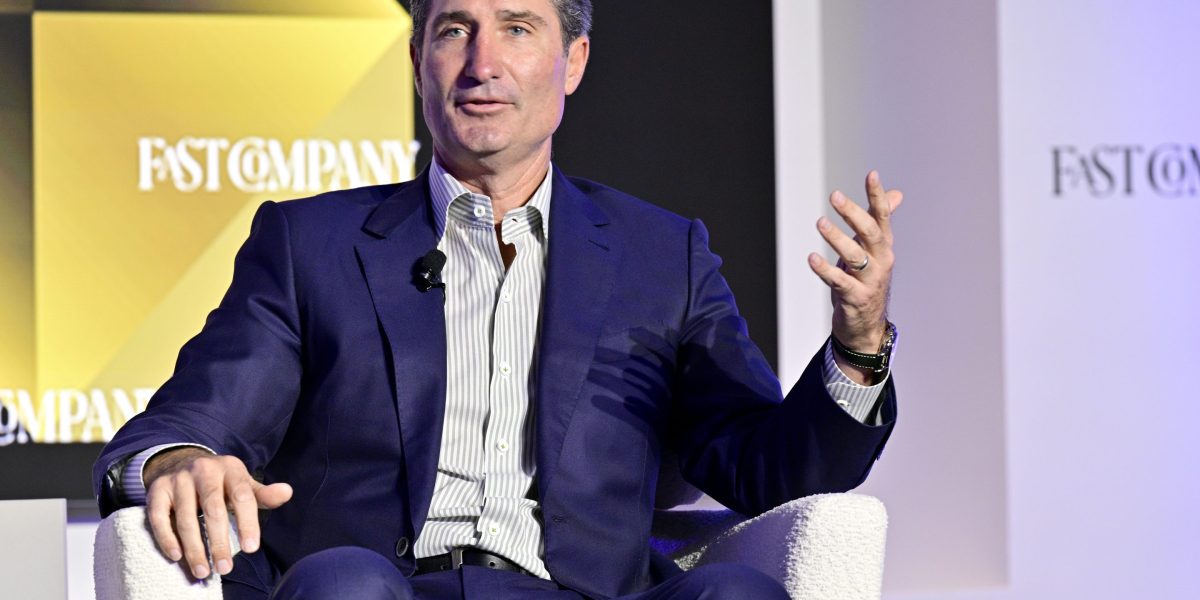
Starbucks CEO Brian Niccol found evidence of turnaround plan working on Reddit thread

Published

on


Starbucks CEO Brian Niccol found evidence his efforts to turnaround the coffee chain’s fortunes are working while scrolling on Reddit.

During an interview at the Wall Street Journal Leadership Institute earlier this month and published on Monday, Niccol said he was reading a Reddit thread of people going through the interview process at Starbucks, with some users asking what interview question they should be prepared for. Other users, ostensibly those who work at the coffee chain, responded that candidates should be prepared to talk about their value of customer service.

“If you don’t like customer service, you’re probably not going to like working at Starbucks. We’re in that transition of getting people to understand that,” Niccol said. “When I saw that in the Reddit thread, I was like, ‘OK, we’re making progress on what the standard of services that we want [are].’”

Customer service has been at the core of Niccol’s “Back to Starbucks” plan he implemented when he took the help of the company in September 2024. Niccol has espoused the hopes of returning Starbucks to a cozy third space, away from the image of being a hurried pitstop to pick up a morning espresso, and toward 1990s nostalgia of lingering over a latte. He told WSJ he wants the Starbucks experience to harken back to the fictional coffee shop Central Perk, beloved by the sitcom Friends characters.

To achieve this relaxed effect, the coffee chain has implemented a swath of changes to its stores, including installing comfier seating and returning seats to thousands of locations where most furniture was moved to accommodate more mobile ordering, as well as writing customers’ names in Sharpie on each to-go cup. It cut back on its menu size in hopes of speeding up orders and introduced trendy items like protein-infused drinks to lure in customers.

“There is tremendous value in being a world-class, customer-service company combined with great craft, great quality food,” Niccol said at the Fast Company Innovation Festival in September. “When you look at putting those two things together for the price that we will have to charge for it, I think it will turn out to be invaluable.”

Early signs indicate Niccol’s efforts to revive the brand are working. In October, the company reported global sales in stores open for at least one year had risen for the first time in two years.

Customer service challenges for the mobile order crowd

One complication with Niccol’s vision of a Starbucks filled with lingering patrons is that 70% of store orders—including 40% drive-thru and 30% mobile, according to the CEO—come from customers looking to grab a coffee and go. He said expectations of store employees to greet and serve customers is the same, regardless of how long they are actually in the store.

“When the ticket comes out…it doesn’t matter to [baristas] whether they’re doing a mobile order or a cafe order,” Niccol said. “What matters, though, for the customer is the mobile order expectation is, you’ve got to be on time and accurate. The in-cafe customer, they want a little bit more connection, and then they also want to know that you’re going to be on time.”

Mobile ordering has been a challenge for Starbucks, with baristas struggling to keep up with the busy flow of orders on a weekday morning. Former CEO Laxman Narasimhan said last year loyal customers were even cancelling orders, as much as a mid-teens percent, that took too long to be fulfilled, which contributed to lagging sales.

In addition to cutting down its menu size, Starbucks has also implemented AI-powered technology behind the counter to help streamline baristas’ workflow and improve efficiency with the goal of completing orders in four minutes or less. Niccol said he doesn’t know how the technology will impact the number of employees working at a given store. However, having the drink-making process completely automated would, in his eyes, undermine the warm customer service reputation Starbucks is trying to rebuild.

“This is still a craft business,” Niccol said. “I think it’s important for you to see the espresso shot get pulled, the milk get steamed, the actual handcrafting of the beverage. I know there’s a lot of people that believe you can have a robot do it. I just think it takes the soul out of the experience.”


Source link

Continue Reading

Business

The world’s richest added a record $2.2 trillion in wealth this year—but they’ve increasingly lost faith in the American Dream

Published

on


The world’s richest people saw their wealth increase more than ever in 2025, but a funny thing happened along the way. Many of them seemed to decide that their best prospects for the future don’t lie on the western side of the Atlantic, even though the exceptional performance of U.S. equity markets is driving much of these gains. A growing share of the ultra-elite are quietly voting with their feet against the idea that the American Dream is still worth pursuing in America.​

The 500 richest individuals on the planet added a record $2.2 trillion to their fortunes this year, Bloomberg’s Dylan Sloan reported, lifting their combined net worth to about $11.9 trillion.​ Big Tech led the charge, with a euphoria over the prospects of artificial intelligence growing so large that the Magnificent Seven decoupled in many respects from the other 493 companies in the S&P 500. Indeed, Sloan reported that roughly a quarter of all the gains recorded by Bloomberg’s wealth index came from just eight individuals.

The year also saw a surge in what UBS Global Wealth Management calls “everyday millionaires,” or the millionaire next door with wealth in the low seven digits. At the dawn of the millennium, there were just over 13 million of these folks worldwide, but that number has “skyrocketed” to nearly 52 million through the end of 2024—a more than fourfold increase. Even after adjusting for inflation, this population has more than doubled in real terms since the start of the century. New York Times bestselling author Nick Maggiulli, the COO of Ritholtz Wealth Management, told Fortune in August that “something weird’s going on” with wealth trends, as many affluent Americans are asset-rich but feeling poor, with six new economic classes taking shape and nobody seemingly very happy about it.

Another look at UBS wealth analysis, the latest Billionaire Ambitions Report, offers a partial explanation. Global billionaire wealth overall climbed to an all‑time high of roughly $15.8 trillion in 2025, powered both by self‑made founders and the largest intergenerational wealth transfer in the report’s history.​ Nearly 3,000 billionaires now sit atop that mountain of capital, as 196 new self‑made billionaires added about $386.5 billion and heirs inherited a record $297.8 billion this year alone.​

To be sure, North America remains the top investment destination for billionaires surveyed by UBS, but the proportion of ultrawealthy who believe it’s the greatest short-term opportunity for returns dropped from 80% to 63% year over year. And where North America is dipping, other destinations are climbing, with four in 10 billionaires rating Western Europe as the greatest space for opportunity over the next 12 months.

When success means leaving

Some high-profile anecdotes show ultrawealthy Americans voting with their feet. Even as the U.S. remains the top investment destination for billionaires’ capital, many of the people who have “made it” are increasingly deciding they do not want to live out their success inside America’s borders.​

The same forces that have inflated asset prices—hyper‑financialization, permanent online visibility and polarized politics—are pushing some high-earners to seek safety, anonymity, and a slower pace of life overseas.​ France’s decision this month to grant citizenship to George Clooney, his wife, Amal, and their twins, reflects deep tensions.

The two‑time Oscar winner, long a Hollywood fixture, has effectively shifted his family’s center of gravity to a former wine estate in Provence that he describes as a farm, turning the hills of southern France into home base instead of Los Angeles. And he’s been unusually blunt about why he no longer wants to raise his children in Los Angeles, telling Esquire recently that he feared they would “never … get a fair shake at life” in the culture of Hollywood. France, on the other hand, can offer his children a “much better life” centered on chores, family, and relative obscurity rather than red carpets and paparazzi.

By choosing a jurisdiction with strict privacy laws and tougher limits on photographing children, Clooney is effectively arbitraging legal regimes the way multinational corporations arbitrage tax codes—only here the protected asset is family life, not corporate profit. His move amounts to a personal hedge against U.S. celebrity culture and, more broadly, a critique of an American Dream that offers visibility as a reward but often delivers surveillance as the cost.

A broader elite exit

Clooney is far from alone among the prominent and wealthy reassessing their relationship with the United States. Recent years have seen Ellen DeGeneres and Portia de Rossi decamp to the U.K. after Trump’s reelection, Rosie O’Donnell relocate to Ireland, and figures like Richard Gere, Tom Ford, and former Google CEO Eric Schmidt shift homes or primary bases to Europe.

Behind the headlines, data points to a wider, less visible wave of departures. The IRS “Expatriation List,” which tracks mostly high‑net‑worth individuals giving up U.S. citizenship, recorded roughly 4,820 renunciations in 2024—up about 48% from 2023 and the third‑highest annual total on record, with about 21,000 high‑net‑worth Americans renouncing between 2020 and 2024 alone. The only years with higher prominent expat departures were 2016 and 2020, for rather obvious reasons—the first election of Trump and the onset of the COVID pandemic.

A fractured dream at the top

UBS finds that billionaire families are becoming more mobile and international, with over a third saying they have relocated at least once and a similar share considering moves, citing a better quality of life, geopolitical concerns, and tax planning.​ It shows how ultrawealthy families are “becoming increasingly extended and international,” wrote Benjamin Cavalli, head of strategic clients and global connectivity at UBS. “This means they now face an unprecedented set of challenges that span continents, generations, and cultures.”

That mobility underscores a paradox: North America remains the preferred destination for capital, yet for some of the people who own it, the “dream” increasingly seems to require an offshore upgrade in order to protect their children and their peace of mind.​

Another aspect of the UBS report suggests the tensions pushing some people to leave are the same thing creating so much wealth in the first place. The U.S. created so much wealth in 2025 that it minted 92 new self-made billionaires, leading the way globally as $179.9 billion of fortunes were created out of the churn of American innovation. Asia-Pacific saw 61 people become billionaires, representing $124.4 billion, and Europe came in last place, with 43 new billionaires and $82.2 billion of wealth.

And regarding long-term investment destinations, billionaires surveyed by UBS found that North America is still the best place for them to generate a return, with 65% seeing it as the top spot, almost unchanged from 2024’s finding of 68%. It suggests that only one region is innovative enough to see the most wealth produced the most quickly, as the wildly popular Irish economics podcaster David McWilliams told Fortune in November.

“This innovative spirit is rooted in American history,” McWilliams said, going all the way back to Alexander Hamilton, as discussed in his 2025 book, The History of Money. In Europe, he said, “the whole idea is you mitigate risk all the time, right? You go to public health, you go to public schools, you get a job, can’t get fired, all that sort of stuff.” Risk, on the other hand, is “the defining psychological state of the American.” The American Dream, in other words, is alive and well, when you look at just how much wealth is being created in the engine room of risk and innovation. It just comes with a big handful of risk.


Source link

Continue Reading

Business

Trump’s TACO tariff parade: Here are all the times he talked a big game and didn’t back it up on trade

Published

on


President Donald Trump made a lot of tariff threats and trade promises this year. Many materialized into a barrage of new import taxes that overturned decades of U.S. economic policy — but others have yet to be fulfilled as 2025 comes to a close.

Some of Trump’s unrealized threats reflect a broader approach from a president with a track record of using sky-high levies to pressure other countries into new trade dealsone-up retaliatory measures or even punish political critics. At the same time, they arrived as growing list of tariffs did go into effect — from Trump’s punishing new taxes on imported metals, to tit-for-tat levies with top U.S. trading partners like China — plunging consumers and businesses worldwide into uncertainty.

Here’s what Trump said when announcing some of his biggest (but still unrealized) tariff threats and promises this year, and where things stand today.

External Revenue Service

In his words:

What happened: The External Revenue Service has yet to be established as of the end of December. While administration officials continued to reiterate plans for launching the External Revenue Service during Trump’s first months back in office, the entity does not yet exist.

200% tariff on European wine, Champagne and spirits

In his words:

What happened: The EU’s planned levy on American whiskey — which it unveiled as part of broader retaliation in response to Trump’s new steel and aluminum tariffs — was postponed, with the latest delay reportedly running until at least February.

Trump’s 200% tariff threat on European alcohol never materialized. But spirits were not included in the EU-U.S. trade deal struck over the summer, which set a 15% rate on most European imports.

100% tariff on foreign-made films

In his words:

What happened: Despite Trump’s repeated threats, the U.S. has yet to impose a 100% tariff on foreign films. After his initial May promise to initiate the process, the White House said no final decision had been made. Also still unclear is how the U.S. would tax a movie made overseas.

Tariffs on pharmaceutical drugs

In his words:

What happened: The president did not sign an executive order imposing a 100% tariff on pharma products on Oct. 1 and, as of today, no levy has been put into place. But Trump previously suggested that steep levies on pharmaceutical drugs could arrive further down the road, telling CNBC in August that he would start by charging a “small tariff” and potentially raise the rate as high as 250%. Meanwhile, trade agreements with specific countries set their own rates or exemptions — with the U.K., for example, securing a 0% tariff on all British medicine exported to the U.S. for three years. The administration also announced deals with specific companies with promises of lower drug prices.

100% tariff on computer chips

In his words:

What happened: A sweeping 100% on computer chips has yet to go into effect. When announcing his plans to impose the levy back in August, Trump was not specific about the timing. And other details have remained scarce.

$2,000 tariff dividend

In his words:

What happened: Details about how, when and if a tariff dividend will reach Americans are still scarce. Budget experts have said that the math doesn’t add up. And Treasury Secretary Scott Bessent suggested that it might not mean checks from the government. Instead, Bessent told ABC in November, the rebate might take the form of tax cuts. White House National Economic Council Director Kevin Hassett also told CBS News that it’s up to Congress.


Source link

Continue Reading

Business

Lay’s rebrands after finding 42% of consumers didn’t know their chips were made out of potatoes

Published

on


Lay’s wants you to remember that it came from humble, homegrown beginnings. PepsiCo, which owns the chip giant, is giving the brand a makeover worthy of a movie montage: stripping its artificial dyes, updating the logo, and putting a potato right there on the packaging.

Remember the potatoes. New bags—matte-ified and designed to look like wood planks (like a potato crate)—will hold the chips with revamped ingredient lists. Lay’s promises that the baked, kettle-cooked, and original chips won’t taste different, they just won’t have any synthetic colors or flavors:

  • The redesign will also incorporate a new logo that looks like the sun, photos of potatoes on the bag, and the phrase “Made with real potatoes.”
  • A 2021 survey found that 42% of consumers didn’t know Lay’s were made out of the spuds.
  • The changes come as Health Secretary Robert F. Kennedy Jr. pushes companies to ditch artificial ingredients.

Big picture: Lay’s generates about 60% of PepsiCo’s annual sales but has seen sales slip every quarter for the last three years. Consumers in every income bracket have been ditching classic snack brands amid rising prices.—MM

This report was originally published by Morning Brew.

A version of this story was published on Fortune.com on October 10, 2025.

Join us at the Fortune Workplace Innovation Summit May 19–20, 2026, in Atlanta. The next era of workplace innovation is here—and the old playbook is being rewritten. At this exclusive, high-energy event, the world’s most innovative leaders will convene to explore how AI, humanity, and strategy converge to redefine, again, the future of work. Register now.


Source link

Continue Reading

Trending

Copyright © Miami Select.