Connect with us

Business

Stablecoins could fix a broken international payments system.

Published

on


Every year, workers around the globe send approximately $900 billion to their families back home and, when it comes to helping them send that money, the market is suddenly up for grabs. The reason is the recent momentum behind stablecoins, which offer an easy way to move money across borders—and for a far cheaper price than legacy transfer systems, whose fees can reach as high as 6%.

Stablecoins, which are backed by reserves designed to peg their value to a fiat currency like the dollar, were long used by experienced crypto traders. Today, millions of ordinary people are using them too via digital wallets. All of this raises an intriguing business question: What companies are best poised to capitalize on the new stablecoin trend?

Will it be a legacy remittance player, like a Western Union or MoneyGram? Or will it be a crypto-native company, like a Kraken or Coinbase, or instead PayPal or one of the growing number of fintechs entering the stablecoin space?

While the emerging stablecoin industry is there for the taking, experts say that both legacy remittance players and newer entrants each possess their own set of advantages and challenges. 

A broken remittances system 

When people send money across borders, fees are steep. The World Bank found in a report earlier this year that the average fee for sending remittances was more than 6%. That cost can be grating over time, especially for low-income immigrants sending money back to developing countries. 

“People are spending extraordinary sums to send money abroad,” said Yesha Yadav, a law professor at Vanderbilt University who specializes in financial regulation. “This impacts how much the most cash-strapped and vulnerable people have in their pocket because some middle person is taking money for no good reason.”

This is where stablecoins could step in. Thanks to blockchain technology, these digital tokens can make international payments faster and at lower costs. The International Monetary Fund recently published an article about how this digital currency could improve payments and global finance. 

Stablecoins have also become a priority in the financial world since President Donald Trump signed the Genius Act in July. The legislation established a regulatory framework for the digital currency. Since then, major remittance players, like Western Union and PayPal, have developed their stablecoin offerings. 

The case for and against incumbents

When it comes to widespread adoption of stablecoins for remittances, traditional players, like Western Union, have the advantage of an existing customer base around the world. This type of company already has established regulation in different countries. That’s according to Nate Svensson, a senior equity research analyst at Deutsche Bank, who says that a company like Western Union has developed compliance internationally for decades, if not centuries. 

“I think [Western Union] has a lot of built in advantages relative to these nascent crypto players,” he said. 

Another analyst, Brett Horn from Morningstar, likewise suggested traditional remittance brands may hold the advantage in the race, citing their long history with clients. When asked about crypto startups who solely focus on remittances using stablecoins, he said, “A lot of times it sounds really good, but I think, frankly, [these startups] are waving away some real difficulties that they might have.”

On the other hand, crypto-native companies have an advantage in their familiarity with the technology and their ability to be nimble. The likes of Western Union, in contrast, may find it hard to move away from long-standing business practices that both the company and their customers know well. When it incorporates stablecoin transfers for remittances alongside its existing fiat transfer system, it essentially has two arms of its business competing with one another. 

“They’re competing with themselves, and that’s just a natural disincentive for things to change,” said Jessica Wachter, a professor of finance at The Wharton School, about legacy remittance players. “A startup would be basically all in on [stablecoins], whereas I’m not sure a [Western Union] would be all in on it.”

Besides legacy financial institutions and crypto startups, another kind of company is vying to win this fight—the bigger crypto companies. Kraken, for example, has an app where users can send and receive funds across more than a hundred countries. 

Regulation for this digital currency is still relatively new, as the Genius Act was only signed into law in July, and the development of the technology is still in its early stages. Yesha Yadav, the law professor at Vanderbilt University, thinks that stablecoins will become even more popular this year, as their consumer protection rules get firmed up.

“I think stablecoins have an enormous runway to expand their footprint,” she said.  


Source link

Continue Reading

Business

Judge rules feds in Minneapolis immigration raids can’t detain or tear gas peaceful protesters

Published

on


Federal officers in the Minneapolis area participating in its largest recent U.S. immigration enforcement operation can’t detain or tear gas peaceful protesters who aren’t obstructing authorities, including when these people are observing the agents, a judge in Minnesota ruled Friday.

U.S. District Judge Kate Menendez’s ruling addresses a case filed in December on behalf of six Minnesota activists. The six are among the thousands who have been observing the activities of Immigration and Customs Enforcement and Border Patrol officers enforcing the Trump administration’s immigration crackdown in the Minneapolis-St. Paul area since last month.

Federal agents and demonstrators have repeatedly clashed since the crackdown began. The confrontations escalated after an immigration agent fatally shot Renee Good in the head on Jan. 7 as she drove away from a scene in Minneapolis, an incident that was captured on videofrom several angles. Agents have arrested or briefly detained many people in the Twin Cities.

The activists in the case are represented by the American Civil Liberties Union of Minnesota, which says government officers are violating the constitutional rights of Twin Cities residents.

After the ruling, U.S. Department of Homeland Security Assistant Secretary Tricia McLaughlin issued a statement saying her agency was taking “appropriate and constitutional measures to uphold the rule of law and protect our officers and the public from dangerous rioters.”

She said people have assaulted officers, vandalized their vehicles and federal property, and attempted to impede officers from doing their work.

“We remind the public that rioting is dangerous — obstructing law enforcement is a federal crime and assaulting law enforcement is a felony,” McLaughlin said.

The ACLU didn’t immediately respond to requests for comment Friday night.

The ruling prohibits the officers from detaining drivers and passengers in vehicles when there is no reasonable suspicion they are obstructing or interfering with the officers.

Safely following agents “at an appropriate distance does not, by itself, create reasonable suspicion to justify a vehicle stop,” the ruling said.

Menendez said the agents would not be allowed to arrest people without probable cause or reasonable suspicion the person has committed a crime or was obstructing or interfering with the activities of officers.

Menendez is also presiding over a lawsuit filed Monday by the state of Minnesota and the cities of Minneapolis and St. Paul seeking to suspend the enforcement crackdown, and some of the legal issues are similar. She declined at a hearing Wednesday to grant the state’s request for an immediate temporary restraining order in that case.

“What we need most of all right now is a pause. The temperature needs to be lowered,” state Assistant Attorney General Brian Carter told her.

Menendez said the issues raised by the state and cities in that case are “enormously important.” But she said it raises high-level constitutional and other legal issues, and for some of those issues there are few on-point precedents. So she ordered both sides to file more briefs next week.


Source link

Continue Reading

Business

Down Arrow Button Icon

Published

on


At a time when productivity means optimizing every second and screens blur the line between work and home, some people are slowing down and disconnecting by looking to communication devices from the past.

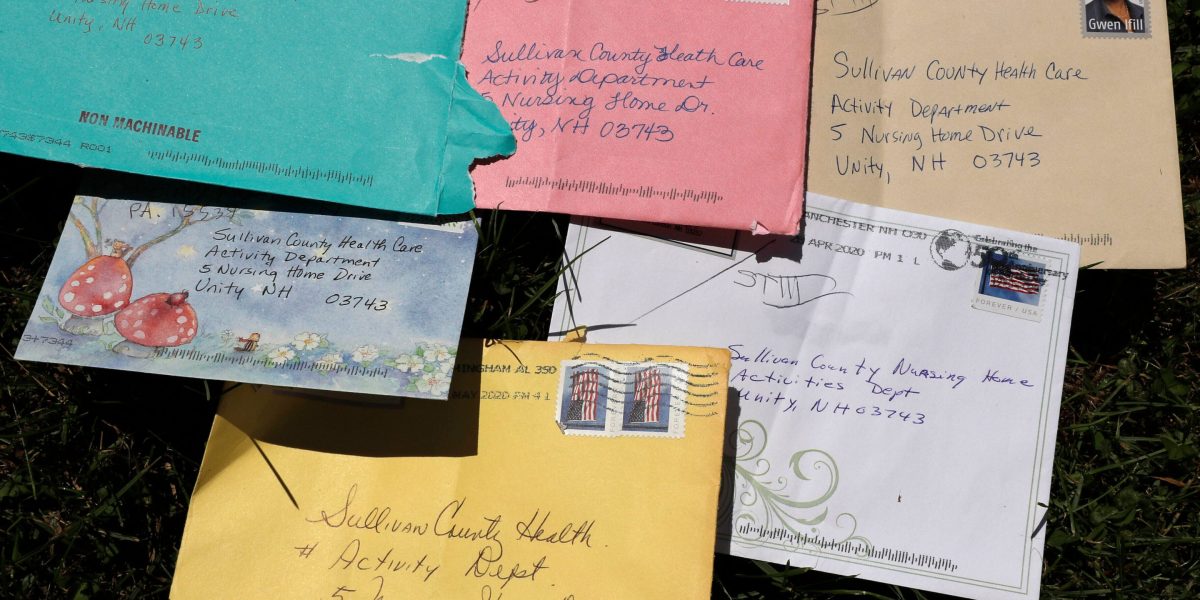
Tactile activities ranging from writing letters and typewriter clubs to TikTok communities showcasing calligraphy skills and wax seals are giving retro writing instruments a resurgence. More than quaint throwbacks, the pursuits provide their enthusiasts with opportunities to reduce their technology use, be more intentional with time and build meaningful connections with others.

“I feel as though my pen pals are my friends. I don’t think of them much differently than if I were chatting with a friend on the phone, in a coffee shop or at another person’s house,” said Melissa Bobbitt, 42, a devoted letter-writer who corresponds with about a dozen people from her home in Claremont, California, and has had up to 40 pen pals at one time. “Focusing on one person and really reading what they are saying, and sharing what’s on your heart is almost like a therapy session.”

Ink, paper and other tools that once were the only way to send a message from afar are continuing to bring people together from around the world. Below, some of them explain the appeal of snail mail and give recommendations for getting started.

Writing can be an escape

In a society shaped by constant availability, hands-on hobbies like writing letters and scrapbooking require focus and patience. The act of picking up a pen, sealing an envelope with wax and laying out pages may yield aesthetically pleasing results, but it also creates a space for reflection.

Stephania Kontopanos, a 21-year-old student in Chicago, said it can be hard to put her phone and computer away, especially when it seems all of her friends and peers are on social media and her classes and personal life revolve around being online.

“There are times when I’m with my friends and at dinner, I’ll realize we are all on our phones,” Kontopanos said, adding that she tries to put her phone down at those moments.

Kontopanos also unplugs consciously by sending postcards to her family and friends, scrapbooking, and junk journaling, which involves repurposing everyday materials like tickets and receipts to document memories or ideas. She says going to the post office has become an activity she does with her mother back home in Kansas and includes sharing stories with the postal workers, people she would not have routinely encountered.

Nostalgia can foster community

Writing and sending letters is nostalgic for KiKi Klassen, who lives in Ontario, Canada. The 28-year-old says it helps her feel more connected to her late mother, who was a member of the Canadian Union of Postal Workers, which represents mail carriers and other postal employees.

In October 2024, Klassen launched the Lucky Duck Mail Club, a subscription-based monthly mail service that sends participants a piece of her art, an inspiring quote and message. She says her membership includes more than 1,000 people across, at most, 36 countries.

“When I sit down, I’m forced to reflect and choose my words carefully,” Klassen said. “It also lends itself to vulnerability because it is easier to write down how you are feeling. I’ve had people write me back and I’ve cried hearing so many touching stories. I think for a lot of people paper creates a safe space. You write it down, send it off and don’t really think about it after.”

For Bobbitt, who has corresponded by mail for years, there is a “grand excitement” when she opens her mailbox and finds something that is not a bill or advertisement. “If we all filled each other’s mailboxes with letters, we would all be kinder and, at the very least, won’t dread checking our mailboxes,” she said.

Bobbitt says she first joined a pen pal club in second or third grade and later was connected to more writers through Postcrossing, an online project that partners people around the world to send and receive postcards. She says some of the postcards turned into letters as friendships grew between her and some other regular writers.

It’s a similar feeling of connection that inspired DJ Robert Owoyele, 34, to create CAYA, a monthly “analog gathering” in Dallas. Owoyele launched the event less than a year ago and has since organized evenings with letter writing, coloring, vinyl listening sessions and other activities.

“We live in a digital age that fosters a false sense of connection, but I think true connection happens in person,” he said. “When we are able to touch or see something, we are more connected to it naturally. These analog activities are a representation of that.”

How to get started

While writing letters and engaging in other vintage pursuits might seem accessible, it is not always easy to get involved. For many people, carving out time to slow down can feel like another obligation in a schedule filled with to-dos.

Kontopanos says she decided it was important for her to reprioritize her time. “The older I get, the more I realize how much time had been wasted on my phone,” she said. Creating space to explore allowed her to discover the hobbies she loved doing enough to make them a priority, she said.

There are many hobbies to consider, some of which don’t require expensive tools or hours of free time. Frequenting spaces where communities centered around these hobbies gather can be a way to learn about the different activities. For example, participating in typewriter clubs such as Type Pals, attending events like the Los Angeles Printers Fair hosted by the International Printing Museum in California, and engaging with social media communities like the Wax Seal Guild on Instagram and The Calligraphy Hub on Facebook.

Klassen says that based on posts she’s seeing on her social media feeds, reviving vintage writing instruments and small tactile pleasures might be on the verge of becoming trendy.

“The girls are going analog in 2026,” she said.


Source link

Continue Reading

Business

Danish general says deployment of European troops to Greenland is for ‘working together with allies’

Published

on


A bipartisan U.S. congressional delegation on Saturday sought to reassure Denmark and Greenland of their support following President Donald Trump’s threat to punish countries with tariffs if they don’t back the U.S. taking over the strategic Arctic island.

Delegation leader Sen. Chris Coons, a Delaware Democrat, said the current rhetoric around Greenland is causing concern across the Danish kingdom. He said he wants to de-escalate the situation.

“I hope that the people of the Kingdom of Denmark do not abandon their faith in the American people,” Coons said in Copenhagen, adding that the U.S. has respect for Denmark and NATO “for all we’ve done together.”

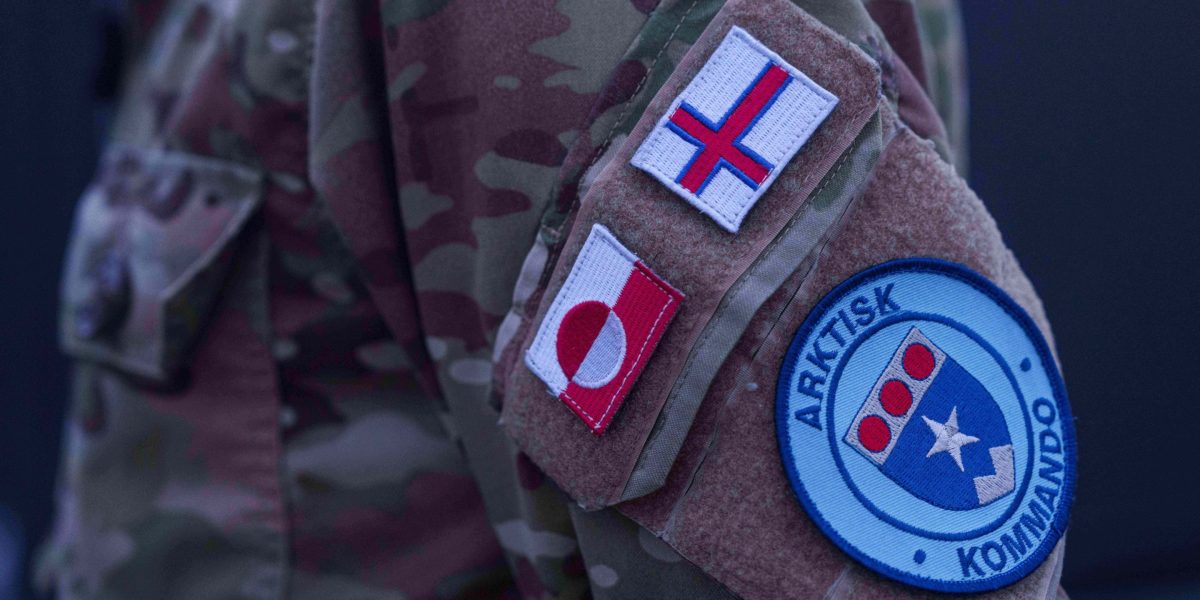
Meanwhile, Danish Major Gen. Søren Andersen, leader of the Joint Arctic Command, told The Associated Press that Denmark does not expect the U.S. military to attack Greenland, or any other NATO ally, and that European troops were recently deployed to Nuuk for Arctic defense training.

He said the goal isn’t to send a message to the Trump administration, even through the White House hasn’t ruled out taking the territory by force.

“I will not go into the political part, but I will say that I would never expect a NATO country to attack another NATO country,” he told the AP on Saturday aboard a Danish military vessel docked in Nuuk. “For us, for me, it’s not about signaling. It is actually about training military units, working together with allies.”

The Danish military organized a planning meeting Friday in Greenland with NATO allies, including the U.S., to discuss Arctic security on the alliance’s northern flank in the face of a potential Russian threat. The Americans were also invited to participate in Operation Arctic Endurance in Greenland in the coming days, Andersen said.

In his 2 1/2 years as a commander in Greenland, Andersen said he has not seen any Chinese or Russian combat vessels or warships despite Trump’s claims that they were off the island’s coast.

But in the unlikely event of American troops using force on Danish soil, Andersen confirmed a Cold War-era law governing Danish rules of engagement.

“But you are right that it is Danish law that a Danish soldier, if attacked, has the obligation to fight back,” he said.

‘Important for the whole world’

Thousands of people marched through Copenhagen, many of them carrying Greenland’s flag, on Saturday afternoon in support of the self-governing island. Others held signs with slogans like “Make America Smart Again” and “Hands Off.”

“This is important for the whole world,” Danish protester Elise Riechie told The Associated Press as she held Danish and Greenlandic flags. “There are many small countries. None of them are for sale.”

Other rallies were planned in Nuuk, the Greenlandic capital, and elsewhere in the Danish kingdom.

Coons’ comments contrasted with that emanating from the White House. Trump has sought to justify his calls for a U.S. takeover by repeatedly claiming that China and Russia have their own designs on Greenland, which holds vast untapped reserves of critical minerals. The White House hasn’t ruled out taking the territory by force.

“There are no current security threats to Greenland,” Coons said.

Trump for months has insisted that the U.S. should control Greenland, a semiautonomous territory of NATO ally Denmark, and said earlier this week that anything less than the Arctic island being in U.S. hands would be “unacceptable.”

During an unrelated event at the White House about rural health care, he recounted Friday how he had threatened European allies with tariffs on pharmaceuticals.

“I may do that for Greenland, too,” Trump said. “I may put a tariff on countries if they don’t go along with Greenland, because we need Greenland for national security. So I may do that,” he said.

He had not previously mentioned using tariffs to try to force the issue.

Earlier this week, the foreign ministers of Denmark and Greenland met in Washington with U.S. Vice President JD Vance and Secretary of State Marco Rubio.

That encounter didn’t resolve the deep differences, but did produce an agreement to set up a working group — on whose purpose Denmark and the White House then offered sharply diverging public views.

European leaders have insisted it is only for Denmark and Greenland to decide on matters concerning the territory, and Denmark said this week that it was increasing its military presence in Greenland in cooperation with allies.

“There is almost no better ally to the United States than Denmark,” Coons said. “If we do things that cause Danes to question whether we can be counted on as a NATO ally, why would any other country seek to be our ally or believe in our representations?”


Source link

Continue Reading

Trending

Copyright © Miami Select.