Connect with us

Business

SpaceX sets $800 billion valuation, confirms 2026 IPO plans

Published

on


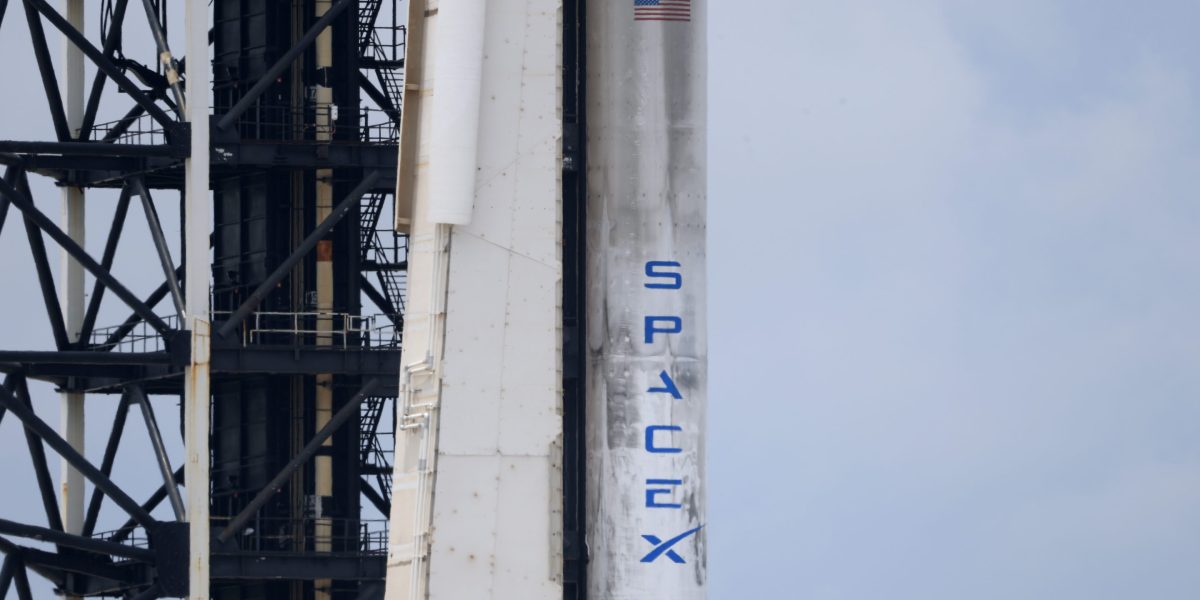
SpaceX is moving forward with an insider share sale that values Elon Musk’s rocket and satellite maker at about $800 billion, setting up what could be the largest initial public offering of all time.

In a company message seen by Bloomberg on Friday, SpaceX said it’s preparing for a possible public offering in 2026 that would be aimed at funding an “insane flight rate” for its developmental Starship rocket, artificial intelligence data centers in space and a base on the moon.

The per-share price of $421 in its latest secondary offering, laid out by Chief Financial Officer Bret Johnsen in the memo to shareholders, is nearly double the $212 a share set in July at a $400 billion valuation.

The valuation vaults past the previous record of $500 billion that ChatGPT owner OpenAI set in October, making SpaceX once again the world’s most valuable closely held company. 

If Musk decides to proceed with the IPO, it would be another splashy venture for him, but it would hinge on a series of ambitious and risky plans that SpaceX would have to pull off in the coming years.

Subscribe Now: The Business of Space newsletter delivers the inside stories of investments beyond Earth, from satellite networks to moon landings.

SpaceX is moving ahead with plans for an IPO that would seek to raise significantly more than $30 billion in a transaction that would make it the biggest listing of all time, Bloomberg reported earlier this week.

The Musk-led company is targeting a valuation of about $1.5 trillion for the entire company, which would leave SpaceX near the market value that Saudi Aramco established during its record 2019 listing. 

Read More: SpaceX’s Lofty IPO Valuation Hinges on Big Bet on Outsize Growth 

The timing of the IPO and the corresponding valuation is uncertain, and the company may decide not to move forward, Johnsen said in the email. 

A representative for SpaceX, formally known as Space Exploration Technologies Corp., didn’t respond to a request for comment.

The company does tender offers twice a year, giving shareholders including employees the chance to cash in or buy more shares. In this case, SpaceX has set its fair market valuation in a precursor to an IPO next year.

Read More: SpaceX IPO Plan Puts $2.9 Trillion of Listings on the Table

The world’s most prolific rocket launcher, SpaceX dominates the space industry with its Falcon 9 rocket that lifts satellites and people to orbit.

SpaceX is also the industry leader in providing internet services from low-Earth orbit through Starlink, a system of thousands of satellites that serves millions of customers.


Source link

Continue Reading

Business

More financially distressed farmers will lose their property as loan repayments and incomes falter
Published

on


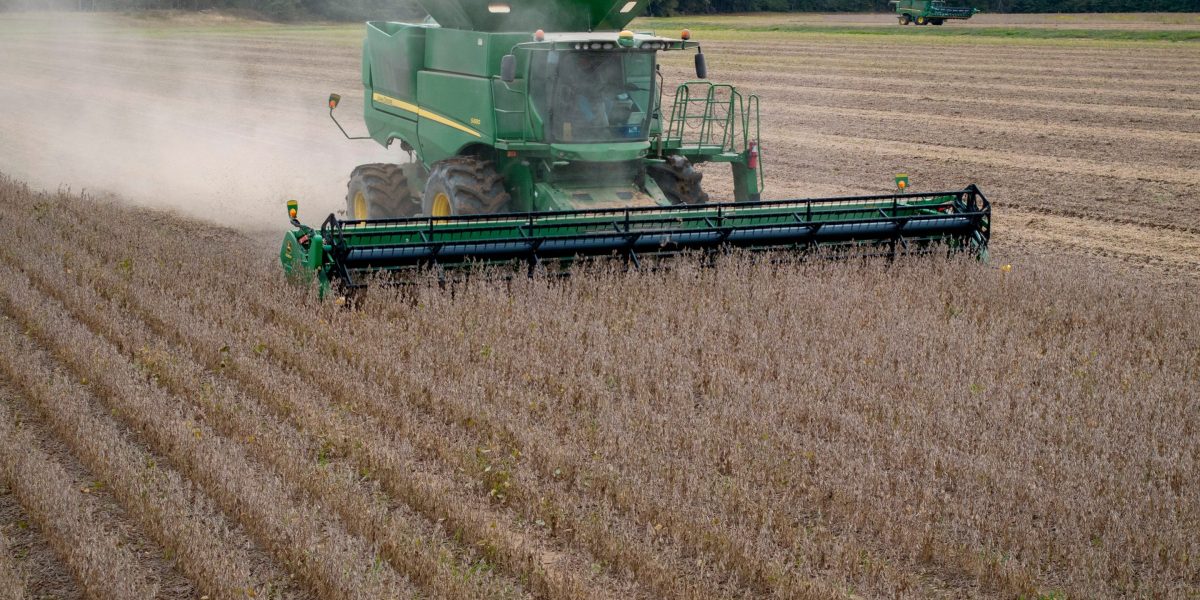
Financial conditions in the agriculture economy are flashing more signs of strain as farmers’ costs remain high while prices for their crops stay low.

A survey last month from the Chicago Fed found that third-quarter repayment rates in the Midwest for non-real-estate farm loans were lower than a year earlier for the eighth quarter in a row.

Meanwhile, 21% of the lenders who responded to the survey said collateral requirements for farm loans rose in the third quarter, while none reported that requirements eased.

And an overwhelming 92% majority expect net cash earnings, including government payments, for crop farmers to be lower during the fall and winter than a year earlier. 

As a result, nearly half the bankers surveyed see forced sales or liquidations of farm assets owned by financially distressed farmers rising in the next three to six months.

Earlier this month, the American Soybean Association (ASA) projected that 2025 will mark a third straight year of losses, noting that when harvest began in September, futures prices for November were 25%-30% lower compared to 2022.

At the same time, farm production expenses are seen increasing by $12 billion from a year ago to reach $467.4 billion in 2025. And with costs seen staying high next year, 2026 is shaping up to be more of the same.

“Unless revenues increase significantly next year, this would squeeze farmgate profits for a fourth year, marking the longest stretch of substantial soybean production losses since [USDA’s Economic Research Service] 1998-2002 reporting period,” the ASA warned.

Several factors have spiked costs recently. President Donald Trump’s tariffs have made key imports more expensive, Russia’s war on Ukraine boosted fertilizer prices, and the Federal Reserve’s earlier round of rate hikes lifted borrowing costs.

On the demand side, Trump’s trade war essentially halted Chinese orders for U.S. soybeans until just recently.

Separate data have shown that U.S. farm bankruptcies have soared this year, and the National Corn Growers Association raised alarms this summer about “the economic crisis hitting rural America.”

Trump administration plans a $12 billion rescue that will serve as a “bridge” before more aid comes next year, but farmers say the short-term lifeline still won’t be enough to cover their losses.

In fact, losses this year for the nine major commodity crops should range from $35 billion to $44 billion, Shawn Arita, associate director of the Agricultural Risk Policy Center at North Dakota State University, told Reuters.

Caleb Ragland, president of the ASA and a farmer himself, estimated the aid package will be enough for only about one-quarter of soybean losses.

“We’re appreciative of an economic bridge,” he told Reuters, but added that the money is just “plugging holes and slowing the bleeding.”


Source link

Continue Reading

Business

2 U.S. service members and one American civilian killed in Islamic State ambush in Syria

Published

on


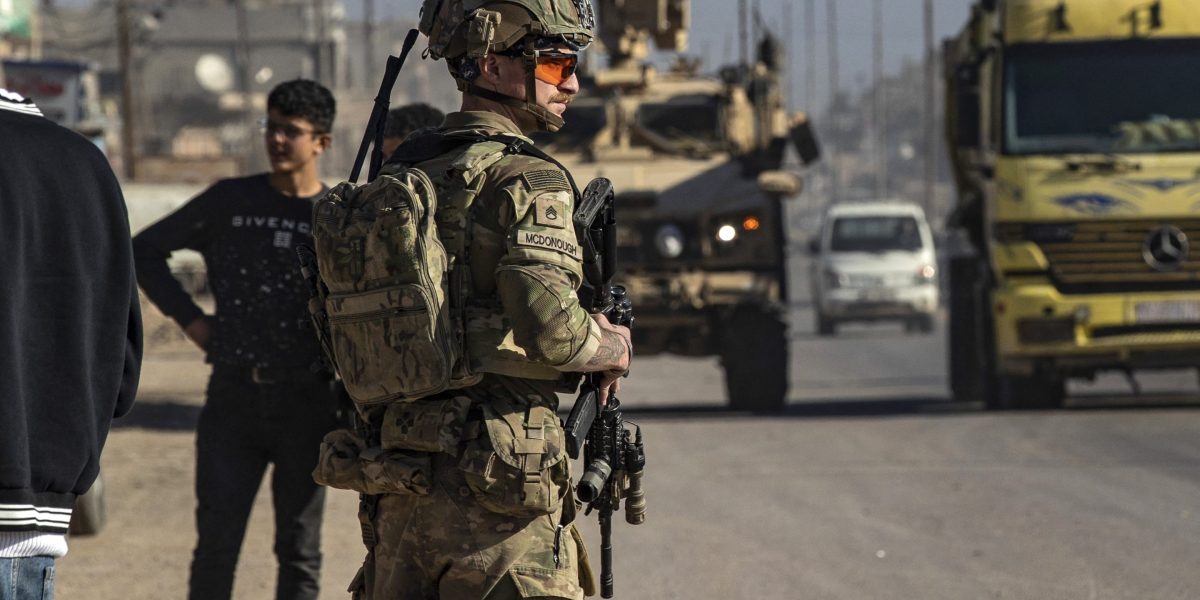
Two U.S. service members and one American civilian were killed and three other people wounded in an ambush on Saturday by a lone member of the Islamic State group in central Syria, the the U.S. military’s Central Command said.

The attack on U.S. troops in Syria is the first to inflict casualties since the fall of President Bashar Assad a year ago.

Central Command said in a post on X that as a matter of respect for the families and in accordance with Department of Defense policy, the identities of the service members will be withheld until 24 hours after their next of kin have been notified.

U.S. Defense Secretary Pete Hegseth posted on X: “Let it be known, if you target Americans — anywhere in the world — you will spend the rest of your brief, anxious life knowing the United States will hunt you, find you, and ruthlessly kill you.”

The shooting took place near historic Palmyra, according to the state-run SANA news agency, which earlier said two members of Syria’s security force and several U.S. service members had been wounded. The casualties were taken by helicopter to the al-Tanf garrison near the border with Iraq and Jordan.

SANA said the attacker was killed, without providing further details.

The Britain-based Syrian Observatory for Human Rights said the attacker was a member of the Syrian security force.

The U.S. has hundreds of troops deployed in eastern Syria as part of a coalition fighting the Islamic State group.

Last month, Syria joined the international coalition fighting against the IS as Damascus improves its relations with Western countries following the ouster of Assad when insurgents captured his seat of power in Damascus.

The U.S. had no diplomatic relations with Syria under Assad, but ties have warmed since the fall of the five-decade Assad family rule. The interim president, Ahmad al-Sharaa, made a historic visit to Washington last month where he held talks with President Donald Trump.

IS was defeated on the battlefield in Syria in 2019 but the group’s sleeper cells still carry out deadly attacks in the country. The United Nations says the group still has between 5,000 and 7,000 fighters in Syria and Iraq.

U.S. troops, which have maintained a presence in different parts of Syria — including Al-Tanf garrison in the central province of Homs — to train other forces as part of a broad campaign against IS, have been targeted in the past. One of the deadliest attacks occurred in 2019 in the northern town of Manbij when a blast killed two U.S. service members and two American civilians as well as others from Syria while conducting a patrol.


Source link

Continue Reading

Business

Stock market rotation out of AI is just getting started, analysts say

Published

on


Investors rushed out of the AI trade this past week and piled into materials, industrials, financials and healthcare, representing a sector rotation that could have staying power, according to Wall Street analysts.

Oracle stock led the latest AI selloff after the hyperscaler’s earnings report and spending guidance renewed fears about excessive capital expenditures.

Jeremy Siegel, Wharton professor emeritus and WisdomTree chief economist, told CNBC on Friday that it’s hard to be certain about the current stock market rotation because there have been “so many head fakes in the past.”

“But as I said, this one has more legs in the sense that there are more things that are happening that throw doubt on how fast or how profitable all the AI buildout is going to be,” he added.

In Oracle’s case, recent delays in data center construction may actually end up being a silver lining if it slows expenditures, but there are still more questions than answers about the profitability of AI, Siegel said.

He noted his research has shown that when companies grow spending faster than their income, they ultimately overexpand, hitting profits and stock returns.

“I’m not saying that that’s necessarily going to happen to AI or certainly all the AI, but that narrative has to come in mind,” Siegel warned.

Also on Friday, Bank of America Securities investment strategist Michael Hartnett said markets are frontrunning a “run-it-hot” scenario expected for next year by rotating into a Main Street trade made up of mid- and small-cap stocks, while getting out of a Wall Street trade consisting of mega-cap names.

Eric Teal, chief investment officer for Comerica Wealth Management, had a similar view in a note on Thursday, saying that the market was dominated by momentum and AI stocks during the first eight months of the year.

But since then, concerns about valuations, margin sustainability, and high debt shifted sentiment around the technology sector.

Financial and healthcare stocks have been more appealing, while small caps and even “micro-cap stocks” will benefit from falling short-term rates, he added.

“More importantly, we foresee this rotation in the early stages with relative valuations remaining attractive,” Teal predicted. 


Source link

Continue Reading

Trending

Copyright © Miami Select.