Connect with us

Politics

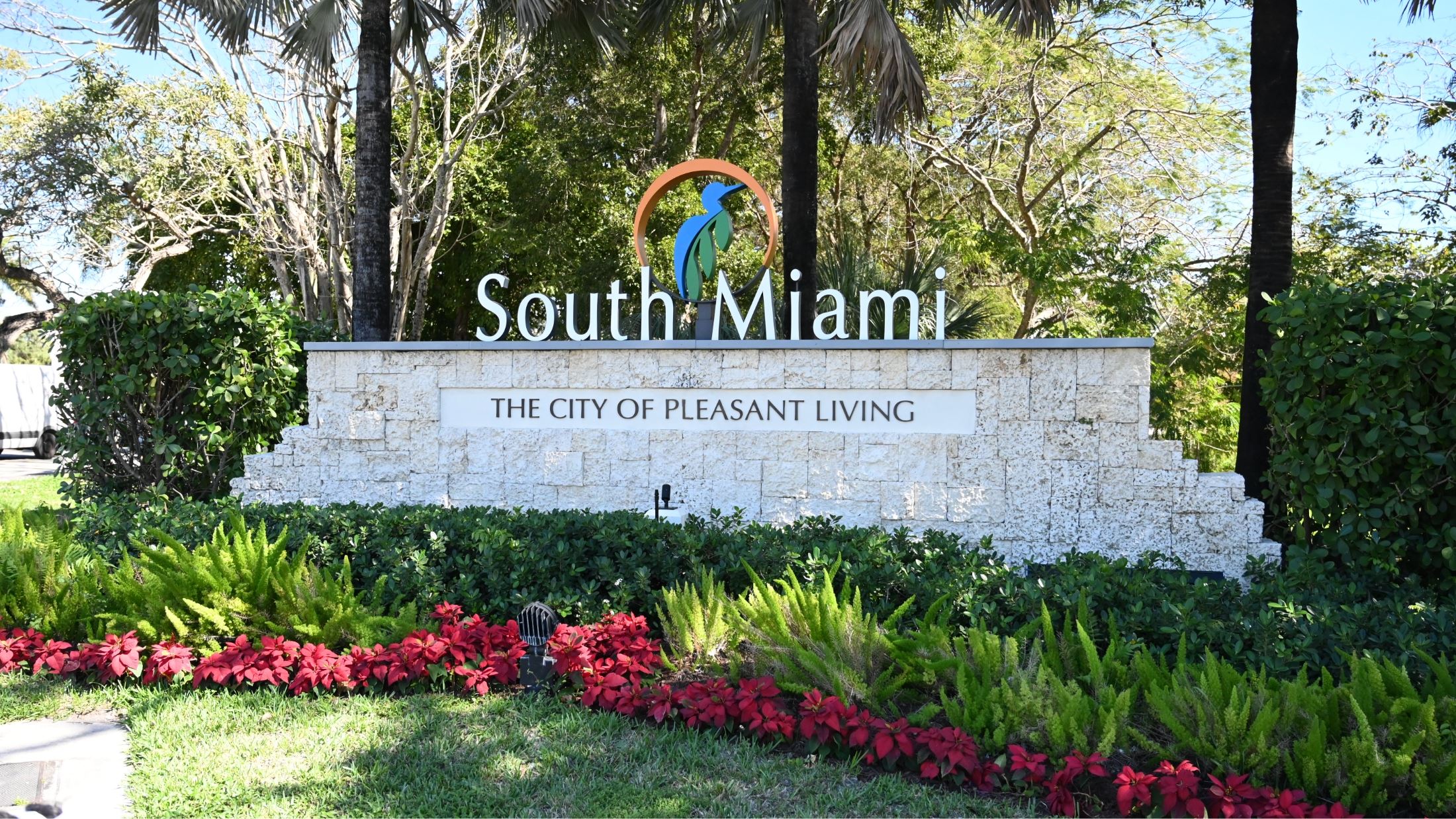
South Miami urges Florida lawmakers to end property taxes for long-term senior residents

Published

on


Every elected official in South Miami wants to ensure that Florida seniors can enjoy their homes without fear of losing them.

That’s the message they sent this week.

Mayor Javier Fernández and his four City Commission colleagues voted unanimously for a resolution urging lawmakers to place a question on the 2026 statewide ballot to end property taxes for residents 65 and older.

The only requirement is that those exempted must have lived in their homes for at least 25 years.

“Florida’s Governor and members of the Florida Legislature have expressed a desire to implement property tax reform, including the possible elimination of the levy of any ad valorem taxes on real property,” said the measure, which Fernández sponsored.

“The City Commission believes that such targeted relief will provide meaningful benefits to long-term owners without jeopardizing the quality or efficacy of municipal services.”

The resolution, which passed Thursday, identifies the House Select Committee on Property Taxes as the body to best consider the city’s request. Members of the 37-seat panel first convened in May to consider five proposals Speaker Daniel Perez proposed as a “springboard” for talks on delivering relief to homeowners.

Those serving in both chambers of the Legislature have introduced measures in recent years to eliminate property taxes for all Sunshine State residents and replace them with an alternative revenue source.

Meanwhile, Gov. Ron DeSantis has been somewhat unsteady on the issue. In February, he floated tripling homestead exemptions, prompting then-Sen. Blaise Ingoglia — whom DeSantis later tapped for Chief Financial Officer — to announce that he was filing legislation that would enable voters to do just that.

The bill ultimately died without a hearing.

Then, in June, the Governor vetoed funding for a study that would determine the potential impacts of nixing property taxes — a step many would consider appropriate for such a significant change.

Property taxes are a local-only levy, set by counties, municipalities and special taxing districts. But while localities can lower their millage rates to zero, effectively ending all property taxes within their jurisdiction, Article VII, Section 2 of the Florida Constitution mandates that property taxation must be “at a uniform rate within each taxing unit.”

Essentially, a city must apply the same millage rate to all taxable property within its bounds and give special discounts to seniors while others pay full freight unless the state Constitution is amended to provide for an exception.

Voters in 2006 and 2012 approved constitutional amendments expanding homestead exemptions for low-income seniors. Legislation to raise the exemption to $250,000, most recently sponsored by Doral Republican Sen. Ana Maria Rodriguez and Hialeah Republican Rep. David Borrero, has failed for a decade.

“While the Governor has struggled to articulate a clear plan for property tax reform, many cities across Florida have been doing the hard work preserving services in the face of rapidly escalating labor and capital costs,” Fernández, a Democratic former state lawmaker, said in a statement.

“South Miami’s reform proposal would prioritize tax relief for Floridians first in stark contrast to the Governor’s ’26 budget, which prioritized tax cuts for corporations instead of seniors.”


Post Views: 0


Source link

Continue Reading

Politics

Hope Florida fallout drives another Rick Scott rebuke of Ron DeSantis

Published

on


The cold war between Florida’s Governor and his predecessor is nearly seven years old and tensions show no signs of thawing.

On Friday, Sen. Rick Scott weighed in on Florida Politics’ reporting on the Agency for Health Care Administration’s apparent repayment of $10 million of Medicaid money from a settlement last year, which allegedly had been diverted to the Hope Florida Foundation, summarily filtered through non-profits through political committees, and spent on political purposes.

“I appreciate the efforts by the Florida legislature to hold Hope Florida accountable. Millions in tax dollars for poor kids have no business funding political ads. If any money was misspent, then it should be paid back by the entities responsible, not the taxpayers,” Scott posted to X.

While AHCA Deputy Chief of Staff Mallory McManus says that is an “incorrect” interpretation, she did not respond to a follow-up question asking for further detail this week.

The $10 million under scrutiny was part of a $67 million settlement from state Medicaid contractor Centene, which DeSantis said was “a cherry on top” in the settlement, arguing it wasn’t truly from Medicaid money.

But in terms of the Scott-DeSantis contretemps, it’s the latest example of tensions that seemed to start even before DeSantis was sworn in when Scott left the inauguration of his successor, and which continue in the race to succeed DeSantis, with Scott enthusiastic about current front runner Byron Donalds.

Earlier this year, Scott criticized DeSantis’ call to repeal so-called vaccine mandates for school kids, saying parents could already opt out according to state law.

While running for re-election to the Senate in 2024, Scott critiqued the Heartbeat Protection Act, a law signed by DeSantis that banned abortion after the sixth week of pregnancy with some exceptions, saying the 15 week ban was “where the state’s at.”

In 2023 after Scott endorsed Donald Trump for President while DeSantis was still a candidate, DeSantis said it was an attempt to “short circuit” the voters.

That same year amid DeSantis’ conflict over parental rights legislation with The Walt Disney Co.Scott said it was important for Governors to “work with” major companies in their states.

The critiques went both ways.

When running for office, DeSantis distanced himself from Scott amid controversy about the Senator’s blind trust for his assets as Governor.

“I basically made decisions to serve in uniform, as a prosecutor, and in Congress to my financial detriment,” DeSantis said in October 2018. “I’m not entering (office) with a big trust fund or anything like that, so I’m not going to be entering office with those issues.”

In 2020, when the state’s creaky unemployment website couldn’t handle the surge of applicants for reemployment assistance as the pandemic shut down businesses, DeSantis likened it to a “jalopy in the Daytona 500” and Scott urged him to “quit blaming others” for the website his administration inherited.

The chill between the former and current Governors didn’t abate in time for 2022’s hurricane season, when Scott said DeSantis didn’t talk to him after the fearsome Hurricane Ian ravaged the state.


Source link

Continue Reading

Politics

Amnesty International alleges human rights violations at Alligator Alcatraz

Published

on


Enforcing what Gov. Ron DeSantis calls the “rule of law” violates international law and norms, according to a global group weighing in this week.

Amnesty International is the latest group to condemn the treatment of immigrants with disputed documentation at two South Florida lockups, the Krome North Service Processing Center (Krome) and the Everglades Detention Facility (Alligator Alcatraz).

The latter has been a priority of state government since President Donald Trump was inaugurated.

The organization claims treatment of the detained falls “far below international human rights standards.”

Amnesty released a report Friday covering what it calls a “a research trip to southern Florida in September 2025, to document the human rights impacts of federal and state migration and asylum policies on mass detention and deportation, access to due process, and detention conditions since President Trump took office on 20 January 2025.”

“The routine and prolonged use of shackles on individuals detained for immigration purposes, both at detention facilities and during transfer between facilities, constitutes cruel, inhuman and degrading treatment, and may amount to torture or other ill-treatment,” the report concludes.

Gov. DeSantis’ administration spent much of 2025 prioritizing Alligator Alcatraz.

While the state did not comment on the report, Amnesty alleges the state’s “decision to cut resources from essential social and emergency management programs while continuing to allocate resources for immigration detention represents a grave misallocation of state resources. This practice undermines the fulfillment of economic and social rights for Florida residents and reinforces a system of detention that facilitates human rights violations.”

Amnesty urges a series of policy changes that won’t happen, including the repeal of immigration legislation in Senate Bill 4-C, which proscribes penalties for illegal entry and illegal re-entry, mandates imprisonment for being in Florida without being a legal immigrant, and capital punishment for any such undocumented immigrant who commits capital crimes.

The group also recommends ending 287(g) agreements allowing locals to help with immigration enforcement, stopping practices like shackling and solitary confinement, and closing Alligator Alcatraz itself.


Source link

Continue Reading

Politics

Dr. Phillips Center’s free holiday festival transforms Orlando

Published

on


In one year of planning, the Dr. Phillips Center for the Performing Arts Center has pulled off an extraordinary feat: It has turned the heart of downtown into a magical Winter festival.

“It’s amazing. I had no idea just what the transformation would be,” said Orlando Mayor Buddy Dyer during a preview for the media and local officials this week for the first-ever Frontyard Holiday Festival supported by AdventHealth.

Fire pits glow. Singers perform on stage. Fake snow falls down for the Florida kids who don’t know the real thing. Holiday booths sell coquito, sandwiches and hearty snacks. It’s easy to forget that the 408 traffic is in the backdrop or ignore an ambulance siren going by. Instead, you get lost in Santa greeting children and the music on stage from Central Florida’s talent.

The free festival, which is officially open, runs 28 days through Jan. 4 and will feature 80 live performances, holiday movies, nightly tree lightings and more. The slate of performers includes opera singers, high school choirs, jazz performers, Latin Night and more. The schedule is available here.

About 300,000 people are expected to attend — a boon to the city’s economy especially since one 1 of every 4 Dr. Phillips Center visitors typically comes from outside Orange County, said Orange County Commissioner Mike Scott.

Most importantly, this festival builds connections,” Scott said. “This festival creates a cultural and economic ripple that extends well beyond the borders of downtown.”

The performing arts center has hosted “Lion King,” “Hamilton” and more during its 10 years in business. But during the pandemic, it began using the space out front — its “front yard” — in innovative ways, said Kathy Ramsberger, President and CEO of Dr. Phillips Center.

Keeping patrons spread apart in individual seat boxes, Dr. Phillips held concerts outdoors during the pandemic.

Ramsberger said the Dr. Phillips Center purposefully has chosen not to develop the land in order to keep the space for people to come together.

“Hopefully, this will grow across the street to City Hall, down the street, over to Orange County administration building, up and down Orange Avenue, and the entire city will be connected with something that the City of Orlando started to celebrate Christmas and the holidays,” Ramsberger said.


Source link

Continue Reading

Trending

Copyright © Miami Select.