Connect with us

Politics

South Miami declares ‘functional zero’ for chronic homelessness, a year ahead of schedule

Published

on


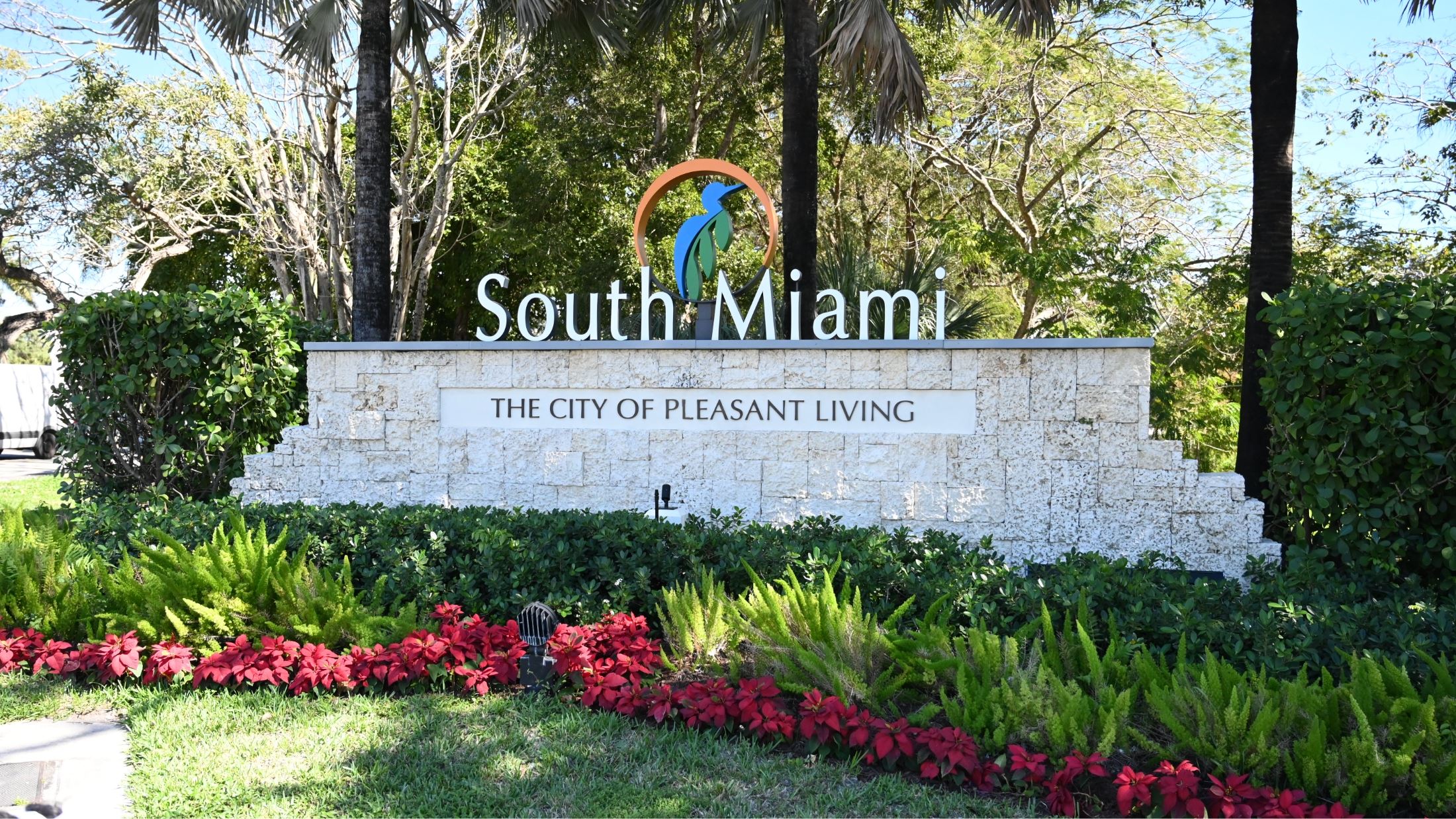
South Miami is celebrating what it says is a milestone in the fight to end homelessness.

This week, the city announced it has become one of a few in the country to achieve “functional zero” for chronic homelessness, a designation that indicates the city has effectively ended its cycle of long-term homelessness.

A press note South Miami published this week cited a to-be-released census the Miami-Dade County Homeless Trust conducted last month, which counted just three people experiencing homelessness in the city.

That’s down from 15 to 20 in past years and follows a reported 43% decrease in unsheltered residents the Homeless Trust reported in February.

According to Community Solutions, the nonprofit that developed the standards, communities reach functional zero when chronic homelessness is reduced to fewer than three people or less than 0.1% of the total homeless population, whichever is greater.

South Miami’s progress began in 2021, when leaders adopted a “housing first” strategy that prioritizes providing permanent housing before addressing other needs like employment or health care.

The city says it paired that model with targeted outreach, designating a community policing officer to work directly with the Homeless Trust and service providers. Partnerships with Baptist Health South Miami and the Midtown Development Group, which contribute annually to shelter beds and support services, bolstered the effort.

By 2023, the South Miami City Commission formalized its goal to reach functional zero by 2026, approving a strategic plan and hiring an outreach vendor to strengthen follow-up, case management and trust-building with individuals experiencing homelessness.

Two years later, the city reached its goal. Its leaders credit coordination across departments and community partners for the expedited progress.

“As a city, we are tremendously proud of having achieved this important milestone,” Mayor Javier Fernandez said in a statement. He credited former South Miami Police Chief Rene Landa and current Chief Reo Hatfield III for their “good work,” which officer Rodney Napier, Cassandra Lilavois, Melvin Lopez and Marcus Prather accentuated.

Fernandez gave “special recognition and congratulations” to Vice Mayor Brian Corey for his “consistent leadership from the dais on this issue and in making South Miami’s current reality.”

“We look forward to continuing to do our part to house the homeless here in South Miami,” the Mayor said.

Corey called it “tremendous news.”

“South Miami has stayed committed to executing our strategy, and the results are clear,” he said in a statement. “This milestone reflects the dedication of our city staff, outreach team, and Police Department.”

Hatfield said in a statement that achieving functional zero “a profound accomplishment” that “would not have been possible without the unwavering dedication of our officers.”

“From building trust with vulnerable individuals to coordinating directly with service providers and outreach teams, our officers have gone above and beyond traditional policing duties to serve the community with compassion and professionalism,” he said, also crediting the four officers Fernandez referenced for being instrumental to the effort’s success.

As for next steps, officials said sustaining South Miami’s progress is key. The city’s strategic plan emphasizes continued collaboration between law enforcement, outreach teams, the Homeless Trust, and local businesses to ensure that anyone at risk of homelessness is quickly connected to permanent housing solutions.

“The Homeless Trust has been working closely with the City of South Miami for the past several years to address unsheltered homelessness and make available resources to meet the unique needs of individuals on the streets,” Homeless Trust Chair Ron Book said. “We appreciate the city’s determination and desire to tackle homelessness in a trauma-informed and collaborative way.”


Post Views: 0


Source link

Continue Reading

Politics

Hialeah voters head to polls as City Commission runoffs test new Mayor’s political clout

Published

on


Early voting is underway in Hialeah as two Council runoff contests will decide who rounds out a markedly different dais at City Hall.

The Group 3 and Group 4 races — featuring Jessica Castillo versus Gelien Perez and William “Willy” Marrero versus Javier Morejon, respectively — also stand to determine whether new Mayor Bryan Calvo gains early influence over the Council.

Perez and Castillo advanced to the Group 3 runoff in last month’s General Election with 40.5% and 36% of the vote, respectively, leaving one third-place candidate behind.

In Group 4, Marrero narrowly led the field with 24.8%, followed by Morejon at 23.3%. They outpaced three others in the contest.

To win outright, a candidate had to capture more than half the vote in their respective races.

The runoffs present one of the first real tests of how much sway Calvo, who made history last month as the youngest person ever elected Hialeah Mayor, will have as he prepares to take office.

He has endorsed Perez and Marrero — a strategic pairing that blends rival factions from the mayoral contest into his new governing coalition. Both ran with political slates opposing him. He told the Miami Herald last month that he’s aiming to create “a coalition to approve the agenda,” without an expectation that Perez and Matteo “will vote with (him) 100% of the time.”

If both candidates win, Calvo could enter January with a working majority on the seven-member Council and greater control over the upcoming appointment to fill Jesus Tundidor’s soon-to-be-vacant seat. Tundidor ran unsuccessfully for Mayor.

In Group 3, Perez, 35, a former city Human Resources Director and one-time mayoral aide, has campaigned on supporting first responders and small businesses, improving infrastructure and parks, expanding senior services and rejecting millage rate increases.

But her tenure as HR director drew scrutiny: a two-year Miami-Dade ethics investigation found employees under her influence received sizable raises while she acted as their real estate agent. She has not publicly responded to inquiries about the probe.

(L-R) Jessica Castillo and Gelien Perez are competing in Group 3. Images via the candidates.

Castillo, 37, has run as an independent voice focused on transparency, accountability, traffic relief, infrastructure upgrades and lower taxes. She has kept her campaign largely offline, with no website and minimal social media activity.

In Group 4, Marrero, 23, a Florida International University public administration student and former Council aide, has emphasized affordability, issues facing working families and seniors, and support for first responders.

Earlier this year, three Council members attempted to appoint him to the same seat he now seeks, but opposition from others blocked the move.

(L-R) William “Willy” Marrero and Javier Morejon aim to take the City Council’s Group 4 seat. Images via LinkedIn and Javier Morejon.

Morejon, 34, a land-use specialist with an extensive volunteer résumé, is running on infrastructure repairs, government transparency, beautification and reducing the cost of city services.

Election Day is Monday, Dec. 9. Because Hialeah elects Council members at-large, all voters can cast ballots in both races.


Source link

Continue Reading

Politics

Soon no Pearl Harbor survivors will be alive. People turn to other ways to learn about the bombing

Published

on


About 2,000 survivors attended the 50th anniversary event in 1991. A few dozen have showed in recent decades. Last year, only two made it. That is out of an estimated 87,000 troops stationed on Oahu that day.

Many survivors were jovial despite the occasion, happy to catch up with old friends and pose for photographs. Even so, harrowing recollections were seldom far from their minds.

In 2023, Harry Chandler gazed across the water while telling an Associated Press reporter how he was raising the flag at a mobile hospital in the hills above the base when he saw Japanese planes fly in and drop bombs. Chandler and his fellow Navy hospital corpsmen jumped in trucks to help the injured.

He spoke of seeing the Arizona explode, and of hearing sailors trapped on the capsized USS Oklahoma desperately tapping on their ship’s hull to summon rescue. He helped care for Oklahoma sailors after crews cut holes in the battleship.

“I can still see what was happening,” Chandler said. He died the next year at a senior living center in Tequesta, Florida.

The bombing has long held different meanings for different people, the historian Emily S. Rosenberg wrote in her book “A Date Which Will Live: Pearl Harbor in American Memory.”

Some say it highlights the need for a well-prepared military and a vigilant foreign policy. To some it evokes then-President Franklin D. Roosevelt administration’s “ineptitude or deceit” and the unfair scapegoating of the military. Others focus on the “treachery” of Japan or the heroic acts of individual troops, she wrote.

Asked what he wanted Americans to know about Pearl Harbor, Chandler said: “Be prepared.”

“We should have known that was going to happen. The intelligence has to be better,” he said.

Lou Conter, who was the Arizona’s last living survivor when he died last year at 102, told the AP in 2019 he liked to attend to remember those who lost their lives.

“It’s always good to come back and pay respect to them and give them the top honors that they deserve,” Conter said.

Heinrichs’ father has been six times since 2016. The former tuba player on the USS Dobbin likes to go not only to remember those killed but also in place of his late band mates; his three brothers who fought in World War II; and the now-deceased Pearl Harbor survivors he has met.

Retired National Park Service Pearl Harbor historian Daniel Martinez said the circumstances resemble the early 20th century when Civil War veterans were dying in increasing numbers. Awareness grew that soon they wouldn’t be able to share their stories of Gettysburg and other battles, he said.

Martinez knew something similar could happen with Pearl Harbor survivors and recorded their oral histories. During a 1998 convention, he conducted interviews 12 hours a day for three days. The Park Service today has nearly 800 interviews, most on video.

“They remain as a part of the national memory of a day that changed America and changed the world,” Martinez said.

The Park Service shows some in its Pearl Harbor museum and aims to include more after renovations, said David Kilton, the agency’s Pearl Harbor interpretation, education and visitor services lead.

The Library of Congress has collections from 535 Pearl Harbor survivors, including interviews, letters, photos and diaries. Over 80% are online. They are part of the library’s Veterans History Project of firsthand recollections of veterans who served in World War I onward. Many were recorded by relatives, Eagle Scouts and other amateurs interested in documenting history.

The Sons and Daughters of Pearl Harbor Survivors gives presentations in schools and marches in parades to share the stories of their families. The California chapter has added six new members this year, including two great-grandchildren of survivors.

“When they’re all gone, we’re still going to be here,” said Deidre Kelley, the group’s president. “And it’s our intent to keep the memory alive as long as we’re alive.”

___

Republished with permission of The Associated Press.


Source link

Continue Reading

Politics

Eileen Higgins to campaign in Miami with Ruben Gallego ahead of Special Election for Mayor

Published

on


Former Miami-Dade Commissioner Eileen Higgins will continue her early voting push with several appearances across Miami alongside U.S. Sen. Ruben Gallego of Arizona on Sunday.

“As Miamians turn out for Early Voting, Commissioner Higgins will highlight her vision for restoring trust at City Hall, ending corruption, and delivering a city government that works for residents,” her campaign said.

“The day will feature a canvass launch, Early Vote stops, and a volunteer phone bank to mobilize voters ahead of the Dec. 9 election.”

Higgins, who is running to be Miami’s first woman Mayor, will make her first stop at 10:30 a.m. at the Mision Nuestar Senñora de la Altagracia church, located at 1179 NW 28th St., followed by a visit to Christ Episcopal Church at 3481 Hibiscus St. an hour later.

Then at 1 p.m., Higgins and Gallego will participate in a get-out-the-vote event in Hadley Park at 1350 NW 50th Street.

They’ll end the day’s tour with a phone bank stop at 4 p.m., the address for which, Higgins’ campaign said, can be obtained upon RSVP.

Higgins, who served on the County Commission from 2018 to 2025, is competing in a runoff for the city’s mayoralty against former City Manager Emilio González. The pair topped 11 other candidates in Miami’s Nov. 4 General Election, with Higgins, a Democrat, taking 36% of the vote and González, a Republican, capturing 19.5%.

To win outright, a candidate had to receive more than half the vote. Miami’s elections are technically nonpartisan, though party politics frequently still play into races.

Gallego, a freshman Democratic Senator, served in the U.S. House from 2015 to 2025 and as a member of the Arizona House from 2011 to 2014. He is a second-generation American, with a Colombian mother and a Mexican father, and the first Latino elected to represent Arizona in the U.S. Senate.


Source link

Continue Reading

Trending

Copyright © Miami Select.