
Fashion
Source Fashion booms with focus on sustainable production

Published
January 19, 2026
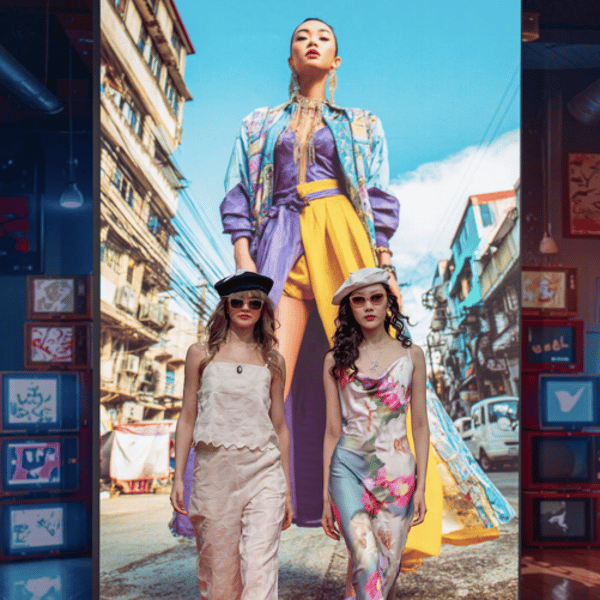
Source Fashion wrapped up last week at London’s Olympia with strong momentum as visitor numbers rose 16% while exhibitor numbers were up 12%. It was busy and buzzing with plenty of special attractions as well as the serious side — meeting buyers and writing orders.
That was both a reflection of the importance of trade shows in Europe generally and of the strength of Source itself that has carved out its place as Europe’s leading sourcing event.
Buying teams visiting the event included the big players such as M&S, Next, New Look, Tesco, N Brown, ASOS, Boohoo, Harrods, and Universal Music, as well as a host of smaller but still important names. Think Lucy & Yak, Joseph, Temperley London, Oliver Bonas, Hawes & Curtis, Agent Provocateur, Rat & Boa, AYBL and more.
UK manufacturing isn’t dead
Bethany Davy-Day, Creative and Operations Director at Fashion Enter said: “It’s been a great show so far. We’ve hosted two upcycling workshops today, and it’s been encouraging to see strong interest from a mix of e-tailers, retailers and start-up brands, all keen to explore UK manufacturing. As a not-for-profit social enterprise specialising in sustainable manufacturing in North London, it’s been valuable to connect with brands at every stage of growth.”

There may be a widely held belief that Britain is no longer a manufacturing hub but the British Pavilion was a big draw at the show as companies focus on more sustainable ways of getting their products to market. The organisers cited exhibitors seeing “high-quality conversations, new commercial leads and a growing appetite from both start-ups and established brands to explore British production”.
Stacey Ohanian at Apparel Tasker, which also featured on the show’s catwalk, said that “we’ve had really positive conversations with start-ups and growing brands who are increasingly interested in working with British manufacturers, and we’ve been able to change perceptions around the cost and value of producing locally. We’ve made a lot of valuable contacts”.
And Colin Spender Halsey, CEO of The Natural Fibre Company, showing for the second time, hailed the “quality of visitors [that] has been even stronger this year. What’s been particularly encouraging is the growing interest in British manufacturing. Many of the visitors we’ve spoken to are actively looking to work with UK manufacturers, with traceability, sustainability and ‘Made in Britain’ increasingly high on the agenda. While we recognise the commercial challenges of producing locally, even small increases in business can make a significant difference to companies like ours”.
Outside of the British Pavilion, the wider show floor was also busy. Katherine O’Driscoll, co-founder of SP & KO, said the company “had a really strong show… the best Source Fashion yet for us. The event has been incredibly busy from start to finish, with fantastic engagement and a steady flow of meaningful conversations. We’ve generated some great leads and already confirmed new contracts, and it’s been particularly encouraging to see so many start-ups and independent designers attending”.
That view was echoed by Ivan Tang and Sandy Chang, respectively MD and business development head at South Enterprises. In their second show, they said they saw “even more traffic” having met “a wide range of new brands, from early-stage start-ups to more established businesses. What’s been particularly positive is seeing how much more focused and informed many brands are, with a growing interest in sourcing more sustainable fibres. There’s a real sense of optimism”.
Sustainability hub
Even director Suzanne Ellingham highlighted the direction the industry is moving in: “What is really encouraging is seeing the direct action that brands and retailers really are looking to bring production closer to home, this is the first time in a few years that we have felt that this is really happening. Alongside responsible sourcing and manufacturing, there is a growing appetite to address what happens at the end of a product’s life.

“Looking ahead, we want Source Fashion to be a place where brands can explore end-of-life materials, deadstock and remanufacturing, supporting circular solutions that create value, jobs and opportunity without relying on volume. That focus on transparency, lifecycle thinking and collaboration will continue to shape how the show evolves into its next edition.”
‘Edutainment’
Apart from the business that was done at the show, there was plenty to both entertain and educate with the content programme a big draw.
There were strong audiences across Source Fashion’s content stages, with supply chain accountability, circular business models, repair and longevity, craft-led production and future sourcing strategies, all on the agenda.

Particularly interesting was a discussion hosted by Simon Platt focusing on supplier collaboration, material innovation and the role of long-term partnerships. Meanwhile, another session challenged brands and buyers to consider how reduced production, alternative value models and craft-led approaches could play a role in building a more resilient fashion industry.
And data-led insight into the commercial outlook for fashion came courtesy of Euromonitor.
That session outlined how “shifting consumer behaviour, commodity pressures and demand for value, quality and sustainability are reshaping the market”. It also highlighted growth opportunities across sportswear- and wellness-driven categories.
A big draw as well was Fashion Deconstructed, which debuted as a hands-on area “designed to shine a light on the skills, processes and people behind fashion production”. That meant live demos, workshops and maker-led sessions, with visitors able to step inside the making process, from repair and upcycling to weaving and circular material innovation.
Copyright © 2026 FashionNetwork.com All rights reserved.
Published
January 19, 2026
The opening of a mono-brand boutique in London is approaching for Boglioli, the iconic Italian menswear luxury brand, renowned above all for having made history with the unstructured jacket and making informal elegance its hallmark. “This is a store of just under 100 square metres on New Bond Street, with no fewer than five display windows and a corner site, hence dual frontage, which will afford us exceptional visibility and will sit alongside our boutiques in Milan and New York,” Francesco Russo, CEO of Boglioli- a brand that now offers a complete head-to-toe look for the contemporary man- tells FashionNetwork.com.
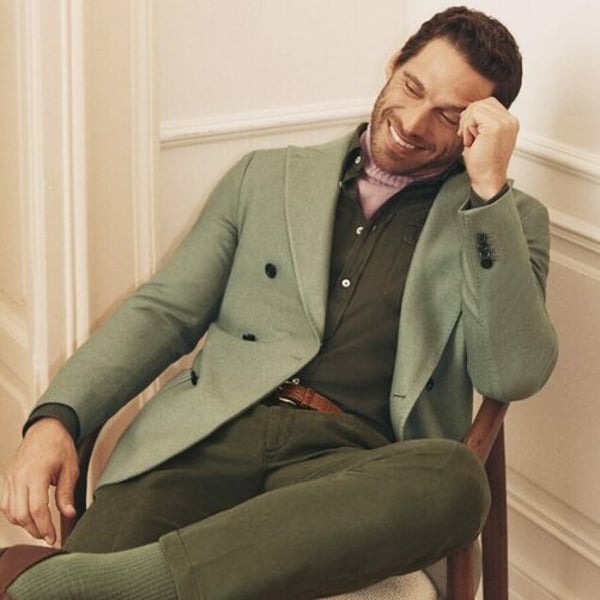
“We began with the unstructured jacket- often treated and garment-dyed- using exceptional, carefully sourced raw materials, or fabrics created exclusively for us, to achieve distinctive effects in both colour and handle,” says Francesco Russo. “Of course, an unstructured garment must still take on the shape of a jacket. And that is Boglioli’s savoir-faire. In my view, the world is full of unstructured jackets today; however, when it comes to soft tailoring, I consider the Boglioli jacket unrivalled. Building on this expertise, our day-to-day goal has been to develop a brand lifestyle over time through the creation of a complete wardrobe to dress the modern man.”
Today the Brescia-based company (its historic headquarters are in Gambara) offers trousers, shirts, knitwear, and coats, using materials of consistently the highest quality and silhouettes that are elegant, “but at the same time comfortable- so comfortable you forget you’re wearing them,” Russo notes. “What best encapsulates all these elements? The DNA of the first Boglioli jacket. If we can deliver that comfort to our customers, then we’ve hit the jackpot.”
The shop-in-shop strategy introduced a few years ago by the Brescia-based company around the world “is working extremely well,” says the CEO. “This format helps to keep the overall wholesale distribution strategy- now somewhat under pressure- vibrant. It’s a way, in the multi-brand arena, to cut through the jungle, the bazaar of similar propositions, because with a 5-10 square metre footprint, fully branded, you can send people a much clearer message. We have implemented shop-in-shops extensively in recent months,” Russo continues, “for example in Istanbul we did it with Beymen, in Düsseldorf and Cologne with Breuninger, in Zurich and Basel with Globus. In all these cases, Boglioli’s brand visibility and sales have surged. In March we will open another in Munich, at Lodenfrey, one of Germany’s leading menswear stores.”

This will be an additional space to the one the menswear brand has long maintained in the German store: a Boglioli pop-up that will be open for three weeks, “which will convey a targeted stylistic message for that market,” according to Russo.
Following the family’s exit and several changes of ownership, Boglioli is now majority-controlled by a Spanish investor, who took over in 2022 from another Spanish fund. A minority stake is owned by CEO Francesco Russo himself, who is modestly satisfied with turnover. “After reaching our all-time high of €19.5 million in turnover in 2024, last year we saw a slight single-digit decline, as we were affected by the slowdown in wholesale, but in 2026 we started well in the first two months of the sales campaign. If we add the London opening, which will definitely give the business a boost, I think we could reach our new record,” he says.
The brand’s largest market- having debuted in India in 2025- is the United States, followed by Italy, which generates 30% of sales. E-commerce has been growing steadily for the past few years, to the point that Russo speaks of record sales in this channel in 2025, at over €1.5 million. Until now it has been managed through an external partner, but from next March Boglioli has invested to bring it in-house, thereby increasing margins. “Above all, this strategy frees up resources for us to invest in content and marketing, which will then drive e-commerce growth further. So less investment in the platform, and more in content, in the message, in broadening the user base,” explains the Boglioli executive, who was impacted only initially by US tariffs.

“The negative impact was felt in April and May 2025, after Liberation Day on April 3, 2025,” says Russo. “From that moment, until the President of the United States said exactly what he wanted to do, people kept their money in their pockets, and we recorded two months of declining sales, particularly in our New York mono-brand boutique. Then, once Trump negotiated and clarified which tariffs he wanted to impose on our sector (ultimately very similar to those already in place), business returned to normal.”
For Boglioli’s CEO, the signing of the agreement to protect European excellences and, above all, to progressively eliminate duties on 91% of EU goods (including clothing and footwear), just concluded between the European Union and the Latin American Mercosur bloc, is therefore important. “It could certainly represent an excellent opportunity for us, because countries like Brazil, Chile, or Argentina- or Mexico, where we are already present but with very small distribution- are all penalised by punitive tariffs. Removing them opens up interesting developments for our brand, particularly in summer, but not only,” he confirms.
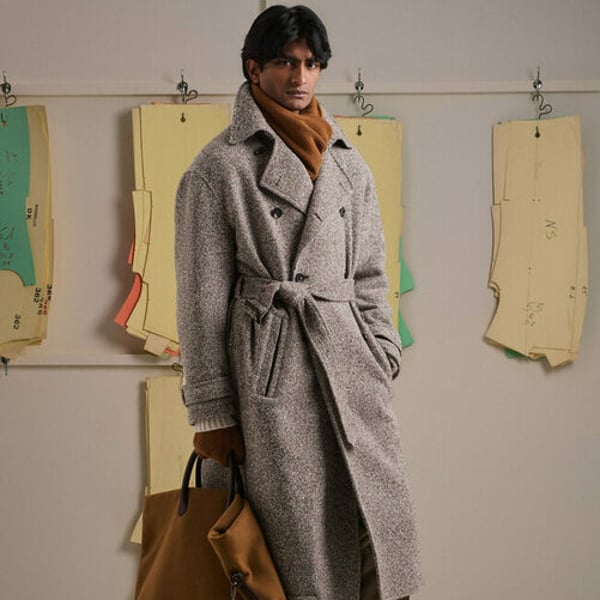
With its 155 employees in Italy, plus four in the New York store and a further four arriving in London, Boglioli presented four chapters of its Autumn-Winter 2026/27 collection in Milan: Back to Milano, Lunch in Galleria, Autumn in Brera and Bagai Club, in which the city becomes a direct source of inspiration. From the deep blues and greys of the business sphere, to shades of beige, to sage with luminous nuances; moving through the tones typical of the autumn foliage of literary Brera- where Boglioli’s signature green takes centre stage- to the warm hues of leather and camel, and the more exclusive colours of the Bagai Club proposals, where cocoa and mauve define a new idea of quiet luxury. The materials, also integral to the narrative, alternate between reinvented archival fabrics, ultra-fine wools, super-light flannels, regenerated cashmere, and treated corduroy.

Among the core jacket offerings, standouts include the Manin, a double-breasted model with a modern cut; the Treves, inspired by travel-ready safari jackets; and the Galleria, a fluid reinterpretation of the historic Gassmann: all designed for an international man who demands functionality, lightness, and versatility. Alongside these, the new technical over-jackets expand the concept of outerwear, integrating water-repellent treatments, lightweight padding, and functional details. All crafted by the in-house design studio led by Marco Re.
This article is an automatic translation.
Click here to read the original article.
Copyright © 2026 FashionNetwork.com All rights reserved.
Fashion
Reliance misses third-quarter profit estimates at $2.06 billion for the October-December quarter


Kiton ends 2025 with €230 million in revenue, debuts on Milan’s Via Montenapoleone

6 ideas Legislature can’t afford to ignore in 2026

Transfer center: highest values for expiring contract players
-

 Politics8 years ago
Congress rolls out ‘Better Deal,’ new economic agenda
-
Entertainment9 years ago
New Season 8 Walking Dead trailer flashes forward in time
-
Politics9 years ago
Poll: Virginia governor’s race in dead heat
-
Politics8 years ago
Illinois’ financial crisis could bring the state to a halt
-
Entertainment8 years ago
The final 6 ‘Game of Thrones’ episodes might feel like a full season
-
Entertainment9 years ago
Meet Superman’s grandfather in new trailer for Krypton
-
Business9 years ago
6 Stunning new co-working spaces around the globe
-
Tech8 years ago
Hulu hires Google marketing veteran Kelly Campbell as CMO