
Fashion
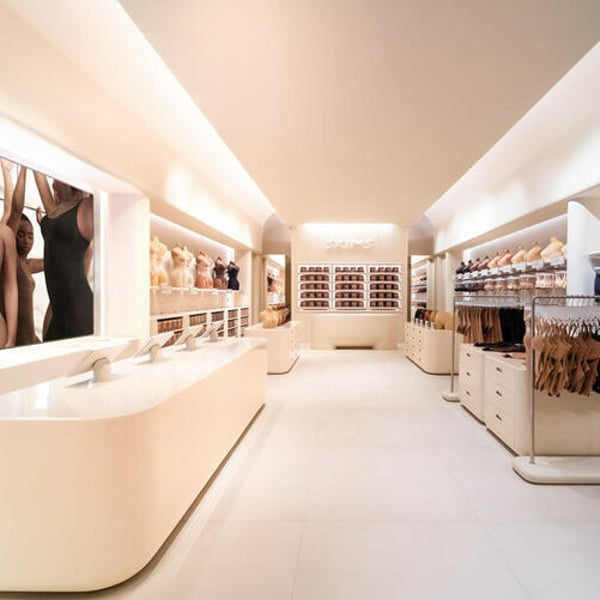
Skims opens first store in Middle East in Dubai

Published
December 24, 2025
This season, winter footwear collaborations are emerging as bridges between performance and style. We spotlight three major alliances that revisit existing models while tailoring their silhouettes to urban and winter use.
Carhartt WIP x Salomon: The X-ALP reimagined between the outdoors and urban culture
Carhartt WIP and Salomon return with a second collaboration, continuing the dialogue begun with their first joint project. At its core are shared values of functionality, durability and performance, applied to an iconic technical silhouette: the X-ALP.
Founded in 1994 by Edwin Faeh, Carhartt Work In Progress is the contemporary European offshoot of the American brand Carhartt, a workwear pioneer established in 1889. Carhartt WIP has reframed workwear codes, embedding them firmly in urban cultures—from hip-hop and skateboarding to the techno scenes of Detroit and Berlin, as well as contemporary art. Today, the brand counts over 100 boutiques worldwide and regularly collaborates with leading names in fashion and streetwear.
For its part, Salomon, founded in 1947 in the French Alps, is a benchmark in outdoor equipment and technical lifestyle. Based in Annecy, the brand develops footwear, apparel and equipment for mountain sports, drawing on the combined expertise of designers, engineers and athletes.
For this collaboration, Carhartt WIP revisits the X-ALP, a model designed to tackle demanding environments. The trainer features rugged grained leather, suede inserts and Carhartt WIP’s signature camouflage. Designed for versatile use, the X-ALP Carhartt WIP embodies the convergence of outdoor technology and urban aesthetics.
The X-ALP Carhartt WIP has been available since 18 December on the brands’ websites, in their boutiques and through selected retail partners. It retails for €160.
Vaquera x Nike: the Air Max Dn8 between romanticism and subversion

Nike has teamed up with Vaquera for an unexpected collaboration centred on the Air Max Dn8, the Swoosh’s latest innovation featuring Dynamic Air technology, launched on December 8. It is a meeting of Nike’s technological prowess and the deliberately irreverent world of the New York label.
Founded in 2013 by Bryn Taubensee and Patric DiCaprio, Vaquera has established itself as a cult label on the independent fashion scene. Moving from blog-era experimentation to the runways of Paris Fashion Week, the brand made its name with pieces that went viral, notably its aviator-style strappy dresses.
For its part, Nike, founded in 1964, continues to push the boundaries of footwear innovation. With the Air Max Dn8, the brand ushers in a new chapter in the evolution of its Dynamic Air technology while embracing a resolutely contemporary aesthetic.
For this collaboration, Vaquera reinterprets the Dn8 silhouette and infuses it with its signature codes.
“Romanticism is a fundamental element of the Vaquera brand,” explained DiCaprio. The trainer is covered in kiss marks, a playful yet romantic motif that subverts performance-footwear standards without compromising functionality. The result illustrates what the founders describe as “fashion fan fiction,” where sincerity and irony deliberately coexist.
The Nike x Vaquera Air Max Dn8 is already available via the brands’ websites, at Dover Street Market and from selected retailers, priced at €200.
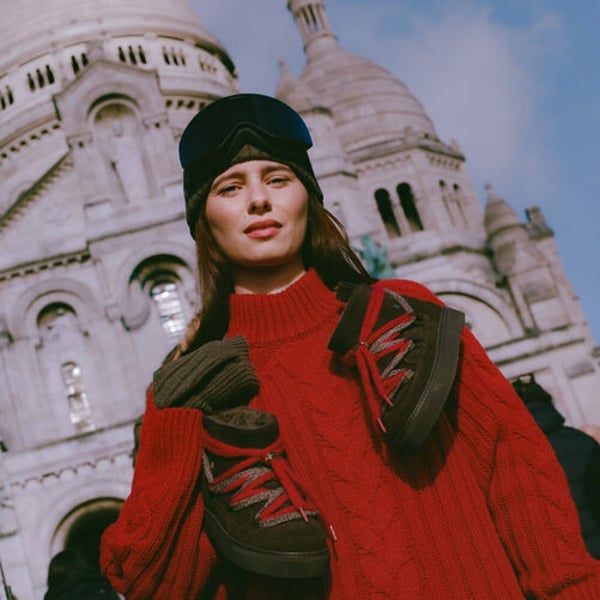
Inuikii x Rouje: alpine après-ski reinvented for the city

Inuikii and Rouje join forces this season to launch a limited-edition take on the legendary Classic Low winter boot, reworked as a warm, urban and unexpected silhouette. At the intersection of sportswear and Parisian elegance, this collaboration explores a new terrain where alpine roots meet city life.
Founded in 2013 in Zurich by Cinzia Maag and her sons Danilo and Alessio, Inuikii has established itself as a benchmark for premium winter footwear. Crafted predominantly by hand in Europe, the Swiss brand’s creations prioritise natural, sustainable materials, with the ambition of redefining après-ski through modern, protective and functional forms, without ever denying its alpine DNA.
For its part, Rouje, created in 2016 by Jeanne Damas, embodies an instinctive, timeless femininity, nourished by vintage references, a cinematic imagination and the nonchalant elegance of everyday Parisian life. The brand quickly established itself as a symbol of a certain French art de vivre, blending sensuality, simplicity and character.
For this collaboration, the two houses revisit Inuikii’s iconic Classic Low to adapt it to urban winter life. The silhouette stands out for its refreshed lines, a dual lacing system and a subtle interplay of materials and colours: chocolate nubuck, Rouje’s signature burgundy accents and discreetly branded details.
The Inuikii x Rouje Classic Low will be available from January 21, as a limited edition, through both brands’ distribution channels.
This article is an automatic translation.
Click here to read the original article.
Copyright © 2025 FashionNetwork.com All rights reserved.



Russell Brand Facing New Charges of Rape, Sexual Assault

Trainers and winter boots: How collaborations are redefining the seasonal wardrobe

Famous TikTok Star Epic Gamer Grandma Dead at 78
-

 Politics8 years ago
Congress rolls out ‘Better Deal,’ new economic agenda
-
Entertainment8 years ago
New Season 8 Walking Dead trailer flashes forward in time
-
Politics8 years ago
Poll: Virginia governor’s race in dead heat
-
Entertainment8 years ago
The final 6 ‘Game of Thrones’ episodes might feel like a full season
-
Politics8 years ago
Illinois’ financial crisis could bring the state to a halt
-
Entertainment8 years ago
Meet Superman’s grandfather in new trailer for Krypton
-
Business8 years ago
6 Stunning new co-working spaces around the globe
-
Tech8 years ago
Hulu hires Google marketing veteran Kelly Campbell as CMO