Connect with us

Business

Singapore voters seek stability as Trump roils global trade

Published

on


Any doubts about the People’s Action Party’s ability to continue dominating Singapore’s politics after six decades of rule were put to rest with Saturday’s election result.

Led by Lawrence Wong in his first election as prime minster, the PAP took 87 of 97 seats in parliament, holding the opposition to the 10 it won during a breakout 2020 vote. The opposition had sought to extend those previous gains, but the mood changed as it became clear early on that voters flocked to safety amid the threat of global economic turmoil. 

The results are an endorsement of Wong’s strategy to deepen social aid in a bid to mitigate rising costs-of-living. They also echo the results of elections the past week in Australia and Canada, where voters backed incumbent parties as U.S. President Donald Trump’s policies roil global trade. 

The 52-year-old economist and his team have warned that inviting more opposition into government could create instability at just the wrong time for trade-dependent Singapore. 

“Lawrence Wong will be beaming like a Cheshire cat,” said Eugene Tan, associate professor of law at Singapore Management University. “He couldn’t have asked for a better result. This will let the PAP ride on for the next decade.”

The Straits Times Index was little changed on Monday, while the Singapore dollar edged higher against the greenback.

Beyond the parliamentary seats, Wong’s party did considerably better with the popular vote, garnering about 66% of the ballots cast, nearly 5 percentage points more than in 2020. 

That standing gives Wong all the backing he needs to complete a succession of new political leaders into his cabinet without much fuss from the opposition. The result also signals policy continuity to foreign companies that have helped make Singapore a global financial hub. 

‘Clear Signal’

It wasn’t all bad news for the opposition. Supporters of the Workers’ Party took some comfort in knowing they were able to hang onto the 10 seats they won in 2020, while boosting their share of the popular vote to almost 15%. That strengthens the WP’s claim as the primary voice for the opposition and, perhaps, a more potent force in the future. 

Yet Saturday’s election suggests a renewal of public trust in a political party that has been in charge since independence in 1965. Wong is the city-state’s fourth prime minister, and just the second not from Singapore founder Lee Kuan Yew’s family—Lee’s son Lee Hsien Loong held the top job from 2004-2024.

In the early hours of Sunday, Wong pledged to redouble efforts to tackle cost-of-living pressures facing Singaporeans. He also addressed the need to create more jobs and bolster support for healthcare, retirement, education and families.

“It’s a clear signal of trust, stability and confidence in your government,” he said early Sunday morning. “We will do our best to serve you and improve your lives.”

While a win was never in doubt, the margin of victory in Singapore can have a significant impact on public policy. 

In 2020 the PAP won 89% of the seats — its worst showing since independence, due in part to a backlash from younger voters. The party sought to lure them back ever since by, among other things, easing access to public housing and repealing a long-standing law barring sex between men. Half of the 32 new candidates the PAP floated in this election were under 40.

The transition to Wong marked a further shift in the PAP’s approach to addressing rising costs among some 3.6 million Singaporeans. That included first-time unemployment benefits and billions of dollars more in successive budgets to help pay for everything from meals to utilities and education support.

Trade War

Now Wong can focus on confronting economic headwinds that threaten to upend the city-state’s trade-reliant economy. The government last month revised its 2025 economic growth forecast down to 0-2% from a previous 1%-3%, and the prime minister has warned that a recession can’t be ruled out.

The strong result also provides a sigh of relief to companies, which were more likely to face higher taxes and restrictions on hiring foreign workers if the opposition had outperformed.

“For businesses, this means greater clarity and continuity in economic policy, including support for digital transformation, sustainability goals, and manpower policies,” said Nydia Ngiow, managing director at consultancy BowerGroupAsia. 

Companies will “find a more predictable regulatory environment in the near term, which would aid in investment planning and operational stability against the backdrop of the geopolitical tensions,” she said.

At the same time, Wong’s government will head into any trade negotiations with the U.S. more confident, with key ministers elected back into office. Wong had sought to convince voters on the campaign trail that Singapore would be in a stronger position to do just that if reelected.

The biggest tailwind for the PAP “was the heightened global uncertainty driven by the trade war unleashed by President Trump,” said Pushan Dutt, a professor of economics and political science at Insead in Singapore. “Voters were never going to take a gamble in the form of a protest vote.”

For the opposition, the result means that efforts to bring more balance and debate to parliament will have to wait. As the tallies came in Saturday evening, opposition candidates were despondent.

“We are shocked by the results,” said Leong Mun Wai, an opposition candidate from the Progress Singapore Party. “We may need to review our strategy and regroup ourselves to fight another day.”

Nonetheless, there was some consolation for them in the ability of the Workers’ Party to hold its ground in parliament. 

“Unlike other parties, the Workers’ Party was successful in staying competitive this time and now stand as the only real opposition force in Singapore,” according to polling firm Blackbox Research.  

This story was originally featured on Fortune.com


Source link

Continue Reading

Business

80% of American Christmas trees are fake. They’re also tariffed

Published

on

On a recent December day, Mark Latino and a handful of his workers spun sheets of vinyl into tinsel for Christmas tree branches. They worked on a custom-made machine that’s nearly a century old, churning out strands of bright silver tinsel along its 35-foot (10-meter) length.

Latino is the CEO of Lee Display, a Fairfield, California-based company that his great-grandfather founded in 1902. Back then, it specialized in handmade velvet and silk flowers for hats. Now, it’s one of the only companies in the United States that still makes artificial Christmas trees, producing around 10,000 each year.

Tariffs and trees

Tariffs shone a twinkling light this year on fake Christmas trees — and the extent to which America depends on other countries for its plastic fir trees.

Prices for fake trees rose 10% to 15% this year due to the new import taxes, according to the American Christmas Tree Association, a trade group. Tree sellers cut their orders and paid higher tariffs for the stock they brought in.

Despite those issues, tree companies say they aren’t likely to shift large-scale production back to the U.S. after decades in Asia. Fake trees are labor-intensive and require holiday lights and other components the U.S. doesn’t make, said Chris Butler, CEO of the National Tree Co., which sells more than 1 million artificial trees each year.

Americans are also very price-sensitive when it comes to holiday décor, Butler said.

“Putting a ‘Made in the U.S.A.’ sticker on the box won’t do any good if it’s twice as expensive,” Butler said. “If it’s 20% more expensive, it won’t sell.”

Americans prefer fake trees

About 80% of the U.S. residents who put up a Christmas tree this year planned to use a fake one, according to the American Christmas Tree Association. That percentage has been unchanged for at least 15 years.

Mac Harman, the founder and CEO of Balsam Brands, which sells hundreds of thousands of Balsam Hill trees each year, said Americans like to set up their trees on Thanksgiving and leave them up for weeks, which dries out fresh-cut trees. Others prefer fake trees because they’re allergic to the mold spores on real trees, he said.

Americans also like convenience; 80% of the fake trees sold each year have the lights already strung on them, Butler said.

That preference is one reason artificial tree production shifted away from the U.S., first to Thailand in the early 1990s and to China about a decade later. Winding lights around the branches is time-consuming and tedious, Harman said.

“Where are we going to get 15,000 people in America who want to string lights on Christmas trees?” Harman said.

Labor-intensive work

It takes an hour or two to make an artificial Christmas tree, from molding and cutting the needles to tying branches together and attaching the lights, Butler said. Workers in China, where 90% of fake trees are made, are paid $1.50 to $2 per hour, he said.

Harman said the workers who wrap the lights on Balsam Hill’s trees are so efficient “it’s like watching an Olympian.”

One of Balsam Brands’ Chinese partners employs 15,000 to 20,000 people; another in Indonesia has up to 10,000, he said. Many are seasonal workers, since orders for Christmas décor slow down between October and February.

Balsam Brands, which is based in Redwood City, California, studied whether it could make faux trees in Ohio during the first Trump administration, when President Donald Trump threatened -– but eventually delayed –- tariffs on imported Christmas décor, Harman said.

The company hired consultants and considered automating some work. But it concluded a tree that currently sells for $800 would cost $3,000 if it was made in the U.S. Harman said Balsam couldn’t even find a U.S. company to make the pair of gloves it includes in each box for fluffing out branches.

American-made trees

Lee Display employs three or four people for most of the year, adding more during the holiday rush to help with installations and displays. About half its business is making custom displays for companies such as Macy’s, while the other half is selling directly to consumers.

Latino said he likes that he can produce an order quickly instead of waiting for it to ship from overseas.

“You have more control over it. I like to think that everything here is either my fault or my mistake or my careful planning and skill,” he said.

The tariffs still affected Lee Display. Latino’s son James, who leads business development and marketing, said the company didn’t import lights or decorations from China this year and relied on items it already had in stock. It’s getting low on lights, so next year it will have to pay more to import them, he said.

Responding to tariffs

Some artificial tree companies are branching out so they’re less reliant on China. National Tree Co., which is based in Cranford, New Jersey, moved some manufacturing to Cambodia in 2024, and could source all its trees from outside China by next year if it wanted to, Butler said.

But diversifying their suppliers didn’t make those companies immune from the impact of tariffs either. In April, the Trump administration threatened a 49% tariff against products from Cambodia. That rate was eventually reduced to 19%. Tariffs on artificial trees from China also bounced around but now average 20%, according to the American Christmas Tree Association.

Butler said his company imported fewer trees this year and also raised prices by 10%. He said he used a lot of the money to offer customer discounts since demand was weak because of consumer worries about the economy.

“It’s a discretionary item. People say, ‘I can wait one more year,’” Butler said.

Balsam Brands cut its workforce by 10%, canceled travel, froze raises and even stopped serving lunch in the office once a week to absorb the impact of tariffs, Harman said. It also raised tree prices by 10%.

Harman said his sales are down 5% to 10% this year in the U.S. but up 10% or more in Germany, Australia, Canada and France. That tells him tariffs have decreased U.S. demand.

“If a merry Christmas is measured in how many decorations people put up, by that measure it’s going to be a slightly less merry Christmas,” he said.

___

AP Video Journalist Terry Chea contributed from Fairfield, California.


Source link

Continue Reading

Business

Jim Carrey nearly quit ‘Grinch’ — Then the founder of SEAL Team Six came to the rescue

Published

on

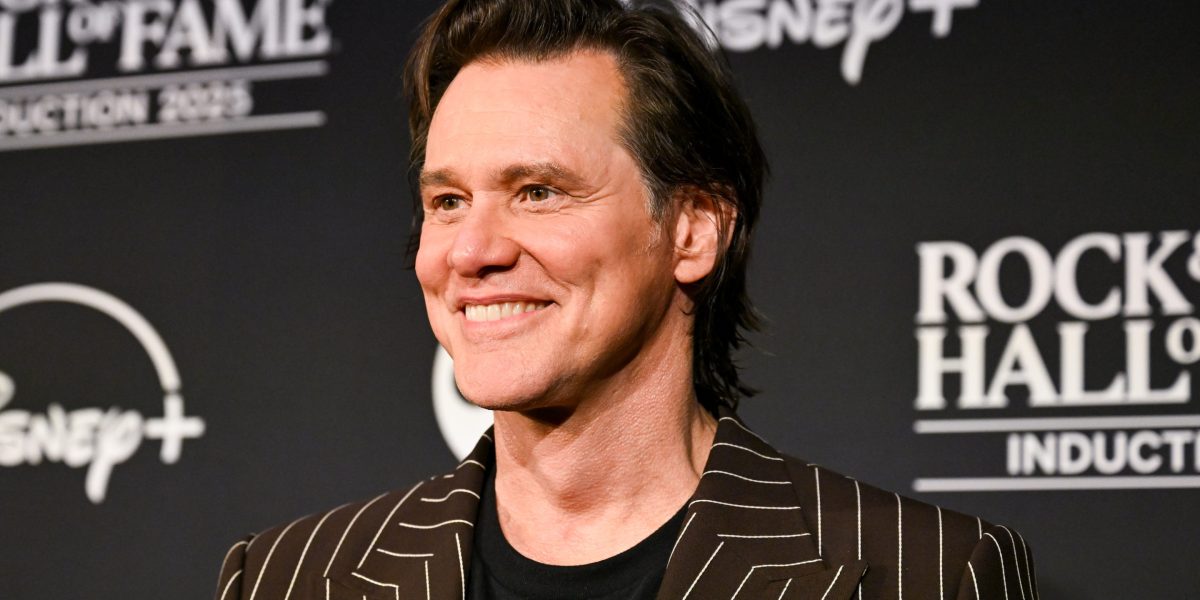
For his role in the movie How the Grinch Stole Christmas, which came out in 2000, Jim Carrey’s tortuous costume and makeup had him on the verge of walking away from a $20 million paycheck.

In an interview with Vulture, the actor said the first day of makeup took eight hours. He nearly quit and suffered from panic attacks after having to wear painful green contacts, makeup that made him breathe through his mouth the whole time, and a full body suit made of itchy yak hair. But before he walked away, producer Brian Grazer hired the founder of SEAL Team Six to help Carrey suck it up.

“Richard Marcinko was a gentleman that trained CIA officers and special-ops people how to endure torture. He gave me a litany of things that I could do when I began to spiral. Like punch myself in the leg as hard as I can. Have a friend that I trust and punch him in the arm. Eat everything in sight. Changing patterns in the room,” Carrey told Vulture in the interview, which was published on Friday.

“If there’s a TV on when you start to spiral, turn it off and turn the radio on. Smoke cigarettes as much as possible. There are pictures of me as the Grinch sitting in a director’s chair with a long cigarette holder. I had to have the holder, because the yak hair would catch on fire if it got too close,” he added.

Carrey said he later learned that Marcinko was the founding officer of SEAL Team Six, the famed special-operations unit. Marcinko passed away at age 81 in December 2021.

Director Ron Howard and Grazer, who were also part of the Vulture interview, recalled Carrey struggling onset because of his Grinch costume.

Howard said the pain he endured was less physical than mental as the makeup was “destroying” Carrey’s skin. It was determined by medical professionals that Carrey couldn’t work in the makeup five days in a row, so he would have a day off or only be off-camera feeding dialogue on Wednesdays, he added.

“Jim started having panic attacks. I would see him lying down on the floor in between setups with a brown paper bag. Literally on the floor. He was miserable,” Howard said.

Carrey even offered to return his entire $20 million paycheck, with interest, Grazer said. But, instead Grazer found Marcinko. 

“I said, ‘Listen, you can quit on Monday, but just spend time with this guy on the weekend,’” Grazer said.


Source link

Continue Reading

Business

A NIMBY revolt is turning voters in Republican strongholds against the AI data-center boom

Published

on

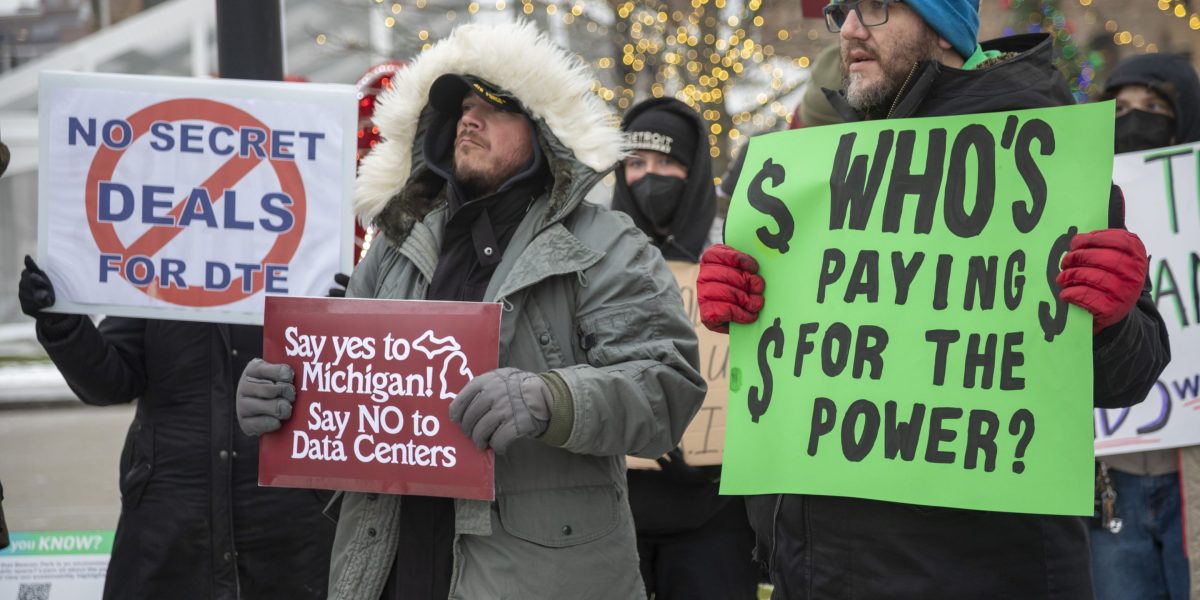
Silicon Valley and Washington sees data centers as the backbone of America’s AI future. Residents who live next to them see giant, humming boxes that throw diesel exhaust into the air, drive up energy costs, and steamroll the look and feel of their neighborhoods—“a plague,” as Virginian anti-data center activist Elena Schlossberg put it.

“If you live near a data center that’s being powered by these gas turbines, you simply cannot imagine living there,” she said. You can “hear the noise” in your home, added Schlossberg—who got into the fight a decade ago while trying, unsuccessfully, to stop Facebook from putting a data center next to her property. 

Virginia has long been the biggest data center hub of not just the country but the world, with northern Virginia alone hosting 13% of the globe’s data centers in 2023, according to a government report. And for just as long, residents have been locked into battles over what that footprint means for their communities.

Now, Schlossberg is leading a Virginia nonprofit group, Save Prince William County, to fight against the encroachment of even more data centers to power the AI boom. Data center power demand is expected to rise five-fold over the next decade, Deloitteprojects; reaching 176 gigawatts, the same amount as Australia and the United Kingdom’s entire power grids combined.

AI infrastructure builders, and the tech giants that plan to rely on the future data centers, argue that they’re essential to unlocking AI’s economic benefits. But in some of the states slated to house these projects, many of them politically purple-ish or even red—Virginia, Indiana, Ohio, Pennsylvania—voters are revolting, often successfully keeping them out of their neighborhoods. Indeed, in elections held last month, opposition to data centers helped tip elections in Democrats’ favor in Virginia and Republican-leaning Georgia.

“Folks realize they’re getting duped,” said Kerwin Olson, executive director of the Citizens Action Coalition, an environmental advocacy coalition based in Indiana. “It’s not just something they hear on Fox News or MSNBC anymore. It’s happening in their own backyard.”

Big Tech companies, Olson added, are showing up at local planning commissions and drainage boards asking for “huge giveaways”— tax abatements, zoning variances, special exceptions —”all to build a $3 billion box that creates maybe 30 jobs.”

“So they’re like, what’s in it for us?” Olson asked. 

Upcoming political battles

The first signs of what could be a broader political reckoning are appearing at the county level. In Prince William County—home to the fight over a proposed 2,000-acre “Digital Gateway” development near the Manassas battlefield—data centers have already forced recalls, resignations, and primary defeats of elected officials, Schlossberg said. The issue has become so radioactive that candidates in both parties now treat opposition to data-center expansion as a prerequisite for running, she added.

“It’s never been red versus blue,” Schlossberg said. “It’s people who live here versus people who want to industrialize where we live.”

That county could be a canary in the coalmine for what comes next, as Democrats and Republicans approach critical midterm congressional elections in 2026. Across key swing states, activists say the next wave of AI-driven projects will collide with a public that is far more organized and hostile than it was even two years ago. 

That tension is beginning to creep into politics. In Indiana, legislators publicly tout the state’s new data-center incentives while privately warning counties that the projects are not without tradeoffs. In Virginia, candidates now get asked—at libraries, at farmer’s markets, even at high school football games—whether they would support a temporary moratorium.

Olson said his group has been “buried” in calls from Hoosiers in every corner of the state—red, blue, rural, suburban—asking for help deciphering tax abatements and utility filings. “I’ve worked on energy issues for decades,” he said. “I have never seen anything like the scale of anger over this.”

When voters see those consequences firsthand, Olson said, they stop caring about geopolitical talking points. “You can tell people this is about beating China,” he said. But when their bill goes up, and their kids are sleeping in basements with headphones on because of the noise, they’re not thinking about China. 

At the heart of the backlash is a basic economic question that data-center backers haven’t convincingly answered: Why should the public subsidize infrastructure that serves some of the world’s richest companies?

Indiana’s first filing under its new “80/20” law—touted as a safeguard to make data centers pay most of the costs—still leaves ratepayers actually footing nearly 40% of the bill, Olson said. The organization he runs, Citizens Action Coalition, did an analysis that revealed that Hoosier households paid 17.5% more in utility bills in 2025 than the previous year. In Virginia, residents fear they will ultimately finance the transmission lines and new generation needed to serve hyperscale facilities.

“The public utility model was always a social contract,” Schlossberg said. “The data-center industry blew that up.”

In many ways, the backlash boils down to a trust problem. Residents don’t trust Big Tech, seeing the hyperscalers as being like “robber barons at the turn of the century” but with unprecedented demands for land, water, and power. Olson pointed to NDAs, closed-door negotiations, and local officials dining with tech consultants as signs that decisions are being made over communities’ heads and without local voters’ input. Layered onto that is a broader skepticism of AI itself: Many voters aren’t convinced they should remake their towns for what still feels like an unproven or overhyped technology.

“It’s like the Gilded Age, part two,” Olson said. “Only bigger.”


Source link

Continue Reading

Trending

Copyright © Miami Select.