Connect with us

Business

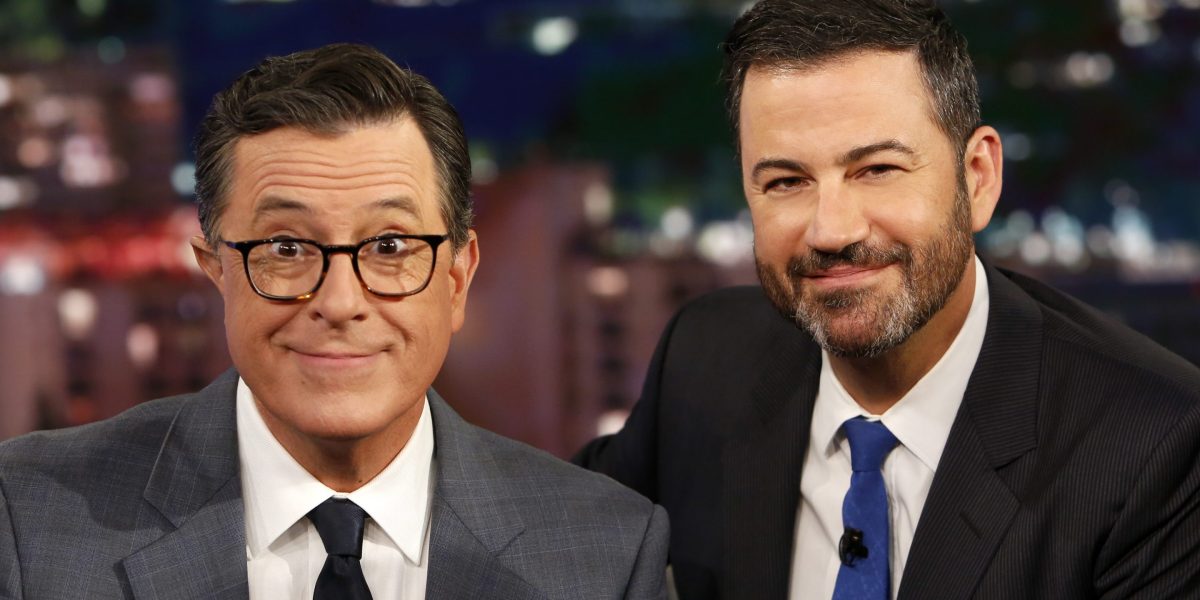
Sinclair reveals that it asked ABC to create a CBS-like ombudsman while backing down on Jimmy Kimmel suspension

Published

on


Sinclair Broadcast Group, one of the country’s largest owners of local television stations, announced Friday it will end its preemption of Jimmy Kimmel Live! and will resume airing the popular late-night program on its ABC affiliate stations, effective Friday evening. The decision marks a significant reversal after a period of scrutiny and debate over the network’s programming choices, with Sinclair and fellow affiliate Nexstar, which also deplatformed Kimmel, finding themselves at the center of a nationwide freedom-of-speech debate.

Sinclair fired back at its critics, claiming its decision was “independent of any government interaction or influence,” and was, in fact, an exercise of free speech itself.

“Free speech provides broadcasters with the right to exercise judgment as to the content on their local stations,” Sinclair said, arguing, “[It’s] simply inconsistent to champion free speech while demanding that broadcasters air specific content.”

The highly unusual preemption began last week, when Sinclair pulled Jimmy Kimmel Live! from its ABC-affiliated stations—an action that drew widespread attention from both industry observers and the general public. Sinclair said in its Friday statement that over the past week, it had received “thoughtful feedback from viewers, advertisers, and community leaders representing a wide range of perspectives.” The company also said it witnessed troubling acts of violence, including a shooting at an ABC affiliate station in Sacramento, implying its removal of Kimmel was responsible in a climate of heightened tension and political violence. The company said such events “underscore why responsible broadcasting matters and why respectful dialogue between differing voices remains so important.”

According to Sinclair, the primary objective in preempting Jimmy Kimmel Live! was to ensure content broadcast on local stations remains “accurate and engaging for the widest possible audience.” The company emphasized its responsibility to “provide programming that serves the interests of our communities” with its obligations to air national network programming supplied by ABC.

Discussions with Disney and the idea of an ombudsman

Sinclair claimed it engaged in “ongoing and constructive discussions with ABC,” during which it proposed a series of new accountability measures, such as creating a “network-wide independent ombudsman,” as part of a broader effort to facilitate transparency and constructive feedback. Noting that ABC and its parent company, Disney, have yet to adopt these measures, Sinclair said it believes creating this new role could help to foster trust among viewers and stakeholders across the country. It emphasized it would like to strengthen accountability, as well as viewer feedback and community dialogue.

Sinclair’s and Nexstar’s actions to remove Kimmel came amid a flurry of comments from FCC Chairman Brendan Carr, prompting criticisms of a government-pressure campaign to censor speech that was critical of the president. Other criticisms, from figures such as influential podcaster Joe Rogan, argued that Kimmel was, in fact, inaccurate in the remarks that immediately preceded his preemption, having to do with the political ideology of the accused shooter of Charlie Kirk.

The appointment of an ombudsman amid a late-night host controversy and government regulation actually happened just weeks ago, when CBS News hired an ombudsman. In July, when Carr approved the takeover of CBS parent company Paramount by Skydance, a company controlled by David Ellison, the son of billionaire and Trump ally Larry Ellison, he said that an ombudsman would soon be hired. “In all respects, Skydance will ensure that CBS’s reporting is fair, unbiased, and fact-based,” Skydance said in a letter to Carr, as reported by the AP.

Shortly after Skydance took over Paramount, CBS announced the shocking cancellation of its own late-night show starring Stephen Colbert, just days after Colbert had criticized the decision surrounding the Paramount takeover.

Disney declined Fortune’s request for comment. A request for comment from Skydance was not immediately returned. Sinclair declined to comment beyond its statement.

Fortune Global Forum returns Oct. 26–27, 2025 in Riyadh. CEOs and global leaders will gather for a dynamic, invitation-only event shaping the future of business. Apply for an invitation.


Source link

Continue Reading

Business

Nvidia CEO says U.S. data centers take 3 years, but China ‘can build a hospital in a weekend’

Published

on


Nvidia CEO Jensen Huang said China has an AI infrastructure advantage over the U.S., namely in construction and energy.

While the U.S. retains an edge on AI chips, he warned China can build large projects at staggering speeds.

“If you want to build a data center here in the United States from breaking ground to standing up a AI supercomputer is probably about three years,” Huang told Center for Strategic and International Studies President John Hamre in late November. “They can build a hospital in a weekend.”

The speed at which China can build infrastructure is just one of his concerns. He also worries about the countries’ comparative energy capacity to support the AI boom.

China has “twice as much energy as we have as a nation, and our economy is larger than theirs. Makes no sense to me,” Huang said.

He added that China’s energy capacity continues to grow “straight up”, while the U.S.’s remains relatively flat.

Still, Huang maintained that Nvidia is “generations ahead” of China on AI chip technology to support the demand for the tech and semiconductor manufacturing process.

But he warned against complacency on this front, adding that “anybody who thinks China can’t manufacture is missing a big idea.”

Yet Huang is hopeful about Nvidia’s future, noting President Donald Trump’s push to reshore manufacturing jobs and spur AI investments.

‘Insatiable AI demand’

Early last month, Huang made headlines by predicting China would win the AI race—a message he amended soon thereafter, saying the country was “nanoseconds behind America” in the race in a statement shared to his company’s X account.

Nvidia is just one of the big tech companies pouring billions of dollars into a data center buildout in the U.S., which experts tell Fortune could amount to over $100 billion in the next year alone.

Raul Martynek, the CEO of DataBank, a company that contracts with tech giants to construct data centers, said the average cost of a data center is $10 million to $15 million per megawatt (MW), and a typical data centers on the smaller side requires 40 MW.

“In the U.S., we think there will be 5 to 7 gigawatts brought online in the coming year to support this seemingly insatiable AI demand,” Martynek said.

This shakes out to $50 billion on the low end, and $105 billion on the high end.


Source link

Continue Reading

Business

Trump finally meets Claudia Sheinbaum face to face at the FIFA World Cup draw

Published

on


Their long-delayed first face-to-face discussion focused on next year’s World Cup — and included side discussions about trade and tariffs — but immigration was not the top issue. That’s despite Trump’s push to crack down on the U.S.-Mexico border being a centerpiece of his administration, and the driving force in the relations between both countries.

Trump has been in office for more than 10 months, and his having taken so long to see Sheinbaum in-person is striking given that meeting with the leader of the country’s southern neighbor is often a top priority for U.S. presidents.

Trump and Sheinbaum had been set to meet in June on the sidelines of the Group of Seven summit in Canada, but that was scrapped after Trump rushed back to Washington early amid rising tensions between Israel and Iran.

Soccer took center stage — but tariffs still loom large

Trump and Sheinbaum sat talking in the president’s box and also appeared onstage with Canadian Prime Minister Mark Carney at the Kennedy Center for Friday’s 2026 World Cup draw. The U.S., Mexico and Canada are co-hosting the tournament, which begins in June.

A senior White House official, who spoke on the condition of anonymity to discuss private meetings, said Trump, Sheinbaum and Carney met privately after participating in the draw.

Sheinbaum had said before leaving Mexico that she’d talk to Trump about tariffs that his administration has imposed on automobiles, steel and aluminum from Mexico, among other things. She said after appearing at the Kennedy Center that the three leaders “talked about the great opportunity that the 2026 FIFA World Cup represents for the three countries and about the good relationship we have.”

“We agreed to continue working together on trade issues with our teams,” Sheinbaum posted on X.

Mexico is the United States’ largest trading partner. The the U.S.-Mexico-Canada Agreement which Trump forged in his first term as a replacement for 1994’s North American Free Trade Agreement also remains in place. But U.S. Trade Representative Jamieson Greer has begun scrutinizing it ahead of a joint review process set for July.

In the meantime, the U.S. and Mexico’s priorities have been reshaped by the steep drop in the number of people crossing into the U.S. illegally along its southern border, as well as the White House’s — so far largely unrealized — threats to impose large trade tariffs on its neighbor.

Before speaking in-person, Trump and Sheinbaum had repeatedly talked by phone, discussing tariffs and Mexican efforts to help combat the trafficking of fentanyl into the U.S. But despite other world leaders, including Russian President Vladimir Putin and Chinese President Xi Jinping, having already met with Trump this term, the meeting with Sheinbaum hadn’t happened until Friday.

The Trump whisperer?

Waiting so long to meet in person hasn’t seemed to hurt Mexico’s president’s standing with Trump.

The two spoke by phone in November 2024, with the then-U.S. president-elect declaring afterward that they’d agreed “to stop Migration through Mexico” — even as Sheinbaum suggested her country had already been doing enough.

Trump soon after taking office threatened to impose a 25% tariff on goods imported from Mexico in an effort to force that country to better combat fentanyl smuggling, only to later agree to a pause.

The White House subsequently backed off tariff threats against most Mexican goods. Then, in October, Sheinbaum announced that the U.S. had given her country another extension to avoid sweeping 25% tariffs on goods it imports to the U.S. — even as many items covered by the USMCA trade deal remain exempt.

Mexico, though, hasn’t avoided all U.S. tariffs. Sheinbaum’s country continues to try to negotiate its way out of import levies Trump has imposed worth 25% on the automotive sector and 50% on steel and aluminum.

Sheinbaum’s success at mitigating many tariffs, and other successes in the bilateral relationship, has led some to wonder if she has a special gift for getting what she wants from him.

She’s largely pulled it off by affording Trump the respect the U.S. president demands from leaders around the world — but especially a neighboring country — and by deploying occasional humor and pushing back, always respectfully, when necessary.

Sheinbaum also defused another potential point of contention, Trump’s renaming of the Gulf of Mexico to the “Gulf of America,” by proposing dryly that North America should be renamed “América Mexicana,” or “Mexican America.” That’s because a founding document dating from 1814 that preceded Mexico’s constitution referred to it that way.

Still, Mexican officials continue to work furiously to lessen the trade blow from tariffs going into 2026 — levies that could wreck its already low-growth economy, particularly in its all-important automotive sector. Sheinbaum’s government has also sought to defend its citizens living in the U.S. as the Trump administration expands its mass deportation operations.

Sheinbaum’s government also lobbied unsuccessfully against a 1% U.S. tax on remittances, or money transfers that millions of Mexicans send home every year from the United States. It was approved as part of Trump’s tax cut and spending package and takes effect Jan. 1.

Trump’s push for mass deportations

Trump has directed federal officials to prioritize major deportation pushes in Democratic-run cities — an extraordinary move that lays bare the politics of the issues. He’s also deployed the National Guard in an effort to curb crime, which has led to a spike in immigration-related arrests, in places like Los Angeles, Chicago and Washington, as well as Memphis, Tennessee, and Portland, Oregon.

The Trump administration says its priority is targeting “the worst of the worst” criminals, but most of the people detained in operations around the country have not had violent criminal histories.

Such operations often meant targeting Mexican citizens who have lived and worked in the United States for years and may face deportation to a homeland they no longer know well. It also has meant serious threats of declining remittance income, which has fallen for seven consecutive months.

The lower number of illegal U.S.-Mexico border crossings has knocked immigration off its perch as the top agenda item for the U.S.-Mexico bilateral relations for the first time in recent memory.

Mexican officials now say conversations around immigration have shifted toward cajoling countries into taking back their citizens and reintegrating them to keep them from leaving again — a major Trump administration priority around the world.

Cooperation on security

Sheinbaum has blunted some of the Trump administration’s tough talk on fentanyl and drug smuggling cartels by giving her security chief Omar García Harfuch more authority.

Mexico has also extradited dozens of drug cartel figures to the U.S., including Rafael Caro Quintero, long sought in the 1985 killing of a DEA agent. That show of goodwill, and a much more visible effort against the cartels’ fentanyl production, has gotten the Trump administration’s attention.

That’s a significant improvement. Only a few years ago, the DEA struggled to get visas for its people in Mexico, and then-President Andrés Manuel López Obrador accused the U.S. government of fabricating evidence against a former Mexican defense secretary, though he never presented evidence to back up the allegation.

Not everything has gone so smoothly, though. Trump criticized Sheinbaum for rejecting his proposal to send U.S. troops to Mexico to help thwart the illegal drug trade.

Last month, Sheinbaum said there was no way the U.S. military would be able to make strikes in Mexico, after Trump said he was open to the idea. And she has denounced U.S. strikes on boats allegedly carrying drugs in the Caribbean and eastern Pacific.

“The president of Mexico is a lovely woman, but she is so afraid of the cartels that she can’t even think straight,” Trump said earlier this year.

Sheinbaum declined to take the bait — and avoided turning up the political pressure — by sidestepping Trump’s criticism.

___

Associated Press writer Chris Sherman contributed from Mexico City.


Source link

Continue Reading

Business

Former Amazon exec warns Netflix-WBD deal will make Hollywood ‘a system that circles a single sun’

Published

on


A Netflix-Warner Bros. merger would risk a monopsony where a single buyer wields enormous control over the marketplace, the former head of Amazon Studios warned.

Roy Price, who is now chief executive of the studio International Art Machine, wrote in a New York Times op-ed on Saturday that predictions of doom are nothing new in the film industry, pointing to the advent of TV, home video, streaming, and AI.

“But if Netflix acquires Warner Bros., this long-prophesied death may finally arrive, not in the sense that filmmaking will cease but in the sense that Hollywood will become a system that circles a single sun, materially changing its cultural output,” he added. “All orbits—every deal, every creative decision, every creative career—will increasingly revolve around the gravitational mass and imprimatur of one entity.”

To be sure, Netflix has said Warner Bros. operations will continue, and the studio’s films will still be released in theaters. Meanwhile, Warner’s TV channels will be spun off via a separate company, though HBO will be included in Netflix.

But Price said the danger “is not annihilation but centralization,” with the combined company accounting for an even bigger slice of overall content spending.

A reduction in bidders also means less content will be produced, while a separate development culture, set of tastes, and risk tolerances will be sidelined, he predicted.

“A Netflix merger with Warner Bros. would create a monopsony problem: too few buyers with too much bargaining power,” Price explained. “Writers, directors, actors, showrunners, puppeteers, visual effects artists—all are suppliers. The fewer buyers competing to hire them, the lower their compensation and the narrower their opportunities.”

Such reasoning sank Penguin Random House’s attempt to merge with Simon & Schuster that would’ve created a book publisher with too much leverage over authors, he pointed out.

Of course, the remaining players in Hollywood and content creation are giants in their own right as well. A KPMG survey of spending in 2024 put NBC Universal parent Comcast at the top with $37 billion, followed by Alphabet’s YouTube ($32 billion), Disney ($28 billion), Amazon ($20 billion), Netflix ($17 billion) and Paramount ($15 billion). Comcast and Paramount also made bids for Warner Bros.

Theater owners, producers and other creative workers have also voiced opposition to the deal. In addition to the business impact of a Warner Bros. takeover, other opponents raised even weightier concerns.

Oscar winner Jane Fonda sounded the alarm on a “constitutional crisis” and demanded that the Justice Department not use its regulatory power to “extract political concessions that influence content decisions or chill free speech.”

For its part, the Trump administration views the deal with “heavy skepticism,” sources told CNBC. The merger is expected to face exceptional antitrust scrutiny, and Netflix’s $5.8 billion breakup fee is among the biggest ever.

On Wall Street, analysts see a tech angle in the merger, namely the importance of content to train and power the next generation of AI models that will shape the entertainment industry’s future.

The acquisition of Warner Bros. would help Netflix stand out in an AI future, Divyaunsh Divatia, research analyst at Janus Henderson Investors, said in a note on Friday.

“They’re also levering up on premium entertainment at a time when competition on engagement from short form video is expected to intensify especially if AI models democratize video creation at an increasing rate,” he wrote.


Source link

Continue Reading

Trending

Copyright © Miami Select.