Connect with us

Business

Silicon Valley investor Vinod Khosla predicts AI will replace 80% of jobs by 2030

Published

on


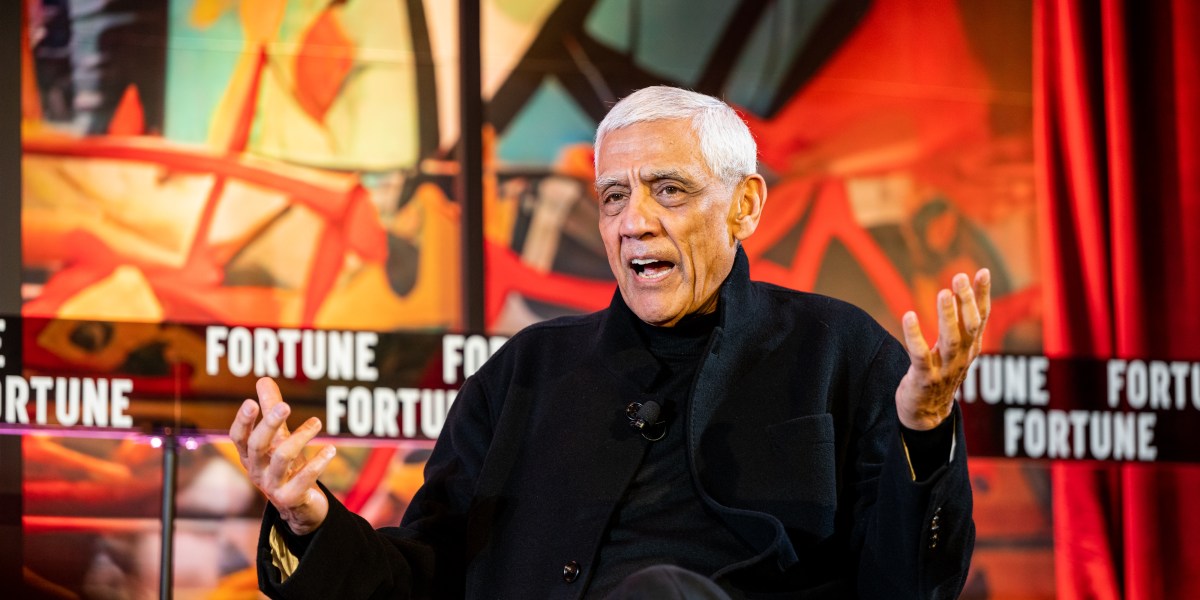
Tech entrepreneur and investor Vinod Khosla‘s prediction of AI automating 80% of high-value jobs by 2030 coincides with a reckoning for Fortune 500 companies.

Khosla shared his predictions for the future in a wide-ranging interview on the Uncapped with Jack Altman podcast. As a venture capitalist and early investor in companies like Square and Instacart, Khosla offered advice for business leaders on navigating unprecedented changes ahead. Companies like Sears and Toys ‘R’ Us collapsed under digital pressure, but Khosla warns the 2030s will see a “faster demise” of giants as AI rewrites industry rules.

See below for an overview of Khosla’s major predictions for AI, the economy, and more.

Key takeaways:

  • Era of unprecedented disruption: Khosla describes the current technology cycle as “crazy and frenetic,” stating, “I’ve never seen a cycle like this… almost every job is being reinvented, every material thing is being reinvented differently with AI as a driver.” He compares the scale of change to the 1960s, noting, “We’re going to see this large change in such a short time, it’s almost hard to imagine how society adjusts.”
  • AI and the end of work: Khosla predicts, “Within the next 5 years, any economically valuable job humans can do, AI will be able to do 80% of it… 80% of all jobs can be done by an AI.” He believes by 2040, “the need to work will go away. People will work on things because they want to, not because they need to pay their mortgage.”  
  • Disruption of the Fortune 500: He forecasts a dramatic acceleration in the demise of large incumbent companies: “One of my predictions is the 2030s will see a faster rate of demise of Fortune 500 companies than we’ve ever seen… that transition won’t happen from existing companies. Somebody new will reinvent this.” 

Predictions by sector:

  • Health care: “If all medical expertise is free… you have an unlimited number of primary care doctors, oncologists, gastroenterologists, mental health therapists… how would you redesign the healthcare system?” Khosla argues that entrenched interests and regulatory barriers will slow—but not stop—AI-driven transformation.
  • Robotics: He predicts that “almost everybody in the 2030s will have a humanoid robot at home… probably starting with something narrow like doing your cooking for you.” The main bottleneck is not hardware, but intelligence.
  • Energy: Khosla is “very bullish about energy,” especially fusion and super-hot geothermal, which he believes could make power “cheaper than natural gas.”

Advice for entrepreneurs:

  • Societal and geopolitical implications: Khosla warns of the risks of authoritarian regimes using AI for both hard and soft power: “By 2040 the biggest risk we might face… is China using both good AI—cyber AI, warfare AI—but also socially good AI, like free doctors to everybody on the planet… to embed their political philosophy.”
  • Philosophy on venture and innovation: Khosla emphasizes founder-driven innovation: “Innovation only—I can’t think of very many large examples where large innovation came from somebody who was large or in the business… experts are terrible at predicting the future; they extrapolate the past. Entrepreneurs invent the future they want.”
  • On risk and impact: “Most people reduce risk to increase the probability of success. I do the opposite: Start with [the] high consequences of success. I don’t care about the probability of failure.”  

Disclaimer: For this story, Fortune used generative AI to help with an initial draft. An editor verified the accuracy of the information before publishing.

Introducing the 2025 Fortune 500, the definitive ranking of the biggest companies in America. Explore this year’s list.


Source link

Continue Reading

Business

Gen Z fears AI will upend careers. Can leaders change the narrative?

Published

on


Good morning. Are you communicating the purpose of AI with your younger employees? According to new data from Harvard, most fear AI is going to take their jobs.

The Institute of Politics at Harvard Kennedy School released the fall 2025 Harvard Youth Poll on Thursday, which finds a generation under profound strain. The nationwide survey of 2,040 Americans between 18 and 29 years old was conducted from Nov. 3–7. For these respondents, instability—financial, political, and interpersonal—has become a defining feature of daily life. 

Young Americans see AI as more likely to take something away than to create something new. A majority (59%) see AI as a threat to their job prospects, more than immigration (31%) or outsourcing of jobs to other countries (48%).

Nearly 45% say AI will reduce opportunities, while only 14% expect gains. Another 17% foresee no change and 23% are unsure—and this holds across education levels and gender. 

In addition, young people fear AI will undermine the meaning of work. About 41% say AI will make work less meaningful, compared to 14% who say it will make work more meaningful and 19% who think it will make no difference; a quarter (25%) say they are unsure.

In my conversations this year with CFOs and industry experts, many have said that the goal of using AI is to remove the mundane and manual aspects of work in order to create more meaningful, thought‑provoking opportunities. However, that message does not yet seem to be resonating with younger employees.

There is a lot of public discussion and widespread fear that AI will mostly take away jobs, but research by McKinsey Global Institute released last week offers a different perspective. According to the report, AI could, in theory, automate about 57% of U.S. work hours, but that figure measures the technical potential in tasks, not the inevitable loss of jobs, as Fortune reported.

Instead of mass replacement, McKinsey researchers argue the future of work will be defined by partnerships among people, agents, and robots—all powered by AI, but dependent on human guidance and organizational redesign. The primary reason AI will not result in half the workforce being immediately sidelined is the enduring relevance of human skills. 

The Harvard poll also found young people have greater trust in AI for school and work tasks (52% overall, 63% among college students) and for learning or tutoring (48% overall, 63% among college students). But trust drops sharply for personal matters. 

Young employees are considered AI natives. However, it is important to recognize that they have not experienced as many major technology shifts as more seasoned employees—like the dawn of the internet. It’s not to say that AI won’t change the workforce, but there’s still room and need for humans. It’s up to leaders to clearly communicate how AI will change roles, which tasks it will automate, and also provide ongoing training and guidance on how employees can still grow their careers in an AI-powered workplace.

Have a good weekend. See you on Monday.

SherylEstrada
sheryl.estrada@fortune.com

Leaderboard

Fortune 500 Power Moves

Amanda Brimmer was appointed CFO of leasing advisory and head of corporatedevelopment at JLL (No. 188), a global commercial real estate and investment management company. Reporting to JLL CFO Kelly Howe, Brimmer will partner with business leaders globally to drive financial growth and performance. Brimmer brings more than two decades of experience from Boston Consulting Group, where she most recently served as managing director and senior partner.

Galagher Jeff was appointed EVP and CFO of ARKO Corp. (No. 488), one of the largest convenience store operators and fuel wholesalers in the U.S., effective Dec. 1. Jeff most recently served as EVP and CFO for Murphy USA, Inc. Before that, he spent nearly 15 years in senior and executive finance roles with retailers, including Dollar Tree Stores, Inc., Advance Auto Parts, Inc. and Walmart Stores, Inc., in addition to a decade-long career in finance and strategy consulting at organizations including KPMG and Ernst & Young. 

Every Friday morning, the weekly Fortune 500 Power Moves column tracks Fortune 500 company C-suite shifts—see the most recent edition

More notable moves this week:

Barbara Larson, CFO of SentinelOne, a cybersecurity company, will transition from her role to pursue an opportunity outside of the cybersecurity industry. Larson will continue to serve in her role through mid-January 2026. Upon her departure, Barry Padgett, chief growth officer, will serve as interim CFO. Barry has more than 25 years of experience in operational leadership at enterprise software companies, including SAP and Stripe. SentinelOne has initiated a search for its next CFO.
Jessica Ross was appointed CFO of GitLab Inc. (Nasdaq: GTLB), a DevSecOps platform, effective Jan. 15. Ross joins the company from Frontdoor, where she served as CFO. She has more than 25 years of experience in finance, accounting, and operational leadership at companies like Salesforce and Stitch Fix, and spent 12 years in public accounting at Arthur Andersen and Deloitte.

Michele Allen was appointed CFO of Jersey Mike’s Subs, a franchisor of fast-casual sandwich shops, effective Dec. 1. Allen succeeds Walter Tombs, who is retiring from Jersey Mike’s in January after 26 years with the company. Allen brings more than 25 years of financial leadership experience. Most recently, she served as CFO and head of strategy at Wyndham Hotels & Resorts. Allen began her career with Deloitte as an auditor. 

Nick Tressler was appointed CFO of Vistagen (Nasdaq: VTGN), a late clinical-stage biopharmaceutical company, effective Dec. 1. Tressler brings over 20 years of financial leadership experience. Most recently, he served as CFO of DYNEX Technologies, and before that, he was the CFO at American Gene Technologies, International, and Senseonics Holdings, Inc. Tressler has also held senior finance roles at several biopharmaceutical companies.

Mike Lenihan was appointed CFO of Texas Roadhouse, Inc. (NasdaqGS: TXRH), a restaurant company, effective Dec. 3. Keith Humpich, who served as interim CFO, was appointed chief accounting and financial services officer of the company. Lenihan has nearly 30 years of finance experience, including the past 22 years in the restaurant industry. Most recently, he served as the CFO at CKE Restaurants, Inc.

Big Deal

The ADP National Employment Report, released on Dec. 3, indicated that private-sector employment declined by 32,000 jobs in November. ADP found that job creation has been flat during the second half of 2025, while pay growth has continued its downward trend. In November, hiring was particularly weak in manufacturing, professional and business services, information, and construction.

“Hiring has been choppy of late as employers weather cautious consumers and an uncertain macroeconomic environment,” said Nela Richardson, chief economist at ADP, in a statement. “And while November’s slowdown was broad-based, it was led by a pullback among small businesses.”

ADP’s report is an independent measure of labor market conditions based on anonymized weekly payroll data from more than 26 million private-sector employees in the U.S. The next major U.S. Jobs Report (Employment Situation) for November is scheduled for release on Dec. 16 by the Bureau of Labor Statistics.

Going deeper

Here are four Fortune weekend reads:

Overheard

“The Fed no more ‘determines’ interest rates than a meteorologist determines the weather.”

—Alexander William Salter states in a Fortune opinion piece. Salter is a senior fellow with the Independent Institute and an economics professor in the Rawls College of Business at Texas Tech University. He writes: “The Fed doesn’t set interest rates. As powerful as America’s central bank is, it’s still just one player in a globe-spanning ocean of financial markets. Instead, the Fed sets targets for short-term interest rates. Those target rates indicate the Fed’s general monetary policy stance, but they are not the substance of monetary policy.”


Source link

Continue Reading

Business

Four key questions about OpenAI vs Google—the high-stakes tech matchup of 2026

Published

on


Hello, Tech Editor Alexei Oreskovic, pitching in for Allie. We’ve been enjoying some crisp blue-sky days here in San Francisco in true December fashion. For the folks at OpenAI however, the days have been red — Code Red. 

In case you haven’t been following, OpenAI CEO Sam Altman on Monday declared a “Code Red” alert in a memo to employees, according to the Information and the Wall Street Journal. The alert, the highest level on OpenAI’s three-point scale, is essentially an all-hands-on-deck call to mobilize and defend against an imminent threat. That threat is Google and its latest version of the Gemini AI model, which competes with OpenAI’s GPT family of models, particularly its flagship ChatGPT product.

It’s a remarkable turn of events, almost exactly three years to the day that OpenAI released ChatGPT and put Google and the rest of the tech industry on the back foot. Now Google is on the ascent, hoping to turn OpenAI into MySpace. Of course, with its $500 billion valuation, OpenAI and its investors are not about to surrender. 

So, as the two AI superpowers roll up their sleeves for what’s sure to be a 2026 slugfest, we thought it would be interesting to tap into the wisdom of Term Sheet readers and ask for your perspectives on some of the key questions of this critical moment in tech history. Send your thoughts directly to me or to Allie G.

How can a company like OpenAI turn a first-mover advantage into a sustainable and long-lasting business that doesn’t get bulldozed by giants with more resources and capital? 

Is there a lesson—good or bad—from a first mover of the past (e.g. Netscape vs Microsoft; Blackberry vs iPhone) that OpenAI should heed?

What is the Google Achilles heel that OpenAI should exploit? 

What is the single most important thing that OpenAI needs to execute on right now – and what is the best metric to measure its success?

And of course, what other important parts of this story should we be thinking about?

Fire away!

Alexei Oreskovic
X:
@lexnfx
Email:alexei.oreskovic@fortune.com
Submit a deal for the Term Sheet newsletter here.

Joey Abrams curated the deals section of today’s newsletter.Subscribe here.

Venture Deals

7AI, a Boston-based agentic cybersecurity platform, raised $130 million in Series A funding. Index Ventures led the round and was joined by Blackstone Innovations Investments, as well as existing seed investors Greylock, CRV, and Spark

Fact Base, a Tokyo-based manufacturing SaaS startup and maker of drawing management system ZUMEN, raised $28.5 million in Series C funding from Insight Partners.

imper.ai, a New York City-based startup that prevents AI and cyber impersonation, emerged from stealth after raising $28 million in funding. Redpoint Ventures and Battery Ventures led the investment round and were joined by Maple VC, Vessy VC, and Cerca Partners.

pH7 Technologies, a Vancouver, British Columbia-based metal extraction company, raised $25.6 million in initial Series B funding. Fine Structure Ventures led the round with strategic investment from BHP Ventures and was joined Energy & Environment Investment, Siteground, Gaingels Fund, and Calm Ventures, along with existing investors including TDK Ventures, Pangaea Ventures, Rhapsody Venture Partners, and BASF Venture Capital.

Pine AI, a Palo Alto, Calif.-based startup that specializes in agentic AI for customer service applications, raised $25 million in Series A funding. Investors included Fortwest Capital

Lumia, an agentic AI security and governance platform, raised $18 million in seed funding. Team8 led the round and was joined by New Era.

Multifactor, a San Francisco-based agentic AI security platform, raised $15 million in seed funding. Nexus Venture Partners led the round and was joined by Y Combinator, Taurus Ventures, Honeystone Ventures, Flex Capital, Pioneer Fund, Ritual Capital, and Liquid2 Ventures.

Laigo Bio, a Utrecht, Netherlands-based biotech company specializing in novel membrane protein degradation, raised €11.5 million ($13.4 million) in seed funding. Kurma Partners and Curie Capital co-led the round and were joined by Argobio Studio, Angelini Ventures, Eurazeo, the Oncode Bridge Fund, ROM Utrecht Region, and Cancer Research Horizons.

Helmet Security, a Washington, D.C.-based agentic AI communication security startup, emerged from stealth after raising $9 million from SYN Ventures and WhiteRabbit Ventures.

Addis Energy, a Somerville, Mass.-based ammonia production technology developer, raised $8.3 million in seed funding. At One Ventures led the round and was joined by existing investors Engine Ventures and Pillar VC.  

Alinia AI, a Barcelona, Spain- and New York City-based startup that builds compliance tools for AI systems, raised $7.5 million in seed funding. Mouro Capital led the round and was joined by Speedinvest, Raise Ventures, and Precursor.

BuiltAI, a London, U.K.-based financial modeling platform for commercial real estate investment, raised $6 million in seed funding. Work-Bench led the round and was joined by Lerer Hippeau, Timber Grove Ventures, Emerald Pine, and angel investors.

Curvestone AI, a London, U.K.-based platform that reduces compound errors in automated workflows, raised $4 million seed funding. MTech Capital led the round and was joined by Boost Capital Partners, D2 Fund, and Portfolio Ventures.

Govstream.ai, a Seattle-based startup building AI-native permitting tools for local governments, raised $3.6 million in seed funding. 47th Street Partners led the round and was joined by Nellore Capital, Ascend, Kevin Merritt, and Andreas Huber.

Private Equity

Ares Management Corporation recapitalized MGT, a Tampa-based national technology and advisory solutions company serving state and local education institutions and governments, with a $350 million investment that values MGT at $1.25 billion. Existing investors include the Vistria Group, JPMorgan, and WhiteHorse Capital.

TRP Infrastructure Services, an Arlington Capital Partners portfolio company, completed its acquisition of Corpus Christi, Texas-based Highway Barricades & Services, a provider of pavement marking and traffic control services. Financial terms were not disclosed.

The Care Team, a Revelstoke Capital Partners portfolio company, acquired select hospice and palliative care operations from Traditions Health, a Tennessee-based hospice, palliative, and home health provider with operations in 16 states. Financial terms were not disclosed.

Inovara Group, an Ambienta portfolio company, acquired Guildford, U.K.-based IBL Lighting Limited, an LED engine design and architectural lighting provider. Financial terms were not disclosed.

People

Hunter Point Capital, a New York City-based investment firm, hired Jonathan Coslet as a senior partner. Previously, he was at TPG


Source link

Continue Reading

Business

Treasury Secretary Bessent insists Trump’s tariff agenda is ‘permanent,’ saying the White House can recreate it even with a Supreme Court loss

Published

on


The Supreme Court is in the process of deciding the fate of President Trump’s tariffs, but even if the administration loses, it might not matter, said Treasury Secretary Scott Bessent.

At issue is the Trump administration’s use of the International Emergency Economic Powers Act (IEEPA) to justify some of its tariffs, including its baseline 10% duty on almost all nations. IEEPA, passed by Congress in 1977, gives the President “broad authority” on economic issues like tariffs after declaring a “national emergency,” for which the White House has pointed to elevated fentanyl imports from abroad.

Although not guaranteed, it’s possible the Supreme Court will decide the fentanyl crisis can’t be used as an emergency to justify broad tariffs on U.S. trading partners, which would make many of the administration’s tariffs invalid. In that case, the White House will just pivot to another justification to make tariffs permanent, said Bessent during the New York Times DealBook Summit this week. 

“We can recreate the exact tariff structure with 301’s, with 232’s, with the, I think they’re called 122’s,” he said, referring to several sections of various trade acts that could serve as alternatives to the administration’s current justification for its tariffs.

When interviewer and DealBook editor Andrew Ross Sorkin questioned whether these measures could exist permanently, Bessent replied “permanently.” He later clarified that tariffs under Section 122 of the Trade Act of 1974 would not be permanent.

In sum, the Constitution gives Congress purview over tariffs, but over the years it has given the executive branch more leeway to levy them through the trade acts mentioned by Bessent. 

Each of the sections Trump’s team may consider comes with its own set of pros and cons. Section 122 would be the quickest method to restore tariffs in the case of a Supreme Court loss because it doesn’t require an investigation on a trading partners’ practices. Using this justification would let the government levy tariffs up to 15%, with certain limits, but only for 150 days before congressional action is required.

The other two sections, as Bessent pointed out, have no time limit or limit on the tariff rate that can be levied, although they have other caveats. To justify tariffs under Section 301 of the Trade Act of 1974, the administration would need to conduct an investigation into practices by its trading partners it sees as “unjustifiable” or “unreasonable.” Trump did this successfully during his first administration to justify tariffs on China in 2017.

Alternatively, the administration could turn to Section 232 of the Trade of the Trade Expansion Act of 1962 and try to justify tariffs as an issue of national security. The White House is already using this justification to underpin its tariffs on steel, aluminum, and autos and those are not being scrutinized by the Supreme Court. 

Finally, experts have previously told Fortune, Trump could also ask Congress to pass a bill giving the president explicit authority to levy tariffs. Although it would require some caveats in terms of scope, and possibly duration of the tariffs, it would likely receive bipartisan support, international trade law expert and University of Kansas Law School professor Raj Bhala told Fortune

Despite the options in the administration’s back pocket, Bessent said he was optimistic about the White House’s chances at the Supreme Court. 

He also said a loss in court would be “a loss for the American people,” and pointed to the fact that China agreed to tighten control over exports of precursor chemicals used to make fentanyl earlier this year—a decision which he attributes to pressure created by the administration’s tariffs.

“I have been very consistent on this, that tariffs are a shrinking ice cube. The ultimate goal is to rebalance trade and to bring back domestic production,” Bessent said.


Source link

Continue Reading

Trending

Copyright © Miami Select.