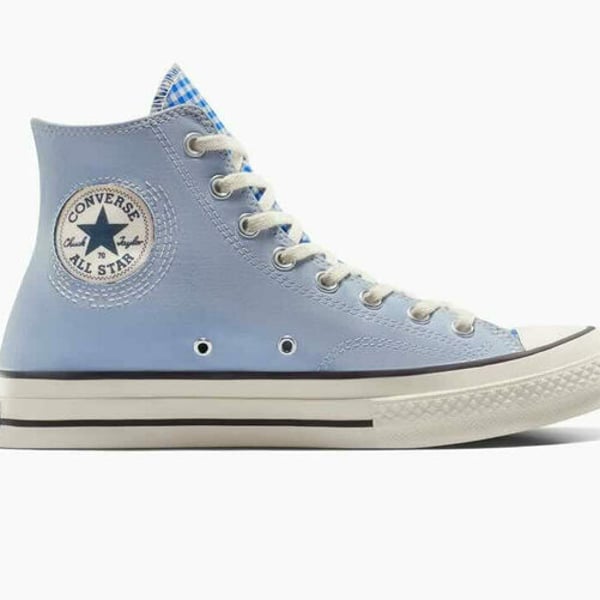
“Got Chucks on with Saint Laurent” declared Mark Ronson and Bruno Mars in their 2014 hit Uptown Funk. Yves Saint Laurent held its fashion show in Paris a few weeks ago. But where were the Chucks? Likely stuck on a retailer’s discount rack.
Converse has posted revenue declines for eight consecutive quarters. – Converse
Elliott Hill, Nike Inc.’s chief executive officer, revealed a day after the Saint Laurent show that sales at Converse, maker of the Chuck Taylor All Star sneaker, had fallen 28% excluding currency movements in the sportswear giant’s first quarter. Rather than suffer the distraction of trying to put the minor brand on a stronger footing, Hill should sell Converse- or at least be open to offers.
As the heat from Adidas AG’s Samba sneaker fades, consumers are looking for alternatives. Converse tends to go in and out of style. It was hot in the early aughts and so should be getting a lift from the adoption of other fashion favourites from that era, such as skinny jeans and khaki jackets. But so far, consumers don’t seem to be swapping the three stripes of Adidas for the starred ankle logo of Chucks.
Hill is trying to change that. He told analysts when he announced first-quarter earnings that he had installed new management at Converse, and that the Chuck Taylor shoe was in the “early stages of a global market reset.” Nike would take “aggressive actions to better position the brand for profitable growth in the future.” He didn’t specify what that meant, but it likely involves clearing out stale shoes before introducing new ones, as Nike has been doing with its Air Force 1s, Air Jordan 1s and Dunks. Given the task of turning the Nike juggernaut, Converse is a distraction Hill doesn’t need.
The footwear brand is expected to generate revenue of $1.4 billion this year, according to data compiled by Bloomberg, and could achieve a sales multiple of 1-2 times according to David Swartz, an analyst at Morningstar. Given that Nike bought Converse for just $305 million back in 2003, it’s unlikely a sale at $1.4 billion to $2.8 billion would trigger any write-down.
For a company with expected revenue of almost $47 billion this year, those sale proceeds won’t move the needle financially for Nike. The real value in offloading Converse would be allowing Hill to focus on his two most pressing tasks: addressing nimble upstarts such as On Holding AG and Deckers Outdoor Corp.’s Hoka in the athletic market, and taking on Adidas in more fashion-forward styles.
Hill would be in good company by disposing of a non-core asset. Last month, VF Corp. agreed to sell its workwear division Dickies to Bluestar Alliance for $600 million in cash. Earlier this year, Levi Strauss & Co. offloaded Dockers to Authentic Brands Group for as much as $391 million.
The brand would be a good fit with VF Corp.’s portfolio, according to Morningstar’s Swartz. But the owner of Vans and The North Face has been a seller rather than a buyer recently to cut its debt load. As well as disposing of Dickies, it sold streetwear name Supreme to Ray-Ban maker EssilorLuxottica SA a year earlier for $1.5 billion. Although VF has made a dent in its borrowings, buying Converse would be a stretch.
Alternatively, private equity may be interested. After all, 3G Capital agreed to buy Skechers USA Inc. for $9.4 billion in May. Although that deal was a smart play on an ageing population, Converse is just the right size for a financial buyer flush with cash. They might calculate that freed from the shadow of the Nike brand, Converse would unleash a wave of creativity and turbocharge sales. And by the time private equity needs an exit – typically three to five years – VF might be in a position to buy.
A sale of Converse wouldn’t be risk free. First, tariffs have depressed footwear valuations. Neither Foot Locker Inc., which in May agreed to be bought by Dick’s Sporting Goods Inc., nor Skechers achieved knockout prices. The fact that Converse is underperforming doesn’t help either. Second, there’s a danger that whoever buys Converse turns it into a success- and another competitor to Nike. Authentic Brands has invested heavily in Reebok, and this seems to be paying off, with sales rising to $5 billion in 2023 from $1.6 billion in 2020.
But Hill has so much on his plate that a disposal still makes sense. Faced with tariffs, many consumers staying cautious and a muscular competitor in the form of Adidas CEO Bjorn Gulden, Hill doesn’t have many easy wins. Selling Converse would be one.
The sale of the fashion collection belonging to Paris socialite, filmmaker, and former runway star Farida Khelfa has raised €330,000 at auction, half of it for charity, confirming how buoyant the vintage market remains.
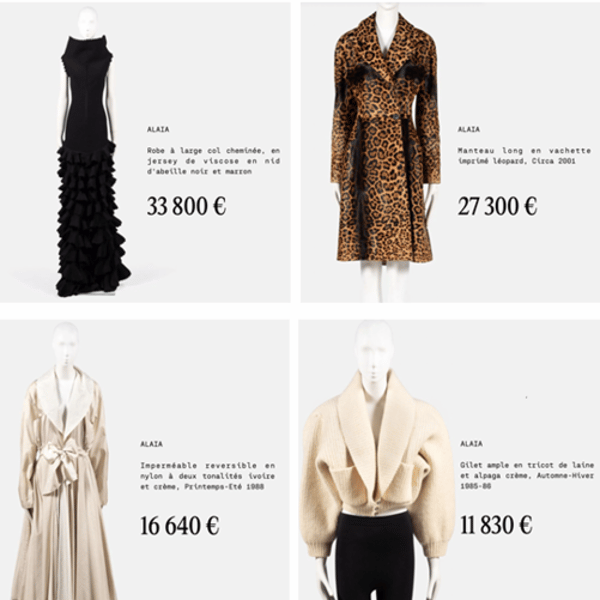
Pieces by Azzedine Alaïa and the prices they fetched at the auction – Maurice Auction
Organised by Maurice Auction, a Paris firm focusing on art and luxury, the sale, entitled Garde-Robe Iconique de Farida Khelfa, raked in €332,343.
A notably elegant figure, Khelfa ran away from her family in Lyons at 15 to begin a career in modelling in Paris, where she walked in shows by such legends as Azzedine Alaïa and Jean-Paul Gaultier. In later life she was named brand ambassador for Schiaparelli. Designs by all three fashion houses made up the majority of the auction which also included creations by Saint Laurent, Jean Charles de Castelbajac, Prada, Pierre Cardin, and Christian Louboutin.
Sold online, these personal archives of Farida came to approximately 200 pieces, comprising outfits, shoes, and accessories worn by the model in her storied career. During this, Khelfa was also the witness at the 2008 wedding of Carla Bruni to then French president Nicolas Sarkozy.
“I thank the buyers: their gesture shows as much elegance as generosity. These resonate particularly well with RIACE, and I am sincerely grateful to them,” said Farida after the auction, half of whose profits will be donated to the RIACE Fund, engaged in solidarity actions.
The Alaïa lots sparked intense competition, achieving a world record for an Alaïa piece from a private collection. A 1996 ensemble of a flared skirt and gilet by Alaïa reached €50,700, while an epic calfskin Alaïa trench printed in leopard went for €27,300.
The sale attracted international collectors, another confirmation of Farida Khelfa’s status and the market’s interest in these archives.
Clothes destined for Europe could soon require digital passports to prove their green credentials, opening a new era of transparency for the world’s $1.7-trillion fashion industry.
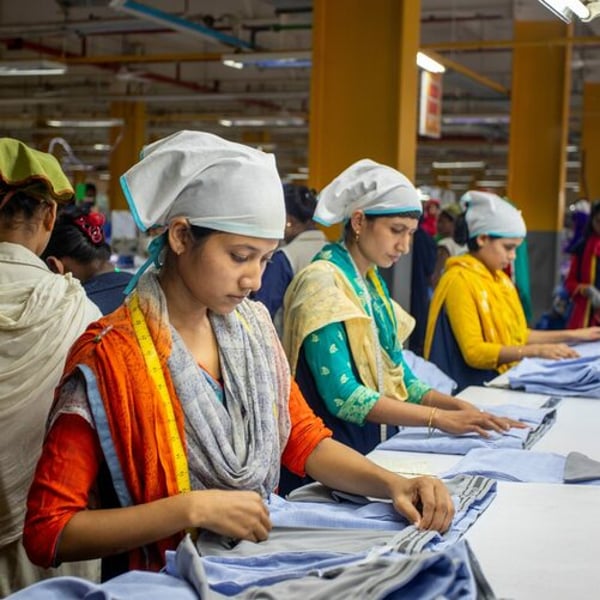
Digital product passports could transform the textile industry in Bangladesh – Shutterstock
Consumers will be able to scan QR codes or electronic tags to see the garments’ digital product passports (DPPs) and check if a fashion brand’s green claims are true. The passports will tell consumers what the clothes are made of, how much energy, water and chemicals were used to make them, and who took part in each stage of their production.
Textile suppliers from Bangladesh, the world’s second largest apparel exporter, may need to implement an initial version of the passport as early as 2027, according to analysis by the European Parliamentary Research Service.
“As consumers place a higher premium on sustainability and transparency, the digital product passport could be a key tool to provide granular records about the environmental footprint of each piece of cloth- starting from the cotton field to finished garment,” said Asif Ibrahim, vice chairman of the Dhaka-based apparel manufacturing company Newage Group of Industries. But Ibrahim said smaller manufacturers were far from ready to fulfil the stringent, new European Union (EU) needs, which aim to stop manufacturers overclaiming their green credentials.
From payroll information to material certifications, fashion makers already provide reams of data about labour and environmental standards to meet buyers’ requirements and audits. Yet a 2023 report by the British-based NGO Greenpeace said some brands and suppliers had misled consumers- for instance highlighting their recycling record, even if most of the ‘recycled’ fibre came from plastic bottles not textile scraps.
“Providing authentic and traceable data from across the supply chain is key to stop the problem of greenwashing,” said Rezwan Ahmed, CEO of Aus Bangla Jutex Ltd, a company producing bags, caps and aprons from recycled and organic cotton.
Bangladeshi suppliers have already started working with technology companies to get ready for the changes. Ahmed has partnered with Aware, a Dutch firm working with several fashion suppliers, using decentralised blockchain to record relevant data as fabric becomes a finished garment.
A manufacturer inputs key pieces of data- perhaps yarn count, water consumption or colour- and Aware’s blockchain-based platform then generates a QR code for consumers. “The manufacturers will have control over what they disclose to their brands and consumers- as we want to give the manufacturers ownership of data,” said Md. Muyeed Hasan, Bangladesh country manager at Aware.
Cotton ginners, washers and dye factories, as well as the makers of finished garments, will all upload any relevant data and certificates to their digital profiles, then must add details about each batch of production in real time. Claims about energy and water usage will be verified by third parties, he told the Thomson Reuters Foundation.
The passport may require Bangladesh’s smaller garment makers to upgrade their hardware and software capacity as well as how they manage their data, said Ibrahim from the Newage Group. Smaller manufacturers make up a large share of Bangladesh’s roughly 3,320 export-oriented apparel factories, according to Mapped in Bangladesh, a project developed by BRAC University in the Bangladeshi capital.
British-based DigiProdPass has partnered with Bangladesh’s garment manufacturers’ association BGMEA to help smaller producers meet the new passport requirements. Salauddin Sohag, managing director of DigiProdPass, said his company is rolling out pilot studies and plans to train smaller businesses to help them adapt.
“Suppliers will need support from global fashion brands and development organisations to upgrade their capacity- while the government should incentivise the early adopters,” said Ibrahim.
Fine jewellery brand Senco Gold & Diamonds has expanded its men’s offering and launched new brand ‘Aham,’ designed to cater to modern Indian grooms with a range of gold, diamond, and platinum options.
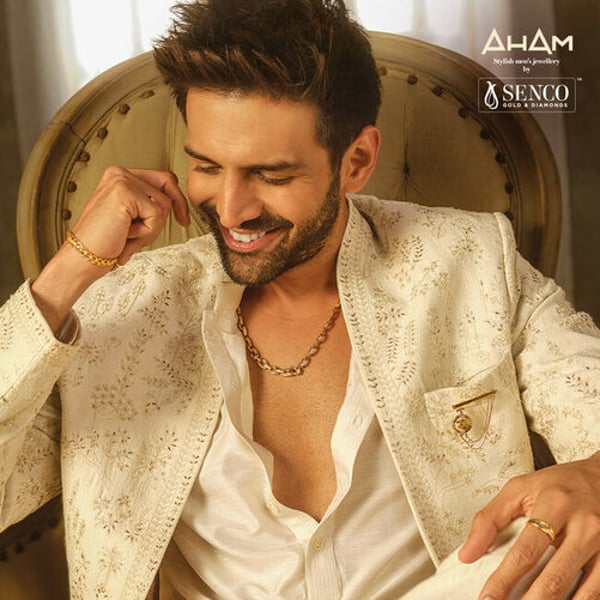
A look from Senco Gold & Diamonds’ new brand Aham – Senco Gold & Diamonds – Facebook
“Aham draws inspiration from the evolving equal relationships of modern Indian couples where the groom’s style is now as significant as the bride’s,” said Senco Gold & Diamonds’ director and head of marketing and designs Joita Sen in a press release. “What we’ve seen in most Indian weddings so far is the groom looking on indulgently as his better half glitters in her wedding jewellery. With Aham, we wanted to change that narrative and have the couple dazzle equally in their Senco adornments! Each piece of this collection allows the groom the freedom to express his personal style, most naturally and effortlessly.”
Now available in Senco Gold & Diamonds’ pan-India brick-and-mortar stores, online, and on the Senco shopping app, Aham’s ‘Wedding Season Collection’ presents a contemporary take on traditional wedding jewellery. The label’s maiden collection features over 800 designs including kadas, platinum wristwear, diamond-set rings, and more minimalist cufflinks, along with a selection of fusion pieces in two-tone styles.
Senco Gold & Diamonds’ parent company Senco Gold Limited was incorporated in Kolkata in 1994, according to its website. The business counts over 175 stores in India.





 Politics8 years ago