Connect with us

Business

Sheryl Sandberg says Silicon Valley’s hyper-masculine rhetoric is ‘terrible’—contributing to ‘one of the worst’ corporate climates she’s ever seen

Published

on


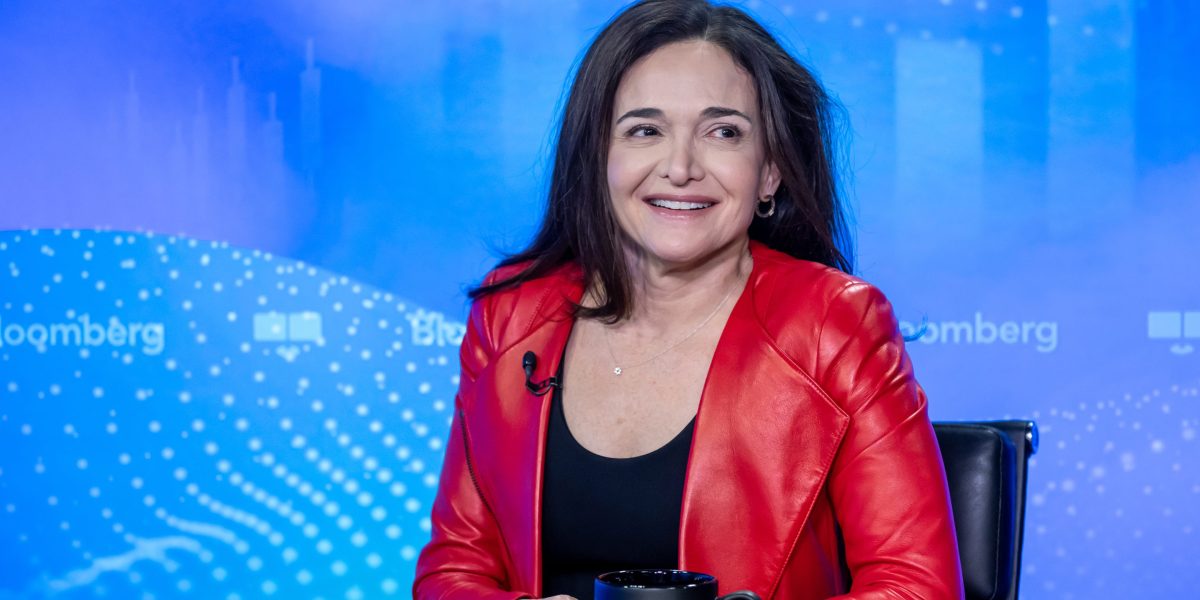
Sheryl Sandberg, formerly chief operating officer at Meta (formerly Facebook) and author of the motivational leadership book Lean In, has some thoughts on the hyper-masculine corporate culture sweeping Silicon Valley: It’s “one of the worst” she’s seen. 

Sandberg, who served for more than 14 years as Meta’s COO before stepping down in 2022, told CNBC corporate America has undergone a cultural shift, explaining “rhetoric matters, who says what matters.”

“Yes, the environment is terrible, really—I think one of the worst you and I have seen in our careers—but we’ve seen this backsliding before, and that is not an excuse for companies not to do the right thing by all of their employees,” Sandberg told CNBC correspondent Julia Boorstin.

Sandberg’s comments stand out because her former boss, Facebook founder and Meta CEO Mark Zuckerberg, has been one of the leaders of Silicon Valley’s creep toward hyper-masculinity. In a January interview with podcaster Joe Rogan, Zuckerberg said while he encouraged fostering welcoming environments, he saw corporate America as “culturally neutered” and said it could use more “aggression” and masculine energy.

Meanwhile, President Donald Trump and the White House have also been on a crusade against diversity, equity, and inclusion (DEI) initiatives both in the public and private sectors. On his first day back in the White House, the president signed an executive order to eliminate all DEI initiatives in the federal government. Beyondthe White House, the Trump administration has also ordered all federal agencies to “combat illegal private-sector DEI preferences.” Federal agencies have already started looking into practices at dozens of universities and some companies such as Northwestern Mutual Life Insurance, whose DEI policies are being investigated by the Equal Employment Opportunity Commission.

As the masculine and anti-DEI rhetoric has ramped up, women’s progress in the workplace has stalled, according to the latest Women in the Workplace study administered by LeanIn.org and management consulting firm McKinsey, which surveyed 9,500 employees at 124 companies. Half of the companies surveyed are no longer making women’s career advancement a priority. Another 21%, she said, see women’s career advancement as a low priority, or not a priority at all—and these are companies that are choosing to participate in the study, she added. 

All this adds up to a five-alarm fire for gender equity advocates, said Sandberg. 

Succeeding at work and uplifting a team means leaders need to be hardcore, she said, but the way to foster that hardcore mentality is through empathetic and kind leadership that brings out the best in workers.

“These things are not at odds and they’re also not particularly masculine or particularly feminine,” Sandberg said. “The best leaders, whether they’re male or female, have both.”


Source link

Continue Reading

Business

Down Arrow Button Icon

Published

on


A new Federal Reserve chair will be nominated soon to replace Jerome Powell, whose term ends in May. But the economy may prevent the central bank from lowering rates as much as President Donald Trump would like, according to Capital Economics.

In a note on Thursday, economists said the recent investment surge led by artificial intelligence is just the start of a multiyear boom in capital spending.

As a result, GDP with grow at a robust rate of 2.5% in both 2026 and 2027, even after accounting for a weaker job market that will slow consumption.

“With core inflation remaining above the 2% target for some considerable time, we think the Fed will cut its policy rate by only 25bp in 2026, putting the new Fed Chair and President Trump at loggerheads almost immediately,” Capital Economics predicted.

The president is considering National Economic Council Director Kevin Hassett, Fed governor Christopher Waller, and former Fed governor Kevin Warsh. The prediction market Kalshi has Hassett as the favorite with 54% odds to be picked, followed by Warsh (24%) and Waller (14%).

On Wednesday, Trump said he will name someone “who believes in lower interest rates by a lot.” A week before that, after the Fed cut rates by a quarter point to 3.5%-3.75%, he complained that it could have been “at least doubled.”

And earlier this year, Trump suggested the rate should go all the way down to just 1%, a level that’s typically consist with a recession, not an economy expanding at a healthy clip.

To be sure, the job market is showing signs of stagnation, but the AI boom will keep the economy buoyant, with incomes holding up too, Capital Economics said.

That’s as business investment should grow by 6.5% in 2026 and accelerate to a 7.4% pace in 2027, as AI adoption spreads to more sectors outside tech, like finance, real estate and healthcare.

AI-fueled productivity gains should also help offset tightness in the labor market due to Trump immigration crackdown, but his tariffs will keep inflation sticky, economists said.

Of course, Trump’s Fed pick could do his bidding and push for more rate cuts, but that will require other policymakers to go along. And even if they do, the aggressive easing will eventually backfire.

“Admittedly, the appointment of a new Fed Chair could trigger a bigger wave of policy loosening, but only if the Trump administration is willing to destroy the FOMC’s independence and inflation-fighting credibility, which may result in higher long-term interest rates,” Capital Economics warned.

For his part, Hassett seemed to display a rare hint of independence from Trump last week, saying the president’s opinion would have “no weight” on the rate-setting Federal Open Market Committee.

Not everyone is so bullish on the economy. Analysts at Citi Research expect GDP growth of around 2% next year with inflation heading toward the Fed’s 2% target and the labor market continuing to soften.

That will clear the war for the Fed to cut rates by a total of 75 basis points—triple what Capital Economics sees—to 2.75%-3.0%.

“Risks are balanced toward a more rapid rise in the unemployment rate that could lead the Fed to cut rates more rapidly and deeply,” Citi said in a note Thursday. “We do not expect a rebound in growth or labor demand in 2026. Instead, our base case is for hiring to remain subdued leading to slower income growth and a sustained slowdown in consumer spending.”


Source link

Continue Reading

Business

House Oversight Dem says a small fraction of Epstein files are out, and many were already public

Published

on


Not only did the Justice Department fail to provide all its files on the late sex trafficker Jeffrey Epstein, but the documents it did release represent just a fraction of what it has, according to the top Democrat on the House Oversight Committee.

Soon after the department published the records, Rep. Robert Garcia told CNN “this is absolutely breaking the law.” That’s after an overwhelmingly bipartisan act of Congress last month required all the Epstein files to be disclosed by Friday.

“It could be that they that we’re only getting about 10% of what the DOJ has,” he added. “And of that 10%, 5% of that has already been released, and the other 5% is highly redacted. So we’re getting very little.”

Garcia said he’s also been in contact with Rep. Jamie Raskin, the ranking Democrat on the House Judiciary Committee, noting that they agree they will “likely have to take legal action if the Trump administration continues to stonewall.”

The Justice Department didn’t immediately respond to a request for comment. In early, overnight hours on Saturday, the DOJ released a few more batches of files that include some court documents, photos and memos.

Earlier, it said on X that it hasn’t redacted any names of politicians, pointing to comments from Deputy Attorney General Todd Blanche.

“The only redactions being applied to the documents are those required by law — full stop,” he said. “Consistent with the statute and applicable laws, we are not redacting the names of individuals or politicians unless they are a victim.”

A spokesperson for Garcia didn’t immediately respond to a request for an update on the percentage of files that have been made public so far.

In addition to withholding files, the Justice Department also appeared to remove a photo with President Donald Trump that had been released on Friday.

That’s in contrast with White House officials highlighting photos of former President Bill Clinton that are in the document dump.

Meanwhile, the congressmen who led the effort to release the Epstein files have also warned of potential legal action due to the Justice Department’s continued failure to put out all the documents.

Rep. Thomas Massie, R-Ky., pointed out that the Epstein Files Transparency Act directs DOJ to provide internal communications about their decisions, then shared a portion of a DOJ letter to Congress that asserts its privilege to omit those materials.

“THEY ARE FLAUNTING LAW,” he posted on X on Saturday.

In a separate post on Friday, Massie highlighted the criminal statute on obstruction of justice along with the Epstein Files Transparency Act’s language prohibiting the redaction of records on the basis of “embarrassment, repetitional harm, or political sensitivity.”

“A future DOJ could convict the current AG and others because the Epstein Files Transparency Act is not like a Congressional Subpoena which expires at the end of each Congress,” he warned.

Also on Friday, Rep. Ro Khanna said the Justice Department wasn’t complying with the spirit or the letter of the law.

The California Democrat added that he and Massie have already started working on drafting articles of impeachment and inherent contempt against Attorney General Pam Bondi, though they haven’t decided yet whether to move forward.

“Impeachment is a political decision and is there the support in the House of Representatives? I mean Massie and I aren’t going to just do something for the show of it,” Khanna told CNN.


Source link

Continue Reading

Business

At least 16 Epstein files have disappeared from DOJ’s site less than a day after they were posted

Published

on


At least 16 files disappeared from the Justice Department’s public webpage for documents related to Jeffrey Epstein — including a photograph showing President Donald Trump — less than a day after they were posted, with no explanation from the government and no notice to the public.

The missing files, which were available Friday and no longer accessible by Saturday, included images of paintings depicting nude women, and one showing a series of photographs along a credenza and in drawers. In that image, inside a drawer among other photos, was a photograph of Trump, alongside Epstein, Melania Trump and Epstein’s longtime associate Ghislaine Maxwell.

The Justice Department did not say why the files were removed or whether their disappearance was intentional. A spokesperson for the department did not immediately respond to a request for comment.

Online, the unexplained missing files fueled speculation about what was taken down and why the public was not notified, compounding long-standing intrigue about Epstein and the powerful figures who surrounded him. Democrats on the House Oversight Committee pointed to the missing image featuring a Trump photo in a post on X, writing: “What else is being covered up? We need transparency for the American public.”

The episode deepened concerns that had already emerged from the Justice Department’s much-anticipated document release. The tens of thousands of pages made public offered little new insight into Epstein’s crimes or the prosecutorial decisions that allowed him to avoid serious federal charges for years, while omitting some of the most closely watched materials, including FBI interviews with victims and internal Justice Department memos on charging decisions.

Scant new insight in the initial disclosures

Some of the most consequential records expected about Epstein are nowhere to be found in the Justice Department’s initial disclosures, which span tens of thousands of pages.

Missing are FBI interviews with survivors and internal Justice Department memos examining charging decisions — records that could have helped explain how investigators viewed the case and why Epstein was allowed in 2008 to plead guilty to a relatively minor state-level prostitution charge.

The gaps go further.

The records, required to be released under a recent law passed by Congress, hardly reference several powerful figures long associated with Epstein, including Britain’s former Prince Andrew, renewing questions about who was scrutinized, who was not, and how much the disclosures truly advance public accountability

Among the fresh nuggets: insight into the Justice Department’s decision to abandon an investigation into Epstein in the 2000s, which enabled him to plead guilty to that state-level charge, and a previously unseen 1996 complaint accusing Epstein of stealing photographs of children.

The releases so far have been heavy on images of Epstein’s homes in New York City and the U.S. Virgin Islands, with some photos of celebrities and politicians.

There was a series of never-before-seen photos of former President Bill Clinton but fleetingly few of Trump. Both have been associated with Epstein, but both have since disowned those friendships. Neither has been accused of any wrongdoing in connection with Epstein and there was no indication the photos played a role in the criminal cases brought against him.

Despite a Friday deadline set by Congress to make everything public, the Justice Department said it plans to release records on a rolling basis. It blamed the delay on the time-consuming process of obscuring survivors’ names and other identifying information. The department has not given any notice when more records might arrive.

That approach angered some Epstein accusers and members of Congress who fought to pass the law forced the department to act. Instead of marking the end of a yearslong battle for transparency, the document release Friday was merely the beginning of an indefinite wait for a complete picture of Epstein’s crimes and the steps taken to investigate them.

“I feel like again the DOJ, the justice system is failing us,” said Marina Lacerda, who alleges Epstein started sexually abusing her at his New York City mansion when she was 14.

Many of the long-anticipated records were redacted or lacked context

Federal prosecutors in New York brought sex trafficking charges against Epstein in 2019, but he killed himself in jail after his arrest.

The documents just made public were a sliver of potentially millions of pages records in the department’s possession. In one example, Deputy Attorney General Todd Blanche said Manhattan federal prosecutors had more than 3.6 million records from sex trafficking investigations into Epstein and Maxwell, though many duplicated material already turned over by the FBI.

Many of the records released so far had been made public in court filings, congressional releases or freedom of information requests, though, for the first time, they were all in one place and available for the public to search for free.

Ones that were new were often lacking necessary context or heavily blacked out. A 119-page document marked “Grand Jury-NY,” likely from one of the federal sex trafficking investigations that led to the charges against Epstein in 2019 or Maxwell in 2021, was entirely blacked out.

Trump’s Republican allies seized on the Clinton images, including photos of the Democrat with singers Michael Jackson and Diana Ross. There were also photos of Epstein with actors Chris Tucker and Kevin Spacey, and even Epstein with TV newscaster Walter Cronkite. But none of the photos had captions and was no explanation given for why any of them were together.

The meatiest records released so far showed that federal prosecutors had what appeared to be a strong case against Epstein in 2007 yet never charged him.

Transcripts of grand jury proceedings, released publicly for the first time, included testimony from FBI agents who described interviews they had with several girls and young women who described being paid to perform sex acts for Epstein. The youngest was 14 and in ninth grade.

One had told investigators about being sexually assaulted by Epstein when she initially resisted his advances during a massage.

Another, then 21, testified before the grand jury about how Epstein had hired her when she was 16 to perform a sexual massage and how she had gone on to recruit other girls to do the same.

“For every girl that I brought to the table he would give me $200,” she said. They were mostly people she knew from high school, she said. “I also told them that if they are under age, just lie about it and tell him that you are 18.”

The documents also contain a transcript of an interview Justice Department lawyers did more than a decade later with the U.S. attorney who oversaw the case, Alexander Acosta, about his ultimate decision not to bring federal charges.

Acosta, who was labor secretary during Trump’s first term, cited concerns about whether a jury would believe Epstein’s accusers.

He also said the Justice Department might have been more reluctant to make a federal prosecution out of a case that straddled the legal border between sex trafficking and soliciting prostitution, something more commonly handled by state prosecutors.

“I’m not saying it was the right view,” Acosta added. He also said that the public today would likely view the survivors differently.

“There’s been a lot of changes in victim shaming,” Acosta said.


Source link

Continue Reading

Trending

Copyright © Miami Select.