Connect with us

Business

Shark Tank’s Robert Herjavec became a millionaire by 26—he tells Gen Z to be great at just one thing

Published

on


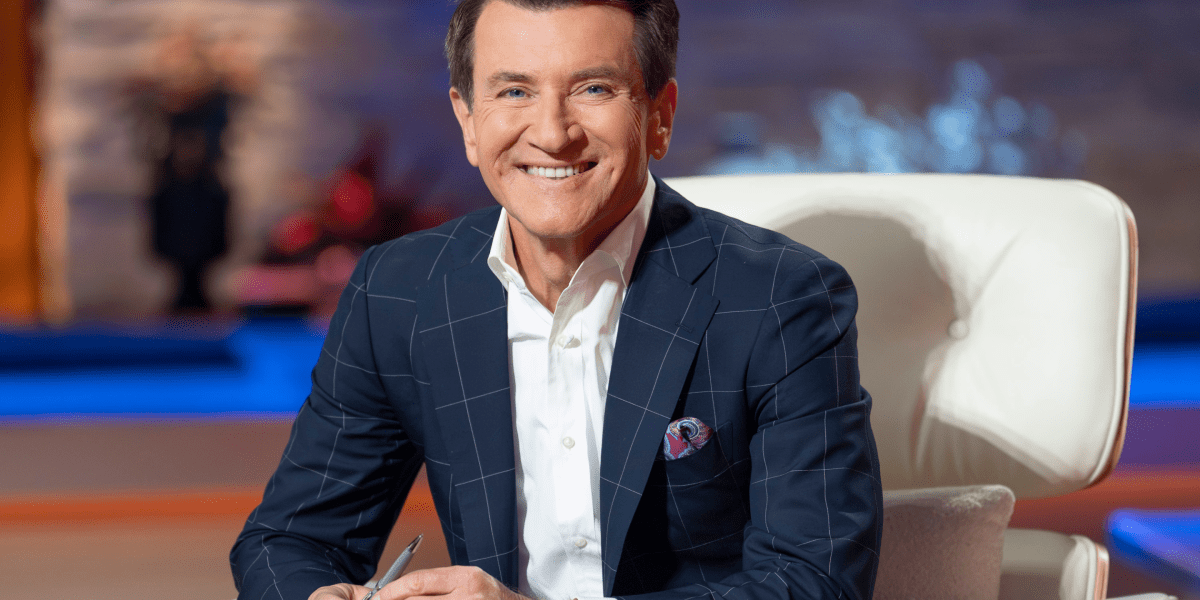
He’s known today for being a multimillionaire Shark Tank star, but when he graduated college in 1984 with an English degree, he was lost on how to jumpstart his career. He bounced between odd jobs—waiting tables, field producing at the Olympics, even helping direct a movie—before realizing juggling gigs wouldn’t set him apart.

Instead, he leaned into the one skill he knew he could master: communication.

“Be great at one thing. The world does not reward general talent. The only place that works is on Jeopardy,” he tells Fortune.

That focus, he says, was key to unlocking his cybersecurity career and helping him become a millionaire by age 26. And while one might expect his English degree to have been a disadvantage in tech, it actually was a benefit. Among the crowded cyber field, Herjavec was the one who was different.

“I had to develop the ability to communicate, and I had to develop the ability to spot talent,” he adds. “I didn’t understand the technology initially, but I was good at understanding people who understood the technology.”

Wringing out every opportunity in life

Herjavec’s drive was shaped from a young age, after immigrating to Canada with his parents from then-Yugoslavia with just one suitcase and $50—a sacrifice that left a lasting impact.

“We lived in someone’s basement for 18 months,” he says. “So I think that drove me for a really long time. I felt if I didn’t make it, if I didn’t make something of myself, it didn’t justify their sacrifice.”

Even after accomplishing his first major milestone—paying off both his and his parents’ homes and feeling like “the richest person in the world”—Herjavec’s ambition only deepened. Instead of resting on his success, he started to question the true meaning of achievement and what it takes to make a life worthwhile.

“For the last so many years, for me, it’s about reaching a potential that I’ll probably never get to,” he says. “It’s that constant pursuit of perfection.” 

“How good can I be? How much can I push myself to really wring out every opportunity in this life? So, now my whole goal is on my deathbed, the last words under my mouth I want them to be ‘I’m tired,’” he adds.

The power of team building

Now 17 years into Shark Tank, Herjavec has sat through thousands of investor pitches —but he notes it’s often not the idea that is the most important, but rather the people behind it.

When a holiday-themed appeal company, Tipsy Elves, came seeking investment during season 5 of Shark Tank, even Herjavec admitted the idea was a bit silly. However, after its founders Evan Mendelsohn and Nick Morton began explaining their passion and business sense, Herjavec was sold: He invested $100,000 in exchange for a 10% stake in the company that had about $650,000 in annual sales.

This ultimately became Herjavec’s biggest investment win from the show. More than a decade later, the company has scaled to making over $300 million in lifetime revenue—proving just how success can come from unlikely ventures.

“The great thing about being an entrepreneur is you can write your own story of greatness,” he told Fortune. “It’s all up to you.”

The newest season of Shark Tank premieres on Wednesday, Sept. 24.

Do you have a rags-to-riches story to share? Email Fortune at preston.fore@fortune.com

Fortune Global Forum returns Oct. 26–27, 2025 in Riyadh. CEOs and global leaders will gather for a dynamic, invitation-only event shaping the future of business. Apply for an invitation.


Source link

Continue Reading

Business

Coca-Cola names 30-year veteran Henrique Braun as new CEO

Published

on


Coca-Cola said Wednesday that its chief operating officer will become its next CEO in the first quarter of 2026.

The Atlanta beverage giant said its board elected Henrique Braun as CEO effective March 31. James Quincey, Coke’s current chairman and CEO, will transition to executive chairman of the company.

Braun, 57, has worked at Coca-Cola for three decades. Prior to assuming the COO role earlier this year, he led operations in Brazil, Latin America, Greater China and South Korea. He has held positions overseeing Coke’s supply chain, new business development, marketing, innovation, general management and bottling operations.

Braun was born in California and raised in Brazil. He holds a bachelor’s degree in agricultural engineering from the University Federal of Rio de Janeiro, a master of science degree from Michigan State University and an MBA from Georgia State University.

David Weinberg, Coca-Cola’s lead independent director, called Quincey, 60, a “transformative leader” who will continue to remain active in the business.

During Quincey’s nine years as CEO, Coke added more than 10 additional billion-dollar brands, including BodyArmor and Fairlife. He also brought Coke into the alcoholic drink market with Topo Chico Hard Seltzer, which went on sale in 2021.

In 2020, Quincey led a restructuring that reduced Coke’s brands by half and laid off thousands of employees. Quincey said Coke wanted to streamline its structure and focus its investments on fast-growing products like its Simply and Minute Maid juices.

But as Quincey steps down as CEO, Coke is facing numerous challenges, including tepid demand for its products in the U.S. and Europe and increasing customer scrutiny of its ingredients. This summer, after a nudge from President Donald Trump, Coke said it would release a version of its trademark Cola with cane sugar instead of high-fructose corn syrup.

Weinberg said the board is confident that Braun will build on the company’s strengths and seek out growth opportunities globally.

Coke shares were flat in after-market trading.


Source link

Continue Reading

Business

Warner Bros. merger fight draws fire across U.S. political divide

Published

on


The battle for Warner Bros. Discovery Inc. has already lit a fire in Hollywood, with unions decrying the potential job losses, theaters sounding an alarm about the future of film releases and actors worrying about free speech. 

Now, the debate over which company will end up owning Warner Bros. — Netflix Inc. or Paramount Skydance Corp. — is carving up the country along political lines.

In Republican circles, it’s become fashionable to root against Netflix. Paramount is run by David Ellison, who has close ties to the White House and whose bid for Warner Bros. is backed by Jared Kushner, son-in-law of President Donald Trump. Some prominent Democrats, on the other hand, are voicing objections to the Paramount bid, crying foul over the $24 billion that’s coming from Middle East sources.

President Trump added drama on Wednesday when he said that any deal for Warner Bros. should include the sale of its CNN cable news network.

“It should be guaranteed that CNN is part of it or sold separately,” he said. The network is run by “a very dishonest group of people.”

Warner Bros. and Paramount declined to comment. Netflix didn’t respond to requests for comment.

Few mergers in recent memory have been as polarizing at the battle for Warner Bros., which combines the glamour of Hollywood, the influence of TV news, foreign intrigue tied to Middle Eastern funds and the specter of White House favoritism.

Trump’s comment triggered even more uncertainty. He had previously raised antitrust concerns about Netflix buying Warner Bros.

After a months-long auction, Warner Bros. agreed last week to sell its studios and streaming business, including HBO, to Netflix for $27.75 a share. Under the Netflix deal, Warner Bros. would move forward with its plan to spin off its cable networks, including CNN and TNT, into a separate company called Discovery Global.

Paramount, which kicked off the sale process by making several unsolicited offers for the company, responded on Dec. 8 by launching a $30-a-share hostile tender offer for all of Warner Bros., including the cable networks.

Paramount released a letter to shareholders on Wednesday reiterating that its offer is superior and more likely to win approval in Washington. 

Ellison has spoken publicly about having a good relationship with the Trump administration. His father Larry Ellison, the cofounder of Oracle Corp. and world’s second-richest person, is a Trump ally. 

Still, Trump hasn’t fully endorsed Paramount’s bid. He bashed the company on Monday over a 60 Minutes interview with Republican Congresswoman Marjorie Taylor Greene, who has become a vocal critic of the president. He also said that neither Netflix nor Paramount “are particularly great friends of mine.” 

Other politicians have been much clearer about who they’re rooting against in the bidding war.

In November, Republican Congressman Darrell Issa of California wrote a letter to Attorney General Pam Bondi asking whether a Netflix deal with Warner Bros. would give the streaming leader too much market power.

“Netflix is already the dominant streaming platform in the United States and permitting it to absorb a major competitor raises antitrust concerns that could result in a harm to consumers,” Issa wrote.

Democratic Representatives Sam Liccardo of California and Ayanna Pressley of Massachusetts sent a letter to Warner Bros. CEO David Zaslav on Wednesday raising concerns about the participation of foreign investors in Paramount’s bid, which includes backing from sovereign wealth funds in Saudi Arabia, Qatar and Abu Dhabi. 

“These investors, by virtue of their financial position or contractual rights, could obtain influence — direct or indirect — over business decisions that bear upon editorial independence, content moderation, distribution priorities, or the stewardship of Americans’ private data,” the lawmakers wrote. 

Like many in Hollywood, Democratic Senator Elizabeth Warren of Massachusetts would prefer no sale at all. She called Paramount’s offer a “five-alarm antitrust fire” on Monday after previously branding Netflix’s bid as an “anti-monopoly nightmare.”

Within the pro-Trump MAGA-verse, influencers and media commentators called on Trump to block a Netflix-Warner Bros. deal. Conservative commentator Laura Loomer zeroed in on Netflix’s ties to former President Barack Obama and his wife Michelle. They signed a deal with the company in 2018.

“If Netflix is allowed to buy Warner Bros. and Trump’s administration doesn’t kill off the merger, CNN will be transformed into the Obama News Network, featuring shows hosted by Michelle Obama @MichelleObama where she lectures Americans about how racist and sexist we are,” Loomer wrote on X

Right-wing podcaster Benny Johnson said combining Netflix with Warner Bros.’ streaming and studios asset would be “the most dangerous media consolidation in American history” and deliver “a monopoly on children’s entertainment” to “the Democrat super-donors that run Netflix.”

Former US Representative Matt Gaetz, who was previously nominated for attorney general by Trump before withdrawing, wrote “TRUMP MUST STOP THIS!” in a post on X shortly after the Netflix deal was announced.

“The most massive content distributor lashing to a massive content producer / catalog will create a homogenized, woke nightmare for the media landscape,” he wrote.

For Hollywood, much of the focus has been on how each deal would impact an industry already facing job losses, production cuts and the threat of artificial intelligence. 

With Netflix co-CEO Ted Sarandos previously deeming the experience of going to a movie theater to be “outdated,” some in the industry are concerned his company’s takeover of Warner Bros.’s streaming business would spell disaster for theater chains and film production. 

Michael O’Leary, CEO of movie theater trade group Cinema United, said in a statement last week that the Netflix deal “poses an unprecedented threat to the global exhibition business.”

“Netflix’s stated business model does not support theatrical exhibition,” he wrote. “In fact, it is the opposite.”

The Producer’s Guild of America urged protection for producers’ livelihoods and theatrical distribution. 

“Our legacy studios are more than content libraries – within their vaults are the character and culture of our nation,” the guild said.

Actress Jane Fonda spoke out against the Netflix deal last week calling it “an alarming escalation of the consolidation that threatens the entire entertainment industry, the democratic public it serves and the First Amendment itself.”

Other creatives commented on how the consolidation might affect consumers. In a skit from Morning Brew’s YouTube Channel Good Work, a movie viewer starts to stream a film at home, only to be barraged by a series of studio logos that include Netflix, Warner Bros., Paramount, HBO, Pixar and the Saudi Arabia Public Investment Fund. The viewer quickly gets bored before grabbing the remote.

“Let’s turn this off,” he says. 


Source link

Continue Reading

Business

Hinge’s founder and CEO is stepping down to start a new AI-first dating app

Published

on


After more than a decade as CEO of Hinge, Justin McLeod is stepping down to launch another dating app—with an AI twist.

McLeod started Hinge in 2011 and spent more than a decade at the helm, including after Match Group acquired the company in 2019. The company’s president and chief marketing officer, Jackie Jantos, will take over as CEO. 

McLeod’s new dating app, Overtone, plans to use “AI and voice tools to help people connect in a more thoughtful and personal way,” according to a press release. Yet, few further details are known about the venture. 

“We’re not going to talk a lot about [Overtone] quite yet,” McLeod told Fast Company, “except to say that there’s an opportunity to completely reimagine the dating experience and how technology can help facilitate people finding their partner—that breaks the mold of the way current dating apps are designed.”

Overtone started as a project within Hinge, but is now spinning off to operate independently. Still, it will continue to have ties to Match Group, which will lead the company’s first funding round in 2026 and plans to hold a “substantial ownership position.” Match CEO Spencer Rascoff will also sit on the board of directors, while McLeod serves as chairman of the board.

Match Group did not immediately respond to Fortune’s request for comment. 

The new venture comes as dating apps have struggled to maintain users. A 2024 study from Forbes found more than three quarters of dating-app users experienced some sort of “swipe fatigue,” and many said the burnout they experienced was linked to not being able to make genuine connections. 

Some data from the biggest market player, Tinder, dovetails with these sentiments. The app is down more than 1.5 million paying users from its peak in 2022, according to Fast Company. Match Group, which apart from Hinge also owns Tinder, Match.com, and OkCupid, reported a 2% year-over-year revenue increase in its latest quarter, yet Tinder’s paying customers dropped by 7%, according to the Wall Street Journal. To be sure, a bright spot in the company’s third quarter was Hinge, whose paying users increased 17%.

Amid potentially stagnating interest in dating apps, Match Group companies, as well as competitors Bumble and even Facebook Dating, have increasingly turned to AI to try to rekindle users’ interest. Earlier this year, Hinge launched a feature called “prompt feedback” that uses AI to help improve users improve the responses they give to public-facing prompts such as “my happy place.” 

Bumble and Tinder have also both added tools that use AI to analyze users’ photos and present the most appealing. Yet, it’s unclear if users are actually looking for more AI in their dating lives. In a study of 1,000 dating app users by Bloomberg Intelligence, nearly 50% of respondents said they didn’t have problems making a dating profile on their own, without AI.

While McLeod’s new project, Overtone, started within Match Group, he said it made more sense for the new dating app to be an independent company so it could move at the fastest possible pace. During his tenure, Hinge grew from less than $1 million in revenue in 2017 to roughly $400 million by 2023. He told Fast Company he was eager for a fresh challenge and to take the reins once more.

“I’m a founder and CEO at heart,” he said. “There’s a piece of me that wants to be out there on my own, ultimately steering the ship again.”


Source link

Continue Reading

Trending

Copyright © Miami Select.