Connect with us

Business

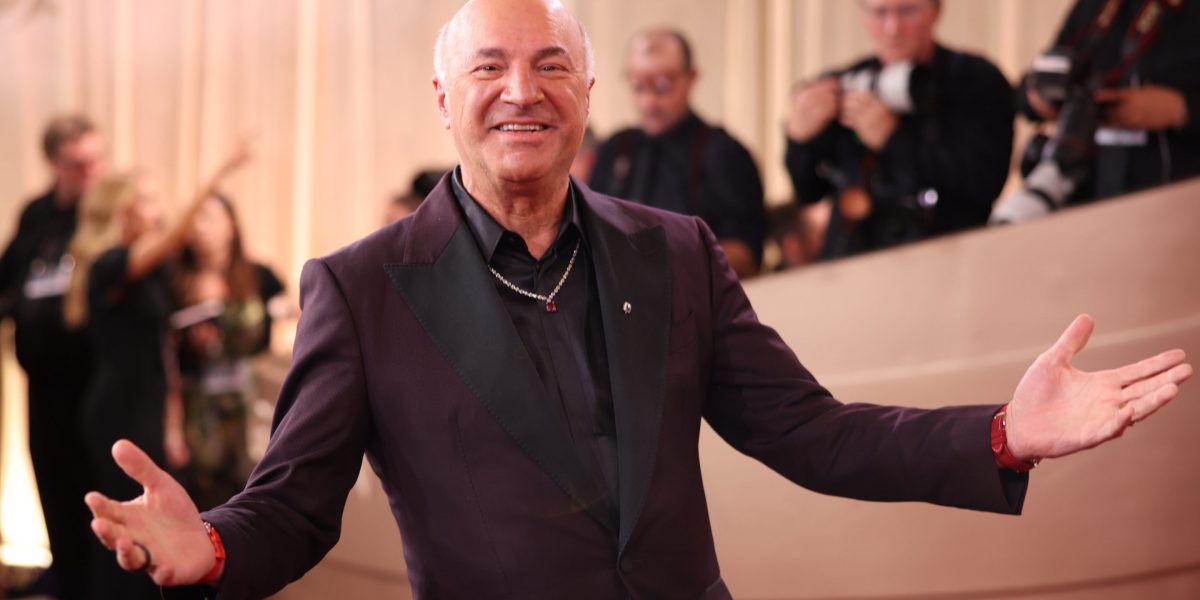
Shark Tank’s Kevin O’Leary warns job seekers he’ll throw your resume ‘straight in the garbage’ if you have bad WiFi

Published

on


We’ve all been there: midway through a video call, the audio freezes. Faces stop moving. A moment later, the dreaded message appears: Your connection is unstable.

For years, those glitches have been shrugged off as an unavoidable reality of remote work. But according to Shark Tank star Kevin O’Leary, that grace period is officially over. 

More than five years after the pandemic pushed millions of workers onto Zoom calls, “Mr. Wonderful” now said spotty internet is no longer an inconvenience—it’s a red flag, especially for someone looking for a job.

“In a hybrid world, your internet connection tells me everything,” O’Leary said on Instagram.

“If your audio cuts out, your video freezes, or you don’t care enough to fix it…you’re telling me you’re not serious about business,” the 71-year-old added. “That résumé goes straight in the garbage.”

The message may sound harsh—especially from a business leader who shows up to meetings in pink pajama pants and flip-flops. But for O’Leary, the issue is more than just professionalism for its own sake—it’s about efficiency.

After all, what he values the most is time. And time, in his view, is money.

Workers need to ditch job-hopping—or face not landing another role again

A strong internet connection isn’t the only bar O’Leary sets for prospective hires. Before a candidate ever reaches the interview stage, he wants proof of something else: execution—and loyalty.

“What I can’t stand is seeing a résumé where every six months they job hop. To me that means they couldn’t execute anything, and I take that résumé into the garbage,” O’Leary said in a video posted to his social media last year. “If I see anything that’s less than two [years], that’s a red flag for me.

Rather than constantly chasing the next opportunity, O’Leary encouraged young workers to embed themselves in a role, deliver results, and prove their value over time.

“Show me you had a mandate and delivered on it over two years or more, that’s gold,” he added. “Discipline, focus, and results matter; that’s how I decide who gets hired.”

It’s not just the résumé—what you say in the interview can be a make-or-break

O’Leary isn’t alone in setting firm—and sometimes unforgiving—expectations for job candidates. For many top executives, the interview itself offers a clearer signal than anything written on a résumé.

For Twilio’s CEO Khozema Shipchandler, it often comes down to what happens at the very end of the conversation.

“The number one red flag for me is when someone doesn’t ask questions toward the end of an interview,” Shipchandler previously told Fortune. “That’s a pretty significant mark against them being curious about what they’re interviewing, the company, the way we might work together, chemistry, culture, all of those things.”

Denny’s CEO Kelli Valade has echoed a similar view, saying that the specific question matters less than the act of asking one at all. To her, it signals preparation, genuine interest, and that a candidate has done their homework.

General Motors CEO Mary Barra, who previously headed the automaker’s human resources department, looks for something more subtle: language. 

The 64-year-old said she pays attention to how often people talk about GM using the pronoun “we” instead of “you” or “they”—an indication as to whether someone already sees themselves as part of the organization.

“Jump in the boat, own the problem, and be part of it,” she said at the Wharton People Analytics Conference in 2018. “You can almost tell in an interview when they interview like they’re already at the company—but in a respectful way where they’re not over assuming anything.”



Source link

Continue Reading

Business

How calculated career risks led a BNY executive to the C-suite of America’s oldest bank

Published

on


In the high-stakes theater of global financial services, leaving a 26-year run at a blue-chip firm for the uncertainty of a pandemic-era IPO would strike most executives as reckless. For Cathinka Wahlstrom, it was instinct.

Now chief commercial officer at Bank of New York (BNY), Wahlstrom’s leap from Accenture partner to the C-suite of the oldest bank in the United States offers a study in modern leadership that blends vision, systems thinking, and comfort with uncertainty.

Her career is defined by inflection points. She left Accenture at the height of her influence. She moved across continents more than once. She declined a role in Japan when her children were young, then later agreed to take a private-equity-backed company public in the middle of a global crisis. Each decision reflected a consistent trade-off between certainty and growth.

Wahlstrom joined Accenture when it was still a partnership grounded in analysis, expertise, and client service. As the firm evolved into a global public company, her role expanded alongside it. What began as deep technical work in financial services grew into stewardship of major client relationships and leadership roles that required her to think across markets, cultures, and organizational layers. She learned to operate inside complex systems where decisions ripple through clients, teams, and institutions.

Over time, her work shifted from solving siloed problems to understanding interdependence and how choices in one area increasingly shape outcomes in another. She could see her future with unusual clarity, including the shape of the work and the progression ahead.

“I could see my next ten years at Accenture,” Wahlstrom says. “And I just knew I was ready for the next thing—even though I couldn’t quite see what that next thing was yet.” 
​​That clarity signaled mastery, she says. Staying would have meant optimizing what Wahlstrom already knew, whereas leaving would have meant embracing the vulnerability of a new learning curve.

The opportunity arrived during the pandemic in the form of a chief commercial officer role at a Blackstone-backed company preparing to go public. The opportunity arrived during the pandemic, when uncertainty already defined the environment. Wahlstrom became chief commercial officer of a Blackstone-backed company preparing to go public, moving closer to day-to-day operations than at any prior point in her career. The role tested her in a different register: less advisory and more ownership of outcomes.

That experience set the stage for what came next. When BNY approached her, the challenge was fundamentally different. Founded in 1784, the bank’s defining strength is longevity. Wahlstrom was recruited with a mandate to modernize without destabilizing. Her task was to upgrade technology, evolve culture, and expand the bank’s relevance to a younger client base while preserving the foundations that have enabled the institution to endure for nearly 240 years.

Today, Wahlstrom says she works at the seams of the organization where data meets judgment, strategy meets execution, and global plans meet local realities. One example is using AI to better understand the client experience, surface friction points, and identify emerging opportunities. 

Viewed in sequence, Wahlstrom says her career has moved from stability to uncertainty and then to renewal. That arc, she says, reflects what leadership increasingly demands: the ability to live inside paradoxes. Leaders must hold vision and detail at the same time, pair analytical rigor with emotional intelligence, and think globally while acting locally.

“I’m really driven by that journey of setting a vision, coming up with a plan, and then executing,” Wahlstrom says. “I just love the process.”


Source link

Continue Reading

Business

Down Arrow Button Icon

Published

on


DraftKings Inc., Flutter Entertainment PLC and other stocks linked to the sports gambling industry are tumbling on Friday after new data suggested that they may be losing ground to competing products from prediction market startups.

Platforms like Kalshi and Polymarket, which have recently introduced financial contracts tied to the outcome of sports games, reported surging activity last week during the beginning of the NFL playoff season. Meanwhile, during what is typically a boom time for sportsbooks, New York state data showed that revenues from online sports wagering plunged from a year earlier.

DraftKings shares dropped as much as 8.3% in New York trading, the worst intraday plunge since late October. Shares of Flutter, which runs the gambling app FanDuel, were down as much as 5.5%, falling to the lowest intraday level since late November. The broader gambling space also took a dive, with an S&P gauge of the industry’s shares shedding as much as 2.5%.

Online sportsbooks have been under pressure for months since prediction markets rose to prominence with their new sports contracts. The startups have used their status as federally regulated exchanges to offer sports wagers that circumvent the state laws that have governed online gambling.

While several state gaming regulators have called the products illegal and pushed the companies to shut them down, the startups have plowed ahead and sports bets have come to account for around 90% of the trading volumes on Kalshi. The contracts have gotten wide distribution through Kalshi’s partnership with the retail broker Robinhood. 

“We do believe prediction markets are having an impact on the sports betting companies,” Jordan Bender, equity research analyst at Citizens, said. “The PMs are built around large tentpole events like the NFL playoffs.”

According to Piper Sandler & Co. analysts led by Patrick Moley, last week saw the five highest volume games of the season on Kalshi, with NFL-related bets on the platform hitting a record $720 million. The analysts say the weekend also marked a milestone, as the Chicago Bears’ comeback win over the Green Bay Packers was Kalshi’s first game to exceed $100 million in trading.

The shares of Flutter and DraftKings have recovered somewhat over the last two months after both companies said that they were opening their own prediction market offerings in states where sports gambling is illegal. While the companies rolled out those new apps last month, it is not yet clear if they have gained any traction.

“It’s still early days for the products and Kalshi has a lot more functionality than them at this time, so I would be surprised if they were gaining a lot of traction,” Needham analyst Bernie McTernan said. 

There has been debate within the industry about whether prediction markets could offer real competition for the more established offerings from sportsbooks, particularly in profitable areas like multi-leg parlay bets. A recent report from Citizens Bank estimates the new platforms still only account for 5% of the total wagered on sports in the US. 

“We think prediction markets will expand more than cannibalize traditional online sports betting markets,” Dan Wasiolek, a senior equity analyst at Morningstar said. 

Over the past few months, the New York state data has indicated that online gambling companies have generally been growing their revenues from the previous year.

But the new weekly numbers out of New York suggest that the revenues from traditional sportsbooks dropped 40% year-over-year in the week ending Jan. 11, which included the NFL wild card weekend. This comes at a time when prediction markets have seen surging volumes and garnered significant public attention.    

Needham’s McTernan says that while the stock selloff is mostly due to the New York state data, the sportsbooks also face difficult comparisons. “If you look versus two years ago it doesn’t look as bad,” he adds.


Source link

Continue Reading

Business

Jamie Dimon says Warren Buffett made peace with him poaching his exec: ‘at least he’s going to you’

Published

on


Jamie Dimon poached a senior figure from Warren Buffett’s inner circle, and the legendary investor was surprisingly OK with it.

The longtime JPMorgan Chase CEO hired former Geico CEO Todd Combs away from Berkshire Hathaway in December, hand-picking him to lead a $10 billion investment group as part of JPMorgan’s Security and Resiliency Initiative aimed at helping companies accelerate manufacturing. 

During a U.S. Chamber of Commerce event Thursday, Dimon said he had called Buffett personally to tell him the unwelcome news. He claimed Buffett accepted the outcome, preferring that his former executive land at JPMorgan than elsewhere.

“It’s a free country, and people make their own decisions,” Dimon said. “I did call Warren. He probably wouldn’t have preferred it, but he said, ‘if he’s going anywhere, at least he’s going to you.’”

Berkshire Hathaway and Warren Buffett did not immediately respond to Fortune‘s request for comment.

In a market saturated with executive moves, Dimon’s Combs hire matters because Berkshire Hathaway is a decentralized empire that draws its strength from the long tenures of its leaders with minimal churn at the top. Its executives are often seen as stewards of a culture, built over Buffett’s own six-decade tenure, that prizes patience and discipline.

Combs, a former hedge fund manager, had been at Berkshire since 2010 and was brought on by Buffett to serve as one of two investment managers tasked with picking stocks for Berkshire. During the succession race to replace Buffett, Combs was positioned as a key leader to assist Greg Abel, who took over as CEO officially this month. Yet, he has also served for nine years on JPMorgan’s board, according to his hiring announcement.

In announcing the hiring, Dimon specifically called out Combs’s investment prowess and his work with Buffett.

“Todd Combs is one of the greatest investors and leaders I’ve known, having successfully managed investments alongside the most respected and successful long-term investor of our time, Warren Buffett,” Dimon said in a statement. 

Combs’ hiring may have been directly influenced by his respect for Buffett, claimed University of Maryland finance professor David Kass, who runs a Warren Buffett blog, in an interview with Business Insider.

“Dimon may very well have viewed Combs as a close proxy for Buffett himself,” Kass told BI. “Although Dimon could not hire Buffett, he could hire one of his protégés.”

Dimon has long admired the 95- year- old legendary investor. In May, as Buffett announced he was stepping down from the CEO role, Dimon praised him as a friend and said he had learned from him.

“Warren Buffett represents everything that is good about American capitalism and America itself — investing in the growth of our nation and its businesses with integrity, optimism, and common sense,” Dimon said at the time, according to Reuters.

Though a couple decades younger than Buffett, Dimon, 69, has also faced questions about when he will step aside.

Dimon, who has served as CEO of JPMorgan since 2006, has been reluctant to put a clean end date on his tenure. He spent years responding to retirement questions with a rolling horizon, and only changed his tone in 2024 saying the timeframe had shortened and succession plans were “well on the way.”

On Thursday, Dimon changed his mind again, reverting to his past refrain that his retirement is still “at least” five years away.


Source link

Continue Reading

Trending

Copyright © Miami Select.