Connect with us

Business

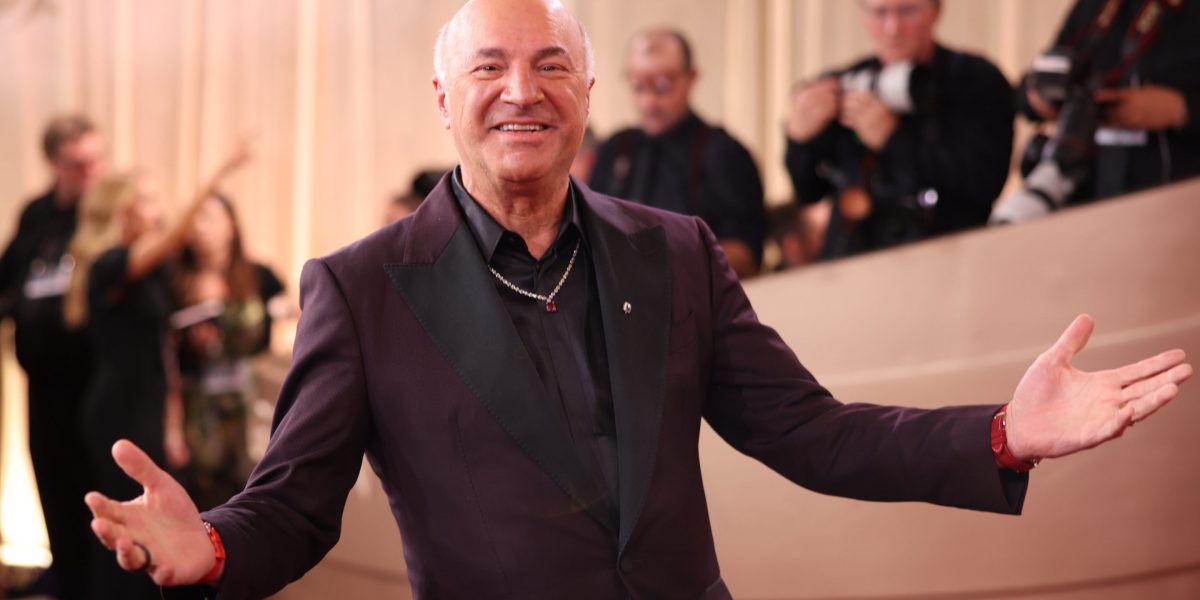
Shark Tank’s Kevin O’Leary warns job seekers he’ll throw your resume ‘straight in the garbage’ if you have bad WiFi

Published

on


We’ve all been there: midway through a video call, the audio freezes. Faces stop moving. A moment later, the dreaded message appears: Your connection is unstable.

For years, those glitches have been shrugged off as an unavoidable reality of remote work. But according to Shark Tank star Kevin O’Leary, that grace period is officially over. 

More than five years after the pandemic pushed millions of workers onto Zoom calls, “Mr. Wonderful” now said spotty internet is no longer an inconvenience—it’s a red flag, especially for someone looking for a job.

“In a hybrid world, your internet connection tells me everything,” O’Leary said on Instagram.

“If your audio cuts out, your video freezes, or you don’t care enough to fix it…you’re telling me you’re not serious about business,” the 71-year-old added. “That résumé goes straight in the garbage.”

The message may sound harsh—especially from a business leader who shows up to meetings in pink pajama pants and flip-flops. But for O’Leary, the issue is more than just professionalism for its own sake—it’s about efficiency.

After all, what he values the most is time. And time, in his view, is money.

Workers need to ditch job-hopping—or face not landing another role again

A strong internet connection isn’t the only bar O’Leary sets for prospective hires. Before a candidate ever reaches the interview stage, he wants proof of something else: execution—and loyalty.

“What I can’t stand is seeing a résumé where every six months they job hop. To me that means they couldn’t execute anything, and I take that résumé into the garbage,” O’Leary said in a video posted to his social media last year. “If I see anything that’s less than two [years], that’s a red flag for me.

Rather than constantly chasing the next opportunity, O’Leary encouraged young workers to embed themselves in a role, deliver results, and prove their value over time.

“Show me you had a mandate and delivered on it over two years or more, that’s gold,” he added. “Discipline, focus, and results matter; that’s how I decide who gets hired.”

It’s not just the résumé—what you say in the interview can be a make-or-break

O’Leary isn’t alone in setting firm—and sometimes unforgiving—expectations for job candidates. For many top executives, the interview itself offers a clearer signal than anything written on a résumé.

For Twilio’s CEO Khozema Shipchandler, it often comes down to what happens at the very end of the conversation.

“The number one red flag for me is when someone doesn’t ask questions toward the end of an interview,” Shipchandler previously told Fortune. “That’s a pretty significant mark against them being curious about what they’re interviewing, the company, the way we might work together, chemistry, culture, all of those things.”

Denny’s CEO Kelli Valade has echoed a similar view, saying that the specific question matters less than the act of asking one at all. To her, it signals preparation, genuine interest, and that a candidate has done their homework.

General Motors CEO Mary Barra, who previously headed the automaker’s human resources department, looks for something more subtle: language. 

The 64-year-old said she pays attention to how often people talk about GM using the pronoun “we” instead of “you” or “they”—an indication as to whether someone already sees themselves as part of the organization.

“Jump in the boat, own the problem, and be part of it,” she said at the Wharton People Analytics Conference in 2018. “You can almost tell in an interview when they interview like they’re already at the company—but in a respectful way where they’re not over assuming anything.”



Source link

Continue Reading

Business

Vail Resorts reports record‑low snowpack, forcing the company to lower its 2026 earnings outlook

Published

on


Good luck trying to wash your hands, your face, your hair with snow; there’s not nearly enough of it to do all that. Vail Resorts is lowering its expected 2026 earnings after some of the lowest snowpack in recorded history has cratered visits at its North American locations by nearly 20% since the start of the season through January 4.

Skiers staying home is taking its toll: Vail’s ski school revenue has dropped 14.9% since the start of the season compared to last year, and dining revenue fell nearly 16%, the company said in an investor statement released yesterday.

Just how dry is it? A rare polar vortex and La Niña combination dumped record amounts of snow on the East Coast this year…while starving everywhere else. The company said snowfall during November and December at its Rocky Mountain locations was down almost 60% compared to the area’s historical 30-year average. Western US resorts were faring only slightly better, with 50% less snowfall than average.

  • On Tuesday, Vail Mountain reported its worst snowpack since it started keeping records in 1978, with just 4.4 inches.
  • Only about 11% of Vail Resort’s terrain in the Rocky Mountains was open last month.

Zoom out: The wipeout comes amid the return of CEO Rob Katz, who revolutionized the ski business by consolidating resort ownership and introducing the Epic Pass, after years of the company faltering financially without him in the C-suite.—MM

This report was originally published by Morning Brew.

Join us at the Fortune Workplace Innovation Summit May 19–20, 2026, in Atlanta. The next era of workplace innovation is here—and the old playbook is being rewritten. At this exclusive, high-energy event, the world’s most innovative leaders will convene to explore how AI, humanity, and strategy converge to redefine, again, the future of work. Register now.


Source link

Continue Reading

Business

Jensen Huang tells Stanford students their high expectations may make it hard for them to succeed

Published

on


We are often told that setting the bar high is key to success. After all, if you shoot for the moon and miss, at least you’ll land with the stars. But Nvidia’s CEO Jensen Huang wants privileged Gen Z grads to lower their expectations. 

“People with very high expectations have very low resilience—and unfortunately, resilience matters in success,” Huang said during an interview with the Stanford Graduate School of Business. “One of my great advantages is that I have very low expectations.”

Indeed, as the billionaire boss pointed out, those at elite institutions like Stanford probably have higher expectations for their future than your average Joe. 

The university is one of the most selective in the United States—it ranks third best in the country, according to the QS World University Rankings, and the few students who get picked to study there are charged more than $68,000 in tuition fees for the premium, compared to the average $38,270 per annum cost.

But, unfortunately for those saddled with student debt, not even the best universities in the world can teach you resilience.

“I don’t know how to teach it to you except for I hope suffering happens to you,” Huang added.

Huang overcame adversity to succeed

Huang’s advice for America’s next-gen elite comes from a place of experience: His life now is a world away from his childhood, which was, by his own admission, steeped in adversity. 

The tech genius—who with a net worth of $155 billion is one of the world’s wealthiest people—was born in Taiwan in 1963 and spent the bulk of his early life in Thailand, before moving to the U.S. at 9 years old.

His serendipitous Stateside move came after his dad, who worked for an air conditioner manufacturer, did some training in the country and set his sights on the American Dream. 

“I was fortunate that I grew up with my parents providing a condition for us to be successful on the one hand,” he said. “But there were plenty of opportunities for setbacks and suffering.”

One example of Huang’s hardship was his daily high school experience: The teenager had to cross a dangerous footbridge with missing planks over a river to get to his public school in Kentucky, where he was then relentlessly tormented. 

“The way you described Chinese people back then was ‘Ch-nks,’ ” Huang previously told the New Yorker, adding that bullies even tried to toss him off the bridge.

In the Stanford interview, he also credited his success and work ethic with his first job at Denny’s, where he was the “best dishwasher” before getting promoted to busboy and giving that his “best” also.

“I never left the station empty-handed. I never came back empty-handed. I was very efficient,” Huang added. “Anyways, eventually I became a CEO. I’m still working on being a good CEO.”

Coincidentally, it was at Denny’s where he cooked up the idea for a company that specialized in computer chips to render graphics, over a Super Bird sandwich with his friends Chris Malachowsky and Curtis Priem. The trio went on to cofound Nvidia, and the rest is history. 

‘I wish upon you ample doses of pain and suffering’

For those fortunate enough to never have personally experienced hardship growing up, Huang doesn’t have any advice on how to welcome more of it into your life now. But he did have some advice on embracing tough times. 

“I don’t know how to do it [but] for all of you Stanford students, I wish upon you ample doses of pain and suffering,” Huang said. “Greatness comes from character and character isn’t formed out of smart people—it’s formed out of people who suffered.” 

It’s why despite Nvidia’s success—the company has a $2 trillion market cap—Huang would still welcome hardship at his organization. 

“To this day I use the phrase ‘pain and suffering’ inside our company with great glee,” he added. “I mean that in a happy way because you want to refine the character of your company.”

Essentially, if you want your workforce to always be on their A game, don’t let them rest on their laurels.

A version of this story was published on Fortune.com on March 13, 2024.


Source link

Continue Reading

Business

The founder and CEO of Intercontinental Exchange, Jeffrey Sprecher, bought the nearly bankrupt company off Warren Buffett for $1,000 and turned it into a $98 billion giant

Published

on


A small investment made at the right moment has the power to launch ordinary people to millionaire status. All it took was $1,000 and an out-there idea for Jeffrey Sprecher, the founder and CEO of Intercontinental Exchange, to set his business on a path to becoming a $98 billion behemoth.

“I had this idea that you should be able to trade electric power, buy and sell electric power, on an exchange,” Sprecher recalled recently at the Rotary Club Of Atlanta. But there was a huge caveat: He “had no idea how to do that. I’d never worked on Wall Street, I never traded.” 

At the time, Sprecher had heard that Continental Power Exchange—owned by Warren Buffett’s electric utility company, MidAmerican Energy—was about to go bankrupt. Despite Buffett’s business pumping $35 million into it, the company was still struggling. And so Sprecher saw this as an opportune moment to swoop in and pursue his entrepreneurial vision. 

“I bought the company for a dollar a share, and there were a thousand shares. So I bought it for $1,000, and I used that as the basis to build Intercontinental Exchange.”

Thanks to his quick thinking and business savvy, Sprecher now boasts a net worth of $1.3 billion. But the journey to the top was not very glamorous. 

Living in a 500-ft studio and driving a used car while scaling the business 

That measly $1,000 investment made back in 1997 served as the launchpad for Intercontinental Exchange, founded just three years later. A small team of nine employees set off to build the technology in 2000; setting up shop in Atlanta, Georgia, Sprecher and his staffers went all-in on building the business up from its former demise. 

It was all hands on deck, and even as the founder and CEO, Sprecher was doing the menial labor to keep everything in order. With money being tight, the entrepreneur lived in a small apartment and drove a used car to the office to keep Intercontinental Energy afloat.

“I bought a 500-foot, one room studio apartment in Midtown…I bought a used car that I kept and I’d go into the office from time to time,” Sprecher explained, adding that he “took the trash out, shut the lights out, answered the phone, bought the staplers and the paper for the photocopier. That was the way the company started.”

Nearly 26 years later, the company boasts a market cap of $98 billion and a team of more than 12,000 employees—and has proudly owned the NYSE for over a decade. 

Entrepreneurs who made a key investment at the right moment

Some of the wealthiest entrepreneurs made their billions by spotting the perfect window to invest small and earn big. 

Take Kenn Ricci as an example: the serial American aviation businessman and chairman of private jet company Flexjet is a billionaire thanks to his intuition to buy a struggling business four decades ago. After being put on leave from his first pilot job out of the Air Force, he turned a sticky situation into a 10-figure fortune.

“I worked for [airline] Northwest Orient for a brief period of time. I get furloughed. Unemployed, back living with my parents,” Ricci told the Wall Street Journal in a 2025 interview, reminiscing on how he made his first $1 million.

But instead of throwing in the towel, he spotted a golden opportunity. Ricci took a contract pilot job at Professional Flight Crews, and one of the companies he flew for was private aviation company Corporate Wings. The budding businessman was intrigued when its owners put the business up for sale at $27,500 in 1981—and jumped on the opportunity to buy it. By the early 1990s, the business was pulling in $3 million a year.

But people don’t need to buy and scale a company to make a worthwhile investment; millennial investing wiz Martin Mignot became a self-made millionaire thanks to his ability to spot unicorn companies before they make it big. One of his biggest wins was an early investment in Deliveroo—back when the business was just a small, London-based operation. 

“They had eight employees. They were in three London boroughs. Overall, they had a few 1000 users to date, so it was very, very early,” Mignot told Fortune last year. “They didn’t have an app. Their first website was pretty terrible and ugly, if I’m frank, but the delivery experience was incredible.”

Lo and behold, Deliveroo grew to become a $3.5 billion company with millions of global customers. And as a partner at Index Ventures, Mignot is part of a team reaping billion-dollar rewards from forward-thinking investments in tech businesses including Figma, Scale AI, and Wiz. Aside from his day job, Mignot has also strategically put money towards iconic European start-ups including Revolut, Trainline and Personio. Before he was even 30, he solidified himself as a notable investor—and advised others that “It’s about owning equity, that is the key.”


Source link

Continue Reading

Trending

Copyright © Miami Select.