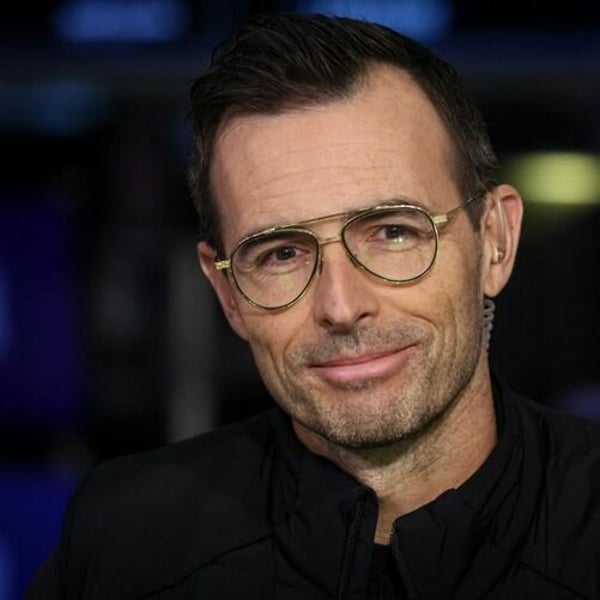
Peyush Bansal founded eyewear-maker Lenskart Solutions Ltd. more than 15 years ago with partners he met on LinkedIn and grew it into a multi-billion dollar business. Now the 41-year-old entrepreneur and Indian television star is in line for a windfall.
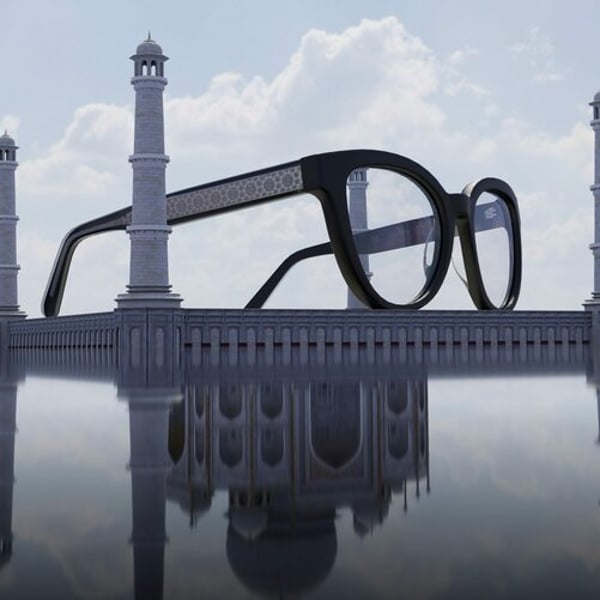
Lenskart retails across India and Southeast Asia – Lenskart- Facebook
Lenskart is planning to list as early as next month in Mumbai, targeting a stock debut that would value the company at $9 billion, based on the IPO size according to people familiar with the matter, and calculations from the prospectus.
That would give the entrepreneur a stake close to $800 million after selling a small portion of his shares in the IPO according to the Bloomberg Billionaires Index. His stock could cross $1 billion if Lenskart shares pop about 25% on debut.
Bansal’s path to a public offering shows how investor confidence is returning for some founder-led ventures after a period where the country’s leading startups struggled to survive and funding dried up. Lenskart has carved out a niche with robotic production in India using machines imported from Germany to produce its glasses, along with a website that makes it easy for customers to order and test their purchases remotely.
Starting with a huge domestic market, Lenskart is already expanding across Southeast Asia where Bansal notes demand patterns in Indonesia and Vietnam mirror India’s trajectory a decade ago.
“India is the myopia capital of the world, and a lot of our people need glasses,” Bansal said in an interview in Mumbai. “If we can solve that, everything else, including scale, profit and rising market capitalisation, will follow.”
Bansal’s pitch is that he stands apart from earlier Indian consumer-tech listings and already makes money. The Gurugram-based company, which designs, manufactures and sells eyewear online and through retail outlets, reported its first-ever full-year profit in the year to March 31.
He’s also got the tailwind of an established retail fanbase behind him. Outside of Lenskart, Bansal is a judge on the Indian franchise of the American show Shark Tank and has amassed more than 900,000 followers on Instagram.
In business, he says he has benefited from timing and persistence. Bansal jokes that he and co-founder Amit Chaudhary spend one day every week brainstorming new ideas, with mixed results.
“Our hit rate is about 50%,” he said. “A coin toss might have worked just as well.”
This year, he’s contended with a stock debut buffeted by trade wars and geopolitical headwinds in addition to more wary investors.
While India’s startup scene is one of the world’s largest, valuations have nosedived for several companies that struggled to grow and as investors ask tougher questions. The family office of tech billionaire Narayana Murthy recently pointed to steep discounts driven by funds that need to exit their investments. Oyo Hotels, which like Lenskart is also backed by SoftBank Group Corp. was once among India’s most valued startups, worth $10 billion in 2019 before its valuation nosedived and later recovered.
Bansal’s approach has drawn backing from investors who prefer patience over flash. SoftBank, which owns about 15% of the company, has described its stake in Lenskart as an example of patient capital that can wait decades for compounding growth. Earlier this year, investor Fidelity Management & Research valued Lenskart at $6.1 billion.
The IPO will test whether the rebound in investor appetite for Indian consumer-technology stocks has staying power. Urban Co.’s blockbuster debut last month, which saw shares of the rent-a-service marketplace surge 62% on opening day, rekindled optimism after a string of disappointing post-market performances from other startups had cooled enthusiasm for the sector.
Still, Lenskart remains dependent on China for more than one-third of its purchases, including frames, molds and raw materials, a reliance Bansal acknowledges but describes as manageable. Such dependence leaves the firm exposed to China’s supply-chain swings, where tariffs or export curbs could hit deliveries and erode margins.
Now Bansal is overseeing production of a new manufacturing facility in Hyderabad, which is expected to be the world’s largest, covering 50 acres with a production capacity of hundreds of thousands of glasses daily.
A graduate in engineering from McGill University in Montreal, Bansal began his career at Microsoft Corp. in Redmond, Washington, before returning to India to pursue entrepreneurship. His first venture, a student-housing platform, gave way to a broader mission after he recognized a much larger gap in vision care. From a small office in Faridabad, on the outskirts of Delhi, he and three partners he met on LinkedIn began building Lenskart.
The company now controls nearly every link in its value chain, from lens design and manufacturing to last-mile delivery. It employs hundreds of ophthalmologists in Kolkata who provide remote eye consultations and is developing AI-based testing tools to reach smaller cities where eye care access remains limited.
Lenskart plans to use proceeds from the share sale to open new stores across India, invest in technology and artificial intelligence capabilities, make acquisitions, and fund general corporate purposes, according to filings.
As of March, it operated 2,723 stores – across India and in markets such as the Middle East and Southeast Asia. Nearly 40% of its revenue now comes from outside India, underscoring its growing international footprint.
Its next big bet is smart eyewear. A 70-member team is working on integrating features such as UPI, AI tools, cameras, and headphones.
“It’s tempting to go all in,” Bansal said. “But timing matters.”
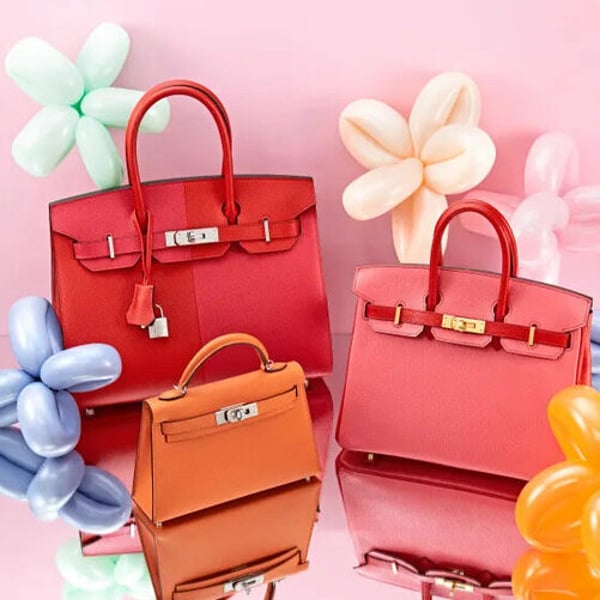
Rebag’s Clair report, which studies the value retention of bags on the resale firm’s platform, said Hermès has reclaimed the top position in 2025, reaching an average 138% value retention—a 38% year-over-year increase.
Rebag
The New York-based Rebag’s report also said that a ten-year analysis of Birkin data shows resale values have surged 92% since 2015, outpacing Hermès’ own retail price growth of 43%.
Behind Hermès, Goyard logged 132% retention in 2025, up 28% from 2024; The Row recorded 97% value retention, while Miu Miu climbed to 104% average retention, according to the report.
In fine jewellery, Van Cleef & Arpels extended its lead, with 112% retention led by the Sweet Alhambra collection, while in the watches category, Rolex remained steady at 104%, with standout models like the Submariner Hulk reaching 244% of their original retail price. Comparatively, Cartier witnessed 87% retention.
Louis Vuitton x Takashi Murakami‘s return boosted search demand and pushed top styles above 130% resale value, the report added, while renewed interest in Balenciaga‘s Le City, Celine‘s Phantom, and Chloé‘s Paddington saw an increased demand for early-2000s bags.
Rebag’s 2025 Clair Report, which analyses millions of data points across the primary and secondary markets to reveal the brands, styles, and investment opportunities shaping the luxury landscape, said that global tariff shifts and changing consumer behaviours have made 2025 a “defining year for luxury resale.”
“Higher primary prices pushed more consumers to the secondary market, reaffirming its stability. The 2025 Clair Report highlights the brands demonstrating lasting long-term value,” said Charles Gorra, CEO and founder of Rebag.
In June, Rebag reported its launch on Luxury Stores at Amazon, bringing its pre-loved designer handbags, jewelry, watches, and more to the platform.
Lululemon Athletica’s CEO shake-up has put the spotlight on the once-dominant yoga pants maker’s race to wrest back younger and affluent shoppers from rivals and revive its sagging U.S. business.
Calvin McDonald – Reuters
Its shares, which have halved in value this year, rose 10% on Friday following the departure of CEO Calvin McDonald after about seven years in the role.
An athleisure pioneer known for its premium yoga apparel, Lululemon lost ground as newer rivals such as Alo Yoga and Vuori weaned away its core younger shoppers with trendier styles, marketing campaigns and celebrity partnerships.
Meanwhile, established players like Nike and Gap also entered the market with lower-priced styles.
Lululemon “caught the perfect wave in fashion, becoming the trend for the last five years,” said Brian Mulberry, senior client portfolio manager at Zacks Investment Management.
“But as its core customers graduate college and face tighter budgets, affordability is a challenge and a new outfit at Lulu can cost as much as a month’s groceries.”
Lululemon sells a range of yoga, running and training apparel such as Align yoga pants priced at $108 and men’s joggers at $128.
The slow refresh to core styles and product missteps, such as its decision to pull its $98 “Breezethrough” leggings from shelves last year, have led to heavy discounting to clear aged inventory.
At an earnings call late on Thursday, company executives said the board is “focused on a leader with experience and growth and transformation”.
“It’s understandable to think that a strategic overhaul with a new leader at the helm will be a positive, but this opens the door to more questions as to what direction the board will go with a replacement,” said Jay Woods, chief market strategist at Freedom Capital Markets.
Lululemon is the latest global consumer company facing leadership churn as macroeconomic uncertainty fuels increasingly divergent spending patterns.
Lululemon is making efforts to speed up product development, launch fresh styles and drive company-wide efficiencies to offset cost inflation and protect margins.
The company beat third-quarter results, lifted by strong China sales, but issued a weaker-than-expected holiday forecast as higher promotions and increased spending on marketing weigh on margins.
Founder Chip Wilson, who is also Lululemon’s largest independent shareholder, in a statement on Friday slammed the board for “poor succession planning” and value erosion.
He called for an urgent CEO search led by new, independent directors with deep company knowledge to restore a product-first focus. Lululemon did not immediately respond to a Reuters request for comment on Wilson’s statement.
The company’s forward price-to-earnings multiple, a common benchmark for valuing stocks, is 14.66, compared to 31.26 for Nike and Abercrombie & Fitch‘s ratio of 10.8, according to LSEG data.
“The main challenge I foresee for the new leadership is not how consumers see Lulu, but how does it see itself?” said Mulberry.
Ferragamo appoints Alberto Tomba as a brand ambassador. The collaboration with the Italian skiing legend celebrates values shared by the Florentine fashion house: dedication, perseverance, resilience and attention to detail.
Alberto Tomba
Born in 1966, Tomba is the quintessential emblem of an Italy that invests in talent, commitment and the ability to push beyond one’s limits. His career is marked by major international successes, including three Olympic gold medals and two silver medals, two World Championship gold medals and two bronze medals, and 50 World Cup victories.
The Bologna-born skier is also the only athlete to have won races in 11 consecutive seasons (1987-1998) and to have claimed four World Cup discipline titles in giant slalom and four in slalom.
“Tomba’s sporting journey perfectly reflects Ferragamo’s philosophy: every achievement comes from sacrifice, every result from dedication. We share with him a deep sense of authenticity and a love of excellence, values that continue to inspire our daily work,” said Leonardo Ferragamo.
“Being chosen by Ferragamo is an honour,” Tomba commented. “I have always believed that sport and style share a common language: that of passion, rigour and the desire to improve every day. Representing a brand that embodies all this, and that brings Italian beauty and craftsmanship to the world, is a source of great pride.”
This article is an automatic translation. Click here to read the original article.





 Politics8 years ago