Connect with us

Business

Shangri-La CEO Kuok Hui Kwong on Asian hospitality: Not ‘silver candlesticks,’ but ‘attention to detail’

Published

on


Most prominent hotel groups don’t actually own their hotels. Instead, when you stay at a Marriott or a Hilton, the building is often owned by someone else—usually a developer—while the hotel company handles the operations.

That’s not the case for Shangri-La Hotel and Resorts, founded by Malaysian tycoon Robert Kuok in 1971, and now led by his daughter Kuok Hui Kwong. The chain operates over 100 properties worldwide, over 80 of which are owned by Shangri-La. 

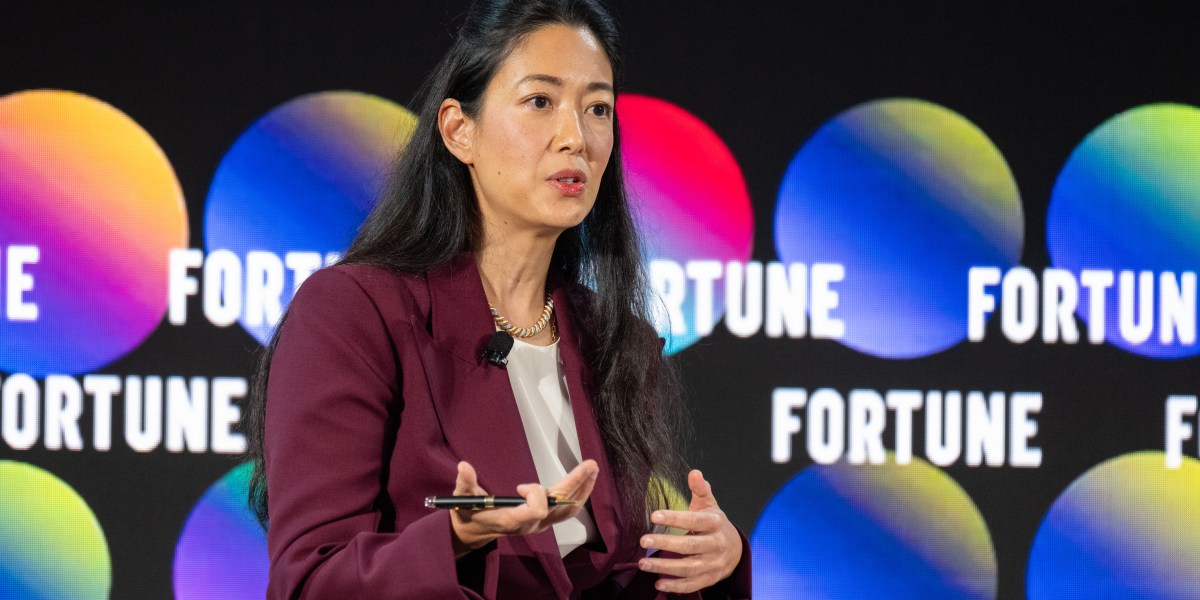
Kuok Hui Kwong, speaking at the Fortune Innovation Forum on Tuesday, recalled why her father chose this asset-heavy model. “No one else was doing it. Land was very affordable, and I took a risk,” she recounted her father as saying. 

The Shangri-La hotel chain has its roots in Asia, starting with its first hotel in Singapore. Around 80% of their hotels are still based in the Asia-Pacific region. 

Kuok said the company’s success comes from the core tenets of Asian hospitality. “[Asian hospitality is] not white linen tablecloths, it’s not sterling silver candlesticks—it’s warmth and attention to detail,” she said.

Asia’s ballooning economy has also translated into more regional luxury hotel guests, Kuok observed. “Most of our guests today are no longer just people coming from North America or Europe—they’re coming from the [Asia] region,” she said.

Fifty-six Shangri-La properties are in mainland China, which Kuok called one of the world’s fastest-evolving economies. “[That’s] a market that has seen unparalleled economic growth in the last 30 years—which is a lot of wealth creation,” Kuok said. Yet companies need to be adaptive and number to stay ahead of the economy’s constant changes, she added. 

For instance, to cater to China’s burgeoning middle class, Shangri-La opened a dual-brand hotel in Hongqiao in October. The development had two brands—the luxurious “Shangri-La” brand for more discerning business travelers, and Traders Hotel, which caters to more price-conscious tourists. 

“With these sorts of flexible models, we’re able to compete in this market where there’s a lot of demand. We just launched and we’re seeing very, very optimistic occupancy rates already,” Kuok said.

According to a report by UN tourism, international tourism rebounded to pre-COVID levels in 2024, with most destinations exceeding 2019 numbers.

Yet in some markets, like Hong Kong, tourism spending remains suppressed as travelers opt for experiences rather than pricey shopping and expensive hotels. 

“Consumers of luxury hospitality are no longer looking for the traditional trappings of luxury. They’re looking to experiences that give them that sense of comfort,” Kuok said. Also, they want to connect with things that feel authentic (i.e. local experiences), rather than “standard international hospitality”.

Shangri-La reported a slight 0.7% increase in revenue year-on-year for the first half of 2025, hitting $1.0 billion. Profit, however, slumped almost 40% to $57 million. Shares in Shangri-La Hotels and Resorts, a subsidiary of the Kuok-owned Kerry Properties, are down by around 13% for the year thus far. 

To strive’

Kuok, No. 36 on this year’s Most Powerful Women Asia list, pointed to her father as the source for her approach to business. Robert Kuok, born in 1923, is one of Malaysia and Southeast Asia’s richest tycoons, with interests in plantation agriculture, oil, hospitality, property development and, at one point, ownership of the South China Morning Post, Hong Kong’s leading English-language newspaper. (Kuok Hui Kwong briefly served as the newspaper’s CEO.)

She said the Chinese phrase fen dou—”to strive”—was her guiding principle. “It’s the recognition that nothing is easy, but you should fully commit and go all in and never give up,” Kuok said. 

“For me, I feel really, really fortunate that I grew up with a great teacher.”


Source link

Continue Reading

Business

House Democrats release new Epstein photos including Trump, Clinton, Prince Andrew

Published

on


House Democrats released a selection of photos from the estate of Jeffrey Epstein on Friday, including some of Donald Trump, Bill Clinton and the former Prince Andrew.

The 19 photos released by Democratic lawmakers on the House Oversight Committee were a small part of more than 95,000 they received from the estate of Epstein, who died in a New York jail cell in 2019 while awaiting trial on sex trafficking charges. The photos released Friday were separate from the case files that the Department of Justice is now under compulsion to release, but anticipation is growing as the Trump administration faces a deadline next week to produce the Epstein files that have been the source of conspiracy theories and speculation for years.

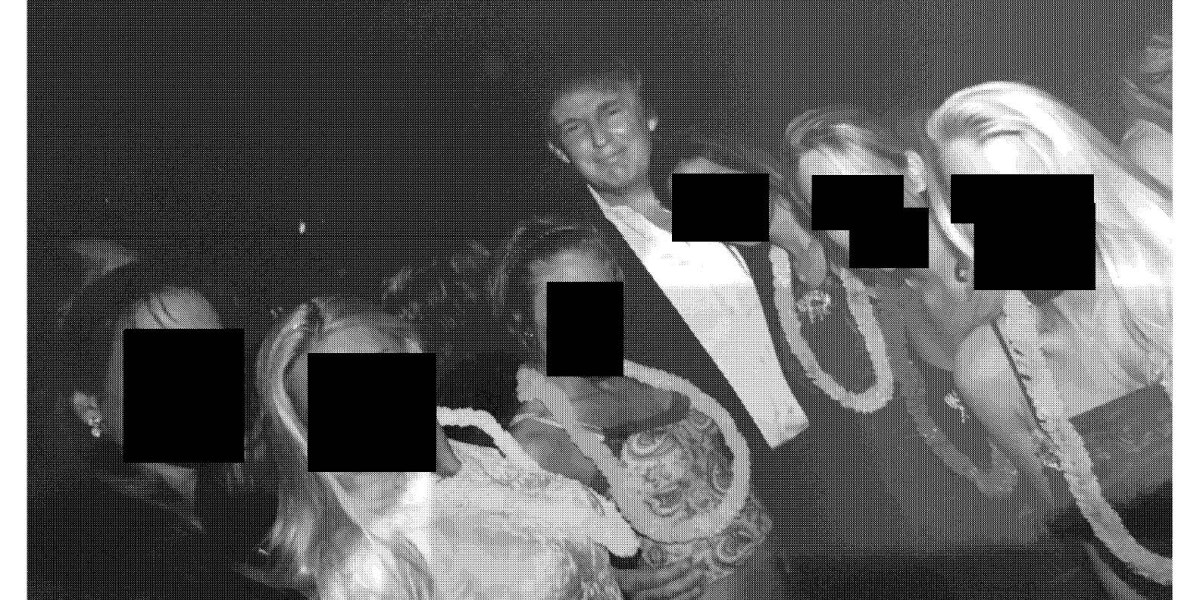
The photos were released without captions or context and included a black-and-white image of Trump alongside six women whose faces were blacked out.

Rep. Robert Garcia, the top Democrat on the House Oversight Committee, did not say whether any of the women in the photos was a victim of abuse, but he added, “Our commitment from day one has been to redact any photo, any information that could lead to any sort of harm to any of the victims.”

White House spokesperson Abigail Jackson accused Democrats of “selectively releasing cherry-picked photos with random redactions to try and create a false narrative” and called it part of a “Democrat hoax against President Trump.”

Many of the photos have already circulated in the public. Democrats pledged to continue to release photos in the days and weeks ahead, as they look to pressure Trump over his Republican administration’s earlier refusal to release documents in the Epstein probe. Garcia said that his staff had looked through about a quarter of the images it had received from Epstein’s estate, which included photos that were sent to him or that he had in his possession.

“Donald Trump right now needs to release the files to the American public so that the truth can come out and we can actually get some sense of justice for the survivors,” Garcia added.

Trump, once a close friend of Epstein, has said that he parted ways with him long before he faced the sex trafficking charges. Clinton, too, has minimized his relationship with Epstein, acknowledging that he traveled on Epstein’s private jet but saying through a spokesperson that he had no knowledge of the late financier’s crimes. Clinton also has never been accused of misconduct by Epstein’s known victims. However, Republicans on the House committee are pushing him and Hillary Clinton to testify in their investigation.

A spokesperson for the Republican-controlled committee also said that nothing in the documents the committee has received shows “any wrongdoing” by Trump.

Andrew lost his royal titles and privileges this year amid new revelations of his ties to Epstein, though he has denied wrongdoing.

The photo release also included images of the right-wing political operative Steven Bannon, billionaires Richard Branson and Bill Gates, filmmaker Woody Allen, former Treasury Secretary Larry Summers and law professor Alan Dershowitz. The men have denied any wrongdoing in their associations with Epstein, who kept many high-profile figures in his circle of friends.

Amid an earlier release of emails between Summers and Epstein, Summers stepped away from his teaching position at Harvard University and faced other fallout to his standing in academic circles.

Allen has faced allegations from his adopted daughter, Dylan Farrow, of molesting her as a child. He has denied the allegations.

Some lawmakers, however, believe that other high-powered figures could be implicated in Epstein’s abuse if the full case files from the Justice Department are released.

Rep. Thomas Massie, a Kentucky Republican who was instrumental in passing a bill to require the public release of the files, said it was a good sign that the Department of Justice has sought to have grand jury material released from several courts.

“The grand jury material is just a small fraction of what the DOJ needs to release, because the FBI and DOJ probably has evidence that they chose not to take to the grand jury because the evidence they’re in possession of would implicate other people, not Epstein or Maxwell,” he said.


Source link

Continue Reading

Business

The Fed just ‘Trump-proofed’ itself with a unanimous move to preempt a potential leadership shakeup

Published

on


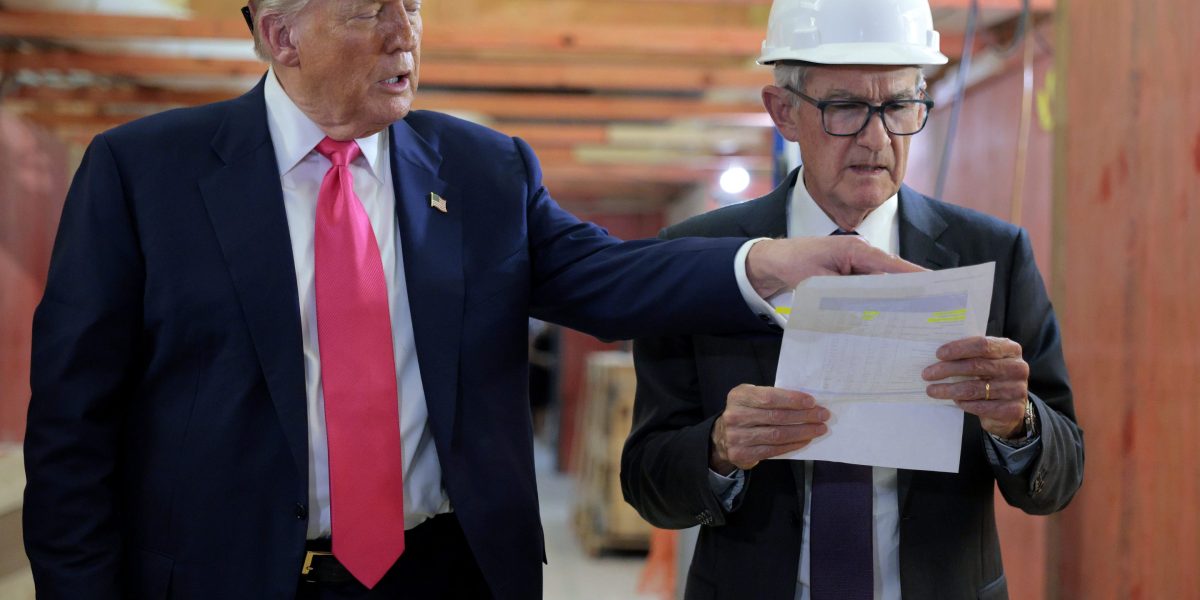
The Federal Reserve’s early reappointment of its regional bank presidents took markets by surprise and eased concerns the central bank would soon lose its independence as President Donald Trump continues demanding steeper rate cuts.

On Thursday, the Fed announced 11 out its 12 bank presidents were re-upped, except for the Atlanta Fed chief role as Raphael Bostic had announced previously that he’s stepping down.

The presidents’ five-year terms were due to end in February, and prior reappointments have typically come closer to expiration dates as they historically have been routine affairs. But recent suggestions from the Trump administration that new conditions ought to be placed on the presidents raised concerns it was seeking a wider leadership shakeup.

Earlier this month, Treasury Secretary Scott Bessent floated a three-year residency requirement for Fed presidents. Days later, National Economic Council Director Kevin Hassett, who is the frontrunner to become the next Fed chair, endorsed the idea.

While Fed presidents are nominated by governing boards drawn from their respective districts, the Fed’s board of governors approve them. As a result, tipping the balance of power on the Fed board with Trump appointees could conceivably give them the ability to reshape the Fed presidents as well.

Meanwhile, the rate-setting Federal Open Market Committee is comprised of the seven members of the Fed board, plus five of the 12 Fed presidents, with four of them rotating on an annual basis. In recent FOMC meetings—including Wednesday’s—Fed presidents have been more resistant to rate cuts while Trump-appointed governors have been more aggressive in calling for cuts.

Deutsche Bank strategist Jim Reid pointed out in a note on Friday the 10-year Treasury yield edged higher after the Fed’s reappointment announcement, as bond investors priced in fewer rate cuts.

“The regional presidents’ current terms expire in February so the advance announcement suggests that the Board was united in wanting to avoid the risk that the reappointment process raises questions over Fed independence,” he added.

Justin Wolfers, a professor of public policy and economics at the University of Michigan, was more blunt about the Fed’s surprise news.

“If I’m reading this properly, they just Trump-proofed the Fed,” he wrote in a post on X.

What’s also notable about the reappointment is the unanimous decision to bring back the Fed presidents suggests the Trump-appointed governors went along with it as well.

That includes Stephen Miran, who is on leave as the White House’s chairman of the Council of Economic Advisers while filling a vacancy on the Fed.

Prior to joining the administration, he had urged an overhaul of the Federal Reserve to give at-will power to the U.S. president to fire Fed board members and Fed bank presidents; hand over control of the Fed’s operating budget to Congress; and shift the Fed’s regulatory responsibility over banks and financial markets to the Treasury. 

The changes would diminish the Fed’s power in favor of the White House so much analysts at JPMorgan warned earlier this year Miran’s appointment “fuels an existential threat as the administration looks likely to take aim at the Federal Reserve Act to permanently alter U.S. monetary and regulatory authority.”


Source link

Continue Reading

Business

‘The question is really just how long it will take’: Over 2,000 gather at Humanoids Summit to meet the robots who may take their jobs someday

Published

on


Robots have long been seen as a bad bet for Silicon Valley investors — too complicated, capital-intensive and “boring, honestly,” says venture capitalist Modar Alaoui.

But the commercial boom in artificial intelligence has lit a spark under long-simmering visions to build humanoid robots that can move their mechanical bodies like humans and do things that people do.

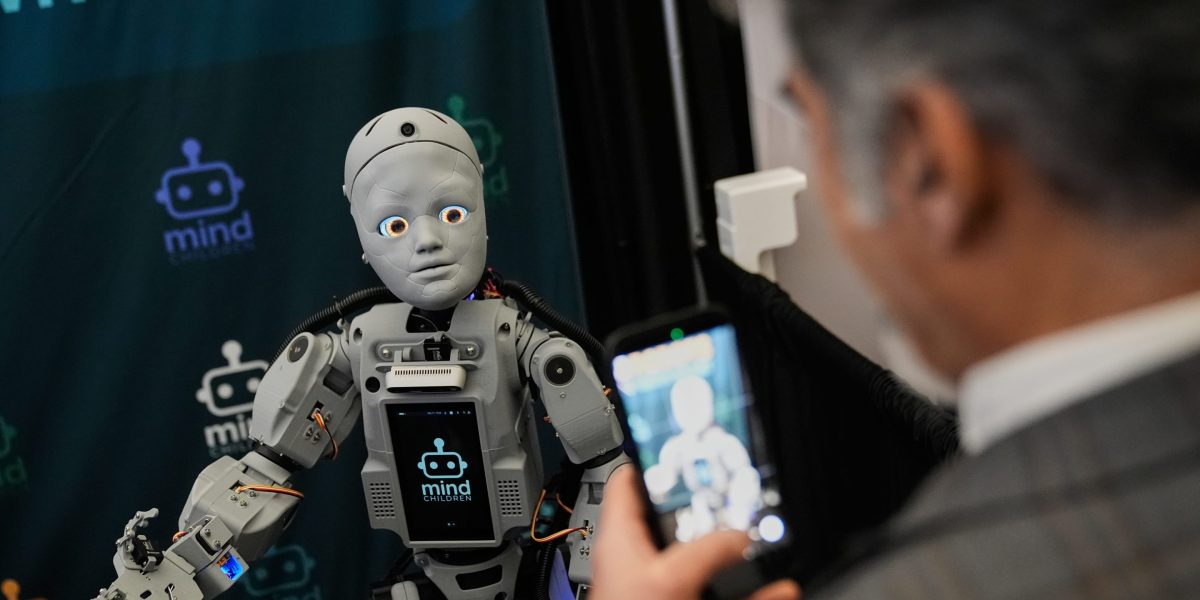
Alaoui, founder of the Humanoids Summit, gathered more than 2,000 people this week, including top robotics engineers from Disney, Google and dozens of startups, to showcase their technology and debate what it will take to accelerate a nascent industry.

Alaoui says many researchers now believe humanoids or some other kind of physical embodiment of AI are “going to become the norm.”

“The question is really just how long it will take,” he said.

Disney’s contribution to the field, a walking robotic version of “Frozen” character Olaf, will be roaming on its own through Disneyland theme parks in Hong Kong and Paris early next year. Entertaining and highly complex robots that resemble a human — or a snowman — are already here, but the timeline for “general purpose” robots that are a productive member of a workplace or household is farther away.

Even at a conference designed to build enthusiasm for the technology, held at a Computer History Museum that’s a temple to Silicon Valley’s previous breakthroughs, skepticism remained high that truly humanlike robots will take root anytime soon.

“The humanoid space has a very, very big hill to climb,” said Cosima du Pasquier, founder and CEO of Haptica Robotics, which works to give robots a sense of touch. “There’s a lot of research that still needs to be solved.”

The Stanford University postdoctoral researcher came to the conference in Mountain View, California, just a week after incorporating her startup.

“The first customers are really the people here,” she said.

Researchers at the consultancy McKinsey & Company have counted about 50 companies around the world that have raised at least $100 million to develop humanoids, led by about 20 in China and 15 in North America.

China is leading in part due to government incentives for component production and robot adoption and a mandate last year “to have a humanoid ecosystem established by 2025,” said McKinsey partner Ani Kelkar. Displays by Chinese firms dominated the expo section of this week’s summit, held Thursday and Friday.

In the U.S., the advent of generative AI chatbots like OpenAI’s ChatGPT and Google’s Gemini has jolted the decades-old robotics industry in different ways. Investor excitement has poured money into ambitious startups aiming to build hardware that will bring a physical presence to the latest AI.

But it’s not just crossover hype — the same technical advances that made AI chatbots so good at language have played a role in teaching robots how to get better at performing tasks. Paired with computer vision, robots powered by “visual-language” models are trained to learn about their surroundings.

One of the most prominent skeptics is robotics pioneer Rodney Brooks, a co-founder of Roomba vacuum maker iRobot who wrote in September that “today’s humanoid robots will not learn how to be dexterous despite the hundreds of millions, or perhaps many billions of dollars, being donated by VCs and major tech companies to pay for their training.” Brooks didn’t attend but his essay was frequently mentioned.

Also missing was anyone speaking for Tesla CEO Elon Musk’s development of a humanoid called Optimus, a project that the billionaire is designing to be “extremely capable” and sold in high volumes. Musk said three years ago that people can probably buy an Optimus “within three to five years.”

The conference’s organizer, Alaoui, founder and general partner of ALM Ventures, previously worked on driver attention systems for the automotive industry and sees parallels between humanoids and the early years of self-driving cars.

Near the entrance to the summit venue, just blocks from Google’s headquarters, is a museum exhibit showing Google’s bubble-shaped 2014 prototype of a self-driving car. Eleven years later, self-driving cars full of passengers operated by Google affiliate Waymo are constantly plying the streets nearby.

Some robots with human elements are already being tested in workplaces. Oregon-based Agility Robotics announced shortly before the conference that it is bringing its tote-carrying warehouse robot Digit to a Texas distribution facility run by Mercado Libre, the Latin American e-commerce giant. Much like the Olaf robot, it has inverted legs that are more birdlike than human.

Industrial robots performing single tasks are already commonplace in car assembly and other manufacturing. They work with a level of speed and precision that’s difficult for today’s humanoids — or humans themselves — to match.

The head of a robotics trade group founded in 1974 is now lobbying the U.S. government to develop a stronger national strategy to advance the development of homegrown robots, be they humanoids or otherwise.

“We have a lot of strong technology, we have the AI expertise here in the U.S.,” said Jeff Burnstein, president of the Association for Advancing Automation, after touring the expo Thursday. “So I think it remains to be seen who is the ultimate leader in this. But right now, China has certainly a lot more momentum on humanoids.”


Source link

Continue Reading

Trending

Copyright © Miami Select.