Connect with us

Business

Senate moves to end shutdown as Bernie Sanders says Democrats voting with GOP made ‘horrific mistake’

Published

on


The Senate took the first step to end the government shutdown on Sunday after a group of moderate Democrats agreed to proceed without a guaranteed extension of health care subsidies, angering many in their caucus who say Americans want them to continue the fight.

In a test vote that is the first in a series of required procedural maneuvers, the Senate voted 60-40 to move toward passing compromise legislation to fund the government and hold a later vote on extending Affordable Care Act tax credits that expire Jan. 1. Final passage could be several days away if Democrats object and delay the process.

The agreement does not guarantee the Affordable Care Act subsidies will be extended, as Democrats have demanded for almost six weeks. Senate Democratic leader Chuck Schumer of New York voted against moving ahead with the package, along with all but eight of his Democratic colleagues.

A group of three former governors — New Hampshire Sen. Jeanne Shaheen, New Hampshire Sen. Maggie Hassan and Independent Sen. Angus King of Maine — broke the six-week stalemate on Sunday when they agreed to vote to advance three bipartisan annual spending bills and extend the rest of government funding until late January in exchange for a mid-December vote on extending the health care tax credits. The agreement also includes a reversal of the mass firings of federal workers by the Trump administration since the shutdown began on Oct. 1 and would ensure that federal workers receive back pay.

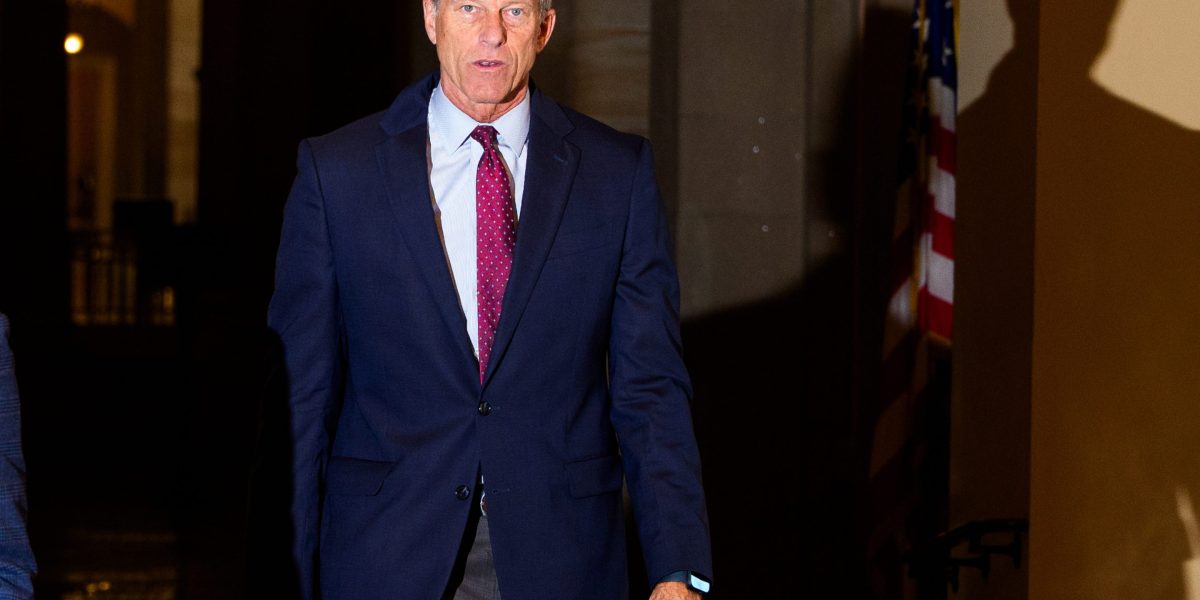
Senate Majority Leader John Thune quickly endorsed the deal and called the immediate vote to begin the process of approving it as the shutdown continued to disrupt flights nationwide, threaten food assistance for millions of Americans and leave federal workers without pay.

“The time to act is now,” Thune said.

Returning to the White House on Sunday evening after attending a football game, President Donald Trump did not say whether he endorsed the deal. But he said, “It looks like we’re getting close to the shutdown ending.”

Five Democrats switch votes

In addition to Shaheen, King and Hassan, Democratic Sen. Tim Kaine of Virginia, home to tens of thousands of federal workers, also voted in favor of moving forward on the agreement. Illinois Sen. Dick Durbin, the No. 2 Democrat, Pennsylvania Sen. John Fetterman and Nevada Sens. Catherine Cortez Masto and Jacky Rosen also voted yes.

The moderates had expected a larger number of Democrats to vote with them as around 10-12 Democratic senators had been part of the negotiations. But in the end, only five Democrats switched their votes — the exact number that Republicans needed. King, Cortez Masto and Fetterman had already been voting to open the government since Oct. 1.

The vote was temporarily delayed on Sunday evening as three conservatives who often criticize spending bills, Republican Sens. Mike Lee of Utah, Rick Scott of Florida and Ron Johnson of Wisconsin, withheld their votes and huddled with Thune at the back of the chamber. They eventually voted yes after speaking to Trump, Lee said.

Another Republican, Sen John Cornyn of Texas, had to fly back from Texas to deliver the crucial 60th vote.

Schumer votes no

After Democrats met for over two hours to discuss the proposal, Schumer said he could not “in good faith” support it.

Schumer, who received blowback from his party in March when he voted to keep the government open, said that Democrats have now “sounded the alarm” on health care.

“We will not give up the fight,” he said.

Independent Sen. Bernie Sanders of Vermont, who caucuses with the Democrats, said that giving up the fight was a “horrific mistake.”

Sen. Chris Murphy, D-Conn., agreed, saying that people in last week’s elections voted overwhelmingly Democratic “to urge Democrats to hold firm.”

A bipartisan agreement

Democrats had voted 14 times not to reopen the government as they demanded the extension of tax credits that make coverage more affordable for health plans offered under the Affordable Care Act. Republicans said they would not negotiate on health care, but GOP leaders have been quietly working with the group of moderates as the contours of an agreement began to emerge.

The agreement includes bipartisan bills worked out by the Senate Appropriations Committee to fund parts of government — food aid, veterans programs and the legislative branch, among other things. All other funding would be extended until the end of January, giving lawmakers more than two months to finish additional spending bills.

The deal would reinstate federal workers who had received reduction in force, or layoff, notices and reimburse states that spent their own funds to keep federal programs running during the shutdown. It would also protect against future reductions in force through January and guarantee federal workers would be paid once the shutdown is over.

House Democrats push back

House Democrats swiftly criticized the Senate.

Texas Rep. Greg Casar, the chairman of the Congressional Progressive Caucus, said a deal that doesn’t reduce health care costs is a “betrayal” of millions of Americans who are counting on Democrats to fight.

“Accepting nothing but a pinky promise from Republicans isn’t a compromise — it’s capitulation,” Casar said in a post on X. “Millions of families would pay the price.”

Rep. Angie Craig of Minnesota posted that “if people believe this is a ‘deal,’ I have a bridge to sell you.”

House Democratic leader Hakeem Jeffries blamed Republicans and said Democrats will continue to fight.

“Donald Trump and the Republican Party own the toxic mess they have created in our country and the American people know it,” Jeffries said.

Health care debate ahead

It’s unclear whether the two parties would be able to find any common ground on the health care subsidies before a promised December vote in the Senate. House Speaker Mike Johnson, R-La., has said he will not commit to bring it up in his chamber.

Some Republicans have said they are open to extending the COVID-19-era tax credits as premiums could skyrocket for millions of people, but they also want new limits on who can receive the subsidies and argue that the tax dollars for the plans should be routed through individuals.

Other Republicans, including Trump, have used the debate to renew their yearslong criticism of the law and called for it to be scrapped or overhauled.

“THE WORST HEALTHCARE FOR THE HIGHEST PRICE,” Trump said of the Affordable Care Act in a post Sunday.

Shutdown effects worsen

Meanwhile, the consequences of the shutdown have been compounding. U.S. airlines canceled more than 2,000 flightson Sunday for the first time since the shutdown began, and there were more than 7,000 flight delays, according to FlightAware, a website that tracks air travel disruptions.

Treasury Secretary Sean Duffy said on CNN’s “State of the Union” that air travel ahead of the Thanksgiving holiday will be “reduced to a trickle” if the government doesn’t reopen.

At the same time, food aid was delayed for tens of millions of people as Supplemental Nutrition Assistance Program benefits were caught up in legal battles related to the shutdown.

And in Washington, home to millions of federal workers who have gone unpaid, the Capital Area Food Bank said it is providing 8 million more meals ahead of the holidays than it had prepared to this budget year — a nearly 20% increase.


Source link

Continue Reading

Business

Apple rocked by executive departures, with chip chief at risk of leaving next

Published

on


Apple Inc., long the model of stability in Silicon Valley, is suddenly undergoing its biggest personnel shake-up in decades, with senior executives and key engineers both hitting the exits.

In just the past week, Apple’s heads of artificial intelligence and interface design stepped down. Then the company announced that its general counsel and head of governmental affairs were leaving as well. All four executives have reported directly to Chief Executive Officer Tim Cook, marking an exceptional level of turnover in Apple’s C-suite. 

And more changes are likely coming. Johny Srouji — senior vice president of hardware technologies and one of Apple’s most respected executives — recently told Cook that he is seriously considering leaving in the near future, according to people with knowledge of the matter. Srouji, the architect of Apple’s prized in-house chips effort, has informed colleagues that he intends to join another company if he ultimately departs.

At the same time, AI talent has been fleeing for tech rivals — with Meta Platforms Inc., OpenAI and a variety of startups poaching many of Apple’s engineers. That threatens to hamper the company’s efforts to catch up in artificial intelligence, an area where it’s struggled to make a mark. 

It all adds up to one of the most tumultuous stretches of Cook’s tenure. Though the CEO himself is unlikely to leave imminently, the company has to rebuild its ranks and figure out how to thrive in the AI era. 

Within the company, some of the departures are cause for deep concern — with Cook looking to stave off more with stronger compensation packages for key talent. In other cases, the exits just reflect the fact that veteran executives are nearing retirement age. Still, many of the shifts constitute a disconcerting brain drain.

While Cook maintains that Apple is working on the most innovative product lineup in its history — a slate that’s expected to include foldable iPhones and iPads, smart glasses, and robots — Apple hasn’t launched a successful new product category in a decade. That leaves it vulnerable to poaching from a range of nimbler rivals better equipped to develop the next generation of devices around AI.

A spokesperson for Cupertino, California-based Apple declined to comment.

The exit of Apple’s AI chief, John Giannandrea, followed a number of stumbles in generative AI. The company’s Apple Intelligence platform has suffered from delays and subpar features. And a highly touted overhaul to the Siri voice assistant is roughly a year and a half behind schedule. Moreover, the software will rely heavily on a partnership with Alphabet Inc.’s Google to fill the gaps in its capabilities.

Against that backdrop, Apple began phasing Giannandrea out of his role in March but is allowing him to remain until next spring.

Within Apple, employees have long expected Giannandrea to step aside — and some have expressed surprise that he’s sticking around as long as he is.

But parting ways with Giannandrea sooner would have been taken as public acknowledgment of a problem, people familiar with the situation said. 

Design veteran Alan Dye, meanwhile, is heading to Meta’s Reality Labs unit — a remarkable defection to one of Apple’s fiercest rivals.

Within a day of that news, Apple turned around and announced that it had poached one of Meta’s executives. Jennifer Newstead, chief legal officer at the social networking company, will become Apple’s general counsel. She helped oversee Meta’s successful antitrust battle with the US Federal Trade Commission — experience that’s likely to prove useful in Apple’s own legal fight with the Justice Department over alleged anticompetitive practices.

Read More: Apple Taps Meta Lawyer as General Counsel in Latest Shake-Up

Newstead is taking over for Kate Adams, who served eight years in the role and will retire in late 2026. Lisa Jackson, vice president for environment, policy and social initiatives, is retiring as well — and her duties will be divided up among other executives. 

Though the news of Adams’ departure was jarring — especially considering the number of Apple legal disputes currently on her plate — she’s had a fairly long tenure for a general counsel at the company.

Jackson, meanwhile, was widely expected to be leaving soon. The former Obama administration official has kept a lower profile during President Donald Trump’s second term, opting to dispatch deputies to handle discussions with the White House. Bloomberg News had previously reportedthat she was considering retirement.

These exits follow an even bigger departure. Jeff Williams, Cook’s longtime No. 2, retired last month after a decade as chief operating officer. Another veteran leader, Chief Financial Officer Luca Maestri, stepped into a smaller role at the start of 2025 and is likely to retire in the not-too-distant future.

The flurry of retirements reflects a demographic reality for Apple. Many of its most senior executives have been at the company for decades and are roughly the same age — either in their 60s or nearing it.

Cook turned 65 last month, fueling speculation that he would join the exodus. People close to the executive have said that he’s unlikely to leave soon, though succession planning has been underway for years. John Ternus, Apple’s 50-year-old hardware engineering chief, is considered by employees to be the frontrunner CEO candidate.

When Cook does step down, he’s likely to shift into the chairman job and maintain a high level of influence over the iPhone maker. That makes it unlikely that Apple will select an outsider as the next CEO, even as executives like Nest Labs founder Tony Fadell are being pushed as candidates by people outside the company. Though Fadell helped invent Apple’s iconic iPod, he left the tech giant 15 years ago on less-than-friendly terms. 

For now, Cook remains active at Apple and travels extensively on behalf of the company. However, the executive does have an unexplained tremor that causes his hands to shake from time to time — something that’s been discussed among Apple employees in recent months.

The shaking has been noticed by both executives and rank-and-file staff during meetings and large company gatherings, according to people familiar with the matter. But people close to Cook say he is healthy and refute rumors to the contrary that have circulated in Silicon Valley.

Read More: The Apple Insiders in the Running to Succeed Cook

A more imminent risk is the departure of Srouji, the chip chief. Cook has been working aggressively to retain him — an effort that included offering a substantial pay package and the potential of more responsibility down the road. One scenario floated internally by some executives involves elevating him into the role of chief technology officer. Such a job — overseeing a wide swath of both hardware engineering and silicon technologies — would potentially make him Apple’s second-most-powerful executive.

But that change would likely require Ternus to be promoted to CEO, a step the company may not be ready to take. And some within Apple have said that Srouji would prefer not to work under a different CEO, even with an expanded title.

If Srouji does depart, which isn’t yet a certainty, the company would likely tap one of his two top lieutenants — Zongjian Chen or Sribalan Santhanam — to replace him.

The recent shifts are already reshaping Apple’s power structure. More authority is now flowing to a quartet of executives: Ternus, services chief Eddy Cue, software head Craig Federighi and new COO Sabih Khan. Apple’s AI efforts have been redistributed across its leadership, with Federighi becoming the company’s de facto AI chief.

Ternus is also poised to take a starring role next year in the celebration of Apple’s 50th anniversary, further raising his profile. And he’s been given more responsibility over robotics and smart glasses — two areas seen as future growth drivers. 

Further reorganization is likely. Deirdre O’Brien, head of retail and human resources, has been with Apple for more than 35 years, while marketing chief Greg Joswiak has spent four decades at the company. Apple has elevated the key lieutenants under both executives, preparing for their eventual retirements.

At the same time, Apple is contending with a talent drain in its engineering ranks. This has become a serious concern for the executive team, and Apple’s human resources organization has been instructed to ramp up recruitment and retention efforts, people familiar with the situation said.

Robby Walker, who had overseen Siri and an initiative to build a ChatGPT-like search experience, left the company in October. His replacement, Ke Yang, departed after only weeks in the job, joining Meta’s new Superintelligence Labs.

To help fill the void left by Giannandrea, Apple hired Google and Microsoft Corp. alum Amar Subramanya as vice president of artificial intelligence. He’ll report to Federighi, the software chief.

But there’s been a broader collapse within Apple’s artificial intelligence organization, spurred by the departure of AI models chief Ruoming Pang. Pang, along with colleagues such as Tom Gunter and Frank Chu, went to Meta, which has used eye-popping compensation packages to lure talent.

Roughly a dozen other top AI researchers have left the organization, which is suffering from low morale. The company’s increasing use of external AI technology, such as Google’s Gemini, has been a particular concern for employees working on large language models.

Apple’s AI robotics software team has also seen widespread departures, including its leader Jian Zhang, who likewise joined Meta. That group is tasked with creating underlying technology for products such as a tabletop robot and a mobile bot.

The hardware team for the tabletop device, code-named J595, has been bleeding talent too — with some headed to OpenAI. Dye also was a key figure overseeing that product’s software design.

Read More: Apple’s AI Push to Hinge on Robots, Security, Lifelike Siri

The user interface organization has been hit as well, with several team members leaving between 2023 and this year. That attrition culminated in Dye’s exit, which stemmed partly from a desire to integrate AI more deeply into products and a feeling that Apple hasn’t been keeping pace in the area. Another top interface leader under Dye, Billy Sorrentino, also left for Meta.

The hardware side of the design group — the team responsible for the physical look and feel of Apple’s products — has been nearly wiped out over the last half-decade. Many staffers followed former design chief Jony Ive to his studio, LoveFrom, or went to other companies.

Longtime interface designer Stephen Lemay is now stepping in as Dye’s replacement. Cook is also taking on more responsibility for overseeing design, a role that had been held by Williams.

Ive, a visionary designer who helped create the iPhone, iPad and Apple Watch, is now working with OpenAI to develop a new generation of AI-enhanced devices. That company acquired Ive’s startup, io, for more than $6 billion to jump-start its hardware business — setting its sights on Apple’s territory.

Like Meta, OpenAI has become a key beneficiary of Apple’s talent flight. The San Francisco-based company has hired dozens of Apple engineers across a wide range of fields, including people working on the iPhone, Mac, camera technology, silicon design, audio, watches and the Vision Pro headset. 

In a previously unreported development, the AI company is hiring Apple’s Cheng Chen, a senior director in charge of display technologies. His purview included the optics that go into the Vision Pro headset. OpenAI recruited Tang Tan, one of Apple’s top hardware engineering executives, two years ago.

Read More: Apple’s Star Designer Who Introduced iPhone Air Leaves Company

And over the summer, the company lost the dean of Apple University, the internal program designed to preserve the company’s culture and practices after the passing of co-founder Steve Jobs. Richard Locke, who spent nearly three years at Apple, left to become dean of the Massachusetts Institute of Technology’s business school.


Source link

Continue Reading

Business

Epstein grand jury documents from Florida can be released by DOJ, judge rules

Published

on


A federal judge on Friday gave the Justice Department permission to release transcripts of a grand jury investigation into Jeffrey Epstein’s abuse of underage girls in Florida — a case that ultimately ended without any federal charges being filed against the millionaire sex offender.

U.S. District Judge Rodney Smith said a recently passed federal law ordering the release of records related to Epstein overrode the usual rules about grand jury secrecy.

The law signed in November by President Donald Trump compels the Justice Department, FBI and federal prosecutors to release later this month the vast troves of material they have amassed during investigations into Epstein that date back at least two decades.

Friday’s court ruling dealt with the earliest known federal inquiry.

In 2005, police in Palm Beach, Florida, where Epstein had a mansion, began interviewing teenage girls who told of being hired to give the financier sexualized massages. The FBI later joined the investigation.

Federal prosecutors in Florida prepared an indictment in 2007, but Epstein’s lawyers attacked the credibility of his accusers publicly while secretly negotiating a plea bargain that would let him avoid serious jail time.

In 2008, Epstein pleaded guilty to relatively minor state charges of soliciting prostitution from someone under age 18. He served most of his 18-month sentence in a work release program that let him spend his days in his office.

The U.S. attorney in Miami at the time, Alex Acosta, agreed not to prosecute Epstein on federal charges — a decision that outraged Epstein’s accusers. After the Miami Herald reexamined the unusual plea bargain in a series of stories in 2018, public outrage over Epstein’s light sentence led to Acosta’s resignation as Trump’s labor secretary.

A Justice Department report in 2020 found that Acosta exercised “poor judgment” in handling the investigation, but it also said he did not engage in professional misconduct.

A different federal prosecutor, in New York, brought a sex trafficking indictment against Epstein in 2019, mirroring some of the same allegations involving underage girls that had been the subject of the aborted investigation. Epstein killed himself while awaiting trial. His longtime confidant and ex-girlfriend, Ghislaine Maxwell, was then tried on similar charges, convicted and sentenced in 2022 to 20 years in prison.

Transcripts of the grand jury proceedings from the aborted federal case in Florida could shed more light on federal prosecutors’ decision not to go forward with it. Records related to state grand jury proceedings have already been made public.

When the documents will be released is unknown. The Justice Department asked the court to unseal them so they could be released with other records required to be disclosed under the Epstein Files Transparency Act. The Justice Department hasn’t set a timetable for when it plans to start releasing information, but the law set a deadline of Dec. 19.

The law also allows the Justice Department to withhold files that it says could jeopardize an active federal investigation. Files can also be withheld if they’re found to be classified or if they pertain to national defense or foreign policy.

One of the federal prosecutors on the Florida case did not answer a phone call Friday and the other declined to answer questions.

A judge had previously declined to release the grand jury records, citing the usual rules about grand jury secrecy, but Smith said the new federal law allowed public disclosure.

The Justice Department has separate requests pending for the release of grand jury records related to the sex trafficking cases against Epstein and Maxwell in New York. The judges in those matters have said they plan to rule expeditiously.

___

Sisak reported from New York.


Source link

Continue Reading

Business

Miss Universe co-owner gets bank accounts frozen as part of probe into drugs, fuel and arms trafficking

Published

on


Mexico’s anti-money laundering office has frozen the bank accounts of the Mexican co-owner of Miss Universe as part of an investigation into drugs, fuel and arms trafficking, an official said Friday.

The country’s Financial Intelligence Unit, which oversees the fight against money laundering, froze Mexican businessman Raúl Rocha Cantú’s bank accounts in Mexico, a federal official told The Associated Press on condition of anonymity because he was not authorized to comment on the investigation.

The action against Rocha Cantú adds to mounting controversies for the Miss Universe organization. Last week, a court in Thailand issued an arrest warrant for the Thai co-owner of the Miss Universe Organization in connection with a fraud case and this year’s competition — won by Miss Mexico Fatima Bosch — faced allegations of rigging.

The Miss Universe organization did not immediately respond to an email from The Associated Press seeking comment about the allegations against Rocha Cantú.

Mexico’s federal prosecutors said last week that Rocha Cantú has been under investigation since November 2024 for alleged organized crime activity, including drug and arms trafficking, as well as fuel theft. Last month, a federal judge issued 13 arrest warrants for some of those involved in the case, including the Mexican businessman, whose company Legacy Holding Group USA owns 50% of the Miss Universe shares.

The organization’s other 50% belongs to JKN Global Group Public Co. Ltd., a company owned by Jakkaphong “Anne” Jakrajutatip.

A Thai court last week issued an arrest warrant for Jakrajutatip who was released on bail in 2023 on the fraud case. She failed to appear as required in a Bangkok court on Nov. 25. Since she did not notify the court about her absence, she was deemed to be a flight risk, according to a statement from the Bangkok South District Court.

The court rescheduled her hearing for Dec. 26.

Rocha Cantú was also a part owner of the Casino Royale in the northern Mexican city of Monterrey, when it was attacked in 2011 by a group of gunmen who entered it, doused gasoline and set it on fire, killing 52 people.

Baltazar Saucedo Estrada, who was charged with planning the attack, was sentenced in July to 135 years in prison.


Source link

Continue Reading

Trending

Copyright © Miami Select.