
Politics
Senate Committee approves bill that gets a facelift with amendment on local control for residential development

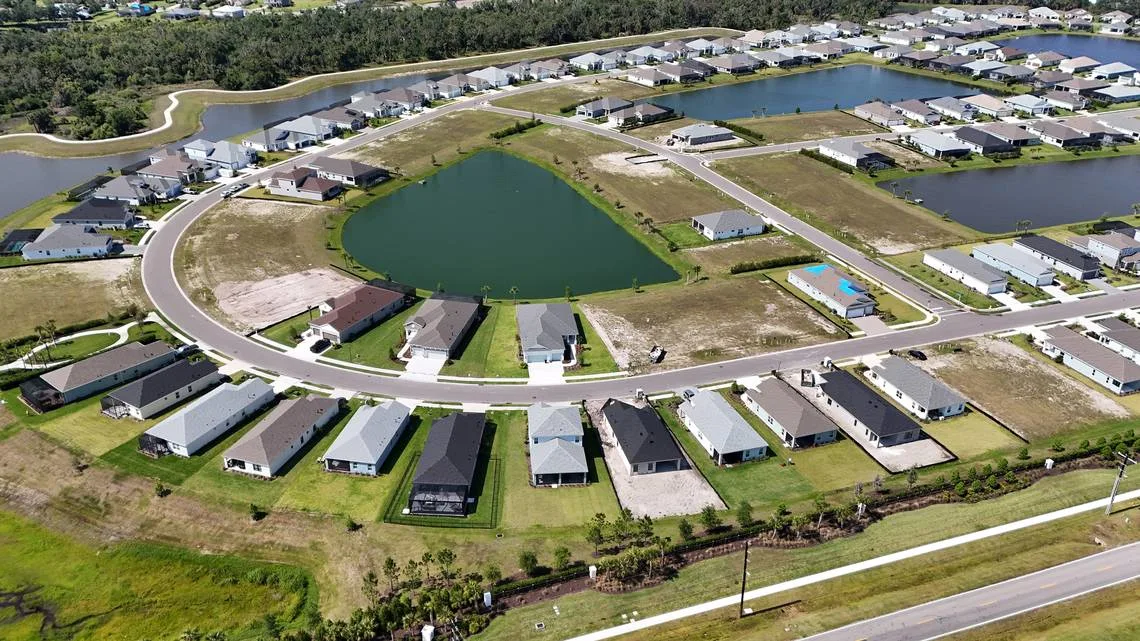
A Senate bill seeking to limit local government control for deciding new residential development was reworked with a strike-all amendment that gutted the original proposal.
With a short discussion Monday, the Senate Judiciary Committee unanimously approved the amended SB 208 during Monday’s hearing.
Bill sponsor Sen. Stan McClain, an Ocala Republican, called the amendment “a negotiated compromise amongst all the key stakeholders.”
Chadwick Leonard, Conservation and Planning Advocacy Coordinator for 1000 Friends of Florida, supported the amendment and said it was about “making sure that local control and the voice of the citizens are being heard.”
Other organizations, including the Florida Chamber of Commerce, the Florida Association of Counties, and the Florida League of Cities, all signaled their support for changes.
The original bill, which contained several provisions, would have overrode any local local rules on the books, so applications to “fill in” more housing in existing residential areas would be required to be approved without having any public hearing, comprehensive plan, amendment, rezoning, variance if the proposed development was similar to existing housing’s density and standards.
The original bill also would have prohibited local governments from banning residential development “on the basis of compatibility” if the proposed development was next to a similar residential development.
But the newly-tooled amended five-page bill will several provisions now says, “Local government comprehensive plans and land development regulations must include factors for assessing the compatibility of allowable residential uses within a residential zoning district and future land use category. Such factors may include intensity, density, scale, building size, mass, bulk, height and orientation, lot coverage, lot size and configuration, architectural style, permeability, screening, buffers, setbacks, stepbacks, transitional areas, signage, traffic and pedestrian circulation and access, and operational impacts, such as noise, odor, and lighting.”
Local government staff must specifically identify how the project isn’t compatible if they are going to deny an application for rezoning, subdivision, or a site plan approval on compatibility grounds, the amended bill said.
And the amended bill added, “References to ‘community character’ or ‘neighborhood feel’ are not sufficient in and of themselves to support a denial of an application on compatibility grounds.”

However, a local government could still set conditions or terms in approving an application to deal with compatibility concerns.
The amended bill had exemptions for rural, agricultural, conservation, open space, mixed-use, industrial, commercial use, master planned communities and historic districts.
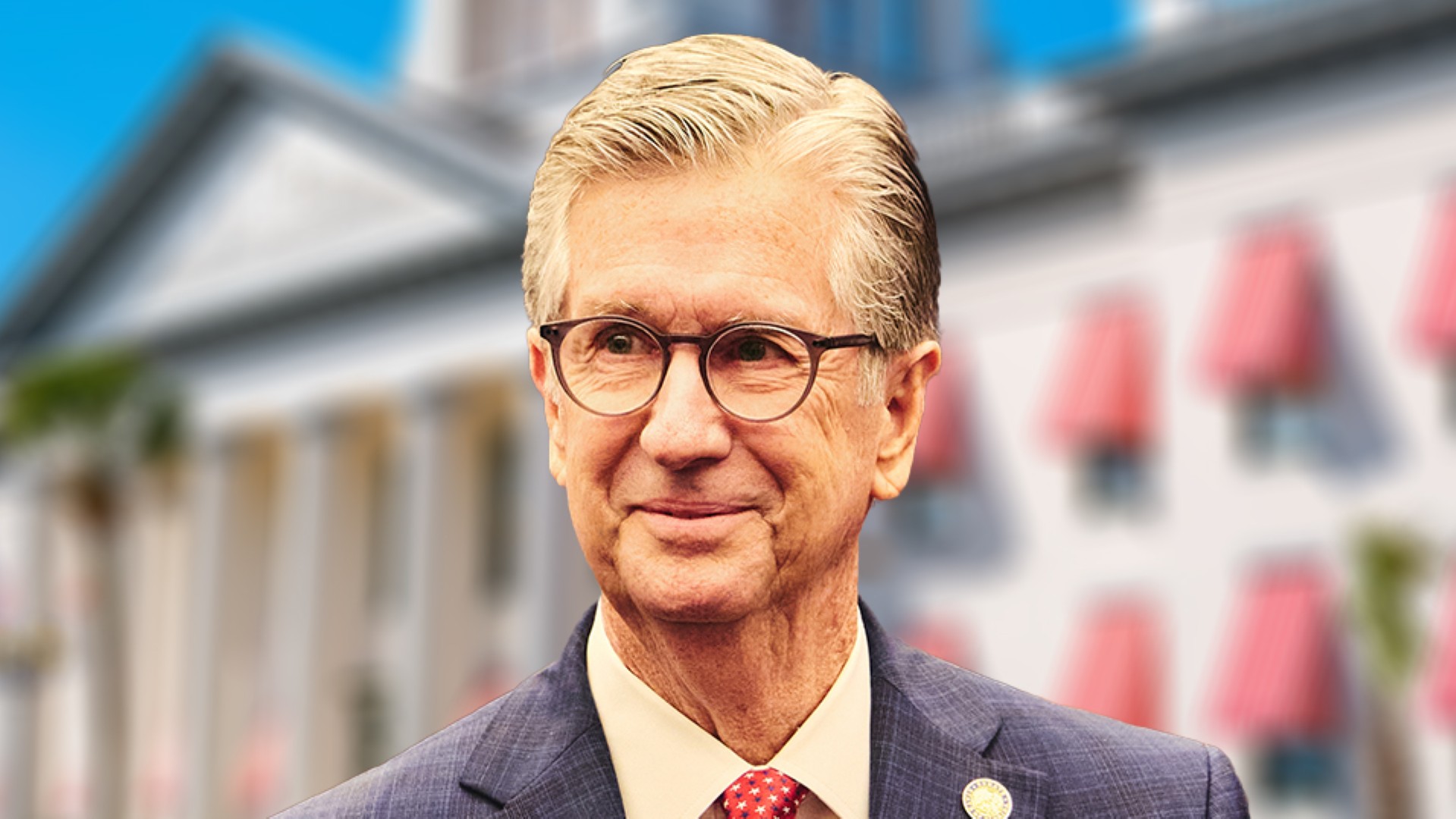
As lawmakers gavel in this week to begin the 2026 Legislative Session, Sen. Jim Boyd says the coming weeks in Tallahassee are likely to be defined by a careful approach to budgeting, targeted fixes to existing laws and an intensifying debate over how Florida funds local government.
Boyd, a Republican who represents Manatee County and parts of Hillsborough County, described the Session as one that should be comparatively steady after recent Sessions marked by sharper conflicts between the Legislature and Gov. Ron DeSantis. Still, he said lawmakers are already preparing for extensive discussions around property taxes, an issue he expects to dominate early debate.
“I think it’ll be a fairly benign Legislative Session this year,” Boyd said. “Sadly, we’ve had some disagreements with the House and the Senate, and the Governor and the House. My goal and overarching desire is for the three of our branches to work well together to do what’s good for our communities.”
“I don’t think there’s anything huge that will come out of this Session in terms of revolutionary legislation or change,” he added. “Property taxes are probably the issue that will be at the forefront of discussion.”
Boyd said property taxes have been a major topic of conversation for months as residents continue to grapple with rising housing costs. While calls for relief have grown louder, he said a full repeal of homestead property taxes is unrealistic without a replacement funding source.
“I think it’s important to talk about property taxes, that’s been a huge topic of discussion for the past six months or so,” Boyd said. “My gut feeling is there’s no way we’re going to be able to totally eliminate homestead property taxes. That would be nice, but there’s so much dependence upon those funds at the local level that we’ll have to figure out how to address those needs if the property taxes were not there to support them.”
Even so, Boyd said he expects lawmakers to advance some form of proposal this year, potentially during a Special Session teased by DeSantis, that could ultimately go before voters in 2026. Any significant changes to property taxes would require a constitutional amendment.
“I do believe there’ll be a proposal that will come out of the Legislature that will go on the ballot in ’26,” Boyd said. “The voters will have a chance to decide.”
Alongside tax policy, Boyd said lawmakers are entering the session with a more cautious approach to spending. Florida’s fiscal position remains strong, he said, pointing to solid bond ratings, continued debt reduction and healthy reserves. But he warned that lawmakers are tightening their grip on discretionary spending as they finalize the state budget.
“This year, project money won’t be quite as plentiful as it has been in the past,” Boyd said. “We’re being very careful and judicious about spending, as we should be.”

That restraint will shape how legislators evaluate local funding requests from cities, counties and nonprofits across the state. Boyd said he has spent years prioritizing projects that local governments cannot easily fund on their own, particularly large infrastructure items tied to growth and storm resilience.
“I’m doing my best to continue to bring dollars back to our community that will make a difference,” Boyd said, while acknowledging that final decisions rest with legislative budget leaders balancing competing requests from 40 Senators and 120 House members.
Boyd has not introduced legislation this year, but said he is closely watching proposals that could have significant impacts on his district, including a bill from Sen. Nick DiCeglie (SB 840).
The bill would revise last year’s storm recovery law, SB 180, which limited local governments’ ability to delay rebuilding after hurricanes but also created unintended consequences for counties and cities, including Manatee, seeking to make broader planning or environmental policy changes. Rep. Alex Andrade is sponsoring the companion bill (HB 1465) in the House.
Boyd defended the original intent of SB 180, saying it was driven by constituent complaints after storms, when residents struggled to obtain basic permits needed to make their homes livable again.
“That has been a topic of discussion,” Boyd said. “The reason for SB 180 was because governments in various parts of the state, our area included, were making it very hard for people to get back in their homes after a storm by dragging out permits or creating challenges, and that’s just unacceptable.”
He said he supports efforts to fix unintended consequences created by the law this Session while preserving its core protections for property owners.
“Once in a while there’s unintended consequences in bills, and we are always open-minded to look at them and see if there’s anything we can do to make it better,” Boyd said.
“I haven’t looked at the details, but I know we will be discussing it in Tallahassee, and I’ll be deeply involved because it’s an important issue,” he added. “I supported SB 180 to begin with, and I certainly support his efforts to try to make it as palatable as possible.”
Boyd said discussions about potential consolidation of services on Anna Maria Island remain ongoing, though he does not expect the Legislature to take action this year. The conversation has focused on whether the island’s three municipalities could consolidate certain services to reduce duplication and costs.
Boyd said he hopes to find resolution outside of the Legislature even though conversations were started through legislative action a couple of years ago. Those talks stalled after recent storms disrupted local operations, but Boyd said he hopes discussions with the cities of Anna Maria, Holmes Beach and Bradenton Beach will resume as recovery continues.
“We have three building departments, we have three police units, we have three zoning and public works. Does it make sense for an island that is 7 miles long to have three of everything? Or could we perhaps consolidate some of those services?” Boyd said.
Boyd is also looking ahead to a Special Session in April on redistricting, although he declined to discuss the topic in detail, citing ongoing legal considerations.
This Session also marks Boyd’s final stretch before he assumes the role of Senate President later this year. He said the position is an honor and noted he is beginning to think about the policy direction he hopes to pursue once he takes the gavel. Boyd also said he is optimistic about working with the House under incoming Speaker Sam Garrison, and emphasized the importance of collaboration between the Legislature and a newly elected Governor.
“It’s an incredible honor, and I’m very humbled by the support of my colleagues to allow me to be the President of the Senate starting next November when we reconvene,” Boyd said. “It’s a daunting task because it’s a big job, but it’s one that I feel I am capable of and ready for.”
“Right now I’m focused on this Session and doing what’s best for our members and my colleagues as I’m the Majority Leader this year,” he added. “Then I’ll start to develop a policy plan and platform for the upcoming two years that will start in November.”
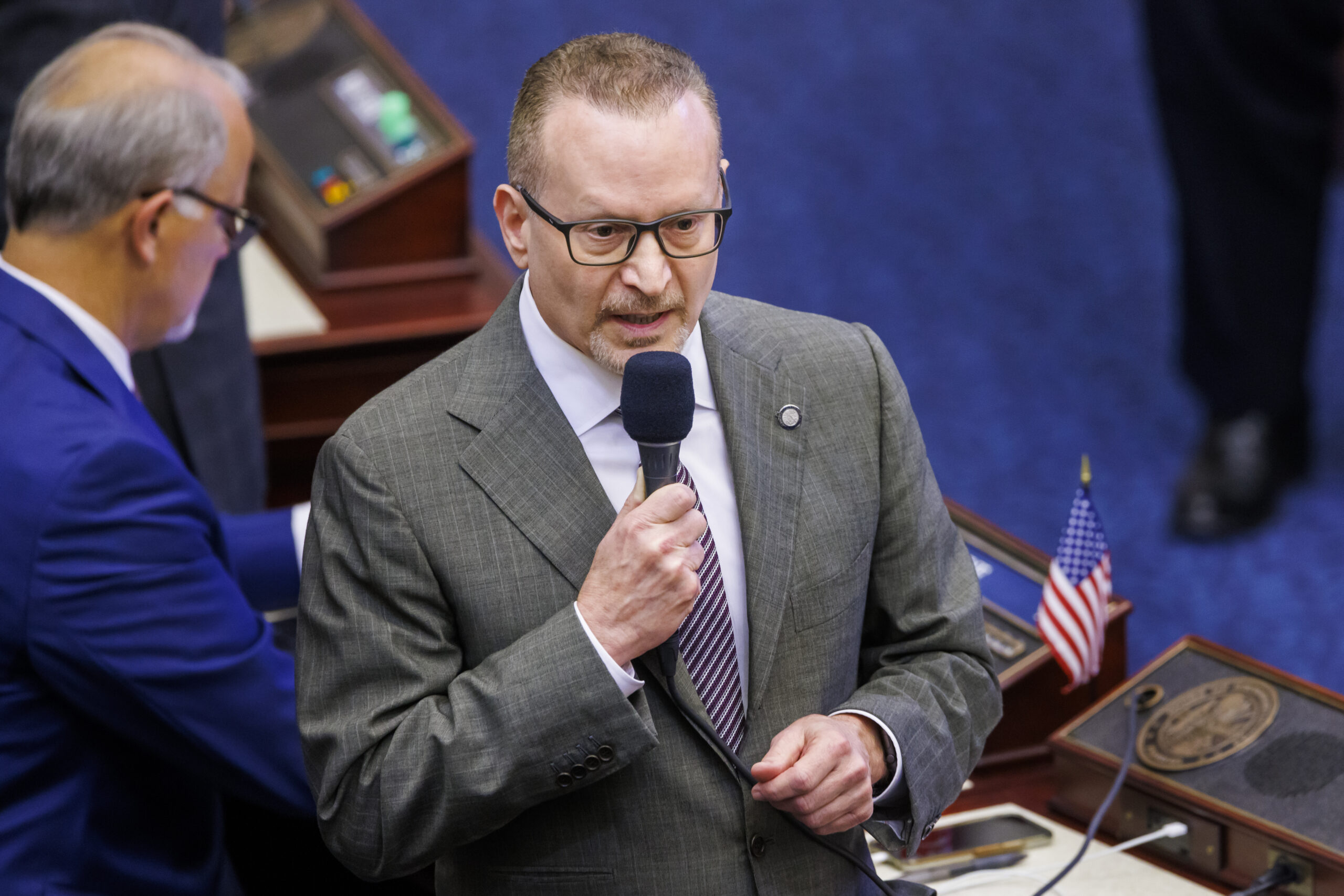
Sen. Ralph Massullo barely had time to slide into his new job.
Fresh off the Dec. 9 Special Election win in Senate District 11, Massullo is chairing committee meetings, filing bills and meeting with constituents — all before he takes the oath of office.
That’ll come Tuesday when the Regular Session begins.
“The swearing in is ceremonial. I’m doing senatorial duties now,” he said.
Though new to the Senate, Massullo is a Capitol veteran. He served eight years in the House, left due to term limits, then waited for an opening in SD 11 that occurred when Gov. Ron DeSantis tapped Blaise Ingoglia as Chief Financial Officer.
“My main goal is to make government more efficient,” the Lecanto Republican said. “Get rid of things that are probably not as effective and concentrate on things that work better. We need to make it responsible to the people.”
As Chair of the Senate Transportation Committee, Massullo said one focus is continuation of the Suncoast Parkway northward. The state recently opened a section between State Road 44 and County Road 486 in Citrus County; construction is underway to continue the parkway another 10 miles to U.S. 19 just north of Crystal River.
“We want to continue the Suncoast, so it doesn’t end up being a dead end,” he said. “I want to continue it up the right of ways of 19 to I-10.”
As for property tax reform, Massullo is cautious.
“I don’t know where it’s all going to shake out,” he said. “You’ve got to find where that alternative money is.”

Massullo is proposing an unrelated constitutional amendment. He sponsored SJR 1104, designed to protect students and educators who express religious viewpoints from discrimination.
“A school district shall treat a student’s voluntary expression of a religious viewpoint on otherwise permissible subject in the same manner that the school district treats a student’s voluntary expression of a secular viewpoint,” the proposal reads.
The question would go before voters in November.
Massullo, who lost his wife, Patty, just 11 months ago, is eager for this Senate new role.
“I feel good,” he said. “My goal is establishing good relationships with fellow members, help them be successful as well.”



Jim Boyd expects steady 2026 Legislative Session, with property taxes looming large

Is Powell’s Fed head independence dead? Trump outfoxes himself this time

Humana launches pilot for automated textile collection system
-

 Politics8 years ago
Congress rolls out ‘Better Deal,’ new economic agenda
-
Entertainment8 years ago
New Season 8 Walking Dead trailer flashes forward in time
-
Politics8 years ago
Poll: Virginia governor’s race in dead heat
-
Politics8 years ago
Illinois’ financial crisis could bring the state to a halt
-
Entertainment8 years ago
The final 6 ‘Game of Thrones’ episodes might feel like a full season
-
Entertainment8 years ago
Meet Superman’s grandfather in new trailer for Krypton
-
Business8 years ago
6 Stunning new co-working spaces around the globe
-
Tech8 years ago
Hulu hires Google marketing veteran Kelly Campbell as CMO