
Politics
Senate again passes ‘Officer Jason Raynor Act’ to hike manslaughter penalty for police deaths
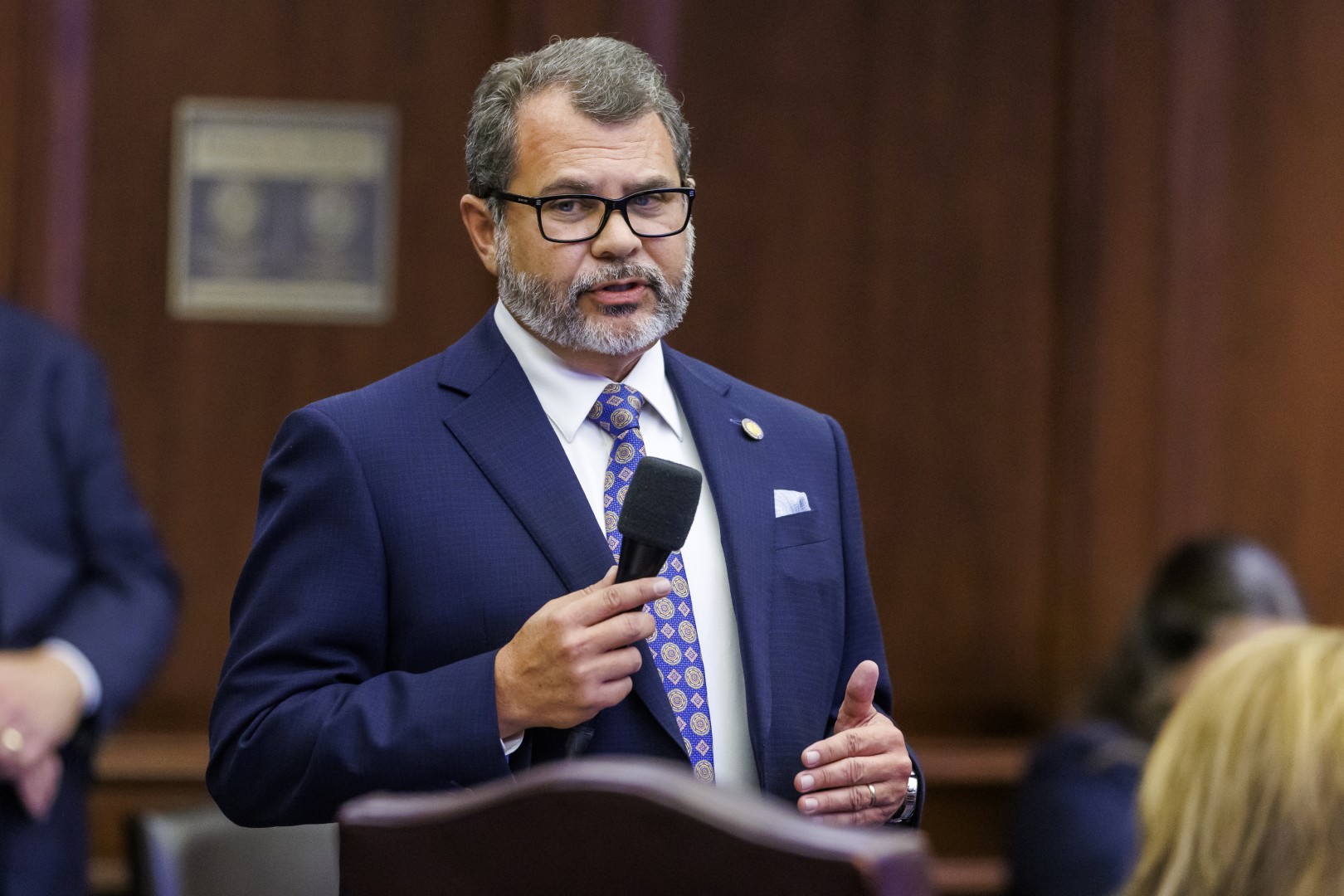
Senate lawmakers have again passed legislation to raise the minimum penalty for manslaughter in the death of a police officer to life in prison without parole.
The measure (SB 156) passed on the Senate floor 31-4, though some who voted for it repeated concerns raised throughout the committee process about how necessary the changes are and the adverse effects of shifting protections further from civilians to cops when street encounters turn violent.
Several Senators referenced the recent Minneapolis killings of Renée Good and Alex Pretti, warning that the changes SB 156 would impose could further embolden bad actors in uniform.
In fielding questions and arguments from his peers Thursday about the bill he sponsored, St. Augustine Republican Sen. Tom Leek consistently returned to the central premise of his legislation: A police officer should not face forceful resistance when detaining or arresting someone, even if the person being arrested believes the interaction or force being used is unlawful.
The proper place for that dispute, he said, is in a courtroom.
Florida law now provides that it is illegal to use force or violence to resist arrest or detention by a police officer. But Leek and Jacksonville Republican Rep. Jessica Baker, who is carrying a House version of the bill (HB 17), have argued that statutory language cited today in jury instructions can sometimes lead to more lenient verdicts.
The say that was the case with the legislation’s namesake, 26-year-old Daytona Beach Police officer Jason Raynor, who was shot and killed by a man named Othal Wallace during a brief, lawful detention on Aug. 17, 2021.
Prosecutors sought a first-degree murder conviction for Wallace, who resisted detainment. But jurors found Wallace guilty of a lesser manslaughter charge carrying a 30-year prison sentence.
Leek and Baker contend that the way the law is now written, jurors can be confused about what constitutes a legal arrest and in what cases civilians can resist.
Aside from increasing sentencing levels to ensure tougher penalties for violent acts against officers, the legislation expands the definition of who qualifies as a protected officer to include correctional, probation and auxiliary officers, and raises the offense severity for crimes such as assault, battery, aggravated assault and aggravated battery when the victim is an officer.

The legislation also includes and defines a “good faith” standard for police conduct during arrests and detainment situations, which Leek included in last year’s version of the bill in response to concerns from Black Caucus members.
Leek acknowledged the “good faith” standard is something of a replacement for language the bill would remove, which provides that an officer or someone they summon to help them is not justified to use force if the arrest or execution of a legal duty is unlawful and known by them to be unlawful.
St. Petersburg Democratic Sen. Darryl Rousson proffered, but then withdrew, an amendment to keep that language in statutes. He said leaving those words intact would “recognize the distinction between honest mistakes and unlawful, unaccountable action.”
Orlando Sen. LaVon Bracy Davis — who voted “no” on the bill alongside fellow Democratic Sens. Lori Berman of Boynton Beach, Tina Scott Polsky of Boca Raton and Carlos Guillermo Smith of Orlando — also filed and withdrew an amendment that would have imposed the same sentencing standards on officers found to have unlawfully killed civilians.
Bracy Davis admitted the amendment was symbolic and meant to convey that “the value of the life at issue should not depend on who is wearing a badge.”
“For the communities I represent — Black communities, immigrant communities, marginalized communities, communities already overpoliced and underprotected — this bill does not feel like safety,” she said. “It feels like a warning. Fear does not make communities safer. It makes people panic instead of pause.”
Polsky raised issue with the fact that the bill, as written, could make the penalty for reckless driving that resulted in the unintentional death of an officer just as severe as for doing so intentionally.
Smith argued that mandatory life sentences for manslaughter give judges and juries no opportunity to weigh any circumstances during sentencing.
Berman voiced misgivings about the legislation’s bearing on how civilians can reasonably react when placed in extreme situations with police, from being choked as George Floyd was or being pepper-sprayed like Pretti was.
Thursday’s vote on the “Officer Jason Raynor Act” came two days after the bill’s final committee stop, where Aaron Wayt, President-elect of the Florida Association of Criminal Defense Lawyers, made a compelling argument that the legislation isn’t necessary.
He noted that Wallace received a lighter sentence than Raynor’s community, coworkers and loved ones wanted because the State Attorney in the case, R.J. Larizza, failed to properly fill out the verdict form with a firearm enhancement on the manslaughter charge.
Sen. Jason Pizzo, a Hollywood independent and former Miami-Dade County prosecutor, said that while he would support the bill because he believes the punishment for killing a police officer should be “very severe,” the justice SB 156 contemplates would have been served if Larizza’s Office had been thorough in its work.
“The disservice and injustice done to the Raynor family was either an oversight, uninformed, uneducated — (a) ridiculous mistake from a prosecutor,” he said. “Shame on the State Attorney’s Office who failed to include an enhancement for a firearm that would have gotten the Raynors the life sentence that they deserved for that punishment.”
SB 156 will now be sent to the House, where Baker can either amend her bill to match its language and seek a floor vote for final passage of the legislation; table her bill and submit SB 156 for a floor vote and final passage; or amend the Senate bill and send it back across the rotunda, potentially recreating a circumstance that killed last year’s version of the bill.