The Ford Mustang Mach-E cruises down a London road choked with traffic, using its onboard AI system to avoid jaywalkers and cyclists, and navigate roadwork as it drives to its destination.
The autonomous vehicle from British startup Wayve Technologies is on a test run ahead of the U.K. government’s robotaxi trials set to launch in the spring. Tech companies including U.S. company Waymo and China’s Baidu also plan to take part in the pilot program, making London the latest arena in the global robotaxi competition.
While self-driving cabs aren’t new, London’s ancient road layout and busy streetscapes could pose special challenges for the technology.
There’s also skepticism from London’s famed black cab drivers, who must pass a grueling training course known as “The Knowledge,” which requires memorizing hundreds of routes and takes years to complete. They’ve previously opposed technology that’s disrupted their industry, and protested the arrival of Uber.
Self-driving taxis are “a solution looking for a problem,” said Steven McNamara, general secretary of the Licensed Taxi Drivers’ Association, which represents black cabbies.
He doubts that robotaxis would have any advantage on London’s road network, which is laid out in a convoluted spiderweb that dates back to Roman times — unlike the grid layout in American cities like San Francisco and Phoenix where Waymo operates.
The British capital is notorious for being one of the world’s most congested cities and its streets are already clogged with other modes of transport, including private cars, buses, motor scooters, bicycles and electric rental bikes.
McNamara and many others have noted that robotaxis face another challenge from pedestrians crossing the streets. While jaywalking is illegal in the United States and many other countries, it’s not an offense in Britain.
“It’s virtually impossible to drive anywhere (in London) without somebody walking in front of you,” McNamara said. In London, with a population of nearly 10 million, he wondered “how these cars are going to deal with those volumes of people?”
The robotaxi companies say there’s room for the new technology.
“I think Londoners are going to love autonomous driving. It’s going to be another choice alongside the Tube, cycling, walking, “said Wayve CEO Alex Kendall in a recent interview at the company’s workshop.
Wayve is teaming up with Uber for the taxi trials, which are part of Britain’s move to adopt national regulations for self-driving vehicles. The nation is seeking to position itself as a world leader in the technology.
Chinese tech company Baidu is also teaming up with Uber, as well as its ride-hailing rival Lyft, to operate its Apollo Go autonomous vehicle service in the London pilot.
Waymo, owned by Google parent Alphabet, will also take part and plans to launch a London passenger service by the third quarter of 2026, company representatives told reporters last month.
Waymo officials sought to ease concerns that the company would suddenly flood London streets with robotaxis, noting that it has operated 1,000 total vehicles in San Francisco since going into full service in 2024.
“We’re not here to replace anyone,” Waymo spokesman Ethan Teicher said. “We’re here to add another option for people who will choose to take black cabs or other modes of transportation when it suits them and choose to take Waymo, when it makes sense.”
Waymo’s self-driving Jaguar I-Pace sedans have been spotted doing test runs around London. Wayve’s Ford Mustang Mach-E vehicles have also been doing road tests with human backup drivers sitting behind the wheel, ready to intervene if needed.
On a recent demo ride for The Associated Press, Wayve’s Ford steered automatically through a three-mile (five kilometer) loop in North London without any problems.
Cruising down a straight and open stretch of road, the car maintained a steady pace of 19 miles (30 kilometers) per hour, a tick under the speed limit.
A traffic light changed as the car approached, forcing it to brake firmly and lightly jolting the passengers forward — the only moment that the driving was less than smooth.
Kendall said Wayve takes a different approach from traditional self-driving technology. It doesn’t rely on “high definition” maps and “hand-coded” safety systems rules written by programmers anticipating every scenario.
Instead, it uses an AI trained on millions of hours of data gathered by its cars to learn and understand how the world works.
“This is the key thing for self-driving, because every time you drive on the road, you’re going to experience something different,” Kendall said. “You can’t rely on a self-driving car being told how to behave in every scenario it encounters.”
He said Wayve is positioning itself as a technology company providing hardware and software that can be added to any vehicle to make it autonomous. It signed a deal with Nissan in December to build self-driving cars that will go on sale in Japan and North America by 2027.
Kendall wouldn’t reveal any more specific details about the robotaxi service it will operate in collaboration with Uber, such as pricing.
Waymo, which has its own app to hail rides, will have “competitive” prices and fares will be in line with the market, officials said last month, while adding that it is often able to “demand more premium pricing.”
Experts say there’s a role for robotaxis in Britain, but it might be a niche one.
They’re best poised to fill gaps in Britain’s public transport network, such as serving villages that have lost bus services connecting them to bigger towns and cities because of budget cuts, said Kevin Vincent, director of the Centre for Connected and Autonomous Automotive Research at Coventry University.
There will still be demand for human drivers, especially from out-of-town visitors and tourists, he said.
If you find a “cab driver who knows the area, you can ask him questions. You feel confident and comfortable you’re going where you need to go,” which is a service that won’t be easily replaced in the short term, Vincent said.
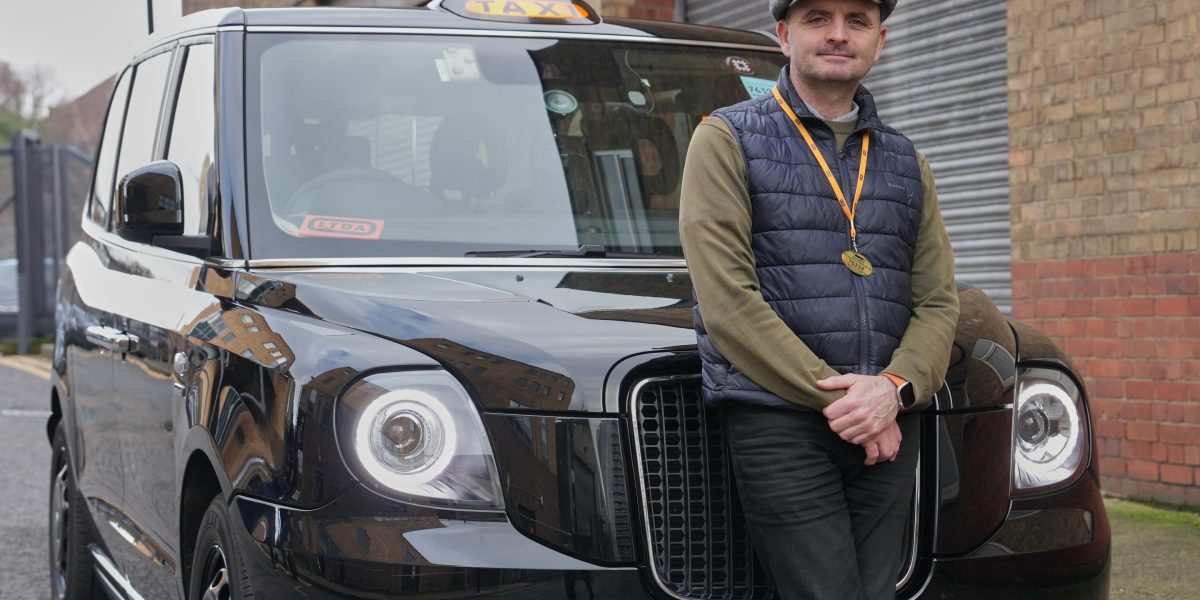
Self-driving taxis can’t replicate the human touch, said Frank O’Beirne, who has been driving black cabs for 14 years.
For example, one of his recent fares was a pair of blind passengers going to touristy Leicester Square. He ended up parking at a cab rank and walking them across the street to their destination, a Chinese restaurant that turned out to be in the basement of a casino.
“They would never have found that, ever, (on their own),” said O’Beirne. “There’s nothing like us. I can’t see the space where autonomous taxis can operate, really.”