
Politics
Second House committee backs Michael Owen’s Hillsborough Superintendent election bill
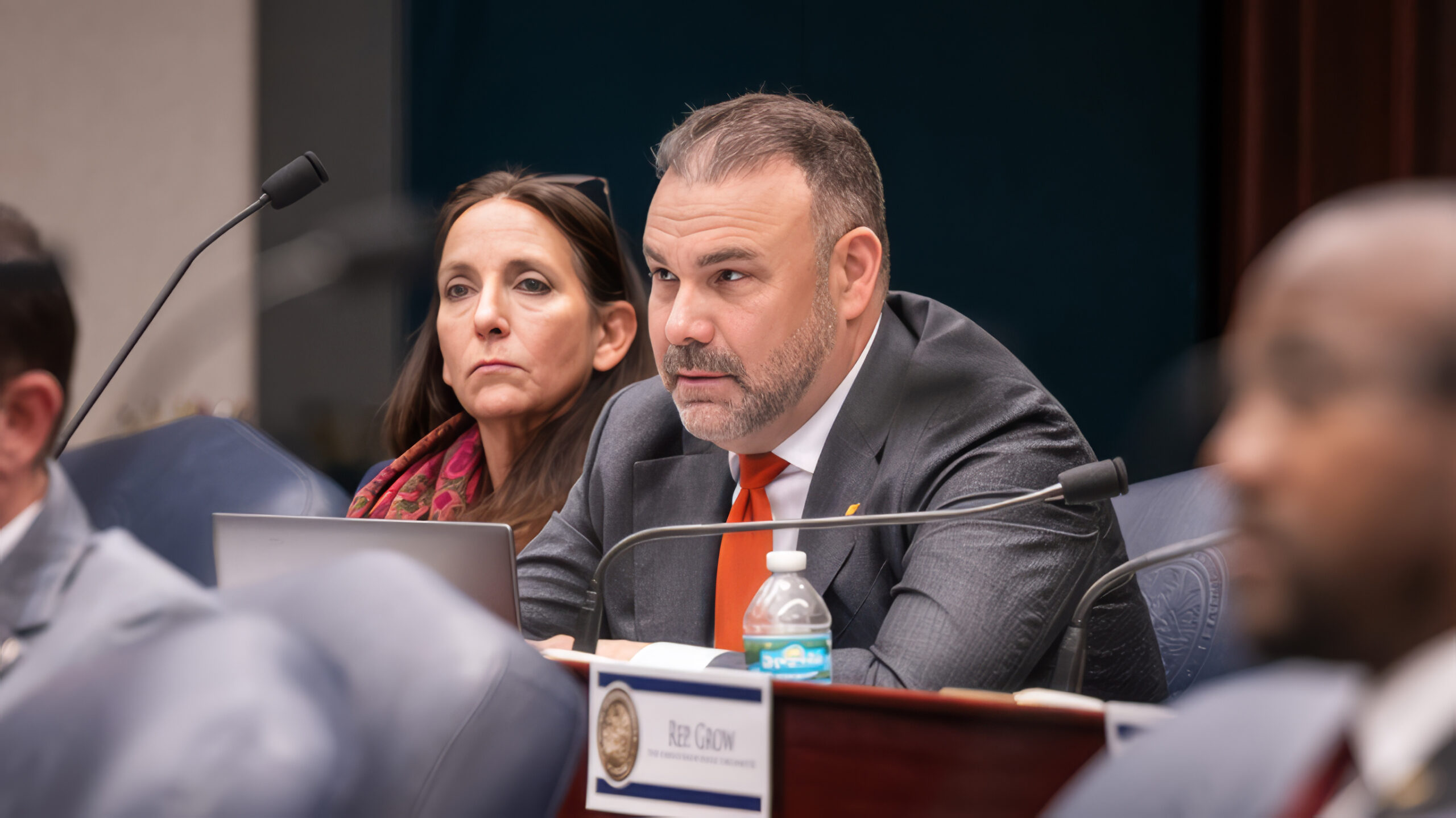
A proposal by Apollo Beach Republican Rep. Michael Owen to create a ballot measure asking Hillsborough County voters whether the district’s Superintendent should be elected or appointed has cleared its second House committee stop.
The House Education Administration Subcommittee approved HB 4027 in the face of opposition from some local residents who spoke during the committee meeting.
The measure does not itself change how the Superintendent is selected. Instead, it authorizes a countywide referendum leaving the final decision of whether to convert the Superintendent from an appointed position to a partisan elected office to voters.
“Who do you think should be accountable? Should it be four members of a Board, or should it be the parents of Hillsborough County?” Owen said. “The thing about this, folks, is it’s not up to me. At the end of the day this is a referendum that’s going on a ballot.”
The committee hearing drew extensive public testimony, with all speakers opposing the bill. They warned it would inject partisan politics into a role they described as a professional, CEO-level position overseeing one of the state’s largest School Districts. Legislators who supported the measure argued that education is already political and that voter oversight would improve accountability.
Matthew Johnson, a Hillsborough County resident, said the proposal would “deliberately inject more partisanship into our schools” and turn the Superintendent into a campaign candidate rather than a professionally vetted administrator.
“Our current School Board operates as a nonpartisan body and that has been a strength, not a weakness,” Johnson said. “We saw this very clearly in our most recent School Board election, a Governor-endorsed candidate ran explicitly on a platform of bringing state-level political agendas into local school governance. Voters rejected that approach by double digits.”
Several parents and former volunteers echoed that concern, noting that the District serves more than 200,000 students and manages a multibillion-dollar budget.
“That’s not a political role, that’s a CEO-level role,” Hillsborough resident Amy Murray Granger Welch said. “Our current appointed model works because it focuses on qualifications, experience and results. Not campaign skills.”
Democratic lawmakers on the committee raised similar objections during debate, arguing the bill would increase the influence of money and party politics in education. It’s a sentiment shared by other Democratic leaders from the Hillsborough area in the lead up to the bill’s introduction.

“We have the opportunity to get politics out of education,” Jacksonville Democratic Rep. Angie Nixon said. “This bill does the exact opposite of what we should be doing. It’s going to cause an infusion of private interest funds and manipulate who is actually going to direct our students.”
But Milton Republican Rep. Nathan Boyles, who represents counties with elected Superintendents, said the model can work effectively and pointed to high-performing Districts in his area.
Others noted that the bill itself is not making the change, simply asking voters to decide. If HB 4027 ultimately clears the Legislature, Hillsborough County voters would decide the issue during the 2026 General Election.
“I don’t know how the folks in Hillsborough will come out on this issue, but I represent two counties both of which have elected school Superintendents,” Boyles said. “They’re both ‘A’ Districts, and I think one of them is actually one of the top-performing Districts in the state.”
The bill now heads to its third and final committee stop with the State Affairs Committee.