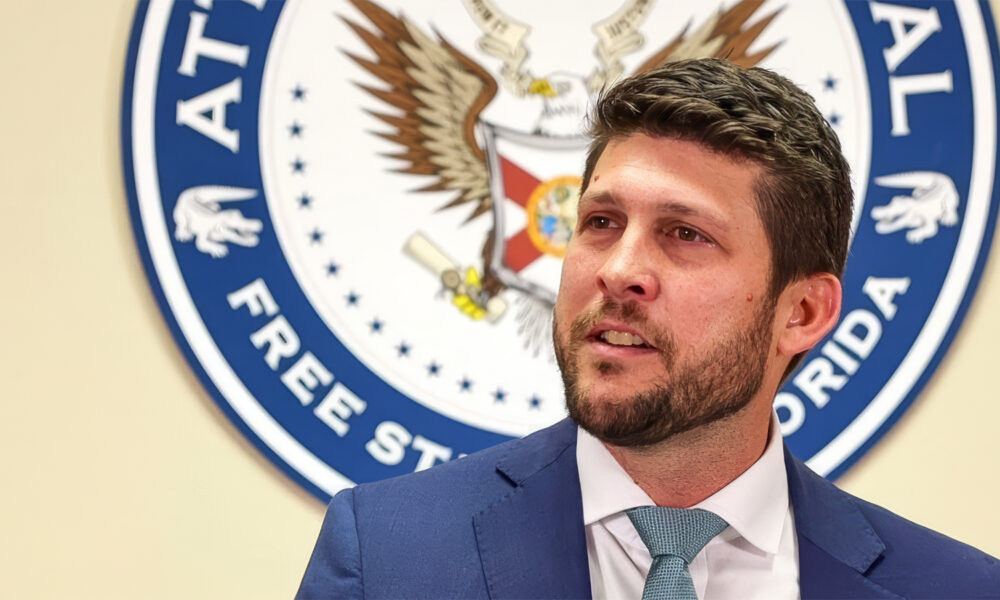
The Florida Supreme Court has shut down a proposal from Attorney General James Uthmeier that would have allowed certain out-of-state lawyers to practice in Florida without ever taking the state’s bar exam.
In a unanimous order, the court rejected Uthmeier’s request to amend the rules governing the Florida Bar, leaving intact long-standing requirements that lawyers demonstrate their knowledge of Florida law via the bar exam before practicing.
In a petition, Uthmeier argued that state agencies are struggling to recruit and retain experienced lawyers because of the time and expense associated with sitting for the Florida Bar. His proposal would have allowed lawyers already licensed and in good standing in other states to work for Florida government offices for up to three years without passing the Florida exam, so long as they were employed in a public-sector role.
He argued that the Bar’s existing rules aim to protect private clients. These lawyers, however, would be representing government clients that need less protection, Uthmeier argued.
The Attorney General’s Office framed the idea as a response to staffing shortages, particularly in specialized areas of law where agencies compete with the private sector. He argued that experienced lawyers from other states should not be sidelined by exam schedules while agencies face growing caseloads and enforcement demands.
But the proposal ran into opposition from the Florida Bar. Members warned that the change would undermine the court’s constitutional authority to regulate the practice of law and weaken safeguards designed to protect the public. The Bar emphasized that the exam and vetting process are key mechanisms for ensuring lawyers understand Florida-specific law and meet ethical standards.
“While the bar shares a desire to ensure state agencies can effectively address attorney recruitment and retention challenges, and is sympathetic to these very real challenges, the structure and operation of (the proposal) run afoul of the text of the state Constitution and should therefore be denied,” the Bar wrote.
Uthmeier rebutted those concerns in his response.
“Opponents also suggest that government attorneys who have passed character and fitness reviews in another state but not in Florida could pose a danger to the public,” Uthmeier wrote. “An experienced attorney from out of state, however, poses far less risk to the public than a newly minted JD who just passed the bar.”
But the court agreed with the Bar. In its order issued this week, the Justices said existing rules already strike the proper balance between addressing workforce needs and maintaining public confidence in the legal profession. The court noted that current certification programs allow out-of-state lawyers to pursue admission while employed by the state, but stop short of letting them bypass the exam entirely.