
Politics
School zone speeders face a crackdown under new state law, but legislative guidance is still needed
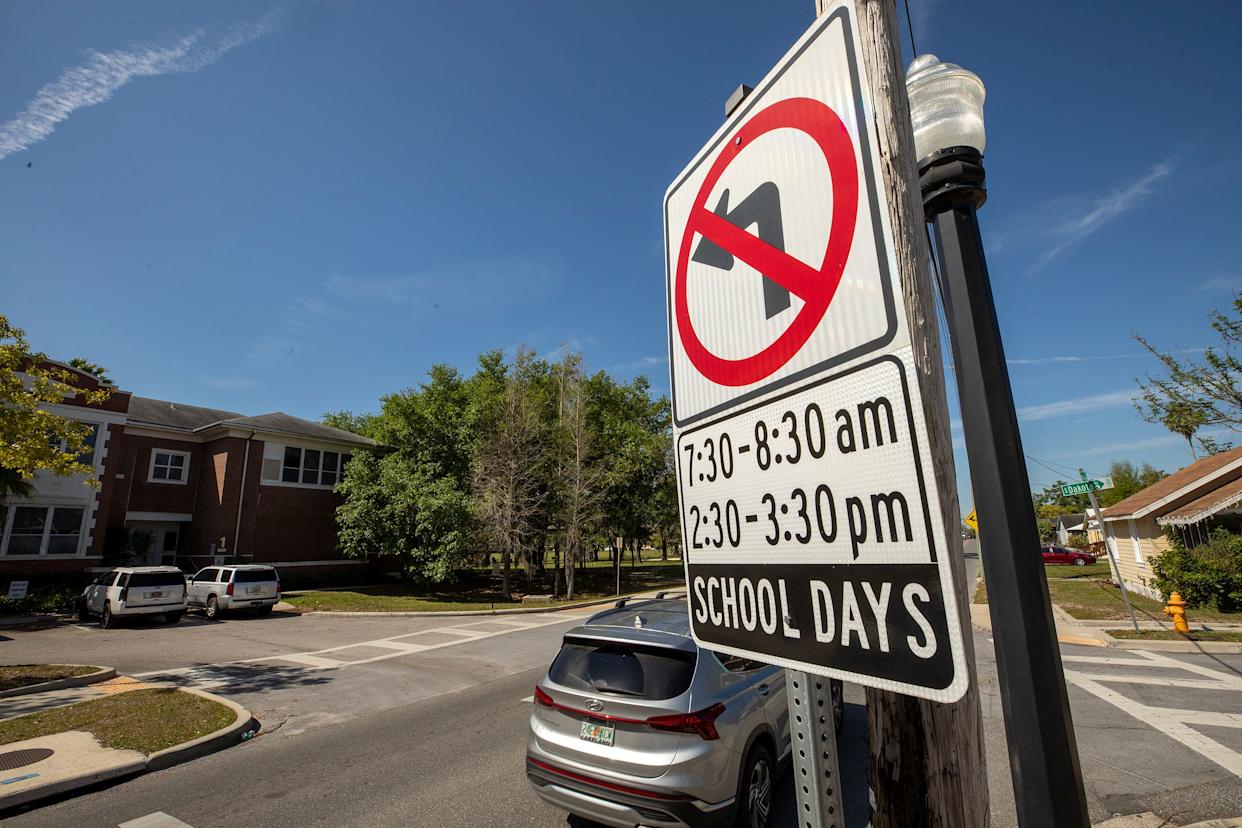
State law allows local governments to place automated speed cameras in school zones to ensure drivers are reducing their speed accordingly, to keep kids safe as they travel to and from school. But talk across the state is heating up around the issue, with some local governments seeking clarification on just where exactly the cameras must be placed.
The school zone safety program was authorized under a measure (HB 657) signed into law by Gov. Ron DeSantis in 2023. It seems simple enough — place a camera that can observe driving activity in school zones and use that footage to issue citations to drivers who are not obeying the posted speed limit — but questions have arisen regarding signage and camera placement, and enforcement can be tricky given that enforcement times vary school-to-school.
The Florida Department of Transportation has issued guidance on the law that, depending on interpretation, may be at odds with language in current state law. Specifically, FDOT says the placement “shall not reduce, impede, restrict or obstruct driver view or sight distance of any intersection, driveway, crosswalk, or existing traffic control devices” and the camera must be installed “at a location where it does not detect vehicles beyond the beginning and end points of school zone limits.”
Unlike state law, FDOT’s interpretation does not explicitly require the cameras to be located in the school zone boundary, rather it must only observe activity within the boundary.
And that’s a critical difference, one that is prompting calls for legislative clarification.
State Rep. Traci Koster sponsored the original school zone speed legislation, with the goal of improving safety near schools. She said she has no issue with legislation clarifying the original law, to ensure local governments are able to adequately enforce it.
“These programs successfully slow down drivers who otherwise would speed through school zones and put students and teachers at risk,” she said. “With every new program it’s important that we identify any implementation issues that need further refinement. I am supportive of making changes to ensure it is clear to drivers what the speed limit is at the time they enter the school zone and that the cameras can be installed to accurately catch any violations of that speed limit.”
The issue is timely, with some localities suspending programs as they await guidance. Osceola County, for example, has suspended its program because officials there are not sure where to place the cameras — either inside the school zone, or just outside of it.
There’s an excellent argument for placing the cameras just outside the school zone. Doing so allows the cameras to observe the driver and the flashing beacon required alerting drivers of the reduced speed in the school zone. The flashing beacon is a visual indication that reduced speeds are in place at that time, and video of speeders easily verifies that they were speeding through the zone during enforcement hours.
But the school zone doesn’t start until the flashing beacon, meaning that to capture it, cameras must be placed just outside the school zone.

Sources tell Florida Politics legislation addressing the issue is likely, but with the Legislative Session not starting until January, it will leave local governments in limbo until then.
It’s worth noting that while some local governments have chosen to hit the pause button for now, others are moving forward, and state law does allow them to do so.
But with any well-intentioned legislation, sometimes there are kinks to work out after initial implementation. All indications are that these kinks will be addressed, because who doesn’t support cracking down on school zone speeders to keep Florida’s children safe?