Scalpers has strengthened its leadership team with the appointment of Francisco Gutiérrez as the fashion brand’s new deputy CEO, the company said in a statement.
Francisco Gutiérrez, new deputy CEO of Scalpers – Scalpers
In this role, Gutiérrez will report directly to the brand’s chairman, Borja Vázquez, and to the CEO, Alfonso Vivancos, and will assume responsibility for the operational and strategic management of the company.
As such, Gutiérrez will take overall responsibility for Scalpers’ operational and strategic management, with the aim of accelerating its international growth and cementing its position as one of the leading brands in the affordable premium segment.
This newly created role reflects the organisation’s natural evolution and professionalisation, enabling the chairman and executive leadership to focus on the overarching strategic priorities of expansion and corporate development.
Gutiérrez began his career in the fashion industry in 2012, when he moved to London to work at Pull&Bear (Inditex). A year later, he joined the brand’s headquarters in Ferrol, where he held various roles within the digital division.
In 2019, he joined Scalpers to lead e-commerce and marketing, taking on the dual role of chief digital officer (CDO) and chief marketing officer (CMO). Since his arrival, he has become one of the main drivers of the brand’s digital transformation and consolidation, the company said.
Under his leadership, the online channel increased its turnover tenfold, from 4.5 million to 45 million euros between 2019 and 2024, and has been established as one of the company’s strategic growth pillars.
The brand’s chairman, Borja Vázquez, emphasised that with this appointment Scalpers reinforces its “commitment to innovation, professionalisation and sustainable growth.” “His leadership and vision will be key to consolidating the project in the coming years,” he said.
This appointment forms part of the implementation of the company’s 2025-2030 strategic plan, designed by Gutiérrez himself and recently approved by the board of directors. This plan sets out the company’s roadmap for the next five years and is structured around three main pillars: elevating and repositioning the brand in the “premium bridge” segment, the growth of the womenswear line as a driver of expansion, and the internationalisation of Scalpers, with a focus on southern Europe and entry into the U.S. market before 2030.
“It is an honour to take on this new responsibility and to be able to lead the future of Scalpers in such an exciting phase. I face this challenge with the conviction that we have a brand with enormous international potential, an exceptional team and a clear vision to continue growing in a sustainable and distinctive way,” said Gutiérrez.
This article is an automatic translation. Click here to read the original article.
In 2025, South Korean fashion takes another step up on the global stage. In a sector where technological innovations are redefining production processes, South Korea stands out for its ability to turn these developments into drivers of growth and global appeal, according to a Spherical Insights study published in November.
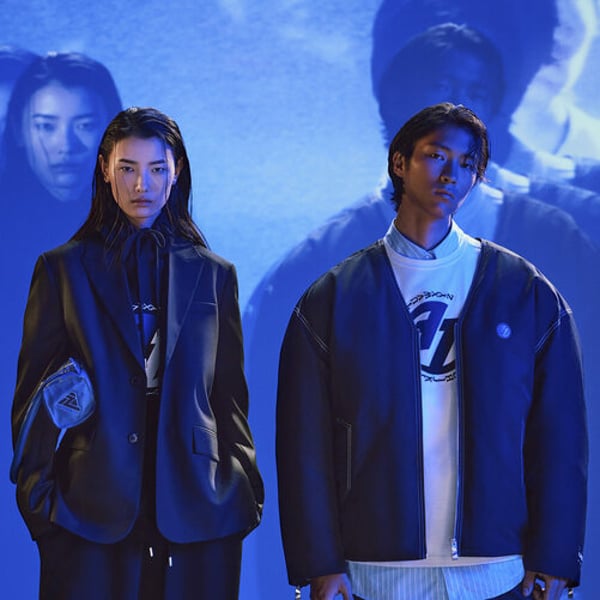
South Korean menswear makes its mark internationally, seen here at Pitti Uomo – Pitti Uomo
According to the South Korean Ministry of Trade, Industry and Energy (MOTIE), almost $27 million is set to be invested in 2025 to strengthen the national textile value chain.
This policy forms part of a broader strategy that provides more than $19 billion in support for firms operating in industrial textiles, the creation of an Industrial Textile Alliance, and a certification centre for technical products. The aim is to lift digital transformation across the sector from 35% to 60% and increase South Korea’s share of the global markets for industrial and sustainable textiles from 2-3% to 10% by 2030.
A dynamic domestic market
These ambitions are underpinned by an already robust industry. In 2024, South Korea imported $12.37 billion worth of clothing, including $5.08 billion in menswear. Exports totalled almost $2 billion, of which $1.7 billion comprised synthetic textiles and crocheted fabrics. This momentum reinforces a domestic market characterised by diverse demand, rapid trend adoption and strong cultural influence.
South Korea invests in its textile industry – Shutterstock
At the heart of this evolution lies the global rise of Korean menswear. Korean brands stand out for their attention to detail, mastery of cut and tailoring, and a strong appetite for exploring experimental materials, bold silhouettes and assertive colours. This stylistic approach, oscillating between minimalism and exuberance, meets a growing demand for pieces capable of expressing individual identity, according to the study.
Exports to be developed
The trends for 2025 confirm this direction: oversized cuts, unique patterns, bright colours, sustainable materials, a fusion of traditional and contemporary styles, as well as layering, athleisure and gender-fluid fashion, are at the forefront. From oversized kimono-polos to two-tone pink shirts, the Korean aesthetic offers a balance of comfort, experimentation and sophistication.
Ader Error is one of the young South Korean brands flourishing internationally (here, its collaboration with Zara) – Zara
This creative ecosystem is supported by a myriad of ‘flagship’ brands. Names already recognised worldwide such as Gentle Monster, Andersson Bell, Kusikohc, Hyein Seo and We11done fuel the country’s international aura through their distinct worlds, blending art, streetwear, craftsmanship and conceptual design. In 2025, other labels are taking centre stage: Ader Error and its deconstructivist streetwear, Wooyoungmi and its modern tailoring, ThisIsNeverThat and its distinctly Korean take on streetwear, as well as 87MM, Recto, Amomento, PushButton and Minjukim, whose gender-fluid offerings are gaining visibility.
By combining massive public investment, a capacity for innovation, cultural richness and creative power, South Korea is putting its fashion industry on an upward trajectory in 2025. It can be seen not only as an exporter of aesthetics, but also as a key player in technical and sustainable textiles, with the ambition of playing a central role in contemporary global fashion.
Hugo Boss recently unveiled an ambitious expansion of its growth plan and on Tuesday the German fashion giant said it has secured a revolving credit facility to “ensure the successful execution” of the ‘Claim 5 Touchdown’ growth plan.
Hugo Boss
The €600 million loan (which replaces another loan of the same amount) “was considerably oversubscribed and aims at providing the company with additional financial flexibility”. It’s also linked to the fulfilment of clearly defined sustainability criteria.
“This successful transaction highlights the strong trust our lenders place in our company and its long-term potential,” said CFO/COO Yves Müller.
The loan has a term of five years and includes two options to extend the term by one more year in each case, plus an option to increase the credit amount by up to €300 million.
The company unveiled its strategy in early December, saying its next phase aims to “realign, simplify, and strengthen the business”.
In the short term it’s sacrificing sales and profits as it said that currency-adjusted group sales and profits will both decline next year. But the refreshed strategy aims to “sharpen focus, discipline, and execution across the business”.
It now clearly has the long-term financing to put its plan into operation with the option of even more money on the table if required.
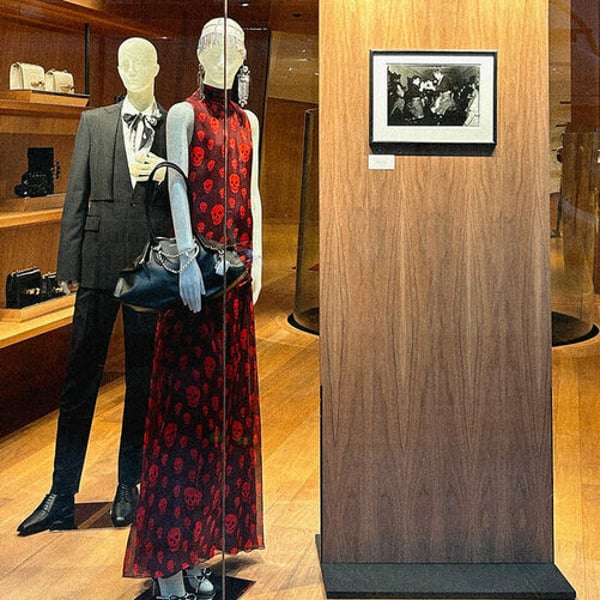
McQueen is aiming to attract attention to its SS26 pre-collection launch with a special installation in its store in the heart of fashion’s capital city, Paris.
McQueen
To celebrate the launch, the label has collaborated with well-known photographer Dafydd Jones, on the installation that features some of his most definitive works, curated by McQueen’s creative director Seán McGirr.
The Rue Saint-Honoré store installation includes 26 of Jones’s original works on public display. The curated selection sits alongside the McQueen pre-collection, “for which these photographs form a core inspiration”.
The installation has just launched and will be in the store until 29 January.
So who is Dafydd Jones? The British photographer is celebrated for his “sharp, satirical depictions of social life, particularly in the 1980s. His career began with prize-winning images of Oxford’s ‘Bright Young Things’, leading to decades of work published in major titles”.
And as well as being in the McQueen store for a limited period, his photos are held in collections including the National Portrait Gallery and the V&A in London.