In this modern era of divisive politics, it seems controversy can be found anywhere, even in the seemingly obvious.
Miami Beach is no exception. The city has consistently wrestled with the balance between preservation of its past and support for its future. But now the city faces a critical question about an impactful project proposal, one in which the answer is a no-brainer.
The Fontainebleau Miami Beach redevelopment proposal — set to be reviewed before the Miami Beach Historic Preservation Board on Tuesday — faces criticism where there should logically be none.
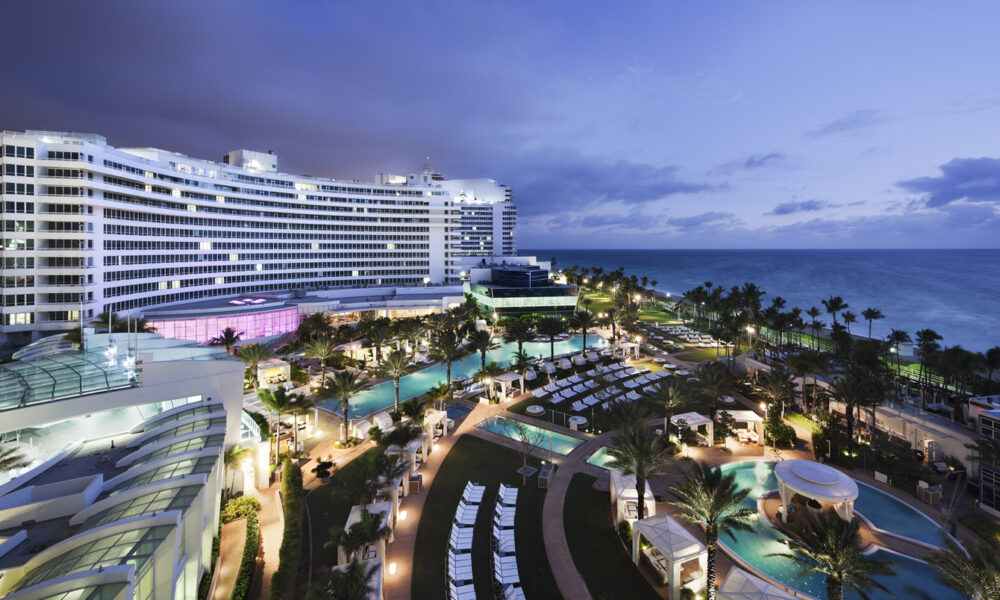
Fontainebleau Development is embarking on one of its most ambitious investments to date — a sweeping redevelopment of the resort’s outdoor pool deck that will redefine family-friendly entertainment in South Florida.
The plan introduces all-new pools and water features, family attractions and slides, upgraded food and beverage offerings, and elevated poolside entertainment — all carefully designed to complement the resort’s existing luxury amenities and iconic character.
Crucially, this transformation does not expand the resort’s footprint. It does not alter Fontainebleau’s world-famous Morris Lapidus architecture. And it does not increase density or traffic.
Yet critics continue to cry foul over unfounded concerns the project will become a traffic boondoggle. Nothing could be further from the truth, and facts do not support this contention.
All aspects of the redevelopment plan are private amenities reserved exclusively for hotel guests, with restricted access that remains unchanged. Guests stay on property.
Hence, no additional traffic burden is placed on surrounding neighborhoods or city infrastructure. To argue otherwise would be like claiming that replacing your pool deck means you need a bigger driveway. It’s ridiculous.
Residents appear to understand this. A recent poll of likely Miami Beach voters shows nearly 60% support for the proposal, with fewer than 30% opposed — and more than two-thirds of respondents say they are already familiar with the plan. That’s informed support, not tacit approval.
Support is also coming from the people whose livelihoods depend on Miami Beach remaining competitive on a global stage. The Greater Miami Convention and Visitors Bureau has called the project a “thoughtful and timely response” to evolving travel patterns, while the Greater Miami and the Beaches Hotel Association has made clear that reinvestments like this are “essential” to Miami Beach’s long-term competitiveness.
The economic upside is real. Construction is expected to begin in 2026, generating hundreds of jobs across construction, hospitality, operations and maintenance — from lifeguards and ride attendants to food and beverage and guest services staff. As the first large-scale, family-friendly attraction of its kind on Miami Beach, the project is poised to strengthen the broader local economy, benefiting nearby restaurants, retailers and service providers.
The Fontainebleau has always been a symbol of Miami Beach’s past. This proposal ensures it also remains part of the city’s future. It is a rare union of historic preservation and next-generation investment — and one the Historic Preservation Board should confidently approve.