Connect with us

Fashion

Sarah Davis, founder of Fashionphile, talks new mega Los Angeles flagship opening
Published

on


Published


November 1, 2025

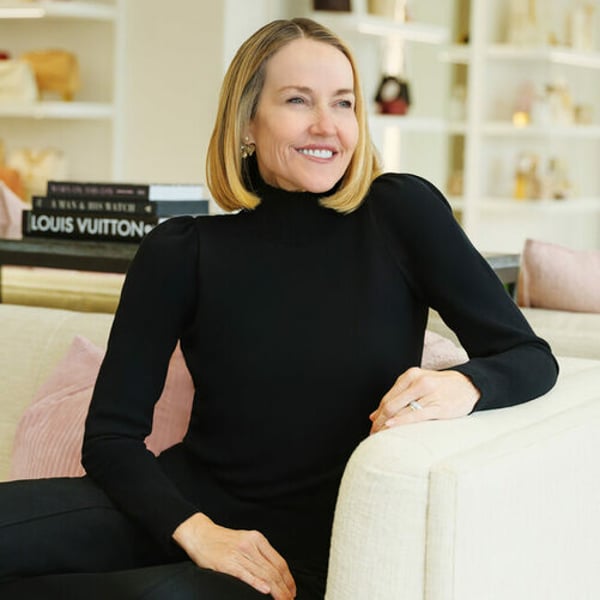
On September 29, Fashionphile, an ultra-luxury re-commerce brand, announced the opening of a giant 32,330-square-foot flagship store at Row DTLA in Los Angeles. It’s is a major expansion for the brand, coupled with the recent acquisition of the UK-based Luxe Collective resale company. Sarah Davis, founder and president of Fashionphile, gives FashionNetwork.com details of her firm’s most recent opening and shares the brand’s ambitions for both the U.S. and international markets.

Sarah Davis, founder and President of Fashionphile – Fashionphile

FashionNetwork: Was Los Angeles a natural choice for your new flagship store?

Sarah Davis: Yes, Los Angeles was a natural choice for Fashionphile’s new flagship store. Our first mini flagship opened to the public in 2006 in a second-floor space in Beverly Hills off Rodeo Drive and Wilshire Blvd. I was born in South Pasadena. LA represents our roots and the heart of our largest U.S. customer base. It has a global reputation for luxury, trend setting and celebrity culture that aligns perfectly with us. Fashionphile’s focus on authenticated pre-owned designer goods and LA’s proximity to major fashion hubs, Hollywood/media influence, and an established luxury retail scene, including Beverly Hills and the Westside, made it a strategic and symbolic choice for the flagship.

FNW: You are expanding from 7,000 to 32,330 square feett at Row DTLA. How are you using this giant space?

S.D.: Since 2006, Fashionphile has pioneered a model unique in luxury resale: the ability for customers to walk into a full authentication center and shop directly from the complete online inventory stored onsite. No other player in our space offers this experience. We’re expanding from a 7,000-square-feet tech and digital office to a 32,330-square-feet multi-use flagship that will serve as a luxury retail designation, an event space, a state-of-the-art operations hub and a office and content creation studio for our LA based marketing, digital, data and tech teams. Behind the scenes, the expansion allows us to take care of back of house operations, offices, a studio for content creation, packing and shipping and training for Fashionphile university to develop the next generation of luxury authentication experts, all under one roof, bringing efficiency and transparency to every step of the resale process.

FNW: You are promoting a new immersive shopping experience. What exactly does that involve?

S.D.: The customer entry of the space is designed as a world class, luxury showroom where local clients can shop, sell, and experience the very best of Fashionphile. They can come in to sell their ultra luxury handbags and accessories and get paid on the spot. And they can also shop in person from up to 10,000 items available in our online inventory for everything from rare handbags to fine jewelry. This is a truly unique experience as there is no other resale or retail destination outside of Fashionphile that will allow a customer to bet paid up front and shop from such an extensive inventory. 

Fashionphile new flagship at Row DTLA, Los Angeles
Fashionphile new flagship at Row DTLA, Los Angeles – Fashionphile

FNW: Your sales grew strongly in 2024, with profits up 67%. Is the development of physical stores behind this success? Are there plans to open more physical stores?

S.D.: We’ve had flagship locations open since 2006. We opened in San Francisco in 2009, and then in San Diego in 2012. We opened a Salon off Madison Avenue in New York City in 2018 and a flagship there in 2022. We’re opening more stores to support our growth but our success is coming from pushing in every channel.

FNW: What is the outlook for growth in 2025?

S.D.: We’re looking to continue our revenue growth in 2025 and expect to beat our already aggressive growth plans.

FNW: In a highly competitive market, how do you explain your success? Does the increase in retail prices in the luxury sector encourage consumers to turn more to the resale market?

S.D.: Fashionphile was the first to bring data-driven pricing and scale to the secondary luxury market. Many competitors followed quickly to launch direct-to-consumer shops. But they missed what was always special and differentiating about Fashionphile. We’ve spent the last 25 years building a brand that our brand obsessed customers can be passionate about. We’ve built a reputation as the most trusted source for pre-owned ultra-luxury, offering the same standards and elevated experience that you’d expect from a first market boutique. That said, as retail prices for classic bags continue to rise, resale has become not just a smart alternative, but a smarter investment. Our growth comes from meeting that modern luxury customer exactly where they are. They want an elevated luxury experience, authenticity, and flexibility without compromise.

Fashionphile's flagship in Los Angeles
Fashionphile’s flagship in Los Angeles – Fashionphile

FNW: Which products are consumers particularly interested in today?

S.D.: It’s fascinating because while you can see some really great insights, and specific data around this, from our 2025 resale report, what stands out to me is how the iconic styles have so much sticking power. Our number one top-shopped bag was the Louis Vuitton Speedy. It’s been in the number 1 spot many of the last 40-plus years, which is why it was featured in our new book as one of the top 25 iconic bags.

FNW: You have been partnered with Neiman Marcus since 2019. How is this partnership going and what other developments would you like to pursue with them?

S.D.: Our partnership with Neiman Marcus has been incredibly successful and continues to evolve over time. Since 2019, we’ve created a seamless bridge between the primary and secondary luxury markets, offering Neiman Marcus clients an easy and trusted way to sell their luxury goods in store and online. It’s expanded our reach and given Neiman Marcus customers a full-circle luxury experience where they can sell to Fashionphile and then take that money and spend it at Neiman Marcus. Looking ahead, we’re excited to deepen that partnership in ways that make resale even more accessible to the Neiman Marcus customer. More to come!

FNW: You have just announced the acquisition of Luxe Collective in the UK. What are your ambitions in this market?

S.D.: Yes, we’re absolutely thrilled about our acquisition of Luxe Collective in the UK. The UK is one of the most sophisticated and fast-growing luxury resale markets in the world, but there is no one doing our brand of resale at scale. This move is an important step in Fashionphile’s international expansion plan. Our ambition is to bring the same level of trust, technology, and white-glove service that defines the Fashionphile brand here in the U.S. to customers around the globe. The Luxe Collective team has built an incredible social following, community and deep local expertise, and together we’re combining that with Fashionphile’s advanced authentication, data, and logistics capabilities to create a truly global resale platform.
 
FNW: What are your ambitions more generally on the international resale market?
 
S.D.: More broadly, we see a lot of opportunity in the international market. Demand for pre-owned luxury is accelerating everywhere, and consumers are increasingly embracing resale as both a sustainable choice and a smart financial decision. Our goal is to build a consistent, trusted experience for buyers and sellers worldwide.
 

Copyright © 2025 FashionNetwork.com All rights reserved.


Source link

Continue Reading

Fashion

Kinji Teramoto brings RMFC and Big Yank to Paris for pop-up

Published

on


Published


January 20, 2026

Against the prevailing mood in the United States he so loves, Kinji Teramoto refuses to turn inward. Hence, the man who refers to himself as the “archivenist” — a term he coined — and who has revived the iconic American labels Big Yank and Rocky Mountain Featherbed, is bringing them with him to 30 Galerie Vivienne, in Paris’s 2nd arrondissement. Open from January 20 to 28, the pop-up will primarily showcase RMFC and its down-filled garments, better suited to the current season, with Big Yank shirts taking a back seat.

Kinji Teramoto, passionate “archivenist” and reviver of heritage brands – 35IVE Summers

On arriving in Paris, Teramoto hopes to blend Tokyo’s gentle spirit with the cool elegance of the French capital. This trip from Japan follows the arrival in 2025 of the European branch of 35IVE Summers, the brands’ parent company, in Paris. Accordingly, the success of this pop-up store will determine whether the two labels secure a lasting presence on Parisian streets, a long-standing project for Teramoto and his teams.

A Paris outpost in the pipeline?

Paris represents a particular opportunity for the “archivenist”, not least because his partner at Anatomica, Pierre Fournier, is based there. The City of Light is also an ideal place to raise the profile of RMFC and Big Yank. The two American brands, founded in the late 1960s and in 1919, respectively, were acquired by 35IVE Summers in 2005 and 2012. Based on a series of pieces acquired by Teramoto, both labels have been relaunched with products that marry heritage and modern, Japan-based manufacturing. Should a permanent presence be established, 35IVE Summers would even look to produce locally the pieces sold in Europe, embracing a local production-and-distribution model.

Rocky Mountain Featherbed will take centre stage
Rocky Mountain Featherbed will take centre stage – Rocky Mountain Feathebed

All of this is underpinned by a highly unusual development cycle. “Garments made in one or two months are incomplete,” Teramoto explained. “We create patterns and produce samples at least three times, then personally try the finished items and wear them for at least six months to observe how they age. This process is our 18-month commitment,” he continued.

Passing on to future generations

The “archivenist”, who rejects the label of collector, believes that every vintage piece carries meaning, having endured through time.

“I only collect what I can truly bring back to life. […] My aim is for the next generation to wear these pieces and in turn pass them on to the next,” he added.

What’s more, RMFC and Big Yank pieces, which revisit designs several decades old, feed the vintage market and will once again be unearthed by new generations.

Big Yank was founded in 1919 by Reliance Company in Chicago
Big Yank was founded in 1919 by Reliance Company in Chicago – Big Yank

Teramoto’s wish to preserve the aesthetics of archival pieces springs from his passion for the labels he has brought back to life: “What these two brands created was truly iconic. What I felt at the time became my business, beyond mere commercial viability,” he confides. “At the time, I could never have imagined that the pieces I created from these archives would be embraced by the global market.”

RMFC and Big Yank have not only been reborn; they are thriving. Rocky Mountain Featherbed closes 2025 with significant growth in Europe and the Americas, with sales in Japan also on the rise.

Big Yank, meanwhile, is seeing its sales climb in Japan, according to Teramoto. In 2025, the brand appointed BerBer Jin’s Yutaka Fujihara as creative director, a move that “is currently attracting strong interest, at least in Japan.”

He is expected at the Paris pop-up store “to increase brand awareness in Europe and the Americas.”

This article is an automatic translation.
Click here to read the original article.

Copyright © 2026 FashionNetwork.com All rights reserved.


Source link

Continue Reading

Fashion

Eleventy: Revenue at €127 million, Chicago store opening imminent, push in the US and Asia

Published

on


Published


January 20, 2026

From its elegantly appointed 1,000-square-metre showroom at 11 Via Uberto Visconti di Modrone in Milan, which showcases the brand’s entire universe, high-end clothing and accessories label Eleventy presented its Autumn-Winter 2026/27 collection, marked by colours new to the house, an expanded assortment—especially in footwear—and the use of new raw materials such as vicuña, as revenue stabilises and new store openings are readied, starting in Chicago.

Eleventy, Autumn-Winter 2026/27

“It’s an important year for us, one in which we wanted to reinvent ourselves, because we believe it’s right to go back to being special,” Marco Baldassari, who continues to lead the brand he owns as CEO, tells FashionNetwork.com. “We had certainly spent many years operating in our comfort zone, with light colours, which by now are no longer distinctive. So we wanted to introduce new, more sophisticated, darker colours and silhouettes that are new to us, to differentiate ourselves once again from what the market offers.”

“The inspiration for the collection,” Eleventy’s CEO continues, “begins with an inner journey of reconnection with nature, which becomes our stage.”

Brown, therefore, assumes a central role in Eleventy’s wardrobe, as do very deep, almost black greys—like the winter sky—alongside forest greens and burgundy.

“This change has been noticed and, I must say, warmly received by buyers, also because I think it’s right to rekindle the desire of a consumer who perhaps had found the market a bit flat, lacking truly new propositions, where everything seems interchangeable,” the entrepreneur notes.

“It’s one of the contributing factors to this global downturn in fashion and luxury sales. More than tariffs, which in my view have somewhat distracted from the real issue—the strengthening of the euro, alongside the weakening of the yen and the dollar—pricing has certainly played a part, and in many cases the end consumer has not found it justified. With a very balanced price-to-quality proposition, Eleventy has not been particularly affected by this phenomenon. I hope this new collection of ours will reignite a great deal of desire, because we have completely reinvented ourselves, including in terms of fit and aesthetic.”

Eleventy, Autumn-Winter 2026/27

Eleventy, which in late 2025 opened its first flagship in Lisbon, will continue its programme of monobrand openings in 2026. The most significant will be in Chicago, in the United States.

“The U.S. is our most important market, thanks also to the mentality of the American consumer, who tends to spend more and is more inclined to purchase than the European customer,” Baldassari observes.

Eleventy currently employs 200 people and has 18 monobrand stores managed directly from headquarters, plus 22 with franchise partners, for a total of 40 monobrand stores. In the multibrand channel, the Milan-based label is carried in around 300 carefully selected doors worldwide.

“To be special, and thereby sell a quality product, you also have to be more selective in distribution, sometimes sacrificing opportunities in favour of a longer-term vision,” the CEO said.

The womenswear collection is growing within Eleventy’s business; today it accounts for 25 per cent of revenue, with turnover rising to 127 million euros from approximately 100 million in 2024 (it was 43 million euros in 2022 and 65 million in 2023, ed.), with 18 per cent generated in Italy and 82 per cent abroad. After the US comes the Middle East, Europe overall, and Asia, where Baldassari highlights South Korea and Japan as growth markets, while China remains to be defined.

Eleventy, Autumn-Winter 2026/27

The agreement between the European Union and Mercosur to further liberalise trade between them “is certainly a new opportunity that we will not fail to evaluate with great attention and interest,” said the founder, in the presence of Gianmarco Tamberi, who has officially become Eleventy’s new brand ambassador.

“The choice of Gianmarco Tamberi is due to two fundamental reasons. First, we are Italian and we want to bring Italy to the world, which an athlete like him represents excellently. Second, the alignment of our respective values: to achieve the results we have, we have made many sacrifices, with hard work, consistency, commitment and discipline. These are all elements that unite our paths,” the founder continued.

Since in recent years fashion has first seen the rise of tennis-inspired style and then that of skiing (preceded about fifteen years earlier by golfwear and polowear), can athleticwear be trendy in the coming years as well?

In other words, will athletics succeed in conveying its values to the general public, as it has almost never managed to do in the past? “Achieving results certainly helps to spur similar developments,”  Tamberi replies.

“We were coming out of a period (from around 2000 to 2015) when athletics had a huge void of champions in Italy. Now something has shifted, especially since the Tokyo 2020 Olympics, after the famous five gold medals we managed to bring home. Results can allow the personalities who achieve them to emerge; otherwise it’s difficult to bring a movement to public attention. Today, many young people in athletics are coming through,” explains the high jumper, who in his discipline has won at least once everything there was to win, having been Olympic champion at the Tokyo 2020 Games, world champion in Budapest 2023, world indoor champion in Portland in 2016, and three-time European champion (2016, 2022, 2024), not to mention victories at the European Indoors and two Diamond League finals reached.

Eleventy, Autumn-Winter 2026/27

“The collaboration with Eleventy came about very naturally, as we share similar values,” confirms the Ancona-born athlete. “For a few years I had the honour of being a Giorgio Armani ambassador, whom I take this opportunity to thank and acknowledge. When that partnership ended, several companies came forward to have me as a testimonial, but I couldn’t find any that resonated with me and with what I want to represent and communicate. Then Marco Baldassari got in touch. And everything clicked into place naturally.”

Founded in Milan in 2007 by Marco Baldassari and Paolo Zuntini, joined in 2009 by Andrea Scuderi, and now majority controlled (65 per cent) by the Fashion Cube fund—a holding company composed of the VEI Capital fund and a Gulf financial group that controls all the sales networks of the high-end apparel and accessories company—Eleventy works exclusively with natural Italian materials and 100% made in Italy production. Present in more than 30 countries, it also has directly operated stores in cities such as Milan, New York, Paris, Tokyo, Seoul and Dubai.

This article is an automatic translation.
Click here to read the original article.

Copyright © 2026 FashionNetwork.com All rights reserved.


Source link

Continue Reading

Fashion

2026 trends: As fashion embraces sustainability, texture and statement pieces

Published

on


Published


January 20, 2026

After a 2025 marked by confirmed trends, Luxurynsight and Heuritech unveil their 2026 trend calendar, revealing a fashion landscape centred on sustainability, textures, volumes and statement pieces.

Last year, several signals stood out: suede, boat shoes and the colour cinnamon far exceeded expectations, as did the Euro summer theme, which propelled buttermilk yellow alongside gingham and oversized polka dots. These latter trends recorded growth of between +17% and +87%, confirming their rapid adoption and long-term potential, while the “city boy” aesthetic—with its vertical stripes, raw denim and cylindrical “duffle” bags—left its mark on urban menswear, signalling an appetite for versatile, functional silhouettes inspired by major global metropolises.

DR

For 2026, the calendar highlights month-by-month trends, each with its own growth forecast. January opened with fur detailing, turning fur into subtle accents on collars, hems and accessories, with visibility forecast to rise by +15% in the first quarter and over the next twelve months.

February spotlighted leather trousers, seen on red carpets and sports grounds, with growth forecast at +8% in the first quarter and +2% over the year, while animal prints and croc-embossed leather complement the masculine aesthetic.

March was dominated by raw denim, appearing in trousers, jackets and monochrome silhouettes, with growth of +11% in the first quarter and +9% over the year. In April, performance football trainers benefited from anticipation of the World Cup, with +12% forecast for the second quarter and +14% over twelve months, while pink trainers emerge as a distinct phenomenon at +19%.

May spotlighted loafers, reinterpreted in suede with playful details such as laces, forecast at +15% in the second quarter and +14% over the year, with suede continuing to gain ground across all categories of footwear. June saw the emergence of shades of green and yellow, “greenfinch” for men and “pickle green” for women, with growth of +15% and +7% respectively—versatile colours suited to sportswear and urban pieces—while tones such as aqua green are set to stand out.

July highlighted draping, celebrating volume, fluidity and sculptural forms across blouses, skirts and trousers, with +5% expected in the third quarter and +7% over the year, while draped tops and dresses reach +15% and +12%. August showcased irregular, tennis-inspired horizontal stripes, forecast at +10% in the third quarter and +5% over twelve months, creating a strong, modern motif.

DR

September introduced structured bags, with +10% visibility in the third quarter and +18% over the year, adopted particularly by consumers seeking a minimalist yet sculptural style. October spotlighted flat-lock stitching details, bringing a technical and graphic finish to silhouettes, forecast at +19% in the fourth quarter and +1% over twelve months.

November confirmed the rise of large polka dots, an oversized and photogenic print, expected to grow by +147% in the fourth quarter and +43% over the year, driven by links with contemporary art and visibility at events such as Art Basel Paris.

Finally, December saw the return of tartan, with +16% for men and +12% for women over the year, incorporating coordinating pieces and varied silhouettes from accessories to over shirts, confirming the relevance of reworked classics in a unisex and sustainable winter wardrobe.

The use of artificial intelligence and machine learning algorithms enabled this study to detect emerging signals and anticipate consumer behaviour. The combination of quantitative precision and qualitative expertise ensures actionable forecasts, offering brands a strategic guide to meeting the expectations of a demanding audience attuned to the stylistic coherence and sustainability of their fashion choices.

This article is an automatic translation.
Click here to read the original article.

Copyright © 2026 FashionNetwork.com All rights reserved.


Source link

Continue Reading

Trending

Copyright © Miami Select.