Connect with us

Business

Salient’s AI boom: How the two-year old startup is building a company to survive the bubble burst

Published

on


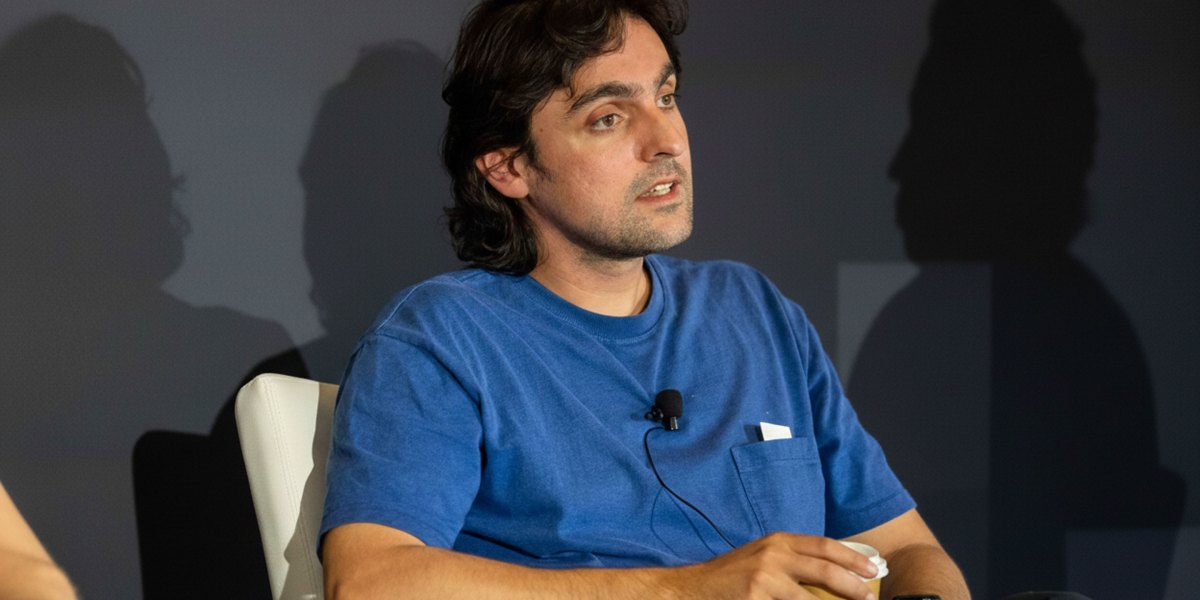
Ari Malik doesn’t spend much time worrying about AI hype cycles. While Silicon Valley debated the philosophy of artificial general intelligence, Malik was building something far more sustainable, prosaic—and profitable—from his bedroom: a system to help repo men and loan officers collect debt. Alongside co-founder Mukund Tibrewala, Malik set out to automate one of the most grueling, regulated, and high-turnover corners of finance.

Two years later, that focus has paid off. Malik is now the CEO of Salient, a vertical AI startup that has quietly become a force in fintech by taking on loan servicing. The company’s software automates everything from collections calls to payment processing for auto lenders, a function historically dominated by call centers and manual workflows.

“This is an area of the economy that has so been left behind by technology, and that consumers are, by and large, left to fend for themselves, that they often don’t know their rights, they often don’t know their processes,” he told Fortune. “And so we thought there’s a huge potential here for AI to be like a 10x solution, rather than a 20 to 30% improvement.”

Salient’s growth has been swift but conservative (at least, in the context of the AI bubble). Just 18 months after inception, Salient raised $60 million in a Seed A round led by Andreessen Horowitz, reaching a valuation of $350 million as of June 2025. Malik told Fortune that Salient’s annualized recurring revenue has now surged past $25 million—nearly double the $14 million figure reported six months ago. Investors have continued to lean in. Insiders say the company has since raised an additional $10 million, pushing its valuation to around $500 million.

There’s no shortage of rapid-rise ARR numbers out there (some of which are more reliable than others). But where Salient stands out particularly, however, is in its retention and churn rate. Malik says the company has never churned a customer and has converted 100% of its pilots into paid deals, even as average B2B churn across the industry approaches 5% annually and, for AI financial tools and fintech, spans from 22% to 76% annually.

AI fintech products have struggled especially with churn due to the regulatory and compliance concerns intrinsic to the industry for which they are created. Salient, Malik says, has managed to instill confidence in financial institutions and clients by demonstrating the model’s proven success. According to Malik, Salient’s AI agents have demonstrated 30 times more compliance than human agents.

This documented success has not gone unnoticed by customers. Salient’s usage retainers are “very high” and its clients, Malik said, are constantly doubling down month-over-month, year-over year. 

The next chapter for Salient, Malik argues, extends far beyond signing more lenders—though Salient already works with more than five of the top ten auto lenders. The company is now processing millions of calls per day, and has already processed more than $1 billion in transactions, a signal of both demand and the scale of the problem it is targeting. Each year, roughly $800 billion in new auto debt is issued in the U.S., and nearly 80% of U.S. households have some debt. Lenders spend an estimated $20 billion to $30 billion just servicing that debt, paying humans to make phone calls, send letters, and negotiate payments, according to Malik.

Salient’s ambition is to capture that spend by becoming what Malik calls the “autonomous system of record”—software that can manage the entire lifecycle of a loan, from origination to payoff, without human intervention.

“We think making servicing a fully touchless process is on the table, and we want to get to it as fast as humanly possible,” Malik says.

Reaching that goal means expanding beyond Salient’s core collections product. Malik says the company plans to build a loan management system, a credit reporting module, and a charge-off module, effectively broadening Salient into a full-stack servicing platform. The existing product, he adds, has already proven its value: clients have seen servicing cost efficiencies of 50%.

Malik says the way Salient deploys its capital is guided by customer trust. “We need to be a generational company, because they invest a lot in us, and we need to make sure that we are stable financially,” he told Fortune. “And so when we invest capital, it’s because we have a really strong conviction that this is a product that could work at scale, and we want to make this realize value as fast as possible.”

The company, he said, has no desire to burn through cash quickly in the coming years. And Salient’s operating costs are much smaller than foundational AI companies because the firm doesn’t engage in pre-training. 

Instead, investments will go toward adjacent workflows, including how lenders interact with the DMV and how they perfect loan recovery processes. Another portion will be reserved for experimentation with new technology—something that has defined Salient since its earliest days.

When Malik and Tibrewala launched Salient in 2023, nearly every lender they pitched dismissed them. To break through, they ran an unconventional Turing test. The founders built a demo in which an AI voice clone of Steve Jobs called lenders to negotiate an auto loan.

“We picked Steve because it was the most recognizable voice,” Malik says. “We wanted to make it illustrative that this tech is getting so lifelike that it’s just a matter of time before it becomes the status quo.”

The stunt worked. “Our first five or six customers, we just played them that demo,” Malik says. “They were all like, ‘Oh my god, this is crazy.’”

Winning deals, however, was only the first hurdle. Salient’s first major client was Westlake Financial, a large subprime auto lender. When Westlake agreed to a pilot, Malik and Tibrewala didn’t just ship an API. They physically moved into Westlake’s offices, setting up desks onsite to ensure the AI didn’t hallucinate or violate complex debt-collection laws.

That level of “rabid customer obsession,” Malik says, is Salient’s moat—a mindset he traces back to his time at Goldman Sachs and later at Tesla. Engineers are embedded directly with customers, and every Salient partner has Malik’s personal cell number. “Our engineers directly interface with their business counterparts at the largest financial institutions in the U.S.,” he says. “They’re much more responsible to what they promised a customer, which creates a much more aligned engineering world. We all know what we need to build and how we need to do it.”

For founders hoping to replicate Salient’s success, Malik’s advice is pointed: leave Silicon Valley. “Go anywhere else,” he says. “Talk to anybody in a different industry. Become an anthropologist. Embed yourself in a community you don’t know—and you’ll find these super ripe inefficiencies.”



Source link

Continue Reading

Business

Down Arrow Button Icon

Published

on


If it wasn’t for a Volkswagen bus and a calculator, Apple might never have existed. At the time, the late cofounder Steve Jobs was in his early twenties and strapped for cash, but hooked on the idea that everyone should be able to own a home computer. The only problem? Like many founders, he didn’t have enough money to bring his vision to life.

So Jobs sold off his Volkswagen bus while fellow cofounder Steve Wozniak got money for his programmable calculator, raising $1,300 to pay for the prototype’s parts. And the first Apple computer, the Apple I, was born on April Fools’ Day, 1976.

The sacrifice paid off: A local computer dealer placed a $50,000 order for 100 units soon after it launched, with the product mainly bought up by hobby enthusiasts. But it made the entrepreneurial duo enough money to create Apple II for the mass market—the first personal computer to include a keyboard and color graphics. A year after its 1977 debut, it made nearly $3 million. 

“I was worth about over $1 million when I was 23, and over $10 million when I was 24, and over $100 million when I was 25,” Jobs told PBS in 1996. “And it wasn’t that important, because I never did it for the money.”

The days of selling their belongings to fund their fledgling business was long behind them.

From college dropout to $10.2 billion net worth: Jobs’ path to Apple success

Jobs didn’t discover his passion for technology in a college class; at age 12, the entrepreneur had already found his true calling, and took a massive leap of faith to pursue his dreams. 

A young Jobs thumbed through the yellow pages, and hunted down the phone number of Hewlett-Packard cofounder Bill Hewlett, ringing him up for a favor. At the time, the tween was in need of spare parts to build a frequency counter. But what he received was far better than some nuts and bolts; Hewlett offered Jobs an internship at the iconic $21.4 billion tech company, where he serendipitously met a talented engineer: Wozniak. 

Together, the pair started their first business, illegally selling “blue boxes” that allowed users to make free, long-distance telephone calls. Jobs reminisced about those years in the early 1970s as a “magical” time in his life that sent him on the path to soon create Apple. 

“Experiences like that taught us the power of ideas,” Jobs said in the 1998 documentary Silicon Valley: A 100-Year Renaissance. “If we hadn’t … made blue boxes, there would have been no Apple.”

Jobs later enrolled at Reed College in Portland, Ore., but his days of higher education were short-lived. He dropped out after just one semester, inevitably working for legendary brand Atari as a technician and games designer at just 18 years old. That would be the last time Jobs worked under somebody else; just two years later, Apple I hit the market, and Jobs was well on his way to becoming one of the most visionary tech pioneers in modern history. 

Fast-forward five decades later, and Apple is the second most valuable company in the world. The business sits in fourth place on the Fortune 500, having sold more than 3 billion iPhones, and boasting more than 100 million Mac users globally. 

At the time of his passing in 2011, Jobs was estimated to be worth $10.2 billion. Although he had enough money to buy a whole fleet of luxury cars shortly after founding Apple, selling his Volkswagen proved to be a critical sacrifice in making it to the top.


Source link

Continue Reading

Business

Yann LeCun is targeting a $3.5 billion valuation for his new startup that hasn’t even launched yet

Published

on


Yann LeCun, the legendary artificial intelligence researcher who helped build and shape Meta’s AI strategy, is already underway on his next big thing. Less than a month after announcing his departure from Mark Zuckerberg’s social media empire, the 65-year-old Turing Award winner has launched fundraising talks that would value his new venture at roughly $3.5 billion before it’s even launched.

The startup, Advanced Machine Intelligence (AMI) Labs, aims to create what LeCun calls “world models”: AI systems that understand physics, maintain persistent memory, and plan complex actions rather than simply predicting the next word. The company plans to establish its headquarters in Paris early next year, with LeCun serving as executive chairman. He’s even picked the CEO already: On Thursday, LeCun announced on LinkedIn that he’s selected Alexandre LeBrun, founder of French health-tech startup Nabla, to take on the chief executive role.

Why LeCun is abandoning Silicon Valley

The €500 million (~$586 million) funding target would be one of the largest prelaunch raises in AI history, reflecting investor confidence in LeCun’s vision of moving beyond today’s large language models.

“Silicon Valley is completely hypnotized by the current models of generative AI,” LeCun explained earlier this month at the AI-Pulse conference. “To pursue this kind of new research, you have to go outside the Valley—to Paris.”

LeCun’s exit from Meta after 12 years—five as founding director of Facebook AI Research and seven as chief AI scientist—had been rumored for weeks before he confirmed it on Nov. 18. His departure coincides with Meta’s strategic pivot toward more powerful LLM-based models under new chief AI officer Alexandr Wang, the twentysomething founder of Scale AI.

While Meta will not invest in AMI Labs, the companies plan to forge a partnership, allowing LeCun to continue his research while maintaining ties to his former employer.

The AI bubble grows bigger

The spectacular valuation for a pre-revenue startup has amplified concerns about an AI investment bubble. Industry leaders have warned that excitement around AI may be outpacing business fundamentals, and LeCun’s fundraising could test whether even the most respected names in the field can command premium valuations without proven commercial traction. The startup faces competition from well-funded European rivals like Black Forest Labs, valued at $4 billion, and Quantexa at $2.6 billion.

LeCun’s skepticism about AI’s current direction has been clear. Earlier this year, during an appearance on Alex Kantrowitz’s Big Technology podcast, he said: “We are not going to get to human-level AI just by scaling LLMs,” arguing they cannot achieve that milestone because they simply predict text rather than truly understand the world. His startup, AMI Labs, on the other hand, aims to develop systems that observe and interact with the physical environment like humans do, potentially revolutionizing robotics, transportation, and health care.

A return to European roots

The French computer scientist, who won the 2018 Turing Award alongside Geoffrey Hinton and Yoshua Bengio, has long advocated for European AI talent. He convinced Meta to open its FAIR lab in Paris in 2015 and now argues the city offers the right environment for his next-generation research.

LeCun’s social media post announcing his departure emphasized continuity: “I am creating a startup company to continue the Advanced Machine Intelligence research program (AMI) I have been pursuing over the last several years with colleagues at FAIR, at NYU, and beyond.” He described the goal as bringing about “the next big revolution in AI: systems that understand the physical world, have persistent memory, can reason, and can plan complex action sequences.”

The partnership with Nabla provides immediate applications for AMI’s technology. The health-tech company will gain first access to world model technologies, enabling it to develop FDA-certifiable AI systems for health care. LeBrun’s transition from Nabla CEO to AMI Labs CEO signals deep integration between the two companies, though he will remain chairman and chief AI scientist at Nabla.


Source link

Continue Reading

Business

Roblox CEO David Baszucki says the best career advice he’s ever received is to outright ignore the advice of others

Published

on


As some Gen Z graduates find themselves iced out of the job market, millions have slipped into so-called NEET status (not in employment, education, or training), unclear as to when their careers will finally be able to take off. For Roblox CEO David Baszucki, that sense of professional drift is familiar.

Although today he helms the $60 billion video game platform—and has a $5 billion net worth to go with it—when he graduated from Stanford University in 1985, he said his career prospects were anything but clear. 

Like today’s aspiring professionals, it was tempting for him to lean on the advice of mentors, professors, or friends to figure out how to jump-start his career. But Baszucki warns that mindset could leave you worse off. In fact, looking back, he says the best advice he ever received was to actually stop overvaluing what others think.

“A lot of my development has been trying to, over time, ignore advice I’ve been given,” Baszucki recalled to students at his alma mater. Instead, when you’re having a rough time, listen when people say, “Trust your gut.”

Baszucki went from lost window cleaner to billionaire tech leader

Even though Stanford has a reputation as a launchpad for billion-dollar companies—from Snapchat to Databricks—Baszucki hit a wall after graduation. His dream job didn’t materialize, and his résumé was thin: One of his only work experiences was window-cleaning with his brother one summer.

“I can remember in this terrible time right out of college trying to figure out what I was going to do,” Baszucki shared with an audience of Stanford business students.

“Rather than trusting my intuition, I can remember having a spreadsheet of nine potential careers and then all these metrics—‘it’s really good for this, but it’s not so good for this.’

“It was, like, a really weird way to try to figure out your career,” he added.

It was then that Baszucki first learned about the need to trust your own instincts.

After landing a postgrad salaried role, Baszucki spent the next two or three years in what he now calls the “absolute worst jobs in the world” where he faced “massive disappointment.” 

Eventually, he took a step back to listen to his gut—and the reset paid off. Baszucki went on to carve his own path and create Knowledge Revolution, an educational software company that sold for $20 million in 1998. After the sale, he expected to get poached for a CEO job. When he didn’t, he found himself once again adrift and needing to forge his own path.

“Time and time again, you have to participate in making your own reality,” he told Fortune earlier this year.

A few years later, he began building what would become Roblox, now a global gaming platform with over 150 million daily active users. 

Fortune reached out to Roblox for further comment.

The best career advice: Trust your own instincts

During a time when data and data-driven decision-making is all the rage in the workplace, leaning on intuition might sound misguided. However, many executives still lean on their instincts to guide even major business decisions.

“Be able to balance a lot of different people’s opinions, but at the end of the day, you have to have your own conviction deep down and make decisions for yourself,” LinkedIn CEO Ryan Roslansky said when asked to give career advice.

“You have to know what’s right, you have to care about what’s right, to be passionate about what’s right,” Roslansky added. “And if you’re going to put yourself out there and decide to dive into the crowd, it should be because you want to … not because someone else is telling you to do it.”

Skims cofounder and CEO Jens Grede also recently echoed the importance of trusting your gut—as long as you exercise it.

“You can feed [intuition] by being a curious person,” Grede said on his wife Emma’s Aspire podcast. “Your gut is really your collective memory, your collective experience and learnings … Every book you read, every article, every conversation, every wrong or right decision you’ve made, that becomes your gut.”


Source link

Continue Reading

Trending

Copyright © Miami Select.