A US bankruptcy judge on Wednesday granted initial approval of Saks Global’s bankruptcy financing, allowing the company to draw on $400 million in new cash despite an objection from Saks’ estranged business partner Amazon.
Saks filed for bankruptcy late Tuesday – Bloomberg
US Bankruptcy Judge Alfredo Perez approved the financing at a court hearing in Houston, saying the money would give Saks a chance to stabilise its business and restructure its debt. Saks’ chief restructuring officer Mark Weinstein said during the hearing that the company would be “dead in the water” without the new money, which would be used to pay vendors and the company’s 17,000 employees.
The luxury retail company filed for bankruptcy late Tuesday with $3.4 billion in debt, after its ill-fated merger with Neiman Marcus caused cash shortfalls that prevented Saks from reliably replenishing inventory at its stores. Saks Global’s attorney, Debra Sinclair, said all the stores remain “open for business,” and that Saks has no concern about weakening customer demand.
“The customers are there, and we know this because when we do have goods available in our stores, we are able to sell them,” Sinclair said. “The problem that you’ll hear a lot about today and over the course of this week has been that we have not been able to buy enough inventory to meet our demand.”
The $400 million infusion approved by Perez is the first tranche of a total financing package that Saks values at $1.75 billion.
Before approving the bankruptcy loan, Perez overruled an objection by online retail giant Amazon, which said its $475 million equity investment in Saks would become “worthless” if the bankruptcy proceeds with the current financing arrangement.
Amazon has “little to no confidence” that Saks can successfully emerge from bankruptcy, Amazon’s attorney Caroline Reckler said at the hearing. Amazon’s attorneys argued that the new loan improperly claimed Saks Fifth Avenue‘s flagship Manhattan store as collateral, when that property’s value had already been used to guarantee up to $900 million in payments owed to Amazon for its collaboration on a “Saks on Amazon” online sales platform.
In addition to approving the bankruptcy financing, Perez also approved several routine requests to help Saks avoid business disruptions during its bankruptcy, such as allowing the company to catch up on late payments to vendors who provided goods and services to Saks before it filed for Chapter 11 protection. Saks said it owes over $337 million to critical suppliers, including French luxury brand Chanel, which is owed $136 million, and Gucci owner Kering, owed $26 million.
Long loved by the rich and famous, Saks never fully recovered from the Covid pandemic, as competition from online outlets rose, and brands started selling more items through their own stores. The company’s vendors began withholding inventory last year after Saks fell behind on payments.
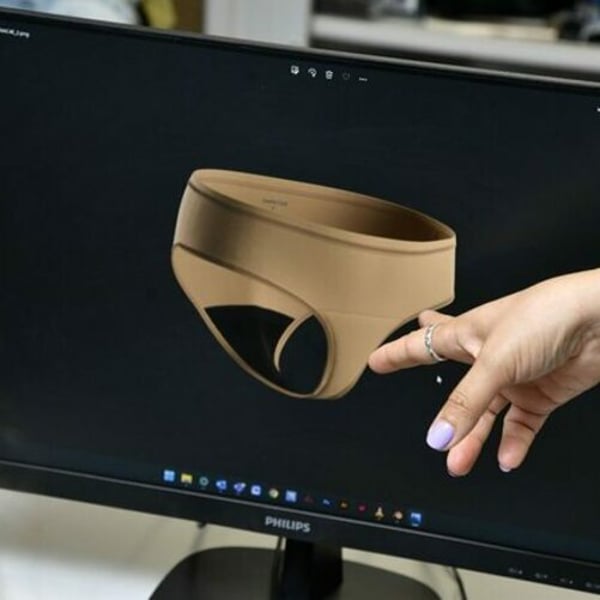
Portuguese group Impetus is working with Straight Lines AI, which specialises in artificial intelligence solutions for the fashion industry, to develop products faster and more efficiently.
Impetus partners with American AI company
As part of this collaboration, Impetus will integrate the Straight Lines AI Creative Design Platform into its creative processes, with the aim of streamlining and accelerating product development, boosting operational efficiency and reducing costs, while also shortening the time-to-market for new underwear collections.
“At Straight Lines AI, we are committed to transforming the fashion industry with our state-of-the-art artificial intelligence solutions,” says Dale Kort, CEO of Straight Lines AI. “We are thrilled to partner with Impetus and to support the company in harnessing the power of AI to enhance its design capabilities, optimise operations, and bring innovative products to market more efficiently,” he adds.
Recognised for the quality of its underwear collections, Impetus views the integration of artificial intelligence as a strategic opportunity to bolster creativity and innovation. Using the Straight Lines AI platform will enable it to automate more labour-intensive tasks, freeing teams to focus on creative development and product design.
“Through this partnership with Straight Lines AI, we will optimise our processes, cut costs and devote more time to what we love most: designing quality products for everyone,” says Nuno Sousa, designer and head of Impetus’s 3D implementation project. “This collaboration will help us increase our efficiency and continue to innovate in this market,” he believes.
Impetus’s commitment to artificial intelligence is not new, as it is already one of the company’s drivers of innovation. On various occasions, including the second episode of the podcast Entre Linhas e Bytes (Between Lines and Bytes), part of the Texp@ct project, which Impetus leads, Nuno Sousa has underlined the central role that 3D technologies currently play at Impetus, highlighting their direct impact on efficiency, collaboration and sustainability in product development. According to the designer, the company already develops between 500 and 600 products per season using 3D and has dispensed with traditional photo shoots, using digital images for presentation and commercialisation.
This article is an automatic translation. Click here to read the original article.
India expects talks on a long-sought trade deal with the European Union to conclude this month, Trade Secretary Rajesh Agrawal said on Thursday, in what would be New Delhi’s largest agreement as it seeks new markets amid US tariff pressures.
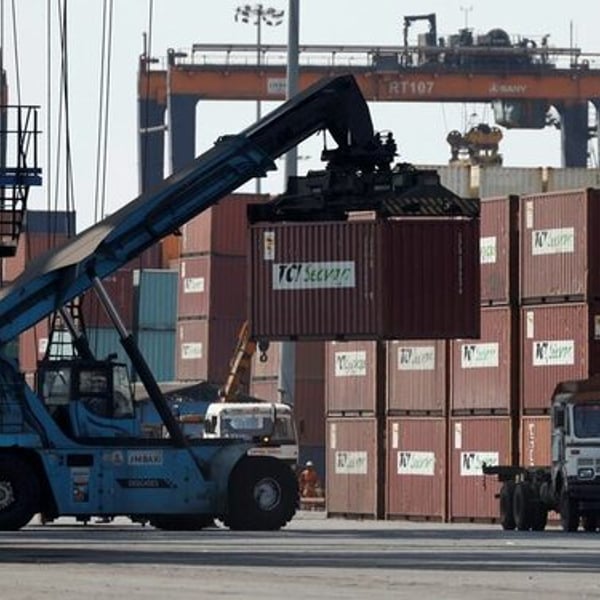
A mobile crane carries a container at Deendayal Port in Kandla, in the western state of Gujarat, India, April 5, 2025 – REUTERS/Amit Dave
The deal, under discussion for years, is seen as a chance for both sides to deepen economic ties and cut reliance on China and Russia. Bilateral trade between India and the EU totalled 120 billion euros ($140 billion) in 2024, making the bloc India’s biggest trading partner. Agrawal said the two sides were “very close” to finalising the pact and were exploring whether it could be wrapped up before leaders meet in New Delhi this month.
He said talks on a US trade pact were continuing and a deal would be reached when both sides were ready. Negotiations collapsed last year after a breakdown in communication between the two governments.
The president of the European Council, Antonio Costa, and European Commission president Ursula von der Leyen will visit India on January 25–27 and co-chair an India–EU summit on January 27, India’s foreign ministry said. If concluded, the deal would open India’s vast and heavily protected consumer market of more than 1.4 billion people to European goods and could reshape global trade flows as protectionism rises and a US-India pact remains stalled.
Both sides have been pushing to close a broad agreement after von der Leyen and Indian Prime Minister Narendra Modi agreed to fast-track negotiations in an effort to close a deal in 2025. Talks, relaunched in 2022, gained momentum after US President Donald Trump imposed tariff hikes on trading partners including India. Brussels has recently signed deals with Mexico and Indonesia and stepped up talks with India, while New Delhi has reached agreements with Britain, Oman and New Zealand.
Some sensitive agricultural items have been excluded from negotiations, an Indian trade ministry official said. India will not open its agriculture or dairy sectors in any trade pact, officials have said, citing the need to protect millions of subsistence farmers.
The EU is pushing for steep tariff cuts on cars, medical devices, wine, spirits, and meat, along with stronger intellectual property rules. India is seeking duty-free access for labour-intensive goods and quicker recognition of its autos and electronics sectors.
Beyond goods, the agreement is expected to expand services trade, investment and cooperation in digital trade, intellectual property, and green technologies, as well as spur European investment in Indian manufacturing, renewable energy ,and infrastructure. Challenges remain over regulatory alignment and the protection of sensitive sectors. The EU’s carbon border levy, which requires importers to account for emissions in steel, cement and other carbon‑intensive products, has started to hit some Indian exports and is a key concern for New Delhi, exporters said.
Cristina Álvarez, who, as of this Thursday, assumes the chair of El Corte Inglés and the Ramón Areces Foundation, has underlined her intention to contribute to the development of the group’s businesses and to its investment programme, which in the 2026-2027 financial year will total €650 million.
Cristina Álvarez, new chair of El Corte Inglés – El Corte Inglés
In a statement, Álvarez explained that this investment will focus on continuing store refurbishments, strengthening the group’s technology and logistics capabilities, and expanding its businesses.
Cristina Álvarez, who replaces her sister Marta, takes the helm of the company and the foundation after both appointments were unanimously approved by all members of the El Corte Inglés board of directors and the board of trustees of the Ramón Areces Foundation.
Cristina Álvarez continues to chair the Appointments and Remuneration Committee. In addition, from Thursday she will also chair the Monitoring Committee and will therefore oversee the strategic plan approved by the board of directors and its implementation by managing directors Santiago Bau and Rafael Díaz Yeregui.
The chairwoman has expressed her “sincere commitment and dedication” to the group, to which she has devoted her professional life for more than 30 years, and has emphasised her “pride in being part of El Corte Inglés.”
In this way, Marta Álvarez steps aside in favour of her sister as chair after six years in the role, a “personal and voluntary decision,” although she will remain a member of the board of directors and of the Monitoring Committee, focusing on the strategic direction of own-brand lines in fashion and home.
Cristina Álvarez, who joined the company in 1992, expressed her thanks, when the handover was announced, for the “magnificent work” carried out by her sister Marta over these years and said she would perform her duties with “humility, always safeguarding the interests of the shareholders, employees and customers of this great company.”
Marta Álvarez’s decision to hand over the chair to her sister came almost a month after the board of directors approved, with immediate effect, the reshuffle of the company’s top management, following the departure of its chief executive officer, Gastón Bottazzini, who took up the post just over a year ago.
This article is an automatic translation. Click here to read the original article.