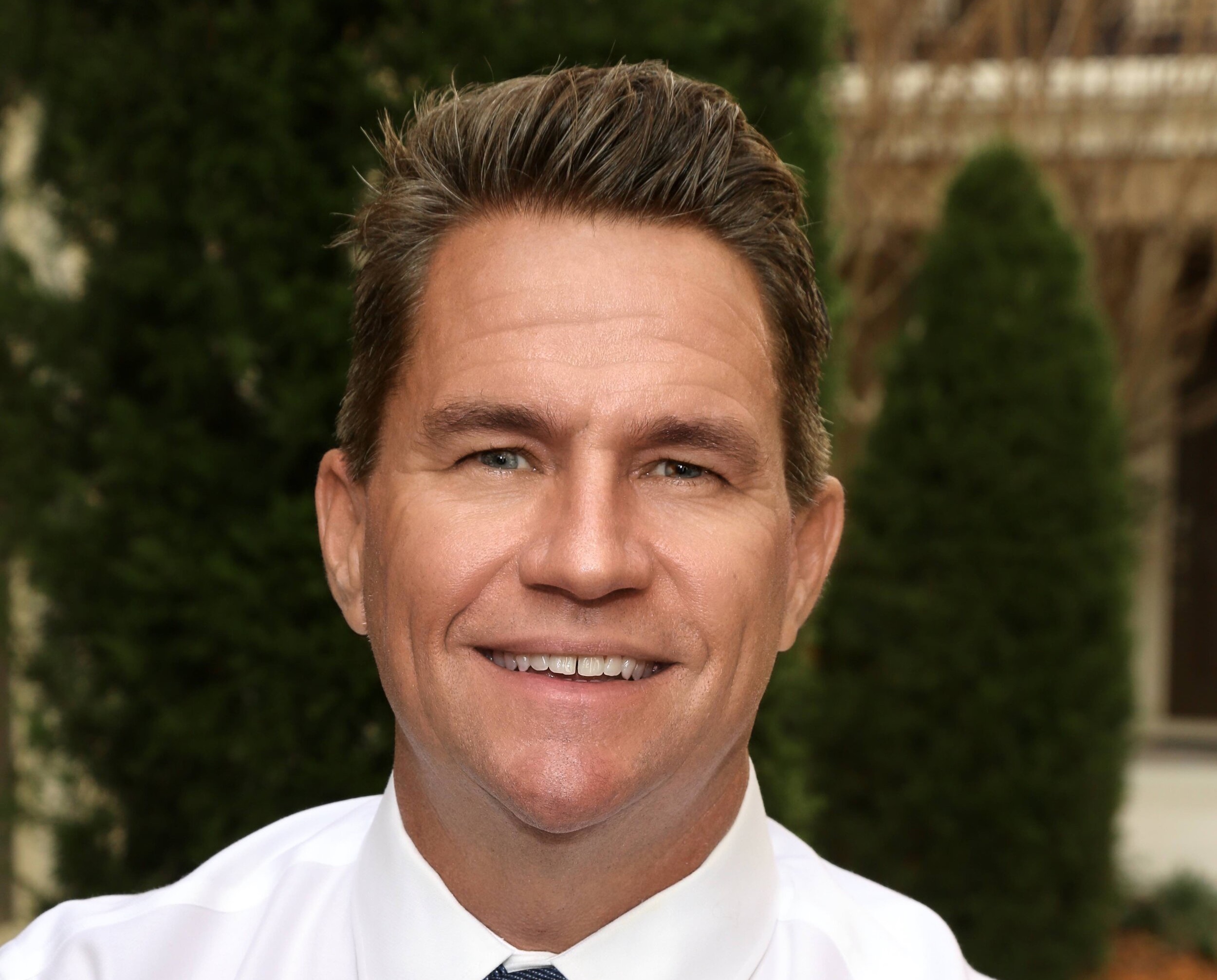
After being defeated in 2002 when he tried to knock out an incumbent on the Orlando City Council, RogerChapin figured that maybe elected office wasn’t his destiny.
So he found a different way to get involved, since he doubted he would run for public office again.
Chapin became a leader on some of the community’s most influential boards, including the Municipal Planning Board, Downtown Development Board and Orlando Utilities Commission, as well as an oversight committee for the construction of the Dr. Phillips Center for the Performing Arts.
Fast forward more than 20 years later, and Chapin is running for the same City Council seat again.
This time, Chapin said he is the most experienced candidate in the race. He points to his long résumé built over the years managing multibillion-dollar budgets and being vigilant on public transparency.
Chapin is facing Mira Tanna in the Dec. 9 runoff to represent District 3, which covers Baldwin Park, Audubon Park, College Park and Rosemont. The four-year term currently pays $79,343 annually for the nonpartisan race.
A razor-thin margin of only 14 votes separated Chapin and Tanna in a crowded field of five candidates in the Nov. 4 election, triggering the runoff.
Chapin argued his experience is needed more than ever as Orlando city government undergoes a major transformation with new leaders in charge. Buddy Dyer, the city’s longest-serving Mayor, is not running for re-election.
Longtime District 3 Commissioner Robert Stuart also did notrun for another term, which is what sparked Chapin’s political comeback this year.
“I thought, ‘Maybe I should give this another shot,’” Chapin said. “It’s always been in the back of my mind and in my blood.”

His campaign has dominated fundraising by raising about $260,000, more than three times his opponent’s war chest.
Linda Chapin.
Roger Chapin is the son of former Orange County Mayor Linda Chapin, a legendary trailblazer in Central Florida politics.
“I can remember sitting in the back seat of the station wagon, watching my mom literally navigate and trying to get in other people’s orbits. And back then it was all men,” Roger Chapin said. “She was half-PTA mom, half-Junior League mom.”
Linda Chapin first ran for the Orange County Commission when he was 16. “At that point I didn’t care about anything but my driver’s license,” Roger quipped.
By the time she was elected Orange County Mayor in 1990, Roger was in college, but he was starting to become more fascinated by politics and even worked in Gov. Lawton Chiles’ press office.
“I caught the bug like a lot of young people do when you’re a senior and you start to think about the rest of your life,” Roger Chapin said.
For his career, Roger Chapin worked at Mears Transportation until he became a consultant about five years ago. His one-man shop, Chapin Communications, does work in public affairs, public relations, business development, government relations and strategic visioning. Currently, Chapin says he has two clients, Mears and another in education.
If elected, Chapin cited Dyer as an example of the kind of leader he wants to be.
Dyer is a Democrat, but doesn’t make headlines for speaking out defiantly against Gov. Ron DeSantis or the Republican-controlled Legislature. (Dyer has, in fact, supported Republicans in past local elections.)
Chapin described himself as a Democrat who wants to “govern from the middle,” compared to Tanna, whom he said is “certainly on the progressive wing of the party.”
Tanna is backed by U.S. Rep. Maxwell Frost and state Rep. Anna Eskamani.
“There’s some people worried about City Council becoming a very partisan place,” Chapin said, citing Dyer as “obviously a Democrat, but can still pick up the phone and talk to Gov. DeSantis’ head of transportation about SunRail.”
“If we keep going down a partisan path of these partisan food fights, city government will suffer for it,” Chapin said. He added that his focus is keeping “Orlando’s best interests always front and center.”
The College Park resident’s priorities include focusing on the Main Street Districts — areas with busy traffic and thriving local restaurants and shops on Ivanhoe Boulevard and Edgewater and Corrine drives.
“I want to be very fully engaged with those within that business community and making sure that those areas remain strong and improve their walkability,” Chapin said.
Other focuses include expanding SunRail to nights and weekends and revitalizing the downtown, which isn’t located in District 3 but plays an important role in the city’s overall economy and health, he said.
And has his mother given him any campaign advice?
“Whose mom doesn’t want to give their son advice?” he joked.
Early voting runs Dec. 1-7, with polls open Election Day, Dec. 9, from 7 a.m. to 7 p.m.
The cold war between Florida’s Governor and his predecessor is nearly seven years old and tensions show no signs of thawing.
On Friday, Sen. Rick Scott weighed in on Florida Politics’reporting on the Agency for Health Care Administration’s apparent repayment of $10 million of Medicaid money from a settlement last year, which allegedly had been diverted to the Hope Florida Foundation, summarily filtered through non-profits through political committees, and spent on political purposes.
“I appreciate the efforts by the Florida legislature to hold Hope Florida accountable. Millions in tax dollars for poor kids have no business funding political ads. If any money was misspent, then it should be paid back by the entities responsible, not the taxpayers,” Scott posted to X.
While AHCA Deputy Chief of Staff Mallory McManus says that is an “incorrect” interpretation, she did not respond to a follow-up question asking for further detail this week.
The $10 million under scrutiny was part of a $67 million settlement from state Medicaid contractor Centene, which DeSantis said was “a cherry on top” in the settlement, arguing it wasn’t truly from Medicaid money.
But in terms of the Scott-DeSantis contretemps, it’s the latest example of tensions that seemed to start even before DeSantis was sworn in when Scott left the inauguration of his successor, and which continue in the race to succeed DeSantis, with Scott enthusiastic about current front runner Byron Donalds.
Earlier this year, Scott criticized DeSantis’ call to repeal so-called vaccine mandates for school kids, saying parents could already opt out according to state law.
While running for re-election to the Senate in 2024, Scott critiqued the Heartbeat Protection Act, a law signed by DeSantis that banned abortion after the sixth week of pregnancy with some exceptions, saying the 15 week ban was “where the state’s at.”
In 2023 after Scott endorsed Donald Trump for President while DeSantis was still a candidate, DeSantis said it was an attempt to “short circuit” the voters.
That same year amid DeSantis’ conflict over parental rights legislation with The Walt Disney Co., Scott said it was important for Governors to “work with” major companies in their states.
The critiques went both ways.
When running for office, DeSantis distanced himself from Scott amid controversy about the Senator’s blind trust for his assets as Governor.
“I basically made decisions to serve in uniform, as a prosecutor, and in Congress to my financial detriment,” DeSantis said in October 2018. “I’m not entering (office) with a big trust fund or anything like that, so I’m not going to be entering office with those issues.”
In 2020, when the state’s creaky unemployment website couldn’t handle the surge of applicants for reemployment assistance as the pandemic shut down businesses, DeSantis likened it to a “jalopy in the Daytona 500” and Scott urged him to “quit blaming others” for the website his administration inherited.
The chill between the former and current Governors didn’t abate in time for 2022’s hurricane season, when Scott said DeSantis didn’t talk to him after the fearsome Hurricane Ian ravaged the state.
Enforcing what Gov. Ron DeSantis calls the “rule of law” violates international law and norms, according to a global group weighing in this week.
Amnesty International is the latest group to condemn the treatment of immigrants with disputed documentation at two South Florida lockups, the Krome North Service Processing Center (Krome) and the Everglades Detention Facility (Alligator Alcatraz).
The latter has been a priority of state government since President Donald Trump was inaugurated.
The organization claims treatment of the detained falls “far below international human rights standards.”
Amnesty released a report Friday covering what it calls a “a research trip to southern Florida in September 2025, to document the human rights impacts of federal and state migration and asylum policies on mass detention and deportation, access to due process, and detention conditions since President Trump took office on 20 January 2025.”
“The routine and prolonged use of shackles on individuals detained for immigration purposes, both at detention facilities and during transfer between facilities, constitutes cruel, inhuman and degrading treatment, and may amount to torture or other ill-treatment,” the report concludes.
Gov. DeSantis’ administration spent much of 2025 prioritizing Alligator Alcatraz.
While the state did not comment on the report, Amnesty alleges the state’s “decision to cut resources from essential social and emergency management programs while continuing to allocate resources for immigration detention represents a grave misallocation of state resources. This practice undermines the fulfillment of economic and social rights for Florida residents and reinforces a system of detention that facilitates human rights violations.”
Amnesty urges a series of policy changes that won’t happen, including the repeal of immigration legislation in Senate Bill 4-C, which proscribes penalties for illegal entry and illegal re-entry, mandates imprisonment for being in Florida without being a legal immigrant, and capital punishment for any such undocumented immigrant who commits capital crimes.
The group also recommends ending 287(g) agreements allowing locals to help with immigration enforcement, stopping practices like shackling and solitary confinement, and closing Alligator Alcatraz itself.
Fire pits glow. Singers perform on stage. Fake snow falls down for the Florida kids who don’t know the real thing. Holiday booths sell coquito, sandwiches and hearty snacks. It’s easy to forget that the 408 traffic is in the backdrop or ignore an ambulance siren going by. Instead, you get lost in Santa greeting children and the music on stage from Central Florida’s talent.
The free festival, which is officially open, runs 28 days through Jan. 4 and will feature 80 live performances, holiday movies, nightly tree lightings and more. The slate of performers includes opera singers, high school choirs, jazz performers, Latin Night and more. The schedule is available here.
About 300,000 people are expected to attend — a boon to the city’s economy especially since one 1 of every 4 Dr. Phillips Center visitors typically comes from outside Orange County, said Orange County Commissioner Mike Scott.
“Most importantly, this festival builds connections,” Scott said. “This festival creates a cultural and economic ripple that extends well beyond the borders of downtown.”
The performing arts center has hosted “Lion King,” “Hamilton” and more during its 10 years in business. But during the pandemic, it began using the space out front — its “front yard” — in innovative ways, said Kathy Ramsberger, President and CEO of Dr. Phillips Center.
Keeping patrons spread apart in individual seat boxes, Dr. Phillips held concerts outdoors during the pandemic.
Ramsberger said the Dr. Phillips Center purposefully has chosen not to develop the land in order to keep the space for people to come together.
“Hopefully, this will grow across the street to City Hall, down the street, over to Orange County administration building, up and down Orange Avenue, and the entire city will be connected with something that the City of Orlando started to celebrate Christmas and the holidays,” Ramsberger said.